{
"de-DE": "",
"en-US": "Publicist and audiovisual producer in love with social networks. I spend more time thinking about which videogames I will play than playing them.",
"es-ES": "Publicista y productor audiovisual enamorado de las redes sociales. Paso más tiempo pensando a qué videojuegos voy a jugar que jugándolos.",
"fr-FR": "Publicitaire et producteur audiovisuel passionné par les réseaux sociaux. Je passe plus de temps à penser aux jeux vidéo auxquels je jouerai qu'à y jouer.",
"it-IT": "",
"ja-JP": "",
"nl-NL": "",
"pl-PL": "",
"pt-BR": "",
"social": {
"email": "",
"facebook": "",
"twitter": "",
"linkedin": ""
}
}
Google has begun rolling out a long-awaited feature in Google Photos that will prevent users from accidentally deleting large amounts of photos and videos. This tool, called “Undo Device Backup,” was leaked in June and has now been officially announced in the Google Photos help forum. Until now, deleting a photo or video from Google Photos automatically removed the local copy on all devices synced with the app, leading users to lose important files while trying to free up space in their account. With the new feature, content can be deleted […]
Google has started rolling out a much-anticipated feature in Google Photos that will prevent users from accidentally deleting large amounts of photos and videos. This tool, called “Undo Device Backup,” was leaked in June and has now been officially announced in the Google Photos help forum.
Until now, deleting a photo or video from Google Photos automatically removed the local copy on all devices synchronized with the application, which led users to lose important files when trying to free up space in their account. With the new feature, you can delete content stored in the cloud without it disappearing from local devices.
When using “Undo device backup,” all backed-up images and videos are removed from Google Photos, but the local copies remain intact, as if they were never synced. However, the function only affects files currently stored on the device, so if the “Free up space on this device” option was previously used to delete local copies, these images will remain in the cloud and will not be deleted with the new function.
Although it will be very useful for many users, the “Undo device backup” feature is currently quite limited, as it does not allow deleting individual files from the backup without affecting the rest (a feature we might see in future app updates).
Xbox Game Pass subscribers are going to have a very good Christmas. Although last Tuesday Microsoft announced the first additions for the month, a few days later we know that two more new games will also arrive that were not on the initial list and will be available to all users subscribed to the Ultimate and PC levels. Among the already confirmed titles, Crash Team Racing: Nitro-Fueled stands out, available from December 4th, and the recent Indiana Jones and the Great Circle, which joins the catalog this Monday, December 9th. Additionally, Wildfrost will make its debut the day […]
Subscribers of Xbox Game Pass are going to have a very good Christmas. While last Tuesday Microsoft announced the first additions for the month, a few days later we know that two new games will also arrive that were not on the initial list and will be available to all users subscribed to the Ultimate and PC levels.
Among the already confirmed titles, Crash Team Racing: Nitro-Fueled, available since December 4, stands out, along with the recent Indiana Jones and the Great Circle, which joins the catalog this Monday, December 9. Additionally, Wildfrost will make its debut the following day, December 10, consolidating a start of the month full of new releases for Game Pass subscribers.
What no one expected was the arrival of For the King 2 and Hunt: Showdown 1896 to the service on December 12. For the King 2 is a turn-based strategy roguelite that simulates tabletop role-playing games and enjoys “Very Positive” general reviews on Steam. On the other hand, Hunt: Showdown 1896, an enhanced version of Crytek’s extraction shooter, was already available for free trial through Game Pass, but now it is being permanently added.
The impact of these new additions is greater considering that some titles for January 2025 had already been announced. Among these are Carrion on January 2 and Road 96 on the 7th, two games returning after previously being removed from the service. Eternal Strands will also arrive on January 28, Sniper Elite: Resistance on the 30th, and Citizen Sleeper 2: Starward Vector on the 31st, expanding the offerings for the start of the year.
However, it is important to remember that most of the launch games available in the catalog from day one are now reserved for the Ultimate and PC levels, so if you are on the Standard level, you will need to upgrade your subscription.
Meta has introduced new features in Instagram’s Broadcast Channels, providing creators and their followers with a two-way communication channel. Until now, these channels only allowed users to react with emojis to creators’ posts, limiting communication to one-way. With this update, creators can enable replies to their posts and allow users to interact with each other. Additionally, it includes the ability to launch questions or topics to start conversations within the channel. This question feature allows followers to respond within 24 hours with text or photos, […]
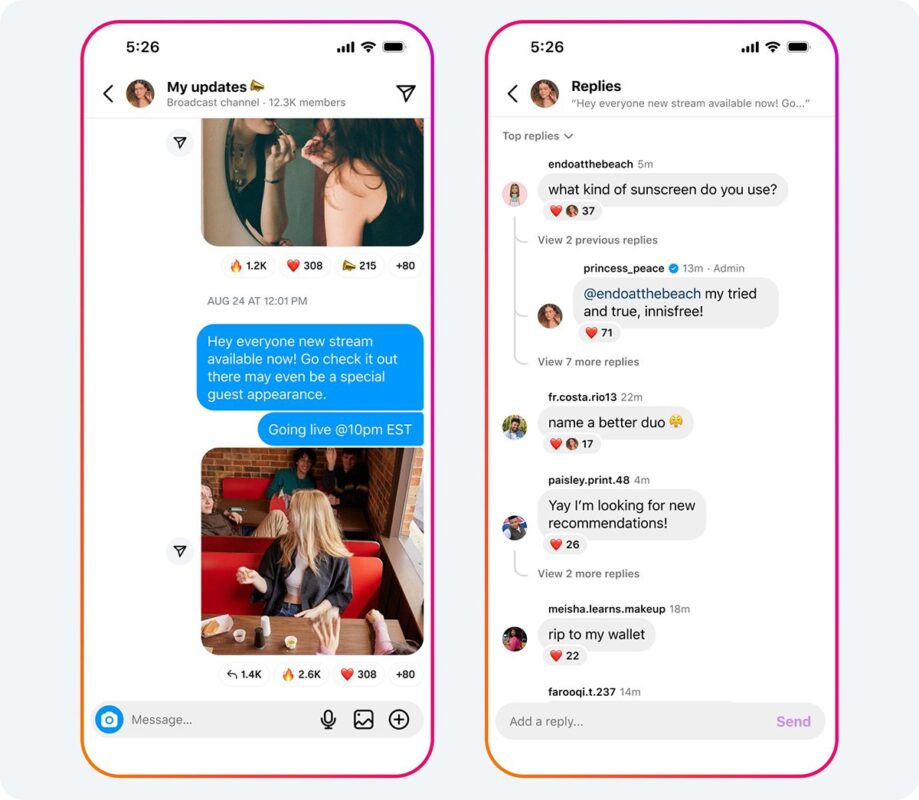
Meta has introduced new features in the Broadcast Channels of Instagram, providing creators and their followers a two-way communication channel. Until now, these channels allowed users to react only with emojis to creators’ posts, limiting communication to one way. With this update, creators can enable replies to their posts and allow users to interact with each other.
Additionally, the possibility of launching questions or topics to start conversations within the channel is included. This question functionality allows followers to respond within 24 hours with text or photos, promoting a more dynamic and creative exchange. Furthermore, Meta has added metrics for creators to analyze the performance of their channels; with these statistics, the platform will offer personalized suggestions, such as posting behind-the-scenes content or increasing the frequency of posts, to encourage user engagement.
Launched last year, Broadcast Channels were initially designed for creators to share public messages with their followers without the overload of responses. However, these improvements bring the experience closer to that of an organized comment section, as responses are grouped under each main message. Creators will have control over these options, and can decide whether to activate them or not in their channel settings.
DeepMind, the artificial intelligence research division of Google, has unveiled Genie 2, an innovative model capable of creating an apparently infinite variety of playable three-dimensional worlds. This model, which follows Genie, released earlier this year, stands out for generating interactive scenes in real-time from a single image or text description, such as “a humanoid robot in Ancient Egypt.” Although it is reminiscent of developments by companies like World Labs and Decart, Genie 2 has features that make it unique. DeepMind’s proposal promises an immense diversity of rich 3D worlds in […]
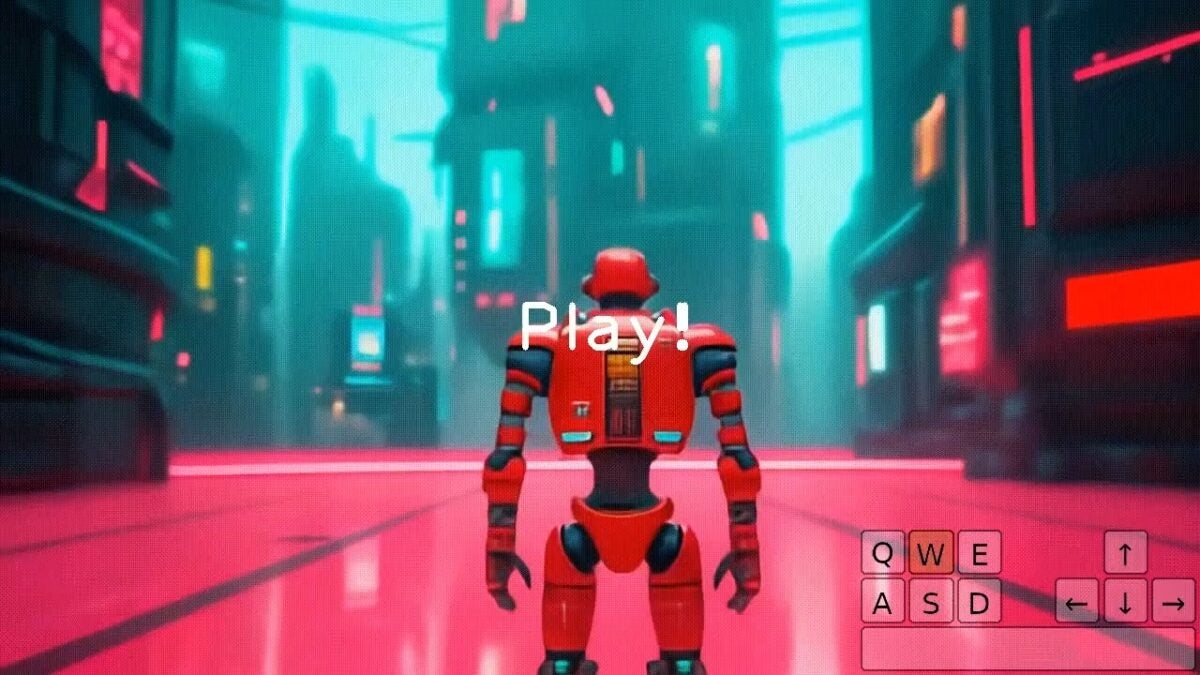
DeepMind, the artificial intelligence research division of Google, has unveiled Genie 2, an innovative model capable of creating an apparently infinite variety of playable three-dimensional worlds. This model, which follows Genie, launched earlier this year, stands out for generating interactive scenes in real-time from a single image or text description, such as “a humanoid robot in Ancient Egypt.” Although it is reminiscent of developments by companies like World Labs and Decart, Genie 2 has features that make it unique.
Subscribe to the Softonic newsletter and get the latest in tech, gaming, entertainment and deals right in your inbox.
The DeepMind proposal promises an immense diversity of 3D worlds rich in details, where users can perform actions like jumping or swimming with keyboard and mouse. Thanks to its training with videos, Genie 2 can simulate object interactions, animations, lighting, physics, and even the behavior of non-playable characters (NPCs). Many of these worlds resemble triple-A video games, which raises serious questions about whether its training included sessions from popular titles. For now, DeepMind has avoided revealing details about how it collected the data.
The model has also reignited the debate over intellectual property. As a subsidiary of Google, DeepMind can access YouTube videos, and the company itself has stated that its terms of service allow the use of these materials to train AI models.
Despite its limitations, such as simulations lasting between 10 and 60 seconds, Genie 2 is more consistent than other similar models. For example, it avoids common issues of visual artifacts and scene forgetting, something that affects competitors like Oasis, from Decart. Additionally, it can remember and render objects that had gone out of the field of view.
DeepMind does not see this model as a tool for traditional games, but as a creative and research resource. According to the company, “Genie 2 turns conceptual art into complete interactive environments” and facilitates the evaluation of AI agents in completely new tasks, opening new possibilities for prototypes and experimentation.
Google has introduced new features in Gmail for Android that make it easier to compose emails and optimize the use of “Connected Sheets for Looker.” Among the new features is the ability to drag and drop email addresses between the “To,” “CC,” and “BCC” fields. “When composing an email in the Gmail app on your Android device, you can now drag and drop contacts between recipient fields,” the company explains in a post on the Google Workspace blog. “This makes it easier to move addresses between ‘to,’ ‘cc,’ and ‘bcc’.” The new feature is now available […]
Google has introduced new features in Gmail for Android that make it easier to compose emails and optimize the use of “Connected Sheets for Looker”. Among the new features is the ability to drag and drop email addresses between the “To”, “CC”, and “BCC” fields.
“When you draft an email in the Gmail app on your Android device, you can now drag and drop contacts between recipient fields,” the company explains in a post on the Google Workspace blog. “This makes it easier to move addresses between ‘to’, ‘cc’, and ‘bcc’.” The new feature is now available for all Google Workspace customers, individual Workspace subscribers, and users with personal Google accounts.
In Connected Sheets, the company has also expanded data analysis capabilities. Now, users can manage up to 100,000 rows of Looker results in pivot tables: “This year, we increased the maximum number of BigQuery result rows, and this week we are extending it to Connected Sheets for Looker.”
Google has also wanted to highlight the availability of the Gemini mobile app for Android and iOS, integrated as a central service of Workspace. Together, these are a series of updates focused on simplifying tasks and enhancing productivity for users of the Google ecosystem.
World Labs, the startup led by renowned artificial intelligence expert Fei-Fei Li, has unveiled its first project: an innovative system that transforms a single image into an interactive 3D environment, similar to a video game. “This [system] allows you to delve into any image and explore it in 3D,” the company explains on its blog. “Beyond the input image, everything is generated automatically.” Unlike other tools that transform photos into three-dimensional models, the World Labs system stands out for being interactive and editable. As seen in a demonstration on their website, the generated scenes […]
World Labs, the startup led by the renowned artificial intelligence expert Fei-Fei Li, has unveiled its first project: an innovative system that turns a single image into an interactive 3D environment, similar to a video game. “This [system] allows you to delve into any image and explore it in 3D,” the company explains on its blog. “Beyond the input image, everything is generated automatically.”
Subscribe to the Softonic newsletter and get the latest in tech, gaming, entertainment and deals right in your inbox.
Unlike other tools that transform photos into three-dimensional models, the World Labs system stands out for being interactive and editable. As seen in a demonstration on their website, the generated scenes can be explored with a keyboard and mouse while adjusting parameters such as depth of field, which modifies the blur of background objects. Although the aesthetics are somewhat cartoonish, its real-time performance is impressive, to say the least.
The project falls within the emerging category of “world models,” technology used to simulate 3D environments, such as the case of Oasis, by Decart. However, World Labs claims that their approach surpasses these limitations by maintaining coherence in designs and respecting the basic laws of physics, achieving scenes with solidity and depth. Additionally, their system allows for the addition of interactive effects such as changes in object colors and dynamic lighting adjustments.
Despite its potential, the tool currently presents certain limitations. For example, users can only move in small areas and, occasionally, rendering errors appear, such as objects blending unnaturally. The company acknowledges that this is just an “initial advance” and assures that it is working on expanding interaction possibilities and improving the quality of the scenes.
World Labs plans to expand the applications of its technology beyond video games, with the aim that artists, filmmakers, and developers can use it to transform the way movies, simulators, and interactive digital experiences are created.
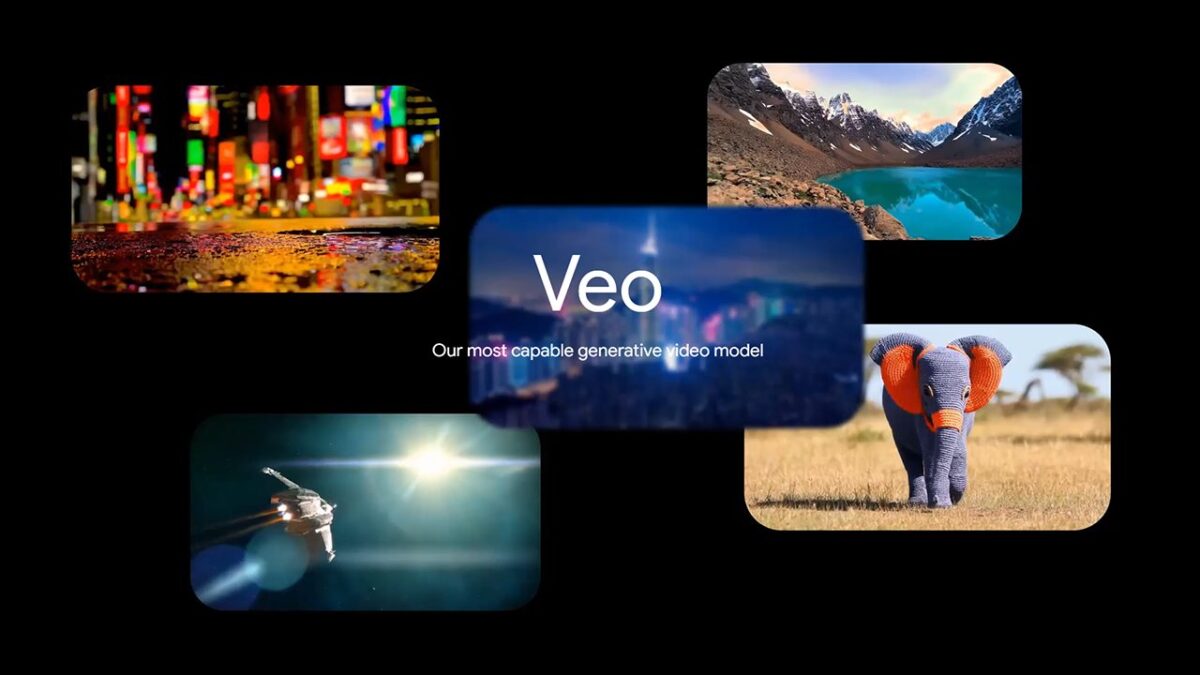
Google has announced that Veo, its artificial intelligence model designed to generate short videos from images and texts, will be available as a private preview for Google Cloud customers using the Vertex AI platform. This expansion will allow companies to integrate AI into their platforms or use it for multiple purposes, such as generating advertising clips. Introduced in May, Veo generates videos of up to six seconds in 1080p resolution and with a wide variety of visual styles, such as landscapes and time lapses. Google claims that it has optimized the model for businesses, now allowing the creation of videos […]
Google has announced that Veo, its artificial intelligence model designed to generate short videos from images and texts, will be available as a private preview for Google Cloud customers using the Vertex AI platform. This expansion will allow companies to integrate AI into their platforms or use it for multiple purposes, such as generating advertising clips.
Subscribe to the Softonic newsletter and get the latest in tech, gaming, entertainment and deals right in your inbox.
Presented in May, Veo generates videos of up to six seconds in 1080p resolution with a wide variety of visual styles, such as landscapes and time lapses. Google claims it has optimized the model for businesses, now allowing the creation of videos in 720p and in landscape or portrait formats. “Since its launch, we have improved Veo for enterprise customers,” stated Warren Barkley, product director at Google Cloud, in a statement. “We will continue to add capabilities, as we have done with other models in Vertex AI.”
The model also stands out for understanding visual effects like explosions and basic notions of physics, although it is not perfect. Sometimes, objects inexplicably disappear or the physical dynamics are incorrect, representing, for example, cars that move in a completely unrealistic way (limitations that reflect the current challenges of generative AI). Additionally, Veo allows editing specific regions of a video and creating longer projects, competing with tools from Adobe, OpenAI and other companies.
Google has trained Veo with large volumes of videos and claims that it uses publicly available data. However, this focus on legality does not put the company in a good position, given that it does not offer mechanisms for creators to remove their content from the datasets used for AI training. That said, to avoid other types of legal issues, Google has included filters for violent or explicit content and has implemented a compensation policy for Veo users in Vertex AI.
The model has already been integrated into YouTube Shorts and other platforms. However, the risks of this technology being used to create “deepfakes”, as well as the impact on the creative industry, where thousands of jobs are expected to be affected by AI, make Google currently adopt a cautious approach with Veo.
Bluesky, la red social descentralizada, se encuentra en el centro de la polémica tras la reciente publicación de un conjunto de datos (dataset) en Hugging Face, una plataforma comunitaria de inteligencia artificial.
Según recoge 404 Media, el conjunto contenía un millón de publicaciones junto con información de usuarios, obtenida por el investigador Daniel van Strien mediante una técnica conocida como scraping, usando la API Firehose. Van Strien justificó el uso de los datos para “desarrollar modelos de inteligencia artificial, analizar tendencias en redes sociales y estudiar patrones de publicación”, aunque acabó eliminando el conjunto tras ver que “este enfoque violaba los principios de transparencia y consentimiento en la recopilación de datos”.
El conjunto de datos incluía metadatos sensibles, como los identificadores descentralizados (DIDs) de los usuarios y herramientas de búsqueda específicas, algo que preocupó a muchos por el posible uso indebido de dicha información. Aunque Bluesky asegura que no entrena modelos de IA con los datos de sus usuarios, admite que “no puede hacer cumplir esta política fuera de nuestros sistemas” y que la decisión recae en los desarrolladores externos. La compañía también promete seguir trabajando con ingenieros y abogados para abordar el problema.
Brief update on our ongoing efforts to allow users to specify consent (or not) for AI training: ?
Y es que la naturaleza abierta y descentralizada de Bluesky, basada en el protocolo Authenticated Transfer (AT), facilita que terceros accedan al contenido públicamente. Un enfoque que contrasta con plataformas como Twitter, donde Elon Musk restringió y encareció el acceso a su API para, supuestamente, frenar el scraping indiscriminado.
Bluesky, la red social descentralizada, se encuentra en el centro de la polémica tras la reciente publicación de un conjunto de datos (dataset) en Hugging Face, una plataforma comunitaria de inteligencia artificial.
Según recoge 404 Media, el conjunto contenía un millón de publicaciones junto con información de usuarios, obtenida por el investigador Daniel van Strien mediante una técnica conocida como scraping, usando la API Firehose. Van Strien justificó el uso de los datos para “desarrollar modelos de inteligencia artificial, analizar tendencias en redes sociales y estudiar patrones de publicación”, aunque acabó eliminando el conjunto tras ver que “este enfoque violaba los principios de transparencia y consentimiento en la recopilación de datos”.
El conjunto de datos incluía metadatos sensibles, como los identificadores descentralizados (DIDs) de los usuarios y herramientas de búsqueda específicas, algo que preocupó a muchos por el posible uso indebido de dicha información. Aunque Bluesky asegura que no entrena modelos de IA con los datos de sus usuarios, admite que “no puede hacer cumplir esta política fuera de nuestros sistemas” y que la decisión recae en los desarrolladores externos. La compañía también promete seguir trabajando con ingenieros y abogados para abordar el problema.
Brief update on our ongoing efforts to allow users to specify consent (or not) for AI training: ?
Y es que la naturaleza abierta y descentralizada de Bluesky, basada en el protocolo Authenticated Transfer (AT), facilita que terceros accedan al contenido públicamente. Un enfoque que contrasta con plataformas como Twitter, donde Elon Musk restringió y encareció el acceso a su API para, supuestamente, frenar el scraping indiscriminado.
Bluesky, la red social descentralizada, se encuentra en el centro de la polémica tras la reciente publicación de un conjunto de datos (dataset) en Hugging Face, una plataforma comunitaria de inteligencia artificial.
Según recoge 404 Media, el conjunto contenía un millón de publicaciones junto con información de usuarios, obtenida por el investigador Daniel van Strien mediante una técnica conocida como scraping, usando la API Firehose. Van Strien justificó el uso de los datos para “desarrollar modelos de inteligencia artificial, analizar tendencias en redes sociales y estudiar patrones de publicación”, aunque acabó eliminando el conjunto tras ver que “este enfoque violaba los principios de transparencia y consentimiento en la recopilación de datos”.
El conjunto de datos incluía metadatos sensibles, como los identificadores descentralizados (DIDs) de los usuarios y herramientas de búsqueda específicas, algo que preocupó a muchos por el posible uso indebido de dicha información. Aunque Bluesky asegura que no entrena modelos de IA con los datos de sus usuarios, admite que “no puede hacer cumplir esta política fuera de nuestros sistemas” y que la decisión recae en los desarrolladores externos. La compañía también promete seguir trabajando con ingenieros y abogados para abordar el problema.
Brief update on our ongoing efforts to allow users to specify consent (or not) for AI training: ?
Y es que la naturaleza abierta y descentralizada de Bluesky, basada en el protocolo Authenticated Transfer (AT), facilita que terceros accedan al contenido públicamente. Un enfoque que contrasta con plataformas como Twitter, donde Elon Musk restringió y encareció el acceso a su API para, supuestamente, frenar el scraping indiscriminado.