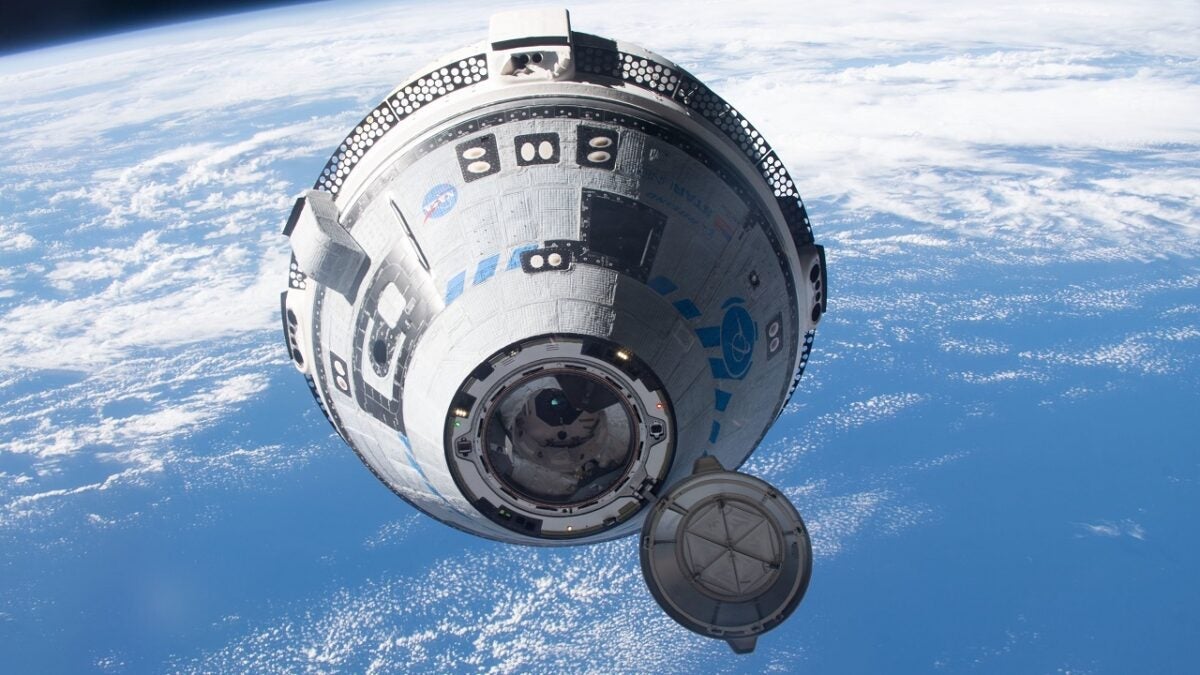
We have been following Boeing’s troubled spacecraft for months: from its construction to its launch, everything has had issues. And the worst part is that this headache is far from over for the astronauts, NASA, and Boeing itself.
The commander of the Starliner, astronaut Barry ‘Butch’ Wilmore, asked mission control in Houston on Saturday why the test capsule had started emitting strange noises through a speaker.
At first, the sounds were not audible, then Wilmore, 61, captured a better recording: an annoying and perpetual glitch, similar to the ping pulse of a submarine sonar.
‘I’m going to let them scratch their heads and see if they can understand what’s going on,’ Wilmore said over the radio with his southern accent and the self-assurance that only an astronaut can have.
A problem – they don’t know where it comes from or what causes it
The flight controllers seemed to not immediately know the cause or origin of the noise. Neither NASA nor Boeing, the developer of the spacecraft, responded to media inquiries about the sounds on Sunday, and it was unclear if the problem persisted.
Wilmore only noticed one unusual thing at the time of communication: the sound coming from the speaker. He stated that there were no other issues or strange configurations inside the capsule.
Although the US space agency recently decided that Wilmore and his crewmate, pilot Sunita ‘Suni’ Williams, would not return in the Starliner but in a SpaceX Crew Dragon capsule, the Starliner remains docked to the International Space Station about 250 kilometers above Earth. It is expected to remain there until it departs for an unmanned robotic landing on Friday, September 6th.
If everything goes according to plan, the Starliner will land at the White Sands Missile Range in New Mexico, about six hours later. A parachute system and airbags will cushion its fall onto the desert shortly after midnight on September 7th.
The failures are the latest in a series of issues related to the Starliner, which was launched from Cape Canaveral (Florida) in June for its first manned test flight.
