NASA has faced a “lost year” in 2025, marked by political instability, a lack of leadership, and a budgetary war that have affected its operations and morale. Since the resignation of administrator Bill Nelson on January 20, the agency has navigated a significant power vacuum, starting with the interim leadership of Janet Petro, who focused on implementing divisive policies before Sean Duffy was appointed as interim administrator on July 9. The situation became more complicated when the White House withdrew the nomination of billionaire Jared Isaacman on May 31, just before […]
NASA has faced a “lost year” in 2025, marked by political instability, a lack of leadership, and a budgetary war that have affected its operations and morale.
Since the resignation of administrator Bill Nelson on January 20, the agency has navigated a significant power vacuum, starting with the interim leadership of Janet Petro, who focused on implementing divisive policies before Sean Duffy was appointed as interim administrator on July 9.
The situation became complicated when the White House withdrew the nomination of billionaire Jared Isaacman on May 31, just before a public dispute erupted between Donald Trump and Elon Musk.
It’s a very dark time for NASA.
The agency is facing damaging budget cuts and effectively has no leader for up to a year now. pic.twitter.com/aYRK58O7zw
Despite his experience as an astronaut, Isaacman did not receive the expected support due to his donations to Democratic candidates, according to Trump’s claims. While Duffy sought to establish a new direction by reopening vital contracts such as the lunar transport one, the political context remained tense.
This situation culminated in the suspension of 15,000 agency employees due to lack of funds, which slowed down both lunar programs and Mars sample return missions, where NASA is directly competing with China.
The administrative ups and downs and difficult budgetary decisions have given the Chinese space agency a significant strategic advantage. With recent achievements like the Chang’e-6 mission, China is well positioned to become the first nation to land humans on the Moon before the United States, something the U.S. administration was trying to avoid precisely with its funding cuts and controversial leadership changes.
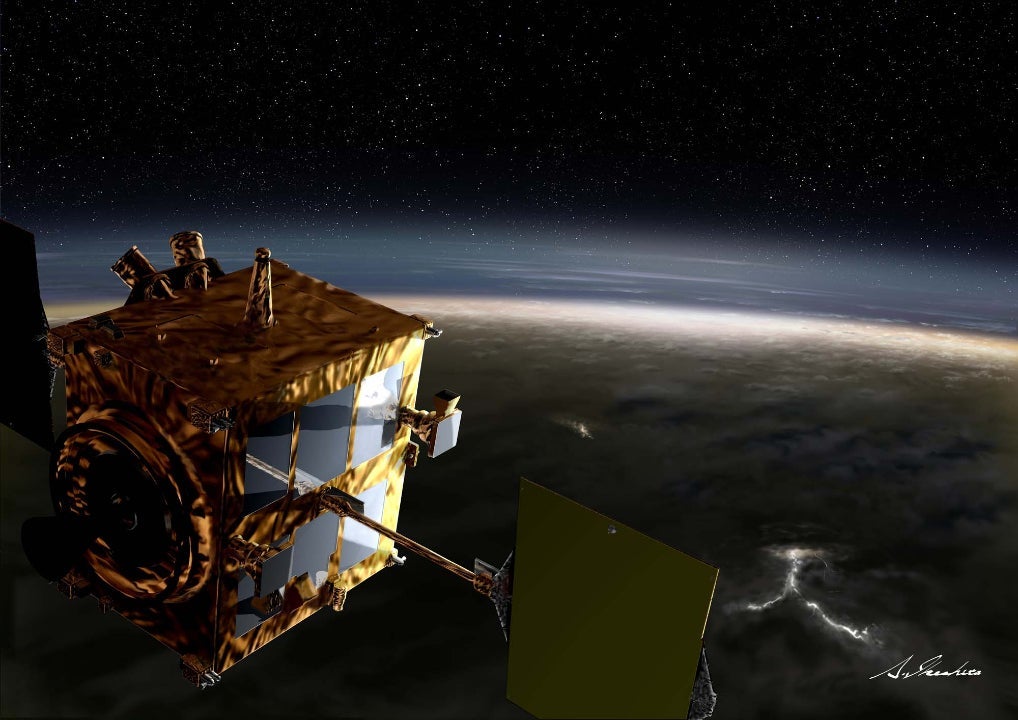
The Japanese satellite Akatsuki has officially closed its operations after 15 years of traveling through space. Launched on May 21, 2010, this satellite was decorated with over 13,000 drawings and messages sent by fans of Hatsune Miku, making it a unique monument to the famous virtual idol. The Japan Aerospace Exploration Agency (JAXA) aimed for Akatsuki to study the weather patterns of Venus and search for signs of active volcanism on the planet. A satellite that had a whole life out there Despite its achievements, JAXA announced the loss of contact […]
The Japanese satellite Akatsuki has officially closed its operations after 15 years of journeying through space. Launched on May 21, 2010, this satellite was adorned with over 13,000 drawings and messages sent by fans of Hatsune Miku, making it a unique monument to the famous virtual idol. The Japan Aerospace Exploration Agency (JAXA) aimed for Akatsuki to study the weather patterns of Venus and search for signs of active volcanism on the planet.
A satellite that had been out there for a lifetime
Despite its achievements, JAXA announced the loss of contact with Akatsuki in April 2024. After a year of trying to reestablish communications, the agency determined that recovery would be difficult and officially ended its operations. In a statement on Twitter, the Akatsuki team expressed their gratitude to everyone who supported the mission over these 15 years.
Akatsuki was the only operational satellite focused on Venus in the last decade, managing to capture stunning images of the planet, characterized by the brown and creamy tones of its atmosphere. This satellite became a symbol not only of space exploration but also of Japanese pop culture, by integrating fan art into its structure.
A hacker known as 7h3h4ckv157 has once again drawn attention after discovering new vulnerabilities in NASA’s systems. This is the second time he has managed to detect security flaws in the space agency, following an initial report in 2022, where he used the Cross-Site Scripting (XSS) technique to exploit weaknesses in their website. Despite NASA’s recognized security, the hacker has shown that their systems are susceptible to attacks similar to those that can affect other organizations. The second time’s the charm XSS refers to a […]
A hacker known as 7h3h4ckv157 has once again drawn attention after discovering new vulnerabilities in NASA’s systems. This is the second time he has managed to detect security flaws in the space agency, following an initial report in 2022, where he used the Cross-Site Scripting (XSS) technique to exploit weaknesses in their website. Despite NASA’s well-known security, the hacker has shown that their systems are susceptible to attacks similar to those that can affect other organizations.
The second time is the charm
XSS refers to a type of attack that allows hackers to inject malicious code into users’ browsers, which can result in the theft of sensitive information, such as passwords. This attack occurs when the page does not properly handle the data entered by users. In his first foray, the hacker received neither recognition nor reward for his finding, which generated some discontent in the ethical hacking community.
Nevertheless, on this occasion, NASA has decided to acknowledge its work by sending a letter of thanks signed by Mike Witt, the agency’s information security officer. This action highlights the importance of recognition within the field of cybersecurity and reinforces the value of security research conducted by external individuals.
Despite the fact that the hacker has not revealed details about the newly identified vulnerability, this situation underscores the need for constant security reviews in critical systems such as those of NASA. The agency has chosen not to provide specific information about the type of vulnerability, indicating that it must ensure the flaw is completely resolved before making a public disclosure. Rumors suggest that it may offer more information on its blog in the future.
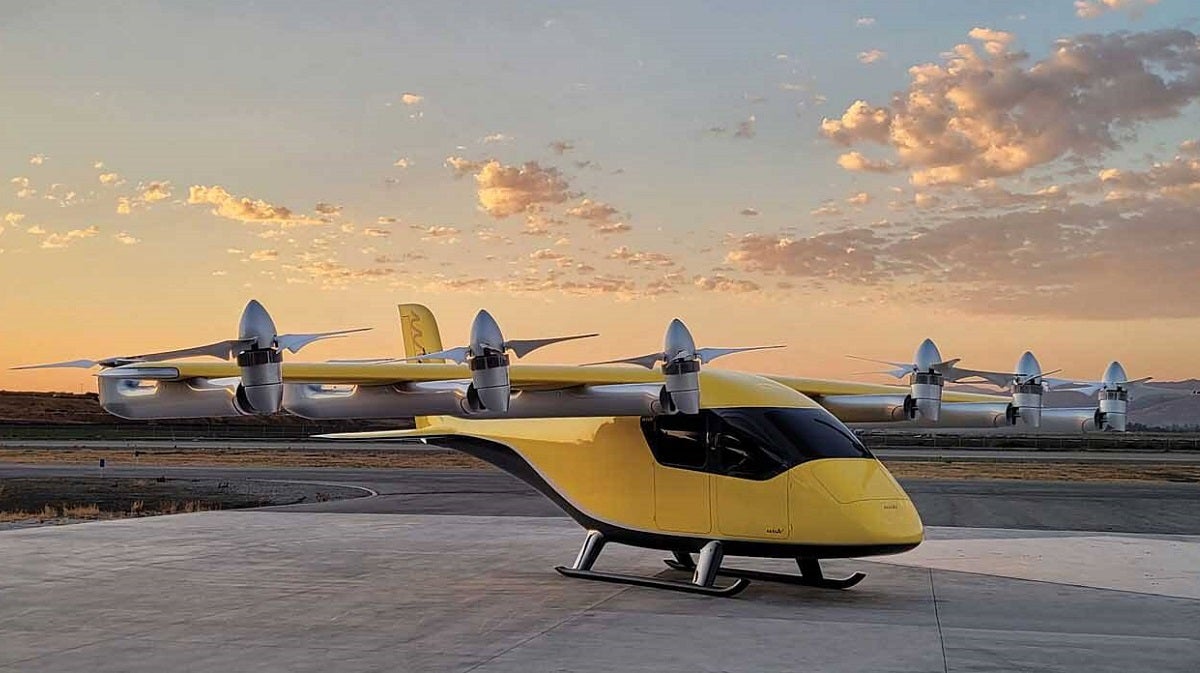
Wisk Aero, a wholly owned subsidiary of Boeing, has announced a new five-year research partnership with NASA to establish advanced air mobility (AAM) standards aimed at integrating autonomous aircraft into the National Airspace System (NAS).
This partnership builds on Wisk’s ongoing collaboration with NASA, which began in 2020 as part of NASA’s Advanced Air Mobility Project, focusing on addressing critical industry challenges and laying the groundwork for autonomous passenger flights.
The centerpiece of Wisk’s efforts is the Cora, an all-electric aircraft that has evolved through multiple generational variants over the past seven years.
🤝 Today, Wisk announced a new five-year agreement with @NASA that will advance autonomous aircraft under Instrument Flight Rules (IFR) in the National Airspace System (NAS).
Wisk Aero and NASA Join Forces for Advanced Air Mobility Standards
This new Non-Reimbursable Space Act Agreement (NRSAA) will expand upon prior research to develop essential guidelines for the safe operation of autonomous urban air mobility (UAM) flights.
Key objectives include optimizing airspace design, establishing safety requirements for aircraft and ground systems, and formulating air traffic control communication protocols necessary for the seamless integration of future UAM aircraft.
To achieve these ambitious goals, Wisk and NASA will utilize advanced simulation techniques and Live Virtual Constructive (LVC) flight environments. These methods combine real flight operations with simulated environments, allowing researchers to evaluate future autonomous operations effectively.
According to Erick Corona, Director of Airspace Operational Integration at Wisk, this long-term partnership represents a significant advancement for both Wisk and the broader UAM sector, positioning them to develop sixth-generation autonomous systems for safe integration into U.S. airspace by the end of the decade.
Recent meetings between Wisk and NASA’s teams have already initiated discussions on instrument flight procedures and how advanced technology can facilitate secure autonomous passenger flights, with a target date set for 2030. As the industry prepares for this transformation, ongoing regulatory developments will be crucial in shaping the future of urban air mobility.
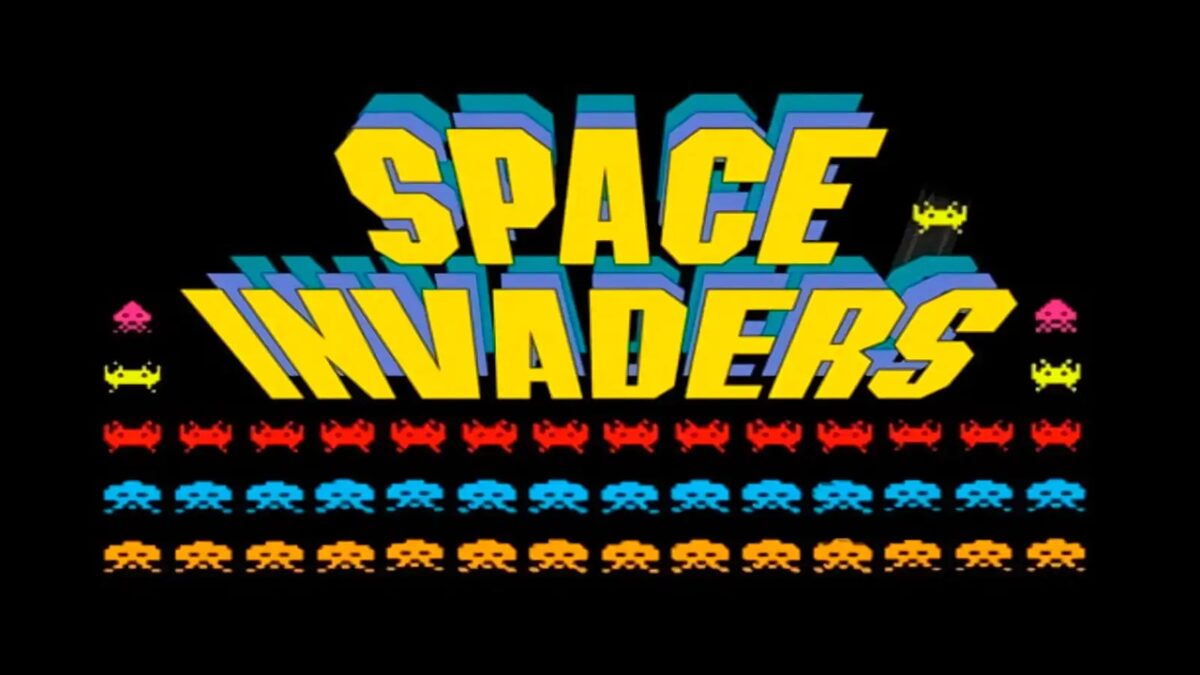
The iconic video game Space Invaders, released by Taito in 1978, has traditionally been considered the pillar that triggered the video game industry in Japan and a precursor to Nintendo’s success in the 80s. However, a recent finding in a publication about trains suggests a more complex narrative about the origins of video games in the Asian country. A train simulator much earlier than Taito’s game A fan discovered an old magazine that documents a train simulation developed in 1970, predating other recognized Japanese titles. This finding raises questions about the history […]
The iconic video game Space Invaders, released by Taito in 1978, has traditionally been regarded as the cornerstone that triggered the video game industry in Japan and a precursor to Nintendo’s success in the 80s. However, a recent finding in a publication about trains suggests a more complex narrative about the origins of video games in the Asian country.
A train simulator long before Taito’s game
A fan discovered an old magazine that documents a train simulation developed in 1970, anticipating other recognized Japanese titles. This finding raises questions about the history of video games in Japan before the Taito phenomenon, as it shows an individual at a convention operating a computer in what appears to be a game with vector graphics, reminiscent of the first video game in history, Tennis for Two, created in 1958.
Researcher Bruno de Figueiredo has expressed certain doubts about the Japanese authenticity of the finding, suggesting that the machine may have been imported or adapted from an American product. Although the simulation, known as Densha no Unten Tesuto or Train Driving Test, involves the existence of interactive programs for children, its creation has not yet been officially certified as made in Japan.
De Figueiredo emphasizes that, while the description of this software is close to what many would consider a video game, there are reasons to be skeptical. The machine used in the simulation, manufactured by an American company in the sixties, has been linked to other similar programs, including NASA’s chess games.
This discovery, while fascinating and enriching the narrative of the evolution of Japanese video games, still leaves questions about its veracity and its place in the official history of the medium. As these findings are investigated, the discussion about the true origins of the industry in Japan becomes increasingly intriguing.
Washington is moving forward with the restoration of a base on Johnston Atoll, a strategic enclave in the Pacific known for its dark history of nuclear and chemical testing. Recent satellite images have confirmed ongoing efforts to reactivate this facility, which focuses on developing a global military supply transport program using rockets, known as Rocket Cargo Vanguard. The U.S. Air Force has announced plans to build two landing platforms on the island, with up to ten tests planned each year for four years, depending on the environmental assessment in […]
Washington is moving forward with the restoration of a base on Johnston Atoll, a strategic enclave in the Pacific known for its dark history of nuclear and chemical testing.
Recent satellite images have confirmed ongoing efforts to reactivate this facility, which focus on developing a global military supply transport program using rockets, known as Rocket Cargo Vanguard.
The U.S. Air Force has announced plans to build two landing platforms on the island, with up to ten tests planned each year for four years, depending on the ongoing environmental assessment.
??? Notorious Abandoned Pacific Island Outpost Eyed For Space Force Rocket Cargo Delivery Tests
Historic Johnston Atoll in the Pacific could host landing pads and start tests for the Rocket Cargo Vanguard program this year.
This location was chosen for its remote geography, its U.S. control, and its adequate logistical capabilities, surpassing other sites evaluated such as Kwajalein or Midway Island for operational reasons.
Johnston Atoll has had a controversial military use in the past, being a center for atmospheric nuclear testing and storage of biological and chemical weapons until its closure in 2003. Currently, despite its status as a national refuge, unused military infrastructures can be observed, such as a 2.7 km runway, which would be used for the new program.
The Rocket Cargo aims to leverage commercial rockets, such as SpaceX’s Starship, which has had a mixed operational history. Despite the issues experienced in previous tests, the Pentagon remains interested in deploying these systems for critical operations, due to their large payload capacity and reusability.
If the environmental assessment is favorable, Johnston Atoll could be reformed into an impressive logistical asset for the U.S. Space Force, ensuring rapid mobilization of resources in an increasingly uncertain world.
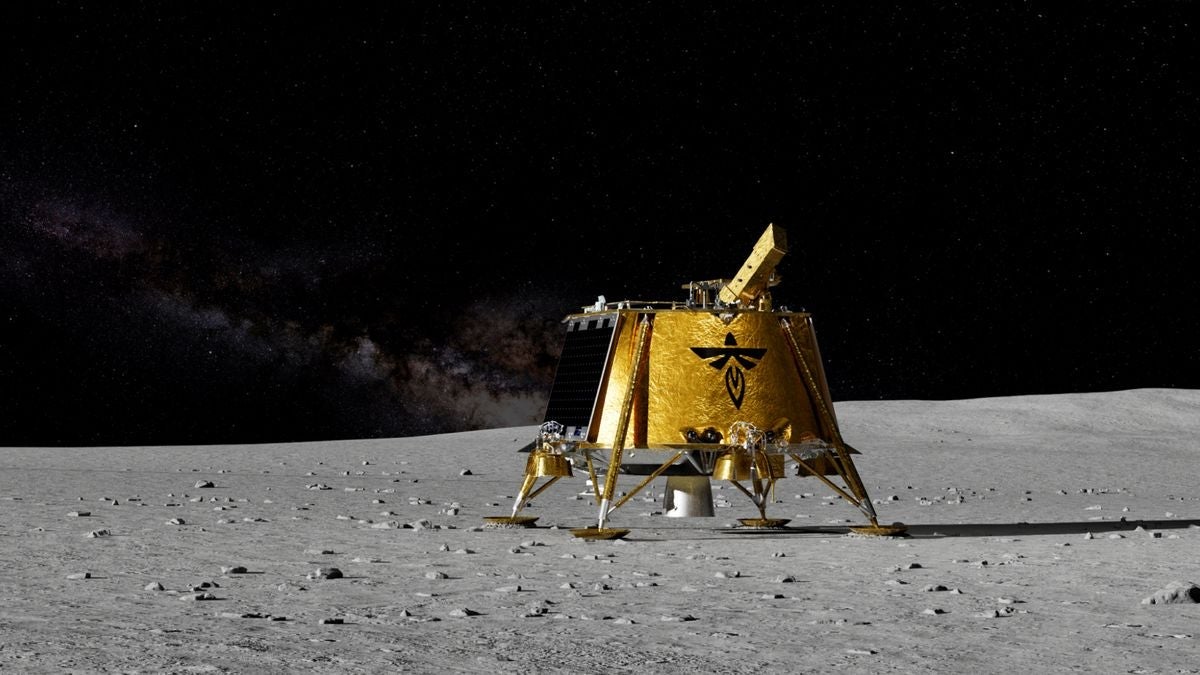
The Blue Ghost lunar module from Firefly Aerospace successfully landed on the surface of the Moon on March 2, marking a significant milestone for the company and for NASA’s commercial space program. The mission, titled “Ghost Riders in the Sky,” launched on January 15 from the Kennedy Space Center in Florida and executed a soft landing on its first attempt. Since its arrival, the Blue Ghost has been communicating with the operations control in Cedar Park, Texas. The Blue Ghost carries a total of 10 payloads from NASA and […]
The mission, titled “Ghost Riders in the Sky,” launched on January 15 from the Kennedy Space Center in Florida and executed a soft landing on its first attempt. Since its arrival, the Blue Ghost has been communicating with the operations control in Cedar Park, Texas.
The Blue Ghost carries a total of 10 payloads from NASA and will conduct crucial experiments for 14 days on the lunar surface. These investigations include subsurface drilling, X-ray imaging, and studies related to lunar dust mitigation.
This is what NASA’s mission on the Moon is looking for
In addition, the probe has sent more than 7 gigabytes of data to Earth and has captured stunning images, such as eclipses and a selfie with Earth in the background, featuring all the inhabitants of the planet.
This achievement comes a year after the failed attempt of a previous U.S. commercial mission that did not land effectively. In comparison, the Blue Ghost has achieved a stable landing in Mare Crisium, within its target of 100 meters.
The CEO of Firefly, Jason Kim, emphasized the importance of the success of this mission, stating that it paves the way for a lasting lunar presence that will open access to the entire solar system.
In addition, alongside the Blue Ghost, NASA launched the small rover Tenacious, designed by the Japanese company ispace. This rover, which is only 25 centimeters tall and weighs 2.27 kilograms, aims to conduct experiments on food production and lunar radiation detection, thus demonstrating humanity’s ongoing interest in exploring and understanding our natural satellite.
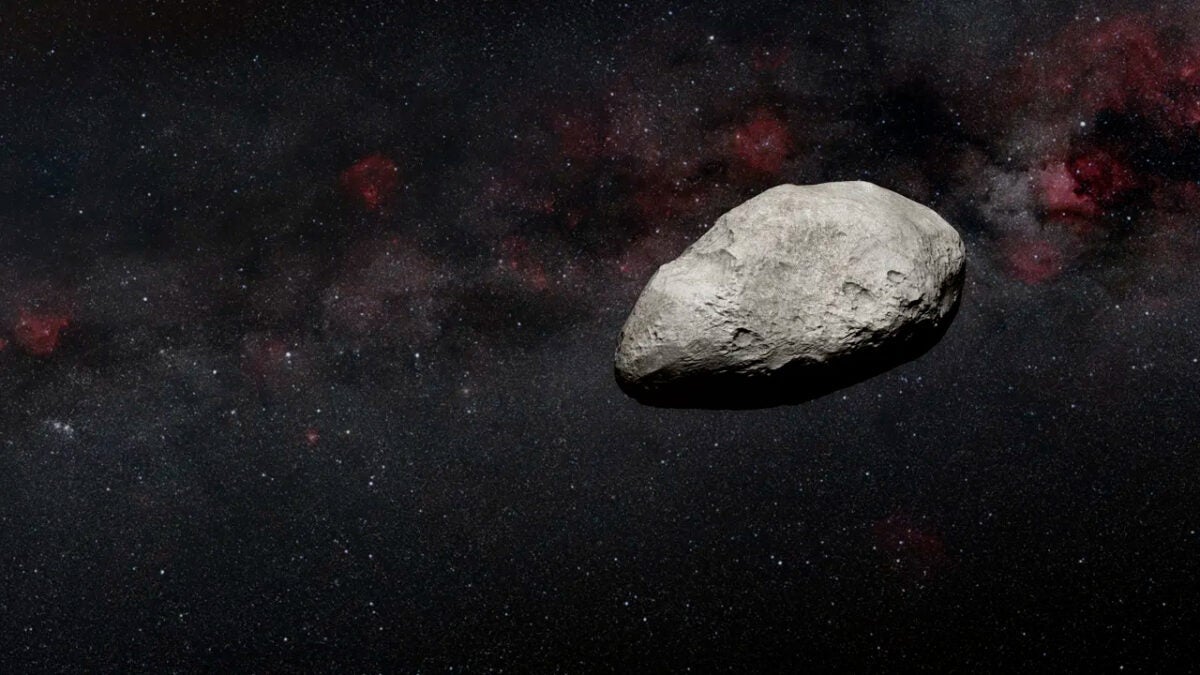
A new asteroid, designated as 2024 YR4, has been detected and has an approximate 1% chance of impacting Earth on December 22, 2032. It seems that investing in the asteroid defense technology we have tested over the years has been worthwhile. Although this information is concerning, experts have pointed out that it is a manageable risk and there is no need to panic. The European Space Agency (ESA) and NASA have placed 2024 YR4 at the top of their risk lists, being the only major known asteroid with a higher impact probability […]
Although this data is concerning, experts have pointed out that it is a manageable risk and there is no need to panic.
The European Space Agency (ESA) and NASA have placed 2024 YR4 at the top of their risk lists, being the only major known asteroid with an impact probability greater than 1%.
While still an extremely low possibility, asteroid 2024 YR4's impact probability with Earth has increased from about 1% to a 2.3% chance on Dec. 22, 2032. As we observe the asteroid more, the impact probability will become better known. More: https://t.co/VWiASTMBDipic.twitter.com/Z1mpb4UPaC
This object, which measures between 30 and 90 meters wide (a size comparable to the Statue of Liberty), is located in the yellow zone of the Torino Impact Hazard Scale, rated at 3.
According to available information, an asteroid of similar size impacts the Earth on average every few thousand years, causing severe regional damage, although it would not be a “planet killer.”
At the moment, mansion-sized Asteroid 2024-YR4 has a one-in-fifty chance of hitting Earth in the next eight years.
The ESA has indicated that the probability of 2024 YR4 impacting Earth could be approximately 1.2% in its next assessment.
Space agencies are collaborating to track and better understand the trajectory and size of the asteroid. Observations are being made, including the use of Chile’s Extremely Large Telescope, although it is possible that 2024 YR4 will move out of the field of view before any possibility of impact can be ruled out.
If the 2024 YR4 becomes a serious threat, NASA and other agencies are exploring defense options. Over time, new information is likely to emerge that will help reduce its risk level. If not, don’t worry everyone, we have the DART project.
After creating NASA in 1958, the American administration in charge of space research took only 10 years to conquer the Moon, an achievement so great that we have not managed to do it again. But from the year 2000 to 2024, we have achieved other milestones. The emergence of private companies and the liberalization of space programs have allowed the space exploration business, which seemed to be at a standstill, to shift into a higher gear. Today we are going to select what we consider to be the 7 most important milestones in the aerospace industry that have happened in the […]
After creating NASA in 1958, the American administration in charge of space research took only 10 years to conquer the Moon, an achievement so great that we have not achieved it again. But from the year 2000 to 2024, we have achieved other milestones.
Subscribe to the Softonic newsletter and get the latest in tech, gaming, entertainment and deals right in your inbox.
The emergence of private companies and the liberalization of space programs have accelerated the business of space exploration, which seemed to be at a standstill.
Today we are going to select what we consider the 7 most important milestones in the aerospace industry that have occurred in the last 24 years. If you feel that an important moment is missing, don’t take it personally: To select 7 moments, many more had to be left out of the list.
Artemis I
Everyone has forgotten that the program to conquer the Moon again began with Artemis I, a mission in which an uncrewed Orion spacecraft flew around the Moon at the end of 2022.
NASA has invested more money in the Artemis Program than in any other space mission in the last 24 years. With the Artemis I mission, NASA will mark a milestone in the program that will finally return humans to deep space after more than half a century—even if we are delayed.
The Dragon capsule crew
The retirement of the space shuttle in 2011 marked a painful moment for NASA. The space agency had to spend several years convincing Americans that the space program was not shutting down. NASA leaders also had to go to the Russian space corporation to ask them to take their astronauts to the International Space Station.
Then in 2020, SpaceX and its Dragon spacecraft arrived. The return of the United States to manned space flights was a significant technical achievement for SpaceX, which became the first private company to put humans into orbit, and allowed NASA to send more astronauts to the space station and make the most of the research capabilities of that facility.
Detection of gravitational waves
Although he theorized about their existence a century ago, physicist Albert Einstein was not sure that humans would be able to detect the faint echoes of gravitational waves traveling through the vastness of space.
However, experimental physicists struggled to achieve it for decades. Then, in February 2016, two LIGO observatories announced that they had detected gravitational waves from two merging black holes. This marked a triumphant moment for experimental physics and confirmed a key principle of Einstein’s general relativity.
The rise of space tourism
It wasn’t until the summer of 2021 that space tourism “took off.” First with the spacecraft VSS Unity from Virgin Galactic and then with Blue Origin’s New Shepard vehicle that took private citizens to suborbital space.
Shortly after, in September 2021, businessman Jared Isaacman commanded the first private orbital mission, Inspiration4, aboard the Crew Dragon. In December of that same year, the daughter of the first American, Laura Shepard-Churchley, followed in her father’s footsteps by flying on a similar trajectory aboard a spacecraft that bore her name. Private space travel is not yet commonplace, but the door has been opened.
China fully enters the space race
One of the main stories of this century is the rise of the Chinese space program and its efforts to challenge the preeminence of the United States. This has been most evident in the country’s efforts to study and land on the Moon with its Chang’e project. In 2007, China flew its first orbiter to the Moon, and in 2013, the Chang’e 3 spacecraft successfully landed on the Moon and deployed the small Yutu rover.
These initial successes laid the groundwork for even more ambitious missions. In 2019, the Chang’e 4 mission landed on the far side of the Moon, the first time anyone had achieved this. Subsequently, the country’s space program embarked on robotic sample return missions, including the Chang’e 6 mission at the Moon’s South Pole this year. China aims to send humans to the Moon by 2030, competing with NASA and the United States.
The SpaceX rockets that are captured
On October 13 of this year, SpaceX launched its massive Starship rocket for the fifth time, but the profile of this flight was different, as the company intended to recover the first stage of the rocket, the so-called Super Heavy.
Surprisingly, the rocket returned to the launch site, stopped next to the launch tower, and was caught in the air by a pair of hooks to be placed back on the launch stand.
This technical achievement demonstrates several important things, including the verification of the radical approach to catching a rocket and also allows SpaceX to accelerate the development and testing of Starship.
The launch of SpaceX’s Falcon Heavy
This February 2018 mission is very important. The visual effects were irresistible. The rocket launch itself was impressive, with the combination of 27 Merlin rocket engines. Next, the twin rockets separated and returned to Earth, landing like a pair of synchronized swimmers. Finally, the stunning vision of a cherry red Tesla (and Starman) moving away from Earth towards Mars.
It was a spectacle that captured the public’s attention. But the new rocket was more than a spectacle. By designing, building, and launching the Falcon Heavy, SpaceX demonstrated that a private company could independently finance and fly the largest and most powerful rocket in the world.
This demonstrated that commercial heavy-lift rockets were possible. By competing with the Delta IV Heavy, the Falcon Heavy saved billions for the U.S. government. This means that it is likely the U.S. government will never again design and develop a rocket.
Researchers have observed mysterious dark ovals, each approximately the size of Earth, appearing in the polar regions of Jupiter in the ultraviolet spectrum. Yes, remember that Jupiter is much larger than our small planet. The gas giant, whose Great Red Spot has been baffling astronomers for centuries, possesses an extremely powerful magnetic field that, according to scientists, could be behind this strange phenomenon. As detailed in a new article published in the journal Nature Astronomy, a group of scientists supported by NASA concluded that disturbances high […]
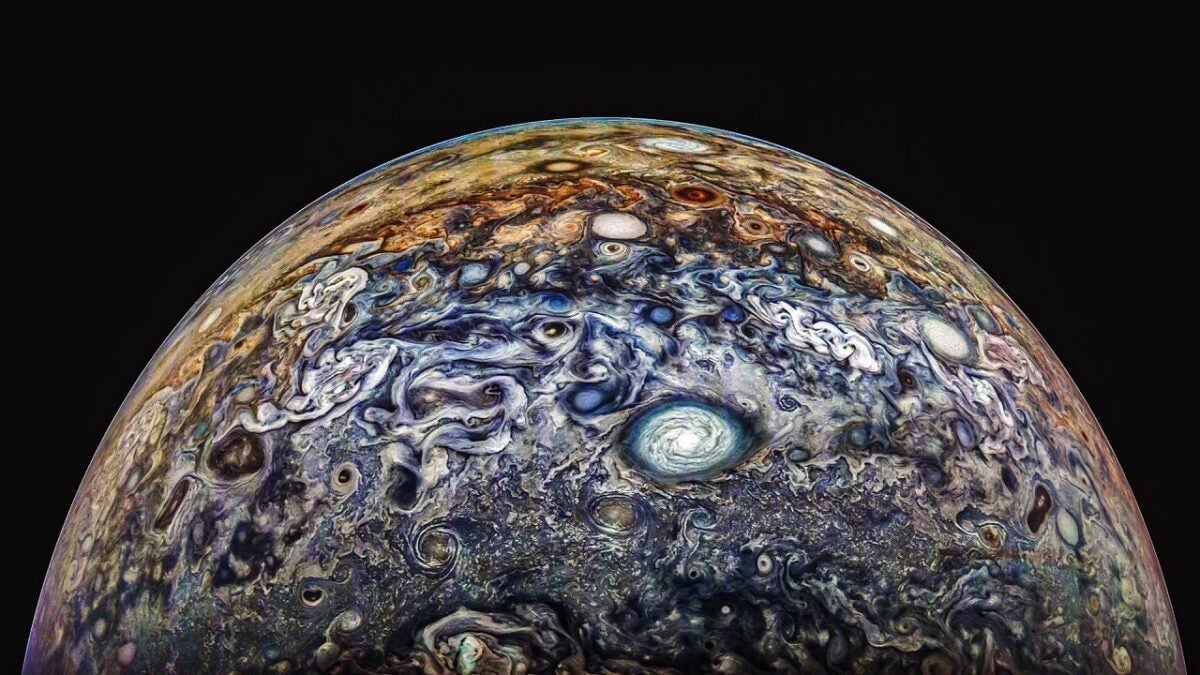
Researchers have observed mysterious dark ovals, each approximately the size of Earth, appearing in Jupiter’s polar regions in the ultraviolet spectrum. Yes, remember that Jupiter is much larger than our small planet.
Subscribe to the Softonic newsletter and get the latest in tech, gaming, entertainment and deals right in your inbox.
The gas giant, whose Great Red Spot has been baffling astronomers for centuries, has an extremely powerful magnetic field that, according to scientists, could be behind this strange phenomenon.
As detailed in a new article published in the journal Nature Astronomy, a group of scientists supported by NASA concluded that disturbances high in the planet’s atmosphere can cause the appearance of these dark spots in ultraviolet observations.
What's that black spot on Jupiter? No one is sure. During one pass of NASA's Juno over Jupiter, the robotic spacecraft imaged an usually dark cloud feature informally dubbed the Abyss. Surrounding cloud patterns show the Abyss to be at the center of a vortex. Since dark features… pic.twitter.com/Becef4TiSQ
In the depths of the planet’s atmosphere, very powerful forces are at work
Although the ovals were detected for the first time in Hubble observations in the late nineties, the team claims to have found the reason for their appearance: they suggest that magnetic tornadoes in the upper atmosphere could be stirring the stratospheric haze, causing the formation of these unusual features near Jupiter’s north and south poles.
These ovals appear dark in the UV observations made by NASA’s Hubble Space Telescope, as part of the Outer Planet Atmospheres Legacy (OPAL) project, because they absorb more ultraviolet light than their surroundings.
It is possible that the phenomenon is not limited to the upper part of the gas giant’s atmosphere. According to the researchers, the existence of the ovals suggests that very powerful forces are at work deep within the planet’s atmosphere.
1/2 So great achievement!
Using 26 global maps of Jupiter, obtained by Hubble between 1994 and 2022, UC Berkeley astronomers have detected transient ultraviolet dark ovals at the planet's north and south poles.
“In the first two months, we realized that these OPAL images were like a gold mine, in a sense, and very quickly I was able to build this analysis pipeline and send all the images through to see what we get,” said UC Berkeley undergraduate student and co-author Troy Tsubota in a statement.
Tsubota and his collaborators suggest that the deepest point of these vortices within the planet’s ionosphere may be stirring Jupiter’s hazy atmosphere and sending it upwards in a manner similar to a tornado, causing these ovals to form for about a month before dissipating.
The team hopes to shed more light on how atmospheric dynamics differ between Earth and Jupiter. The gas giant has always been a mystery to us, but we are gradually getting to know it better as our measuring instruments improve.