
The Eurovision Song Contest has been for decades a musical battlefield where European countries competed to bring the best song. Such has been its popularity that it has managed to transcend borders and incorporate countries such as Turkey, Australia and Israel.

And seeing countries so far away from Europe perform is not something that goes unnoticed. Don’t you have to be European to participate in Eurovision? What’s all this about “Euro” then?

The key is in the UER

Before we start, we have to contextualize a bit and go back to the origins of Eurovision, back in the 50’s. At that time, only 7 countries participated in the first edition. Over the years, the number of nations has increased considerably until reaching 43, its historical maximum (reached in 2008 and 2011). With so many countries participating, it was necessary to introduce the semifinals, which have been active since 2000.
If we take a look at this long list of countries, we will see that there are many that do not belong to Europe. To understand this, we must delve into the technical intricacies of the event.
It all starts from the foundations of the European Broadcasting Union (UER), the organization responsible for coordinating Eurovision. The EBU encompasses a host of public broadcasters for the purpose of negotiating broadcasting rights, exchanging programs and much more. Although its name suggests that it is limited to Europe, the truth is that it extends much further afield.
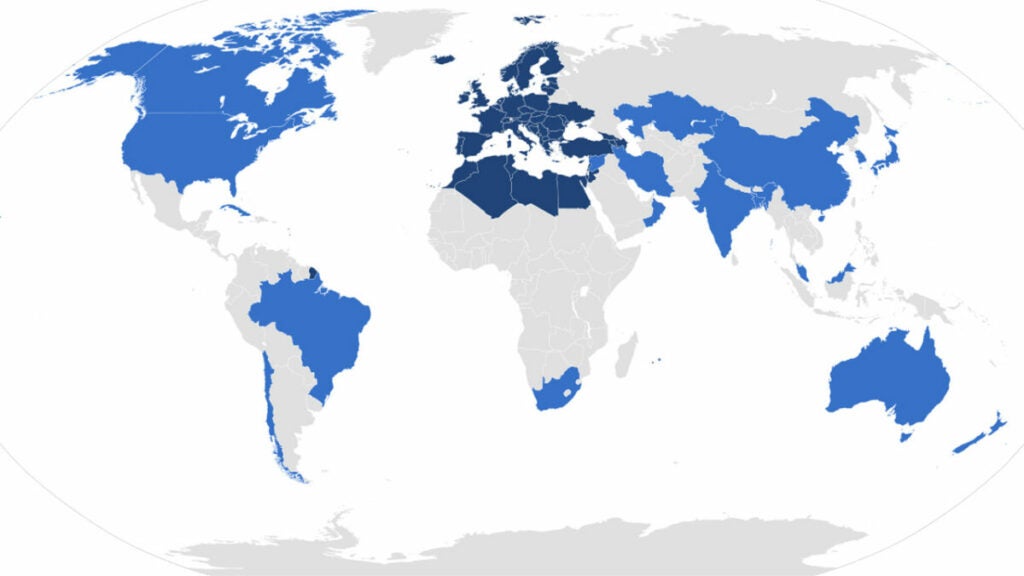
The UER is currently composed of 114 organizations and its members are located in Europe, the Mediterranean basin and Western Asia. What exactly does this have to do with Eurovision? Well, in short, any active member of the UER has the possibility to participate in Eurovision. This allows countries such as Israel to enter the contest. It also gives other states (such as Lebanon or Egypt) the opportunity to join, should they wish to do so.
This is what makes it possible for us to see countries like Israel participate in Eurovision. Moreover, its history dates back to 1973, which is when it debuted in the contest with the song Ey Sham by IIanit. Israel got a fourth place in that edition and since then, it has participated in Eurovision 40 times.

However, everything changes when it comes to UER associate members. Australia, for example, is one of them. Associate members are not entitled to participate in the festival. However, due to the popularity of Eurovision in Australia, the EBU issued a special invitation to the country in 2015 so that it could participate.
Some of the links added in the article are part of affiliate campaigns and may represent benefits for Softonic.
