Spotify has reported its first annual net profit, a milestone indicating a significant change in its financial situation. After more than a decade, the future is starting to look hopeful for Spotify. The company currently has 675 million active subscribers, of which 260 million are on the premium plan. This growth has been partly driven by successful marketing strategies, such as the popular Spotify Wrapped campaign, which attracted 35 million new active users. The future of Spotify concerns artists due to payments and AI. CEO Daniel Ek announced plans […]
Spotify has reported its first annual net profit, a milestone indicating a significant change in its financial situation. After more than a decade, the future is starting to look hopeful for Spotify.
The future of Spotify worries artists due to payments and AI
CEO Daniel Ek announced plans to “increase the music offering” in 2025, which will likely include the introduction of a Hi-Fi tier that will offer high-quality audio, as well as new features for users. This new approach could include a more expensive subscription to access this content of interest, complemented with additional benefits for music enthusiasts.
However, this streak of successes has not been without controversy. In 2024, Spotify laid off 20% of its staff and implemented cost-cutting measures that have negatively impacted artists.
One of the most controversial decisions was to stop monetizing artists with less than 1,000 streams per month, which has sparked criticism as it is considered an additional burden for those more vulnerable participants on the platform.
The recent monetization policies have led to less financial support for non-popular artists, even though Spotify continues to report profits. Additionally, the incorporation of an AI summary in Spotify Wrapped and the exploration of AI-generated music could further shift compensation away from creators in favor of content that does not require payments.
As Spotify continues its financial journey towards greater profitability, questions arise about how these measures will affect the user experience and the sustainability of artists on the platform.
How many times have you listened to an album and thought that some of its songs sounded a bit strange? It could be a whisper, a strange phrase, a murmur, or even something subliminal: there are dozens of songs that hide all kinds of mysterious messages that only the most skilled and sharp-eared can recognize… But some of the stories woven with them are absolutely incredible and worthy of a movie. Are you ready to discover these 6 hits that hide much more than it seems? Mejores días (Angelo) “I talk about those I love, about how much […]
How many times have you listened to an album and thought that some of its songs sounded a bit strange? It could be a whisper, a strange phrase, a murmur, or even something subliminal: there are dozens of songs that hide all kinds of mysterious messages that only the most astute and sharp-eared can recognize… But some of the stories woven with them are absolutely incredible and worthy of a movie. Are you ready to discover these 6 hits that hide much more than it seems?
“I speak of those I love, of how much I miss them, I speak of the pride and the strength that beats within my heart”. This was the chorus of this 2010 song that Colombians will instantly recognize: it was sung by Angelo, one of the finalists of Factor X in the country, and the actress and singer Natalia Gutiérrez. But Mejores Días was not planned to be a hit, but to send a message to those kidnapped by the FARC for years.
At first, they thought of doing it with a joke, where the beeps to hide the insults would conceal a Morse code, but they thought it would be too obvious, and preferred to send it with the rhythm of an emotional song, to give more clues to the hostages. It was a message of hope that they heard through the radio and was hidden in three different places in the song: “19 people rescued. You are next. Do not lose hope”. When they say that music lifts the spirit, no one imagined to what extent it was true.
YYZ (Rush)
Another Morse code example. In this case, the band Rush, in 1987, decided to be very specific in the title of their song YYZ in its introduction… through bells that ring in a most interesting pattern. Basically, because what they “say” continuously is YYZ. And what is YYZ really? The code for Toronto International Airport, which is also the place where the band was founded. That’s what you call a full-fledged tribute.
10,000 Days (Tool)
There are many groups that, especially in the 80s, added an extra track after the last one, but Tool gave the ultimate hidden song in 2006 with the release of the album 10,000 Days. In addition to achieving three hits on the sales charts, they sold more than half a million copies in just the first week. But even the most seasoned listeners didn’t notice the group’s extra song, over ten minutes long, which occurred… when you overlaid three different tracks.
Specifically, if you combine the songs 10,000 Days, Viginti Tres, and Wings for Marie, you will have a new song with different lyrics. An unreleased track within three already existing tracks. It may not be the best or the most remembered, but it is certainly a very clever way to innovate in music. Oh! On the same album, we also have a song that, if you listen to it backward, has a hidden message, although it’s nothing satanic: “Work hard, stay in school, listen to your mother, your father was right.” Wholesome rock.
Detour through your mind (B-52)
Although among the songs that hide messages when played backwards, perhaps the most curious is the one by B-52, which in the album Bouncing off the Satellites, from 1986, specifically in the track Detour Thru Your Mind, included the phrase “I buried my parakeet in the backyard. Oh, no, you’re playing the record backwards. Be careful, you might destroy your needle“. Imagine hearing this without having the slightest idea of what was going to happen. A 10 out of 10 for the ultimate trolling.
Revolution 9 (The Beatles)
The Beatles have acknowledged placing some messages that could be heard if you played the songs backwards. For example, in Free as a bird, we can hear the phrase “Turned out nice again”, with the idea of having a bit of fun with all those who claimed to hear hidden messages in their records. But it is undeniable that in Revolution 9, an experimental piece from the White Album (parodied years later in The Simpsons with a pseudo-Yoko Ono saying “Number eight, number eight”), something very mysterious is heard.
Specifically, the phrase “Turn me on, dead man.” The record is from 1968, and the conspiracy theory suggests that Paul McCartney died in 1966 and has since been replaced by someone very similar to him. The “Paul is dead” theory has continued to this day, with apparent clues that the Beatles left throughout their later albums… and it’s a rabbit hole I recommend exploring if you want to spend the next few hours tangled in impossible conspiracy theories. I also tell you that you need a bit of imagination to hear “Turn me on, dead man.”
Reise, Reise (Rammstein)
We end with another song that hides a secret that very few have heard. And it happens… Before the song! Rammstein decided to put an introduction on the CD before track 1, known as “song 0”. If you wanted to listen to it, you had no choice but to rewind the music backwards to find it, since by default players started at track 1. If you’re curious, what you hear is a Japanese plane about to have an accident. What we’ve missed because of Spotify!
Glenn McDonald, former Spotify engineer and key figure in the creation of its famous Wrapped for over a decade, has quickly joined the chorus of criticism towards the 2024 edition of the famous annual music summary. Fired from the company in 2023 during a 25% staff reduction, McDonald told Business Insider that this year’s Wrapped lacked context and humanity: “It didn’t connect my listening with communities or the world, it just treated each listener as if they were alone.” Users were not far behind in expressing their disappointment. “Spotify Wrapped failed this year […]
Glenn McDonald, former engineer at Spotify and a key figure in the creation of its famous Wrapped for over a decade, has quickly joined the chorus of criticism towards the 2024 edition of the famous annual music summary. Laid off from the company in 2023 during a 25% staff reduction, McDonald told Business Insider that this year the Wrapped lacked context and humanity: “It didn’t connect my listening with communities or the world, it simply treated each listener as if they were alone.”
Users did not hold back in expressing their disappointment. “Spotify Wrapped failed so spectacularly this year… Where are the musical cities, the playlists, the main genres, or the listening auras? All that time waiting for WHAT?” wrote a user on Twitter. Even Sydney Brown, a loyal follower of the platform, declared to The New York Times that this edition seemed “like a class assignment turned in late.” Although the company claimed that Wrapped 2024 has been their best year so far, the criticisms point to a lack of key elements that made previous editions popular.
McDonald attributed part of the issue to a shift in focus towards artificial intelligence tools. This year, Wrapped offered an AI-generated podcast that described users’ musical habits, leaving behind the cultural comparisons and musical genre narratives that used to be the soul of this experience. “Spotify always treated Wrapped as a marketing exercise, but sometimes you have to make an effort to infuse humanity into something like this,” noted McDonald, who now works at an AI startup.
From their perspective, the mass layoffs also affected the creativity of the remaining team. “I’m not surprised that someone might think: ‘Maybe I won’t stick my neck out this year,'” they added. For its part, Spotify has defended the use of AI and highlighted a 26% increase in first-day interactions compared to 2023, although it acknowledged that the features of Wrapped change every year.
Now, the debate is on: can Spotify recover the community and cultural essence of Wrapped without abandoning its commitment to technology? In any case, the company would do well to take note for future years, at the risk of devaluing one of its most popular features.
Yesterday we talked about how Apple had released the summary of its music streaming app called Apple Music. Today, this very morning, Amazon has done the same with its Amazon Music. The reality is that we were all waiting for the dominant music app to release its summary: Spotify Wrapped 2024 is already with us… … Continue reading “”
Yesterday we talked about how Apple had launched the summary of its music streaming app called Apple Music. Today, this very morning, Amazon has done the same with its Amazon Music. The reality is that we were all waiting for the dominant music app to release its summary: Spotify Wrapped 2024 is already with us… you just have to open Twitter or Instagram to check it out.
It’s clear that Spotify Wrapped 2024 is one of the most anticipated moments of the year. For some reason, people love to show off their musical tastes, all the minutes of music they’ve listened to, and their top five most played songs. Some would say it’s a status issue among certain content creators and influencers.
The Swedish company creates a summary of everything you’ve heard that year in various statistical formats, wrapped in bright, beautiful graphics so that sharing it via social media looks very professional.
Spotify Wrapped 2024 powered by AI, as it couldn’t be otherwise
In 2024, the summary shows you which music categories you followed, how your listening habits changed over the year, you’ll get a list of your top 10 songs and artists, find out who your top artist of the year was, and even see a short video interview with one of the featured artists.
This year’s Wrapped also allows you to access independent segments, like a personalized podcast with two AI “hosts” (courtesy of NotebookLM by Google) who chat about your listening habits.
It’s easy to find Spotify Wrapped on your mobile app. By the way, while Wrapped 2023 was also available on Spotify’s website, this year you can only find it on the Android or iOS app.
The easiest way is to open the app and look in the top menu: you will find a button called “Wrapped” that will take you directly to the Wrapped homepage. From there, you can view your Wrapped timeline (by pressing the Let’s Go button) or choose a specific segment to view (such as the AI podcast).
Don’t hesitate to share your year summary on social media, as surely all your friends and followers are eager to know that you’ve listened to Dua Lipa 1,000 times this summer.
For years, the world of music was something very simple: you took a song, covered it your way with your friends, released an album, and, with luck, managed to become a social phenomenon. Nowadays, however, things have changed, trends are not the same, and you don’t even need people to play with you or, in fact, for them to be real at all. The phenomenon of virtual bands seems to be on the rise, but it has actually been with us since the late 50s. Pay attention to the path we’ve taken since then, because it’s spectacular. […]
For years, the world of music was something very simple: you took a song, covered it your way with your friends, released an album and, with luck, managed to become a social phenomenon. Nowadays, however, things have changed; trends are not the same, and you don’t even need to have people playing with you or, in fact, for them to be real at all. The phenomenon of virtual bands seems to be on the rise, but it has actually been with us since the late 50s. Pay attention to the path we’ve taken since then, because it’s spectacular.
It all started in 1958, when singer David Seville modified his own voice in the song Witch Doctor to make it sound “chipmunk-like” with very high pitches and a faster speed than usual. It was a huge success, and thus, the trio that first accompanied him on stage and later flew on its own: Alvin and the Chipmunks. Although you may only know them from the film adaptations, the truth is that from the end of that decade until now, they have released more than fifty albums, each time of much more questionable quality.
Alvin and the Chipmunks ended up being a television series, had several video games, comics, and even went on four tours across the United States from 1984 to 2015. And, indeed, they have more Grammys than many artists. Seeing the situation, there were quite a few who jumped on the bandwagon to make “chipmunk” songs, trying to pursue a market where there weren’t that many people.
An example was the Nutty Squirrels, who also had a television series (even before Alvin and the Chipmunks) and released their last album in 1964. The album included a cover of, among other things, A Hard Day’s Night by The Beatles. Quite something. The world of singing mascots was put on hold for a moment until someone thought, “Hey, what if instead of squirrels, there are many more animals?”
From comic to reality
Said and done. In 1968, the Banana Splits were born in a Hanna-Barbera television series with their name: they were four animals dressed in hilarious costumes. And no, they weren’t just cartoons: they were also people dressed in plush suits playing songs. They even released several albums, although they were never famous enough to go on tour. However, very recently they had a reboot as a horror movie. Hey, you never know where success lies.
It was during this time that virtual bands finally had their moment of glory, emerging from the least musical medium possible: comics. The Archies (formed in the animated series that adapted the Archie comics) tried to adapt the success of The Monkees to animation, and they succeeded. In fact, their influence is so significant that even in 2023 there was an Indian movie for Netflix based on them. Alongside them, another group based on a comic from the same publisher: Josie and the Pussycats.
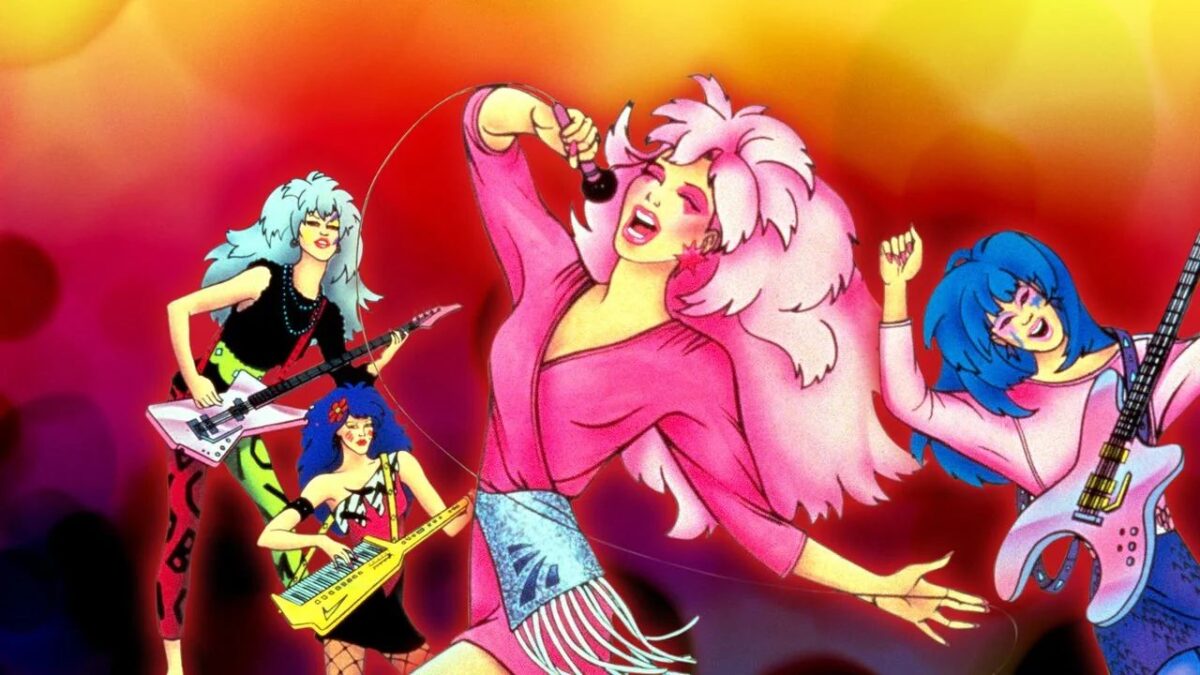
This is a curious case, because from the nonexistent band that played in the cartoon series, a real band was formed that released several albums, had a movie in 2001, and went on several tours. From a virtual band, a real band was born, something that Marvel tried to replicate with Jubilee (unsuccessfully). As fake music bands were becoming a profitable business, dozens of cheap TV series with this idea started to emerge, from Jabberjaw (whose protagonist was a shark) to the Cattanooga Cats (four cats playing guitar, bass, drums, and vocals) or Jem and the Holograms, among many others. And of course, the market became oversaturated.
They have become aggressive
When the industry calmed down, in 1998 perhaps the epitome of virtual bands was born: Gorillaz, a group whose real face was unknown. Its members were animated characters, their music videos pure fantasies that mixed anime with the late 90s aesthetic, their lore was more than well-formed… and they even ended up touring where the real band played completely in the dark behind a giant screen showing the videos that had made them famous. At least until 2005, when they came out as a real band… and the “Gorillaz-mania” subsided a bit. To this day, they still continue to perform concerts, release albums, and were even about to shoot a movie with Netflix (which ended up being canceled). Quite something.
With modernity and the Internet, this phenomenon has increased. There are idols that don’t exist and fill stadiums (like Hatsune Miku, for instance), groups that exist in the reality of games like League of Legends, or even singers that only sound thanks to artificial intelligence. And it’s going further. We have left behind the singing chipmunks and anime music videos to focus on cybernetic figures that seem taken from a cyberpunk fantasy in which, ultimately, we move. Will the day come when no one needs to pick up a guitar and the work on tours is just pressing “play” on a video? Hopefully, we won’t see it. With even more luck, we’ll return to the era of people dressed as animals playing the guitar.
Spotify has announced that it will restrict developers’ access to certain features of its web API, such as song and artist recommendations. The new measure, communicated on its official developer blog, aims to address a series of security issues and curb the misuse of its platform, according to the company. Although not explicitly mentioned, this restriction seems to be focused on preventing user data from being used to create artificial intelligence applications. “As part of our ongoing work to address the security challenges that many companies face today, […]
Spotify has announced that it will restrict developers’ access to certain features of its web API, such as song and artist recommendations. The new measure, announced on its official developer blog, aims to address a series of security issues and curb the misuse of its platform, according to the company. Although not explicitly mentioned, this restriction seems to be focused on preventing user data from being used to create artificial intelligence applications.
“As part of our ongoing work to address the security challenges that many companies face today, we are making changes to our public APIs,” a Spotify spokesperson explained to TechCrunch. Among the revoked features are tools that allowed analyzing users’ listening habits, such as song and artist recommendations or audio analysis data that describe characteristics like “danceability” or its “energy.”
The developer community has not hesitated to react to this measure. In the Spotify forums, some expressed their discontent at losing access to these tools, which they used for various purposes, not necessarily related to AI. “With transformer models, there is probably a risk that models will be trained to emulate Spotify’s,” said one user. “I hope that is not the reason, but if it is, I am disappointed.” Another pointed out that this decision is not about security, but about the “data used to train AI models.”
Spotify has been working on its own artificial intelligence models for years. Its CEO, Daniel Ek, has stated that AI will be “huge for creativity” in music. In this context, the company has launched products such as an AI-powered DJ and customized playlists with this technology.
The changes will only affect developers with limited access to the API, while official partners and those with approved extensions will continue to access the restricted features.
Almost since the beginning of time, music and comics have had a very particular union. Ben Grimm dressed like The Beatles in a Fantastic Four comic, Kiss had their own comic (made with their own blood), and even mangas like Beck, Nana, or 20th Century Boys had rock and roll as a vital part of their structure. But what happens when it’s the other way around? When music turns its head to the pages to create true anthems? We present to you 10 songs based on comics that will have you floating between chords and panels. […]
Almost since the beginning of time, music and comics have had a very particular union. Ben Grimm dressed like The Beatles in a Fantastic Four comic, Kiss had their own comic (made with their own blood), and even mangas like Beck, Nana, or 20th Century Boys had rock and roll as a vital part of their structure. But what happens when it’s the other way around? When music turns its head to the pages to create true anthems? We present to you 10 songs based on comics that will have you floating between chords and panels.
Subscribe to the Softonic newsletter and get the latest in tech, gaming, entertainment and deals right in your inbox.
We start with a classic: the version of the 70s animated series filtered through The Ramones and whose theme song has appeared, in one way or another, in all the Spider-Man movies to date. The truth is that it was part of a tribute album called Saturday Morning: Cartoons Greatest Hits, where bands of all kinds covered the songs of Scooby Doo, Gigantor, or Speed Racer. But, without a doubt, the one that has gone down in history the most is this little pop culture masterpiece that has survived unblemished to this day.
Side Kick (Rancid)
Rancid decided to dedicate a song not to Batman, but to Tim Drake, the third Robin, who in 1994 was a very minor character. This is expressed in the lyrics (“I had a dream I was a vigilante sidekick, my name is Tim I’m a lesser known character”) before taking a turn and talking about Wolverine at one point. The song is pure nihilistic punk and, as such, couldn’t care less about having internal cohesion. The result is a marvel that perfectly frames the underground music of the time.
Nobody loves the Hulk (The Traits)
In 1969, Marvel was beginning to taste the sweetness of pop culture and decided that, of course, besides comics, it had to dip its toes into novels, television, cinema… and music. This is where ‘Nobody Loves the Hulk’ was born, sung by The Traits, an unknown high school band that played in a garage, and which was heavily promoted by the publisher (it was only sold if you responded to an ad at the back of the comics). The song, in addition to reviewing the origin of Hulk, also manages to deliver an anti-racist statement (“We don’t allow no green skin people in here!”) and although the lyricist, Rosalind Rogoff, feels embarrassed by what she did, it remains campy and very fun. However, she didn’t become a millionaire: only a few hundred copies were sold. 55 years later, it is a myth covered by dozens of people. That’s life for you.
Ghost Rider (Suicide)
The 70s marked a time of change for Marvel, where they began experimenting with new characters like Ghost Rider, a demonic motorcyclist with a flaming head (and bike) who, of course, caught the attention of a punk group like Suicide, who included a tribute on their first album, which would later be covered by hundreds of other bands. The lyrics, however, are nothing extraordinary: “Ghost Rider motorcycle hero, hey baby, baby, baby he’s a-lookin’ so cute. Sneak around-round-round in a blue jump suit, Ghost Rider motorcycle hero”. You can’t say more with less.
Flash (Queen)
Flash Gordon was born in 1934 and over the years, has influenced thousands of comics, movies, and television series. But also Queen, perhaps the most famous music group of all time – with the Beatles’ permission – who made a song for the 1980 film adaptation. Flash (inevitably, in your head, you’re singing “Uoooooh”) never reached number one on the sales charts, but inevitably, everyone can continue the lyrics without much trouble almost 45 years later. It’s not a small recognition.
The Dark Saga (Iced Earth)
In this case, it’s not just a song, but an entire album: Iced Earth dedicated ten songs to Spawn, the comic by Todd McFarlane, who, in gratitude, drew the cover. And to think that he originally rejected them when they offered to write songs for the movie based on the character. Who would have thought that ‘The Dark Saga’ would become a power metal legend? Although at the time their more melodic change was criticized, today songs like ‘I Died for You’ or the title track ‘Dark Saga’ remain essential for the band.
Slept on Tony (Ghostface Killa)
One of the members of Wu Tang Clan, the legendary rapper Ghostface Killa, did not want to miss the opportunity, in 2008, to make his own version of Iron Man taking advantage of the release in theaters of Marvel. In this song, he reviews the entire trajectory of Iron Man very faithfully to the comics (“I created an iron suit, to protect my people, escaped, bound to be Ironman the great. The billionaire Tony Starks’ll renew your fate!”) and gave a lesson on how to be an old-school fan. Wonderful.
Silver Surfer (Los Punsetes)
Let’s go for a second to Spain, because here, beyond songs based on local comics like Rompetechos or Mortadelo y Filemón, we have also looked at American comics with themes like Silver Surfer, by Los Punsetes, from their album Aniquilación, where, with some irony, they see the world from above with a “I have no destiny, space is my path. I have no skill, but laziness doesn’t defeat me”. As a curiosity, the band Veintiuno also referenced Stan Lee’s character in a great song where Diego sings “I know he flies. No one ever believed it, but he rises, leaves a mark like Silver Surfer…” Let it not be said otherwise.
Magneto and Titanium Man (Wings)
Paul McCartney has never hidden that he was a fan of comics in general, and in Magneto and Titanium Man he presents a story among three of Marvel’s greatest villains: Magneto, Titanium Man, and Crimson Dynamo, which is so fantastic that years later Stan Lee himself had to admit that he loved it. Some have wanted to see allegories of the Beatles’ breakup in the lyrics, but in reality, it seems more like a song created with psychotropic substances, I’m not going to lie to you.
Legendary Iron Hood (Mike Eagle)
And we end with a song dedicated to one of the best villains in comic book history: Juggernaut. Or as Mike Eagle calls him to avoid copyright issues, Iron Hood. He also takes the opportunity to explore the character’s mental health, who is actually Charles Xavier’s stepbrother, and, frankly, you end up having genuine compassion for him. Some people want to see in its lyrics an allegory of those who have to grow up in marginalized communities, and it might be. Because in the end, comics are that: allegories of a present and a reality that many confuse with mere punches in the air.
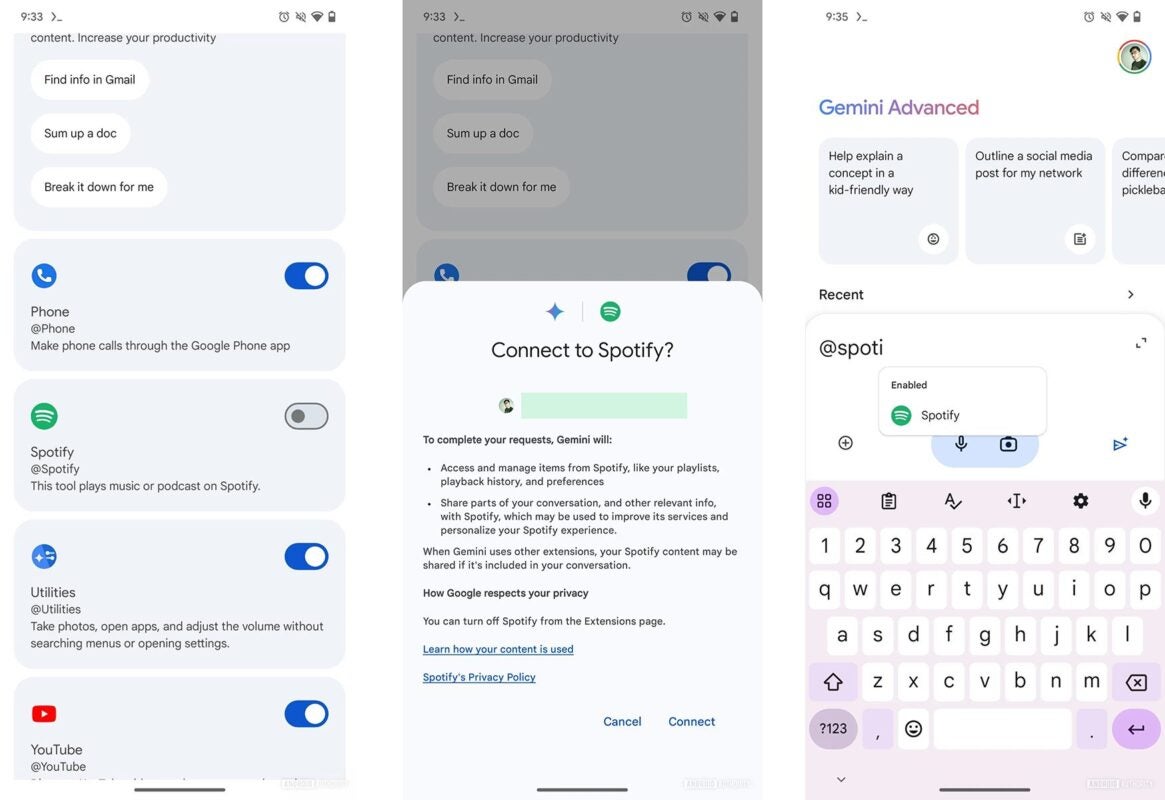
Google is developing a new Gemini extension for Spotify, similar to the one already available for YouTube Music. This extension will allow users to play both podcasts and music directly from Spotify.
According to an analysis of the latest version of the Google app (version 15.30.27.29) carried out by Android Authority, when asking Gemini to play music from Spotify, a YouTube Music information card is initially displayed, but the playback is done through the Spotify app.
In addition, the assistant will be able to play Spotify music in the background without the need to open the application, according to the analyzed data. The extension is still under development and does not have a confirmed release date for the public.
Spotify is on everyone’s lips these days. A few days ago, the platform once again started offering song lyrics to free users, after being criticized for making them an exclusive feature for Premium users; a quite unpopular measure taken to encourage subscriptions, but that has (fortunately) already been reversed.
In addition, a few days ago, Spotify CEO, Daniel Ek, announced the new ‘Deluxe’ plan, which will include enhanced features and higher audio quality than the Premium plan. This new plan, which will cost around 17 to 18 dollars in the United States, aims to offer a superior experience to users.
In the world of music streaming, Spotify has long been a benchmark, leading with a vast library and interesting features. However, their latest announcement at the recent shareholders meeting has left many with mixed feelings. The good news is that, according to Spotify CEO Daniel Ek, the company is still working on its highly anticipated Hi-Fi support, a project first announced in early 2021, which is still in its “early days”. The bad news? The price of Spotify could skyrocket.
High-quality audio yes, but at an even higher price
According to EK, Spotify will launch an ultra-premium level. This “deluxe” version aims to be an enhanced version of the current service “with more control and higher quality in all aspects”, although at a considerably higher cost. The expected price would be around $18 per month, approximately $5 more than the current premium fee.
This move may seem like a natural evolution in the service offering, but it raises an inevitable question: what about the price increase? The direct competitor, Apple Music, has been offering lossless audio and spatial audio with Dolby Atmos since June 2021, and it does so at no additional cost.
With Apple Music costing $10.99 per month, Spotify’s decision to charge extra for these enhancements could be a significant point of friction for its subscribers. While YouTube Music costs $11.99 per month, the premium plan of Disney+ costs $11.99 per month, and Amazon Prime, which gives us access to Prime Video and Amazon Music, costs $14.99 per month, the price of Spotify Deluxe is considerably high.
For now, we will have to wait for an official announcement, but with an increasing offer in the music streaming market, raising the price for features that other services offer for free can be a risky decision. We will see how the news unfolds, but for now, we are in between bad and good news for Spotify.
Spotify has launched a new “Basic” subscription plan in the United States, which offers users access to millions of songs and podcasts without ads for a price of $10.99 per month. In addition to a one-dollar difference compared to the Individual Premium plan, which now costs $11.99 per month, the main difference in this new plan is that it excludes audiobooks.
“Enjoy the benefits of streaming music from your Premium plan without the monthly listening limit for audiobooks,” Spotify said in a blog post where they introduced their new Basic plan.
Spotify’s most expensive Premium plans include 15 hours of monthly audiobooks from a catalogue of more than 250,000 titles. The launch of the Basic plan comes shortly after a price increase in most of its existing subscriptions. The Individual plan increased from $10.99 to $11.99 per month, the Family plan increased from $16.99 to $19.99 per month, and the Premium Duo plan, which offers two ad-free accounts and 15 hours of monthly audiobooks, increased from $14.99 to $16.99 per month.
In addition, Spotify in the United States offers an exclusive audiobook plan for $9.99 per month, which likewise includes 15 hours of audiobook listening. Since March 1, with the introduction of the audiobook access level, Spotify was able to negotiate lower music-licensing fees for combined music and audiobook plans. This move was made possible thanks to an agreement reached in 2022 between the National Music Publishers’ Association (NMPA) and streaming services, which includes exceptions for packages like the new Spotify plans.
However, last week, the NMPA filed a complaint with the United States Federal Trade Commission (FTC) against Spotify, arguing that the music and audiobook bundles will reduce royalty payments to composers and artists by $150 million annually. According to Spotify, it’s true that the bundles allow for lower fees, but the company argues that overall creator revenues will continue to increase.