Artificial intelligence has also wanted to predict the outcome of Eurovision 2023.
The final of Eurovision 2023 is just around the corner. Several of the favorites to win, among them Sweden, Finland and Norway, have secured their place in the final that will take place on Saturday, May 13, in the city of Liverpool, United Kingdom. This year it will be the British who will host the event, replacing Ukraine, the winner of the previous edition.
As a member of the Big Five, Spain has already secured its place in the final from the start, as have Germany, Italy, the United Kingdom and France. Blanca Paloma will be representing us at the M&S Bank Arena, with Eaea. However, what do the odds and artificial intelligence say about Blanca Paloma’s chances?
According to estimates that can be consulted on sites such as Eurovision World, Blanca Paloma has a 4% chance of winning theEurovision 2023 microphone. This leaves her below Ukraine (6%), France (7%), Finland (22%) and the highly acclaimed Sweden (44%). Sweden’s representative, Loreen, would set a new record by becoming the first woman to win the festival twice (the first time was with Euphoria in the 2012 edition).
On the other hand, artificial intelligence has also wanted to predict the result of Eurovision. Specifically, Nielsen (the leading media conglomerate in data measurement and analysis), through its Gracenote tool, coincides with the bookmakers in predicting that Sweden will win the contest.
According to Gracenotes, a song must contain these two characteristics to go far in the contest: be passionate and energetic. Austria, Poland, Iceland, Malta, Israel, Moldova and Sweden are the countries that the artificial intelligence considers to have every chance of winning. Specifically, the tool shows itself to be a “big fan” of Tattoo, which it considers the song with the best chances of winning this edition of Eurovision.
Just don’t try to ask ChatGPT or Bing, as they won’t dare to give you an answer beyond “Hello. As a language model, I don’t have the ability to predict future events, such as the outcome of Eurovision 2023. My knowledge is based on information available up to September 2021, and I do not have access to real-time data. I suggest you consult reliable news sources or follow the event to get the most up-to-date information about Eurovision 2023 and find out who the winner will be.”
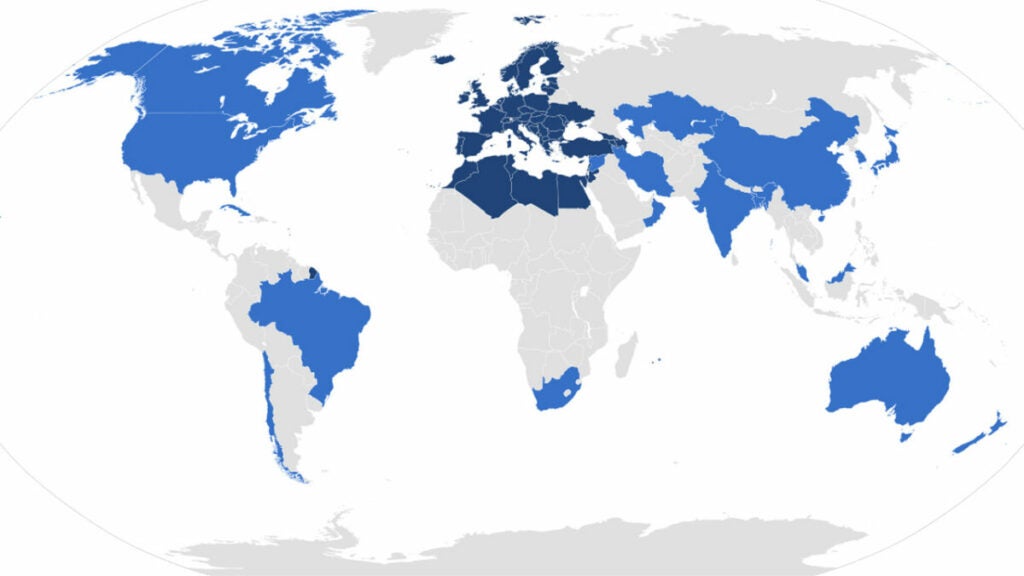
Seeing countries so far from Europe act is not something that goes unnoticed. Don’t you have to be European to participate in Eurovision?
The Eurovision Song Contest has been for decades a musical battlefield where European countries competed to bring the best song. Such has been its popularity that it has managed to transcend borders and incorporate countries such as Turkey, Australia and Israel.
And seeing countries so far away from Europe perform is not something that goes unnoticed. Don’t you have to be European to participate in Eurovision? What’s all this about “Euro” then?
Before we start, we have to contextualize a bit and go back to the origins of Eurovision, back in the 50’s. At that time, only 7 countries participated in the first edition. Over the years, the number of nations has increased considerably until reaching 43, its historical maximum (reached in 2008 and 2011). With so many countries participating, it was necessary to introduce the semifinals, which have been active since 2000.
If we take a look at this long list of countries, we will see that there are many that do not belong to Europe. To understand this, we must delve into the technical intricacies of the event.
It all starts from the foundations of the European Broadcasting Union (UER), the organization responsible for coordinating Eurovision. The EBU encompasses a host of public broadcasters for the purpose of negotiating broadcasting rights, exchanging programs and much more. Although its name suggests that it is limited to Europe, the truth is that it extends much further afield.
The UER is currently composed of 114 organizations and its members are located in Europe, the Mediterranean basin and Western Asia. What exactly does this have to do with Eurovision? Well, in short, any active member of the UER has the possibility to participate in Eurovision. This allows countries such as Israel to enter the contest. It also gives other states (such as Lebanon or Egypt) the opportunity to join, should they wish to do so.
This is what makes it possible for us to see countries like Israel participate in Eurovision. Moreover, its history dates back to 1973, which is when it debuted in the contest with the song Ey Sham by IIanit. Israel got a fourth place in that edition and since then, it has participated in Eurovision 40 times.
However, everything changes when it comes to UER associate members. Australia, for example, is one of them. Associate members are not entitled to participate in the festival. However, due to the popularity of Eurovision in Australia, the EBU issued a special invitation to the country in 2015 so that it could participate.
Eurovision is more enjoyable if you know what you’re talking about, right? We tell you seven things not to miss in a unique edition.
The Eurovision Song Contest is coming, that day when it doesn’t matter what happens outside your living room, the pizza, the friends scoring, the screaming and the disappointments. Whether you are one of those who believe that Blanca Paloma is going to be the first or those who have not heard a single song and just want to watch the gala to make memes on Twitter, this guide is for you. Because Eurovision is more enjoyable if you know what you’re talking about, right? We tell you seven things not to miss in a unique edition.
We all know that last year, even though Chanel came very close, Ukraine won, with the hope that this year they could host the song festival. For whatever reason, Kiev is still not a safe place, so the honor has been passed to the country that came second, that is, United Kingdom with ‘Space man’, by Sam Ryder.
It is true that in Spain we fought it (because nothing else, but for a good party we are even capable of winning this) and Valencia offered to be the place where the edition would be held if Chanel had been second, but finally it will be in the Liverpool Arena, which will have a scenography that, apparently, will launch a message of unity and solidarity through music. Let’s go, the same as every year. We have come here for something else, gentlemen of Liverpool.
Who will win
Let’s get straight to the point, in case you want to give the points and look like the most Eurovisionist of your friends. There are three countries at the top: first Finland, with ‘Cha Cha Cha’ by Käärijä, the singer who decided that he was not going to put a vowel without umlaut. The song is absolutely incredible, the staging cathartic, a marvel.
Then there is Sweden, which has once again bet on Loreen despite her bitter controversy with Eva Soriano, who after winning in 2017 has returned with ‘Tattoo’, a song in English that has lost a little in the staging but is still a great song. Close behind them are Slovenia and France, yes, but the top 3 of great possible winners is closed by Españita. Eaea.
Blanca Paloma
This year has happened a bit like last year at the Benidorm Fest: the most casual audience supported one song (‘Ay mamá’ in 2022, ‘Nochentera’ in 2023) and in the end won another very different one that, over time, has become a Eurovision standard. ‘Eaea’, by Blanca Paloma, mixes a scandalous performance with a song that is out of the ordinary on that European stage. And maybe that’s where it will make its way.
“Oh, come to me, my child, sleep by my side, in my chest there is shelter, little coat for your sorrows”. Okay, you may not be dancing to it this summer in Ibiza, but the staging added to the rise of Rosalía around the world may give us a more or less unexpected victory. Hey, hope is the last thing you lose, right?
How to vote
Honestly, if at this point we have to explain how to vote, it is possible that this guide to be an expert becomes the guide to not screw up in front of the fans. There are two parts, and they have managed to give emotion to both of them so that they are different and at the same time complementary. First, after listening to all the songs, you can call in to choose your favorite (from outside your country, of course).
After watching the repetition of all the songs seven times, it will be time to connect one by one with all the countries so that the jurors can give their votes by scoring from 1 to 12 points their favorite songs. And then, the votes given by telephone can give up to a maximum of 468 points to a single title (something that has never happened before), adding all those obtained by each country. The one who comes first will be the winner and the one who will have the task of organizing the gala in 2024.
Of course, in the semifinalsthe countries have passed only with the votes of the public, so you never know when this radical change will also be implemented in the ceremony itself.
Where to watch the gala
Surely at the moment of truth you are wondering on which channel you will be able to watch the gala: it will be on La 1 of TVE at 21:00, and it is not that their competition is going to be huge. Antena 3 will counterattack with the horrible ‘Jack Reacher: Never look back’ and Telecinco will make a special of ‘Got talent’ with their best performances. That is to say, no resistance.
In addition, Eurovision will be screened in cinemas, you can watch it in special trains, at events throughout the country, bars, nightclubs … And if you do not have a TV near you, it will also be on YouTube live and on the RTVE website. So, the excuse that you didn’t know when it was not valid: this is the Barça-Madrid of popular music.
How many songs will be played
If you are one of those who have to watch Eurovision by obligation and do not know how many songs you will have to endure until you can change the channel or put on ‘Zelda: Tears of the Kingdom’, the answer is 26. Five of the “Big Five” that we are nominated each year (Spain, Germany, Italy, United Kingdom and France), last year’s winner (Ukraine) and the twenty countries that pass in the heats of May 9 and 11. Better sit back and try to enjoy it, it’s going to be a long one.
Who will present
This year there is a little surprise in the presentation of the gala, because Graham Norton will be back on stage. He is a Eurovision classic for the British who has been commentating the gala since 2009 and is held in such high esteem that he even appeared in the parody that Netflix made with Will Ferrell (full, by the way, of great songs). Joining him will be Alesha Dixon, Hannah Waddingham and Julia Sanina.
That’s it, you know it all. Now you just need to choose the best snack, choose the scores wisely, win in the betting pool and, above all, sing, enjoy and endure the desire for another 365 days until Eurovision returns.
Find out who are the Eurovision 2023 artists with the most followers (they are not the ones you think).
Reaching the podium at Eurovision is something that many long for and in this year’s edition, the artists are working their butts off to achieve it. From having a stunning song to delivering a performance that takes everyone’s breath away. All elements play a key role for success.
However, the power of social media in the digital age has become crucial to gain public support. In the end, those who have been active longer tend to have more support, although this does not always have to be the case.
Who are the Eurovision 2023 singers with the most followers?
Within the world of Eurovision, not all participants enjoy the same reach. Although each one employs their own strategies to gain a foothold, there are those who manage to get along with the dreaded algorithm and succeed wherever they go.
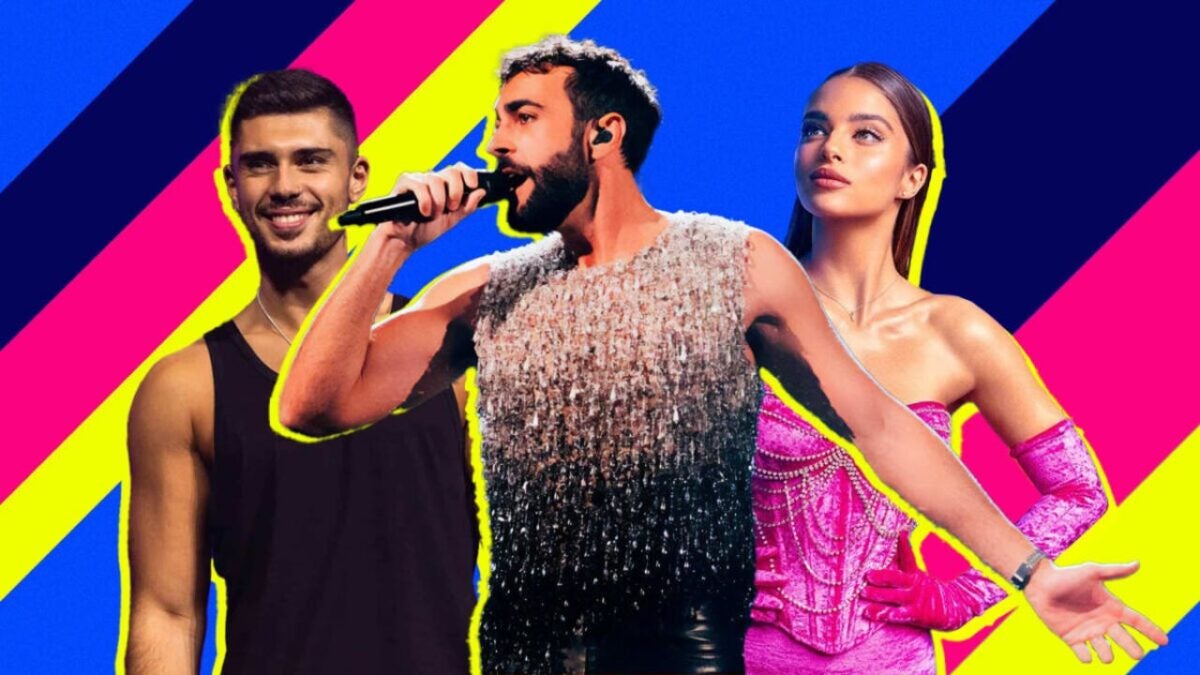
One of those who manage best in the world of networks is Marco Mengoni. The Italian representative has 2.3 million followers on Instagram alone, while on TikTok he has 572,200 followers. He came to the limelight in 2009, the year he won the Italian version of The X Factor. As with Loreen, Eurovision is not unknown to her: in 2013, she already represented Italy with the song L’essenziale. Her performance gave her a decent seventh position.
Noa Kirel, the chosen one from Israel this year, is also a beast when it comes to numbers. In her resume we can see that in addition to being a singer, she is also a dancer, actress and TV presenter. Her first song, Medabrim?, was released on YouTube when she was only 14 years old. Since then, her great success in Israel led her to win her first MTV award for Best Israeli Artist at the age of 16. Kirel’s popularity is something that can be felt in his networks, where he has 1.5 million followers on Instagram and 1 million on TikTok.
Andrew Lambrou is another artist who can’t complain about numbers. While he doesn’t reach the big numbers of Noa Kirel and Marco Mengoni, the Cyprus representative has a large legion of followers on both Instagram and TikTok (478,000 and 704,600, respectively). Like Mengoni, Andrew Lambrou also went through The X Factor, but in Australia. However, he was not as lucky as the Italian and could not even perform in the galas. Lambrou did not give up his dream of becoming a singer and used YouTube to upload versions of other artists (his version of Dusk Till Dawn accumulates 2.4 million views).
It is surprising to see that the big favorites of the festival, such as Loreen or Käärijä, do not yet reach these figures. Still, they do rank among those who have gained the most followers during the last month on Instagram. The first has been Noa Kirel, who has managed to gain more than 27,000 followers. She is followed by Loreen, with more than 18,000 and Käärijä with 17,000.
If we look at the Spotify statistics, there are three songs that have managed to stand out among the public: Tattoo (Loreen), Due Vite (Marco Mengoni) and Queen of Kings (Alessandra). Tattoo alone has a total of 51 million streams on Spotify, while Due Vite has 47.8 million and Queen of Kings has 41.9 million.
Will these numbers impact the final results of Eurovision 2023? The truth is that this year, we have a new voting system. For the first time in history, the vote of the professional jury will not be taken into account in the semi-finals. It will be the audience itself that will decide who will be in the grand final on May 13. In addition, the vote will be international and anyone will be able to choose their favorite song, regardless of the country.
The first semifinal of Eurovision 2023 will start today, May 9. Know the broadcast time and the countries that will perform.
The countdown begins: the excitement is palpable in the air and the cause is the arrival of Eurovision 2023 and its expected semifinals. The winner of the iconic festival, which this year celebrates its 67th edition, will be announced on May 13.
This year, viewers will enjoy 37 songs, each one more different than the last. Once again, Eurovision proves to be a stage where any genre has its place. After the memorable third place achieved by Spain in 2022 with Chanel and its hit song SloMo, our country aspires to return to the podium with Blanca Paloma. Will it be possible to repeat the triumph in this new edition?
Before the grand final of Eurovision 2023, fans of the festival will be able to enjoy the long-awaited semi-finals. The first semi-final will start today, May 9. Thus, this is how the schedule looks like:
First semi-final of Eurovision 2023: Tuesday, May 9
Second semi-final of Eurovision 2023: Thursday, May 11
Eurovision Song Contest 2023 Final: Saturday, May 13
It should be noted that the members of the Big Five will not have to undergo the judging of these semifinals as they go directly to the grand final. These countries are Spain, United Kingdom, Germany, Italy and France. This year the festival will also have a great novelty: it will be the first time that other countries outside Eurovision will be allowed to vote.
First semi-final of Eurovision 2023: these are the songs that will be performed
Today, Tuesday 9 at 21:00 Spanish time (19:00 UTC) will be when we will witness the first semifinal of this year, which will be broadcast on both La 2 and RTVE Play. The 15 countries that will participate in this round are:
Norway: Queen of kings, by Alessandra
Malta: Dance (our own party), by The Busker
Serbia: Samo mí se spava, by Luke Black
Latvia: Sudden Lights by Sudden Lights
Portugal: Ay coração by Mimicat
Ireland: We are one by Wild Youth
Croatia: Mama sc by Let 3
Switzerland: Watergun by Remo Forrer
Israel: Unicornio by Noa Kirel
Moldova: Soarele si luna, by Pasha Parfeny
Sweden: Tattoo, by Loreen
Azerbaijan: Tell me more, by TuralTuranX
Czech Republic: My sister’s crown by Vesna
Netherlands: Burning daylight, by Mia Nicoali and Dion Cooper
Finland: Cha cha cha by Käärijä
Here we leave you the Spotify list with all the Eurovision 2023 songs, including those that will be heard in today’s semi-final. Which one is your favorite?