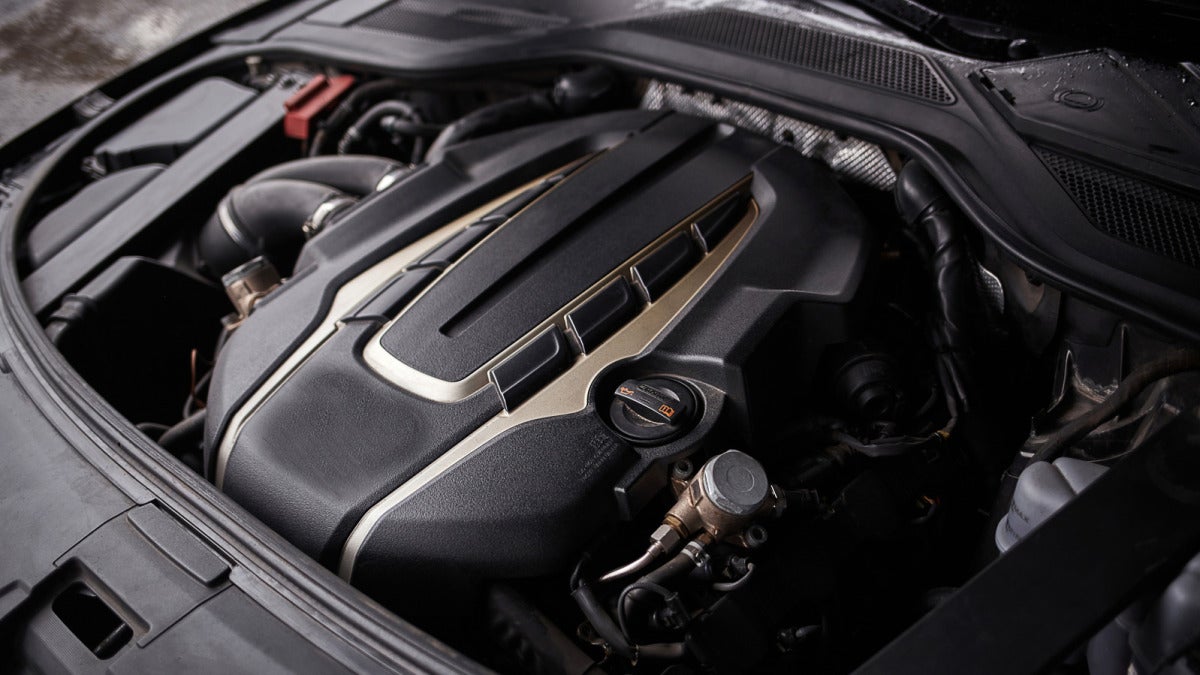
Plastic engine covers have been a normal part of modern cars since the 1990s. They helped make engine bays quieter and tidier at the same time that wiring, sensors, fuel and emissions equipment, and turbo plumbing were crowding the space under the hood.
For drivers, the biggest benefit is refinement. A lot of these covers are built as acoustic covers, with foam or similar material underneath to blunt the noise, vibration, and harshness that come with direct-injection turbo engines. They also hide hoses, wiring harnesses, and air ducts, give the bay a more organized layout, and keep some dirt, debris, and moisture away from wiring and ignition components.
If you think plastic engine covers are only there for looks, a 2024 patent filing from Novares tells a more mixed story: aesthetics come first, followed by sound reduction and protection. Depending on the vehicle, the panel may also use insulation, heat shielding, or airflow management, not just sit there trapping heat. Some engine covers are even shaped to create deformable space that can reduce pedestrian head injuries.
Automakers usually make them from heat-resistant thermoplastics or composites such as glass-fiber nylon or polypropylene. Those materials are light, hold up well, and cost less than metal.
So yes, you’ll probably keep seeing plastic engine covers. The market was roughly $1.8 billion to $2.3 billion in 2024 and 2025, and forecasts put it above $3 billion in the early 2030s as vehicle production climbed from 92.7 million to 96.4 million. Public data suggests the gains in noise reduction or temperature control aren’t huge, but electric vehicles are picking up the same idea anyway, mainly to protect electrical hardware and make the under-hood layout look cleaner.

Author: Chema Carvajal Sarabia
{
"de-DE": "Journalist, spezialisiert auf Technologie, Unterhaltung und Videospiele. Über das zu schreiben, was mich begeistert (Gadgets, Spiele und Filme), ermöglicht es mir, bei Verstand zu bleiben und mit einem Lächeln im Gesicht aufzuwachen, wenn der Wecker klingelt. PS: Das stimmt nicht 100% der Zeit.",
"en-US": "Journalist specialized in technology, entertainment and video games. Writing about what I'm passionate about (gadgets, games and movies) allows me to stay sane and wake up with a smile on my face when the alarm clock goes off. PS: this is not true 100% of the time.",
"es-ES": "Content Manager - Periodista especializado en tecnología, entretenimiento y videojuegos. Escribir sobre lo que me apasiona (cacharros, juegos y cine) me permite seguir cuerdo y despertarme con una sonrisa cuando suena el despertador. PD: esto no es cierto el 100 % de las veces.",
"fr-FR": "Journaliste spécialisé dans la technologie, le divertissement et les jeux vidéo. Écrire sur ce qui me passionne (gadgets, jeux et films) me permet de rester sain d'esprit et de me réveiller avec le sourire aux lèvres quand le réveil sonne. PS : cela n'est pas vrai 100 % du temps.",
"it-IT": "Giornalista specializzato in tecnologia, intrattenimento e videogiochi. Scrivere di ciò che mi appassiona (gadget, giochi e film) mi permette di mantenere la sanità mentale e di svegliarmi con un sorriso sul viso quando suona la sveglia. PS: questo non è vero al 100% del tempo.",
"ja-JP": "",
"nl-NL": "",
"pl-PL": "",
"pt-BR": "Jornalista especializado em tecnologia, entretenimento e videogames. Escrever sobre o que me apaixona (gadgets, jogos e filmes) me permite manter a sanidade e acordar com um sorriso no rosto quando o despertador toca. PS: isso não é verdade 100% do tempo.",
"social": {
"email": "chemacs91@gmail.com",
"facebook": "",
"twitter": "https://twitter.com/chematopetazo",
"linkedin": ""
}
}
View all posts by Chema Carvajal Sarabia