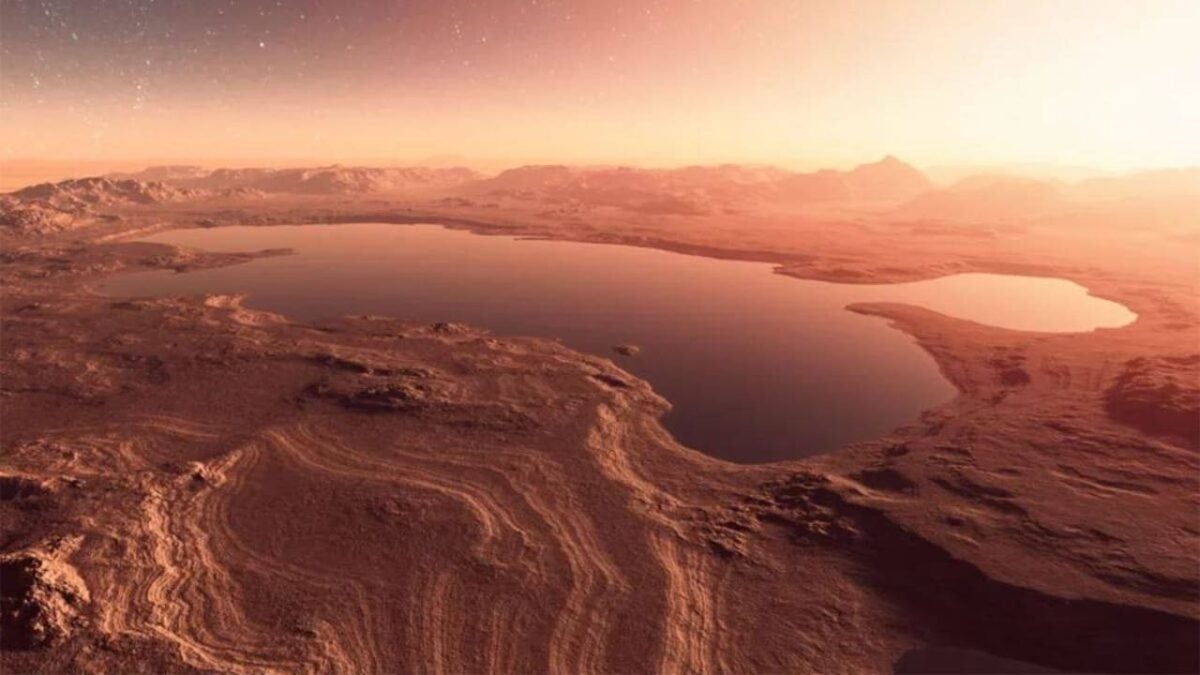
Mars was very different from what it is today. NASA’s Curiosity Rover has detected clear signs that about 3.6 billion years ago, Mars experienced seasonal cycles of wet and dry conditions. According to a new study, this discovery strengthens the evidence that the planet was once habitable for life.

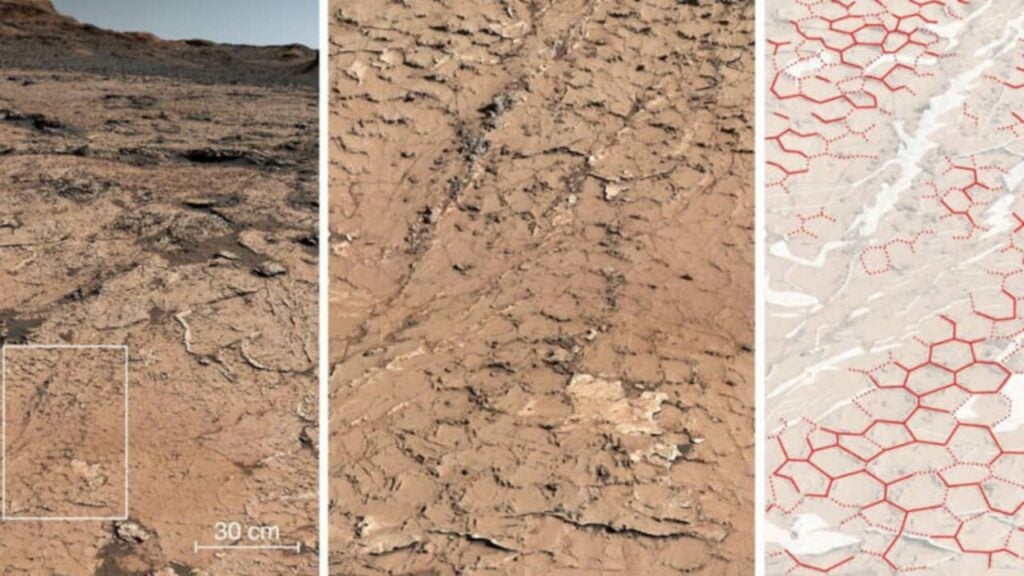
Curiosity Rover encountered in 2021 a region with peculiar polygonal ridges that had never been seen on Mars before. After thorough analysis, scientists have concluded that these are cracks formed by regular episodes of flooding and drying, a natural phenomenon known to greatly support life on Earth.
Having explored the Gale Crater since 2012, the Curiosity Rover has amassed a wealth of evidence showcasing that ancient Mars was habitable for life as we know it.
Formed in fresh mud, the fossilized cracks reveal that a series of “repeated wet-dry cycles of regular intensity” could have created “a climatic regime similar to Earth and surface environments conducive to prebiotic evolution” on Mars, according to a study published this week in the scientific journal Nature.
Given that Mars’ past is so well-preserved, scientists have been able to find clear indications that liquid water flowed and accumulated on its surface for extended periods, providing the right conditions for life to emerge. However, nobody knows whether extraterrestrial beings, as we imagine them, actually arose.
The question is whether all of this could have occurred without any seasonal variation and without the need for wet and dry cycles.
Nevertheless, the analyzed cracks strongly suggest that Mars experienced a seasonal climate, something it shares with its sister, Earth. Scientists have even found evidence that periodic hydration and dehydration are interconnected with the evolution of biomolecules that make up the DNA propagating all life on our planet.
Because of this, the discovery of seasonal cycles on Mars reinforces the probabilities that life existed on Mars and opens a new window into the origin of life on Earth.
And it is that our planet has such biological and geological activity that with the passage of time it has erased any indication of the origins of life, but Mars preserves an environment “prebiotic” that could shed light on our own beginnings.
Some of the links added in the article are part of affiliate campaigns and may represent benefits for Softonic.
