In Hollywood, it is trendy to adapt video games, but it seems that few people know how to do it well. Many people adapt books; they have found a goldmine in video games, but it seems that the success rate is still much higher among the former. Or at least that is the impression given. And now, Steven Kane, creator of the Halo series, has two reasons for this: video game fans hate adaptations, and also, adapting a video game is much more difficult. A man aware of the challenges of his work In an interview for Deadline, the creator of the Halo series admitted […]
In Hollywood, it is trendy to adapt video games, but it seems that few people know how to do it well. Many people adapt books; they have found a goldmine in video games, but it seems that the success rate is still much higher among the former. Or at least, that is the impression given. And now, Steven Kane, creator of the Halo series, has two reasons for this: video game fans hate adaptations, and moreover, adapting a video game is much more difficult.
A man aware of the challenges of his job
In an interview for Deadline, the creator of the Halo series admitted that adapting video games has an extra difficulty compared to other media. “Fans are going to hate anything you do at first. You have to accept that it’s part of the process,” he stated. Adding that, “also, the company that owns the game doesn’t want to destroy the franchise, so there’s a lot of pressure”.
Regarding what it has meant to work with Halo, he pointed out that “everyone has their own idea of what Halo is, so now you carry what the IP means and you don’t want to mess it up.” Thus demonstrating a total awareness of the difficulty of his work. And also why players often have a very defensive attitude towards these kinds of adaptations: each person has a very particular concept of what the IP is and they don’t necessarily have faith that it will be adapted well.
But as we have seen in recent years with series like The Last of Us, Fallout, or, to a lesser extent, Halo, it seems that the audiovisual medium is knowing how to adapt video games with much more fidelity than before. Assuming with more respect, affection, and delicacy towards the medium, everything indicates that video game adaptations are now treated with more respect and care than before. And also, that fans will learn to accept them more easily.
Recently, the adaptation of video games into television series has generated divided opinions among fans and critics. Examples like Halo, The Witcher, and Resident Evil have received negative reviews, pointing out that not all managed to capture the essence of their source materials. However, an analysis of the first series based on a video game, the animated Pac-Man, reminds us that not all efforts in these adaptations have been satisfactory. Pac-Man was a pioneer in every sense Produced by Hanna-Barbera between 1982 and 1983, Pac-Man failed to resonate with the audience despite having a total of 44 episodes
Recently, the adaptation of video games into television series has generated divided opinions among fans and critics. Examples like Halo, The Witcher, and Resident Evil have received negative reviews, pointing out that not all managed to capture the essence of their source materials. However, an analysis of the first series based on a video game, the animated Pac-Man, reminds us that not all efforts in these adaptations have been satisfactory.
Pac-Man was a pioneer in every sense
Produced by Hanna-Barbera between 1982 and 1983, Pac-Man did not resonate with the audience despite having a total of 44 episodes.The series features Pac-Man, Ms. Pac-Man, and their son Pac-Baby in a world that lacks narrative depth. The author of a recent review of this series highlights that the script is unoriginal and the characters are forgettable, which contributed to its quick cancellation.
The premise of Pac-Man revolves around attacks from Mezméron, a villain who sends “ghost monsters” after Pac-Man, while he chases Power Pellets in his struggle for survival. Despite the low standards, the series seems to have been a product of its time, where the challenge was to add value to a simple arcade concept. While more is expected from current adaptations, where titles like Fallout and Arcane have shone, the comparison with Pac-Man returns to a level of appreciation for the effort that is invested today.
In this context, despite the fact that recent adaptations may have failed or not been received with enthusiasm, there is always a sense of nostalgia for works like Pac-Man, highlighting how far we have come in the television production of video game adaptations.
The renowned author Stephen King, known for his works in the horror genre, has recently shared his list of the ten favorite movies of all time through Twitter. The curious thing about this revelation is that King has decided to exclude his own film adaptations, a decision that highlights his focus on appreciating cinema beyond his own work. The list was presented “without a specific order,” allowing his followers to enjoy an authentic glimpse into his cinematic preferences. No adaptation of his novels As his fans reflect on […]
The renowned author Stephen King, known for his works in the horror genre, recently shared his list of the ten favorite movies of all time through Twitter. The interesting thing about this revelation is that King has decided to exclude his own film adaptations, a decision that highlights his focus on appreciating cinema beyond his own work. The list was presented “without a specific order,” allowing his followers to enjoy an authentic glimpse into his cinematic preferences.
No adaptations of his novels
As his fans reflect on his selections, it stands out that the prolific author is not only immersed in literature; he also has several film projects in the works. The adaptations of his novels The Long Walk, The Running Man, and It are set to receive new treatments in Hollywood, generating excitement among genre enthusiasts. This resurgence of his works on the big screen has led many to wonder how these iconic stories will translate into a new and contemporary format.
Despite the fact that King has excluded his own films, his influence on the film industry is undeniable. Many of his works have been successfully adapted, contributing to the development of a unique style that combines horror with deep emotional elements. The blend of his literary artistic vision with the cinematic medium has resulted in classics that continue to resonate with today’s audience.
Fans of King and cinema in general are eager to see how his new adaptations will be received. Meanwhile, the list of his favorite movies will surely continue to be a subject of debate and analysis, once again showcasing the rich relationship the author has with the art of film.
Siempre ha habido una relación estrecha entre la literatura y los videojuegos. Y no deberíamos sorprendernos. Muchos libros son excelentes videojuegos. Algo que se demuestra con el puerto que tendremos este mismo mes de I Have No Mouth, and I Must Scream, de Harlan Ellison. Pero por cada obra que es explícita y muy… Continúa leyendo “”
There has always been a close relationship between literature and video games. And it should not surprise us. Many books make for excellent video games. Something that is demonstrated by the port we will have this month of I Have No Mouth, and I Must Scream, by Harlan Ellison. But for every work that is explicit and obviously a literary adaptation, there are several that are not. And today we want to talk to you about that. About five video games that, despite being quite well-known, you might not have realized are based on novels. And in fact, all of them are quite famous novels.
We start by cheating a little because it is true that this is the most well-known case. Although it is not in the name, it is evident that the inspiration for the S.T.A.L.K.E.R. saga is Roadside Picnic by the brothers Arkady and Boris Strugatsky. This does not mean that many people are not caught by surprise: some believe that its main source of inspiration is only Stalker, the excellent film by Andrei Tarkovsky. Which also shamelessly draws from Roadside Picnic.
But what do video games and books have in common? Essentially, everything. In both, there is an exclusion zone where strange phenomena exist, men and women enter to obtain treasures and strange mutations between fantasy and science fiction that those who venture into it must deal with. Even in the existence of a mysterious object that will grant a wish to whoever manages to reach it. Because, in the Slavic countries, Roadside Picnic is a novel that had an impact that we can only begin to sense beyond its borders.
Empire of the Ants
If it were its version from the 2000s, it probably wouldn’t ring a bell. Since it received a new version on November 7, 2024, you may have at least heard of Empire of the Ants. A real-time strategy game from Microïds, with small elements of adventure and platforming, where we must lead a community of red ants. Only this time, we will personify a particular ant. Ant #103,683.
This peculiarity is due to the fact that it is an adaptation of a science fiction novel of the same name by the writer Bernard Werber. Translated into Spanish as The Ants, it was originally published in 1991 and would expand into a whole trilogy where two stories occur in parallel: a man moves into his entomologist uncle’s house and a colony of ants lives its life in an ant-city. Until both stories intersect in a way that is only possible in a science fiction story.
Maid of Sker
Among the most interesting horror games of recent years is Maid of Sker. A survival horror heavily inspired by Outlast and Silent Hill that had a very intriguing setting: a cursed hotel from the late 19th century. But what’s interesting is that Wales Interactive, the studio, didn’t have to make anything up. Because Sker House exists in reality. And it inspired a famous three-volume novel.
The Maid of Sker is a novel written by R. D. Blackmore in 1872 that, if you have played Maid of Sker, you already know broadly what the novel is about. Because the study closely followed what Blackmore narrated, bringing it to the present and demonstrating that sometimes, all you need to make a great horror game is a 19th-century novel.
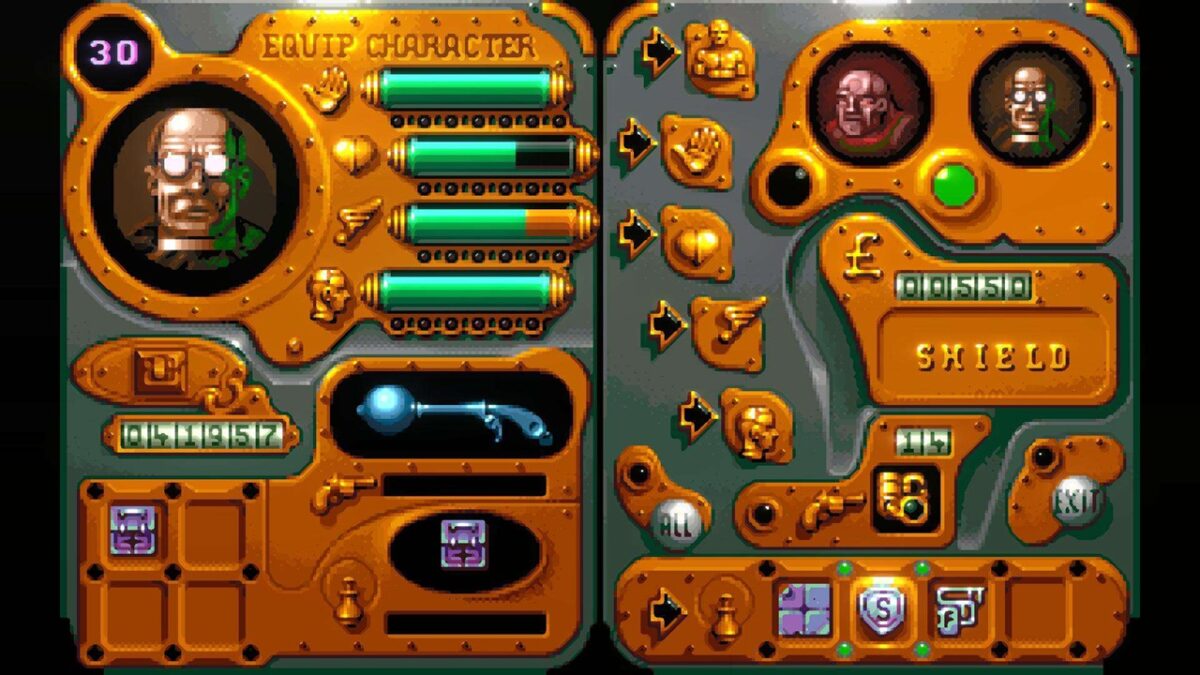
The Chaos Engine
Pocos nombres inspiran tanta admiración como The Bitmap Brothers. Creando algunos de los mejores juegos de Amiga de la historia, son considerados los mayores visionarios en la historia de los videojuegos europeos. Si no a nivel mundial. Entre sus juegos más celebrados se encuentra The Chaos Engine, un excelente run-and-gun que sigue siendo un deleite jugar hoy en día, especialmente en su versión original de Amiga, que aprovechamos para destacar.
But the interesting thing is that although it is not an explicit adaptation, it is indeed very inspired by a novel. Its entire story and aesthetic are based on the novel The Difference Engine by William Gibson and Bruce Sterling, an absolutely wonderful novel that is considered the foundation upon which the bases of steampunk would be established. Although it would not be an explicit adaptation, it would serve as such a strong inspiration that it is hard not to see the relationship. And how could The Chaos Engine exist without it.
Parasite Eve
In light of the success of Resident Evil and Final Fantasy, Square decided to create something that could combine both universes. The result was an excellent game that combined survival horror, turn-based combat, and a very elaborate narrative with Parasite Eve. A game that would go on to have two sequels and that to this day is one of the franchises that, apparently, will never have a third sequel. Not because of how Square Enix focuses on other kinds of projects.
What many people don’t know is that it’s not even an adaptation of a novel. It’s a sequel to a novel. With exactly the same name. Tremendously confusing as this is, it doesn’t make the game any less playable on its own, but it does make it more interesting if you’ve read the novel. Which you won’t be able to do in Spanish, as it has only been translated into English. But to be fair, Parasite Eve also never came out in Europe, so it’s not surprising.
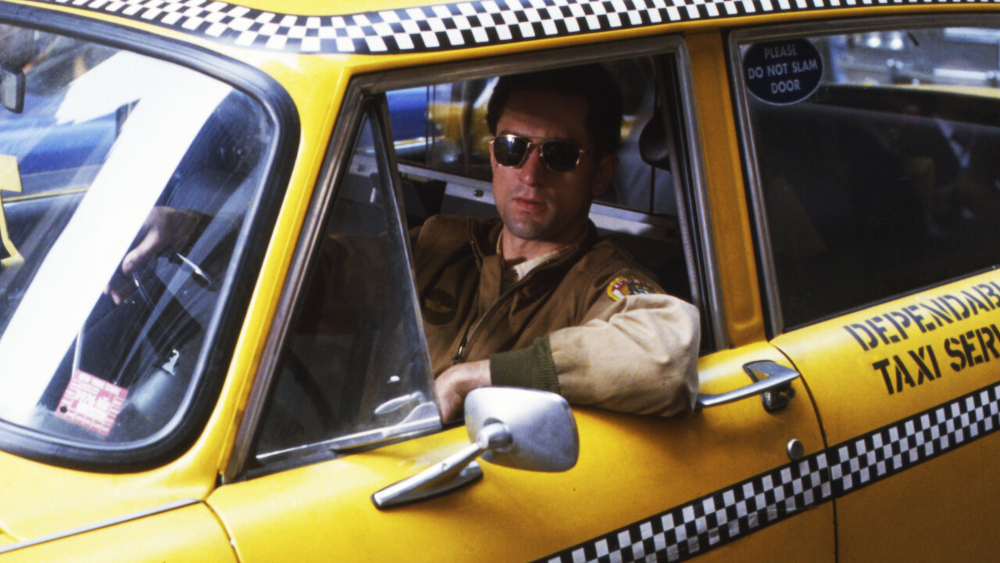
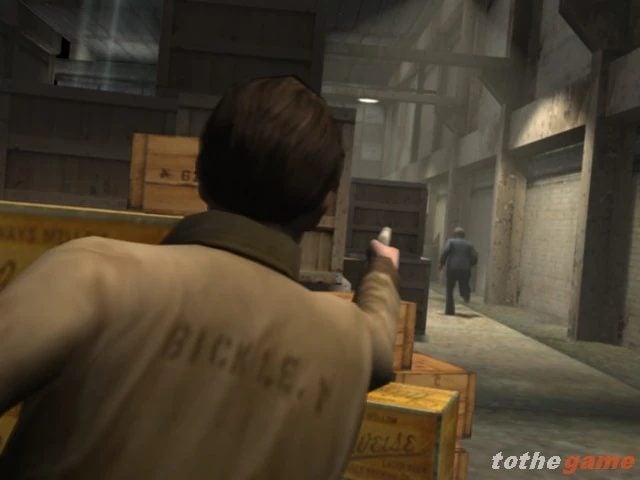
Majesco announced that it would make Travis Bickle a playable character in the 'Taxi Driver' adaptation, which was intended to "stay true to the spirit" of the original film while also being "a total entertainment experience."
There are movies or TV series that could never be adapted to video games, or so we want to believe. Mean Girls’, ‘The Godfather’, ‘Dragon ball evolution’, ‘Jaws’, ‘White people can’t get it in’ or ‘Elf’, for example. The problem is that they made a videogame out of all of them without any kind of restrictions (not even, as you can imagine, the lack of quality). And this is the fate that Martin Scorsese’s masterpiece almost lived ten years ago.
In 2012, Majesco announced that it would make Travis Bickle a playable character in the adaptation of ‘Taxi Driver’, which was intended to “stay true to the spirit” of the original film while being “a total entertainment experience“. Something is wrong there, not because the film version wasn’t great, which it was, but because no one would call it “total entertainment”.
But there were PS2, Xbox and the ever-eternal PC ready to receive the video game based on this masterpiece intended as a sort of sequel to celebrate its thirtieth anniversary. “Celebrate” is one way of putting it, of course. In the game, Travis would try to avenge Betsy’s death by entering the dark world of the New York mafia. Or, put another way, it would be a plagiarism of ‘GTA‘. Surely it has caught you by surprise, huh?
The mission of our protagonist would be to finish off the New York criminals using different types of firearms. In fact, by proxy, we could even kill innocent citizens (although it would worsen our mental health). And, while we were at it, we could drive the cab to make a few bucks. The most sordid version of ‘Taxi driver’, created by people who, apparently, had not seen ‘Taxi driver’.
The phrase “receivership” should never bring joy, but the truth is that in January 2006, after losing 70 million dollars in a year because of ‘Psychonauts’ and ‘Advent rising’. Majesco went bankrupt and decided that all its important games would be canceled to make way for cheaper options like ‘Cooking mama’ and others made for mobile. At least there was time to see a trailer, pictures and some gameplay, although the rest of the game is lost, supposedly in Majesco’s offices.
Maybe someday someone will find a lost prototype that says “Are you talking to me? There’s no one else in this room.” Fingers crossed as to what the hell this sequel was going to be!