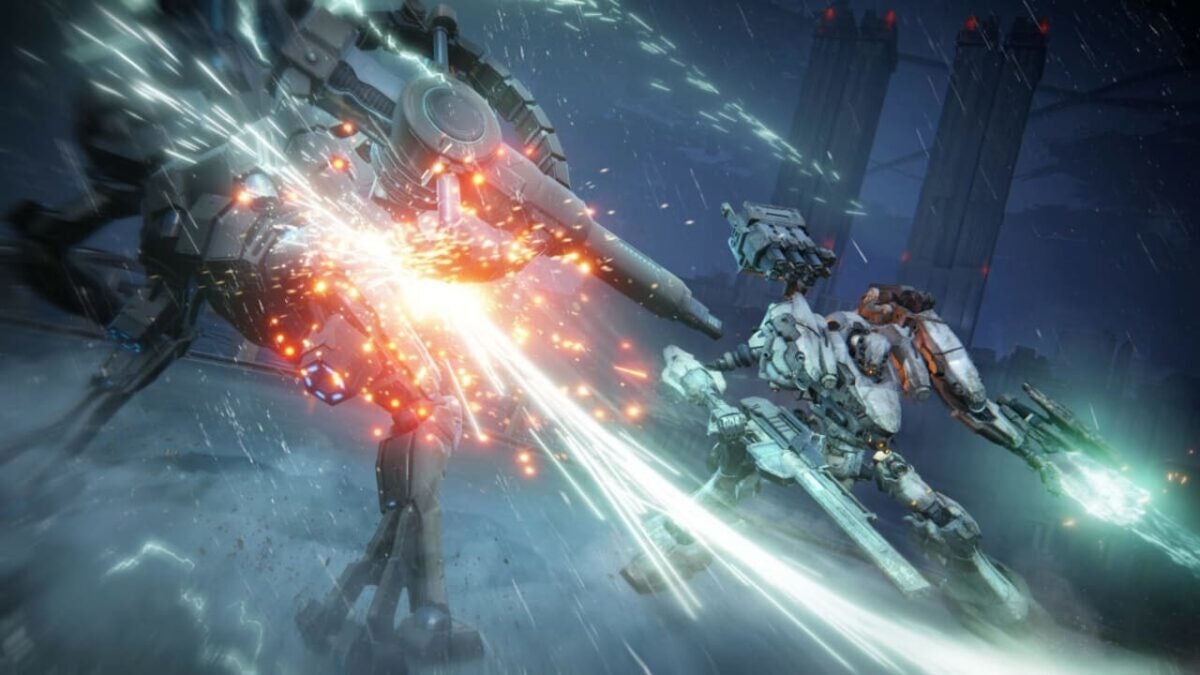
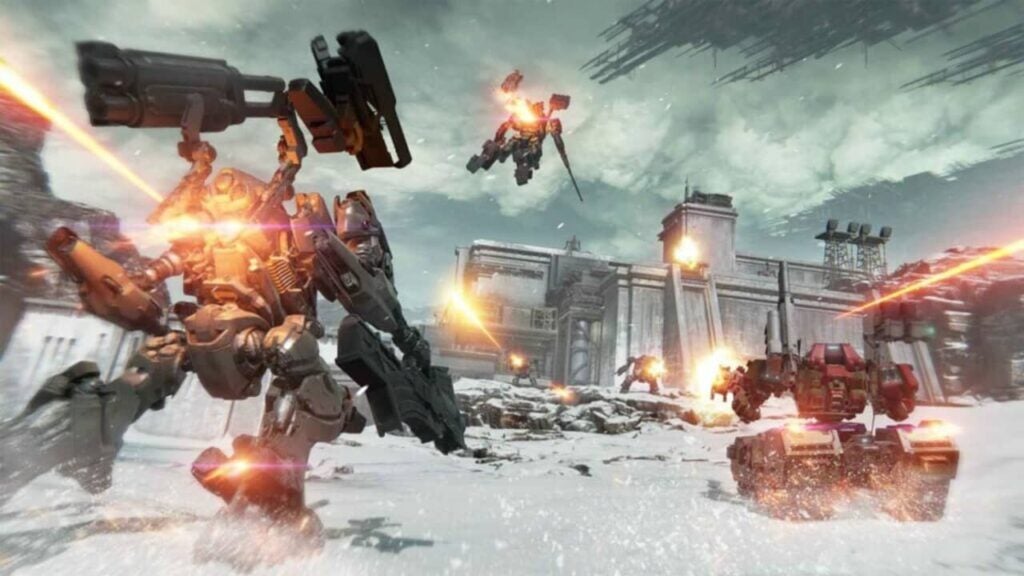
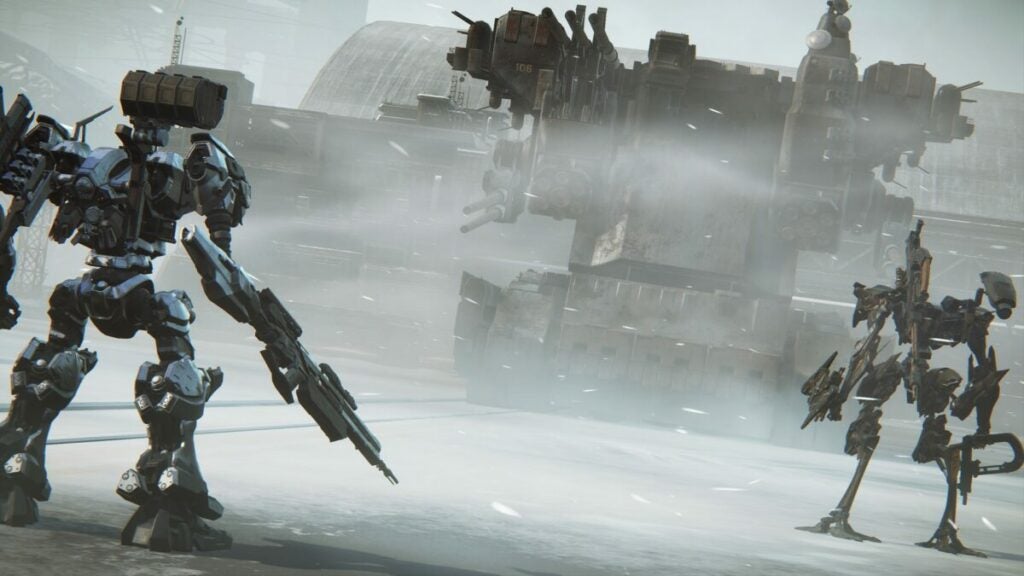
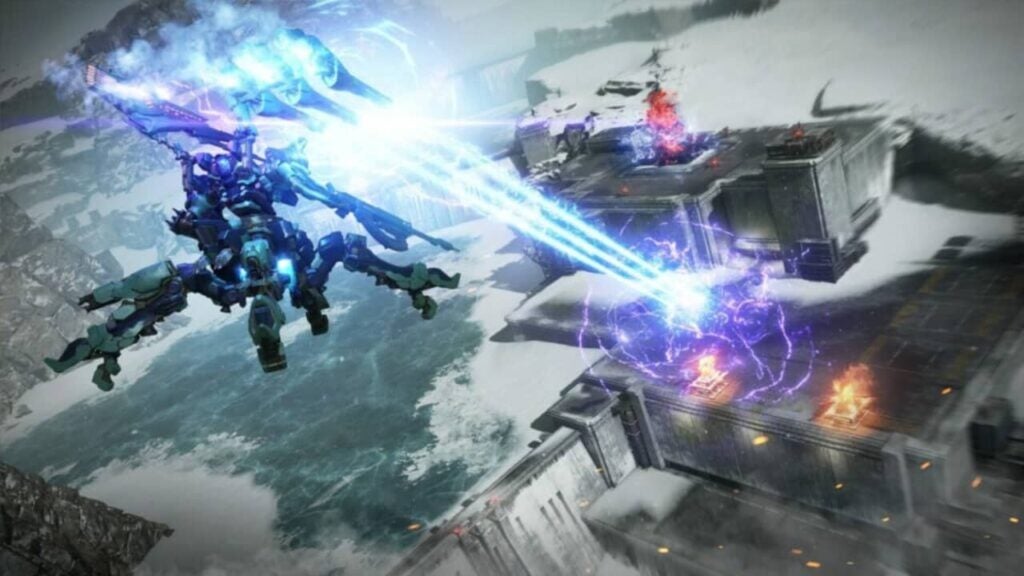
Within this framework, content creator Thryfe has gained notoriety for his innovative mech builds, highlighting one particularly impressive: a replica of Sailor Moon. This creation has been acclaimed among players, celebrating both its aesthetics and its performance in the game. By the power of the Moon! Thryfe, known for his focus on creative builds, has been a reference in the Armored Core community. His Fashion Core design, which mixes visual appeal and competitiveness in PvP, has caught attention after receiving updates in weapon handling. The Moonlight sword, a strategic choice in […]
Within this framework, content creator Thryfe has gained notoriety for his innovative mech builds, highlighting one particularly impressive: a replica of Sailor Moon. This creation has been acclaimed among players, celebrating both its aesthetics and its performance in the game.
For the power of the Moon!
Thryfe, known for its focus on creative builds, has been a reference in the Armored Core community. Its Fashion Core design, which blends visual appeal and competitiveness in PvP, has caught attention after receiving updates in weapon handling. The Moonlight sword, a strategic choice in its build, has proven to be effective after adjustments since the game’s launch, further enhancing its appeal during online battles.
Customization in Armored Core allows players to merge RPG elements and racing mechanics, adding significant value to the gaming experience. Thryfe’s builds, which bring vibrancy and color to the generally industrial environment of the mechs, are a testament to players’ ability to elevate gameplay through creativity. Their meticulous approach to design, such as the clever use of mech parts to mimic clothing, has been well received by the community.
Although there are rumors that FromSoftware might be working on an expansion or mini-sequel for Armored Core 6, the lack of official communication has left many fans eager. Meanwhile, the creativity of builders like Thryfe ensures that the legacy of the game remains strong and vibrant in the collective imagination of players.
Armored Core VI: Fires of Rubicon is an excellent game, but it’s also a game that can be difficult, so here are some tips.
While summer usually isn’t the best time of year for video games, this year is an honorable exception. Due to delays, the avoidance of competing with other major titles, and specific decisions from certain big studios, we have a very eventful August full of announcements that would typically have occurred between February and April or between September and November. That’s why it’s impossible for anyone not to have something to sink their teeth into during the holidays. Even if what excites them are giant robots.
The latest from From Software, the creators of Dark Souls and Elden Ring, is a mecha game. For the uninitiated, that means giant piloted robots. Although calling it new is a bit misleading. Armored Core is a franchise that has been around since the first PlayStation era and is revered as one of the deepest when it comes to customizing these giant robots. That’s why, at first glance, it might seem intimidating. But it doesn’t have to be! Not if you have our help.
That’s why we’re going to provide you with five tips to make sure the game doesn’t give you a hard time. Because while it’s true that Armored Core VI: Fires of Rubicon is a rather unique game with a rich history, it’s not necessarily a difficult game. You just need to learn to speak its language. And we’re going to show you how to do it.
The thruster is your best friend
You’re piloting a several-ton machine. Moreover, it doesn’t have wheels; it has legs. That means its movement is slow and very, very heavy. If you try to move like in a shooter game, using the left stick to achieve agile and smooth movement, you’ll die constantly. The first thing you need to learn is that if mechs have thrusters on their back, it’s meant to be used. To be used constantly. What do we mean by “constantly”? Literally every second of gameplay. That’s why we’ll provide you with a summary of each and every one of them.
Just remember one thing: all of this consumes EN (and you won’t be able to do it if you don’t have EN), unless we say otherwise. The EN bar recharges when we are on the ground and not using any ability that consumes EN.
Vertical Thruster (Hold A/X Button): Similar to jumping, but by holding it, you stay in the air for a certain amount of time. Necessary to avoid the blast radius of missile explosions and to move in the air to engage airborne enemies in melee attacks.
Quick Thruster (Press X/Square Button and a direction): Perform a quick dodge, highly useful for evading melee strikes and projectiles.
Assault Thruster (Press Left Stick): Propel forward rapidly. This not only makes you move much faster but also catches your enemies off guard, quickly positions you, and deals more damage—essential if you want to engage in close combat or land a shotgun blast.
Movement Thrust (Press B/Circle Button): Your mech activates the thrusters to move instead of its mechanical steps. This significantly increases your speed and doesn’t consume EN. Always activate movement thrust to navigate the environment and stay mobile in combat while you recharge the EN bar. You don’t want to be dodging bullets with a robot limited to leg movement speed.
Don’t skip the tutorials
You might think that you’ve played enough action games in your life to never need another tutorial again. Well, you’re mistaken. Unless you’re a veteran of the series, you need the tutorials because Armored Core operates on its own terms. Its customization system is quite complex, and when you add to that an equally complex mechanical system, learning it takes a more than reasonable amount of time.
After all, it’s not just about learning the specifics of each limb controlling a weapon or the different types of propulsion. It’s also about understanding the different configurations, weapons, radars, and heads. Even the fact that this is a game where movement is 100% in 3D. If you don’t learn to fly and control the amount of EN you have left, don’t expect to get any platinum medals. Let alone defeat any bosses. That’s why you shouldn’t skip the tutorials — don’t say we didn’t warn you.
We understand that in other games, legs might not be something you even consider, but seriously, we’re not joking: legs are important in Armored Core. So much so that your mech’s gameplay style will completely change based on the type of legs you equip. Bipedal legs are all-around, capable of doing a bit of everything without excelling in any particular aspect. Inverted limbs are excellent for quickly transitioning between ground and aerial combat, making them outstanding targets that are hard for distant foes to hit. Quadrupedal legs allow for extended periods of floating, turning into mini battle stations. Tank legs allow you to carry much more weight and heavier equipment, turning them into walking fortresses of cataclysmic power.
What are the best legs? It depends on the mission’s requirements and your play style. When in doubt, bipedal mechs will always get the job done gracefully. But a well-configured specialized mech will easily accomplish what a biped might struggle to achieve.
Save your settings
Armored Core is a game that, from its origins, has been based on spending more time designing mechs than using them in combat. And that’s perfectly fine—it’s part of the charm. Therefore, please, save every mech design you create. You have 100 save slots, so running out of space is unlikely. Save every mech configuration that has helped you overcome a particular mission, because it’s almost certain that it will come in handy in the future. That’s the essence of the game—constantly switching between mechs and configurations. Don’t be afraid to change. The beauty of this game lies in adapting your mech to suit each mission. The idea of getting attached to a single build and never changing it is reserved for games from other companies, not From Software.
Auto-lock is what keeps you alive
This may sound sacrilegious to anyone who is not a veteran of the franchise —for the veterans, not so much because, well: they’re used to entries where manual aiming doesn’t even exist as such—, but you’re going to have to put your gamer pride aside. Auto-lock is going to save your life in practically every situation.
You can choose not to use it. We understand that if you come from Souls or Elden Ring, and you’ve spent many hours, you’ve already gotten used to not using it, but Armored Core is a different beast. Manual control is much more delicate and complex, highly dependent on the particular parts of your mech. That’s why you should take advantage of the auto-lock feature, which you can use by clicking the right stick. You’ll have plenty of time to switch to manual aiming once you get used to the wonders of this fascinating game.
From Software returns to one of its star franchises, Armored Core, and we wonder, will it be something different from an Elden Ring with robots?
Elden Ring has been a huge success. Perhaps there was a time when Souls were niche games, but that time is no longer ours. With the community eagerly awaiting DLC, before that From Software has other plans. For while the world is still trying to come to terms with what they did with their last title to date, they are thinking about returning to one of their most beloved franchises in Japan, and with a cult following in the West, long before Demon’s Souls was even an idea in Hidetaka Miyazaki’s mind. Because on August 20, Armored Core VI will arrive on our consoles and computers.
The big question is, will he look like Elden Ring? And the answer is a bit ambiguous. Because the truth is that although its developers have insisted that Armored Core is its own thing, far from the canons of what a Souls is, it is undeniable that Armored Core is a franchise with the DNA of From Software games.
With its first title released in 1997 for the first PlayStation and this being the fifteenth installment of the franchise, not counting spinoffs, Armored Core is a cult FromSoftware franchise that puts us in the shoes of a mecha pilot, giant manned robots, who acts as a mercenary and can choose to work for different corporations in a post-apocalyptic future. Although there is some cohesion between some of the installments, both in terms of gameplay and narrative, the franchise has had major changes over time, making it difficult to summarize what ultimately defines it.
Difficult, but not impossible. If anything defines Armored Core it is the importance of customizing our mecha, the great emphasis it places on its lore, the high difficulty of all its titles and the methodical nature of its combat. If all this reminds us of Souls, it’s normal. After all, they are made by the same developer. But the particularity is that different installments of Armored Core have had a special emphasis on different aspects of these sections. Some installments are simpler and more accessible, others emphasize the need to be constantly changing the pieces of our mecha, and the speed changes abruptly between the relatively slow Armored Core 3 and the absolutely inhuman Armored Core V, where it is impossible to follow the action without the assistance of the AI of our mecha.
In this sense, From Software has already indicated that their intention with Armored Core VI: Fires of Rubicon is not to make an Elden Ring with mechas. However, neither do they want to make a classic Armored Core as if it hadn’t been ten years since their previous release.
Its director, Masaru Yamamura, has stated in an interview for Famitsu that his intention is for the speed to be somewhere between that of Armored Core 3 and Armored Core V, but with a heavy emphasis on close-range combat and the ability to switch between ranged and melee combat. According to him, this can make it seem much faster than it is, and closer to the experience to what a Souls is. On the other hand, in an interview with Eurogamer, Yamamura himself has stated regarding this association of a certain style of gameplay with soulslike that “people think of our titles from the last few years when they think of those elements, but these are things that have really been present in our company’s philosophy and in our games for much longer than that. With Armored Core VI we’re trying to incorporate those elements in a way that doesn’t overshadow the qualities of what makes Armored Core what it is.” Something quite obvious when it is also confirmed that we will not be navigating a huge open world, but a mission system similar to previous installments.
Does that mean there are no elements of Elden Ring and all the soulslike lineage that led up to it? Not according to Yamamura. Because he also points out that “some of that is definitely present in the aggressiveness of the combat in Armored Core VI”. Something that if we add the giant final bosses that have let us see their latest trailer, they point out that, while this is not an Elden Ring in space, it is clear that it has the genetic code of Souls.
So it’s not bold to say that while Armored Core VI: Fires of Rubicon isn’t going to be the new Elden Ring, it’s going to be a game that feels similar in many ways. At the end of the day, it’s made by the same company. Many of the Souls elements were already in Armored Core long before it was popular. And being that it’s a game directed by Yamamura, who comes from designing Bloodborne and Sekiro -two games that From Software doesn’t consider to be soulslike-, it’s not bold to say that Armored Core VI: Fires of Rubicon has every chance of delighting all From Software fans.
Some of the links added in the article are part of affiliate campaigns and may represent benefits for Softonic.