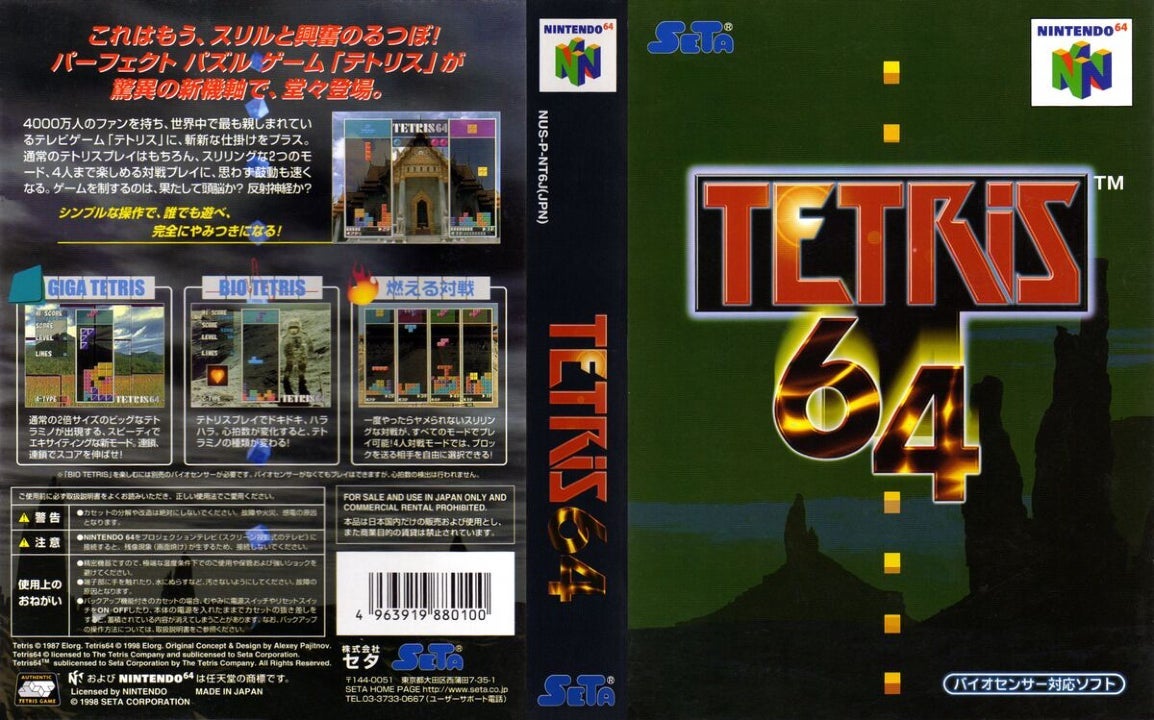
The Bio Sensor, a device launched by Nintendo in Japan in late 1998, marked a milestone at the intersection of technology and video games, allowing the player’s heart rate to modify the difficulty of the renowned Tetris 64. This innovative peripheral, designed to connect to the Nintendo 64 controller, included a clip that was placed on the player’s ear, analyzing their heart rate in real time and adjusting the gaming experience in a mode called Bio Tetris. Although it was a bold attempt to integrate the player’s physiology into gameplay, the device never left Japan and was only applied to this particular title.
A useless device that only serves to play Tetris
The Bio Sensor was offered both independently and in a package alongside Tetris 64. Its unique functionality allowed for two game modes, contributing to a more immersive experience, especially in its multiplayer version. However, despite its originality, the Bio Sensor is part of an extensive culture of unusual peripherals that spans the history of video games, where innovative ideas have been both acclaimed and considered complete failures.
Almost a decade later, Nintendo introduced the Wii Vitality Sensor, a similar device intended to capture heartbeats during the gaming experience in various Wii titles. However, the company eventually abandoned the product, although it did not give up on the idea of using players’ emotions and reactions as an integral part of the game dynamics.
Meanwhile, Tetris has continued to evolve over time, presenting new variants that have expanded the boundaries of the classic game. Titles like Tetris Effect, which offers stunning sensory experiences, especially in virtual reality, demonstrate that the franchise continues to explore new ways to connect with its players, highlighting the lasting relevance of the series within digital entertainment culture.