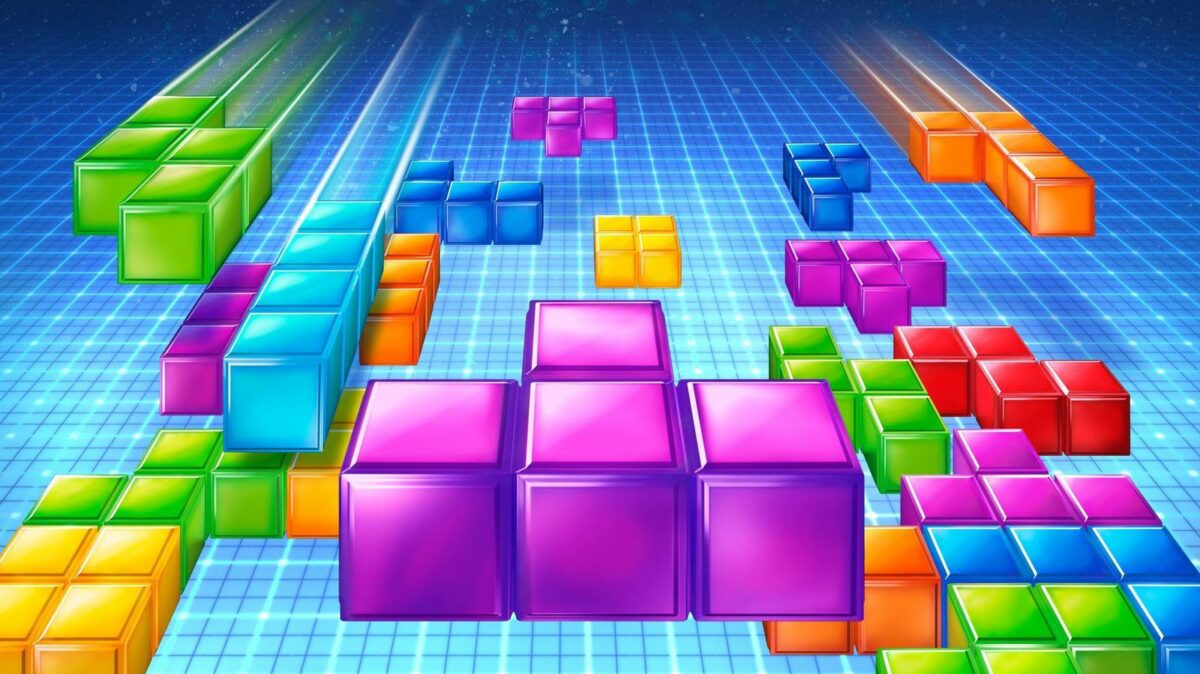
In 1984, Alexey Pajitnov, a young Soviet developer, never imagined that his simple puzzle, inspired by one of his favorite games, would change the landscape of video games forever. Tetris, as he named it, would not only become a global phenomenon but would also catapult him to fame and wealth. Over the years, Pajitnov has continued to create new gaming experiences, highlighting recent titles like Tetris 99 and Tetris Effect, which reimagine the classic gameplay of his original creation. A most singular man After emigrating to the United States in the 90s, […]
In 1984, Alexey Pajitnov, a young Soviet developer, never imagined that his simple puzzle, inspired by one of his favorite games, would change the landscape of video games forever. Tetris, as he named it, would not only become a global phenomenon but also catapult him to fame and wealth. Over the years, Pajitnov has continued to create new gaming experiences, highlighting recent titles like Tetris 99 and Tetris Effect, which reimagine the classic gameplay of his original creation.
A Most Unique Man
After emigrating to the United States in the 90s, Pajitnov founded The Tetris Company, taking charge of managing the rights to the iconic brand. Although his masterpiece has always been Tetris, Pajitnov has shown his passion for video game design with several projects, although none reached the same level of success. Among them are Welltris, which introduced three-dimensional elements to the classic Tetris, and Hatris, a game where players must match hats falling from the sky.
At Microsoft, where he worked for several years, his game Hexic stands out, released alongside the Xbox 360 in 2005, which is considered one of his greatest achievements at the company. Despite his semi-official retirement in 2010, Pajitnov has left an indelible mark on the video game industry, although his personal life has been marked by tragedies, such as the death of his son in 2017.
Recently, Pajitnov was in Spain to receive an award at the OXO Video Game Museum, reaffirming his impact on the industry. As the world of video games continues to adapt, fans hope that Pajitnov’s legacy and creativity will continue to inspire future generations of developers and players.
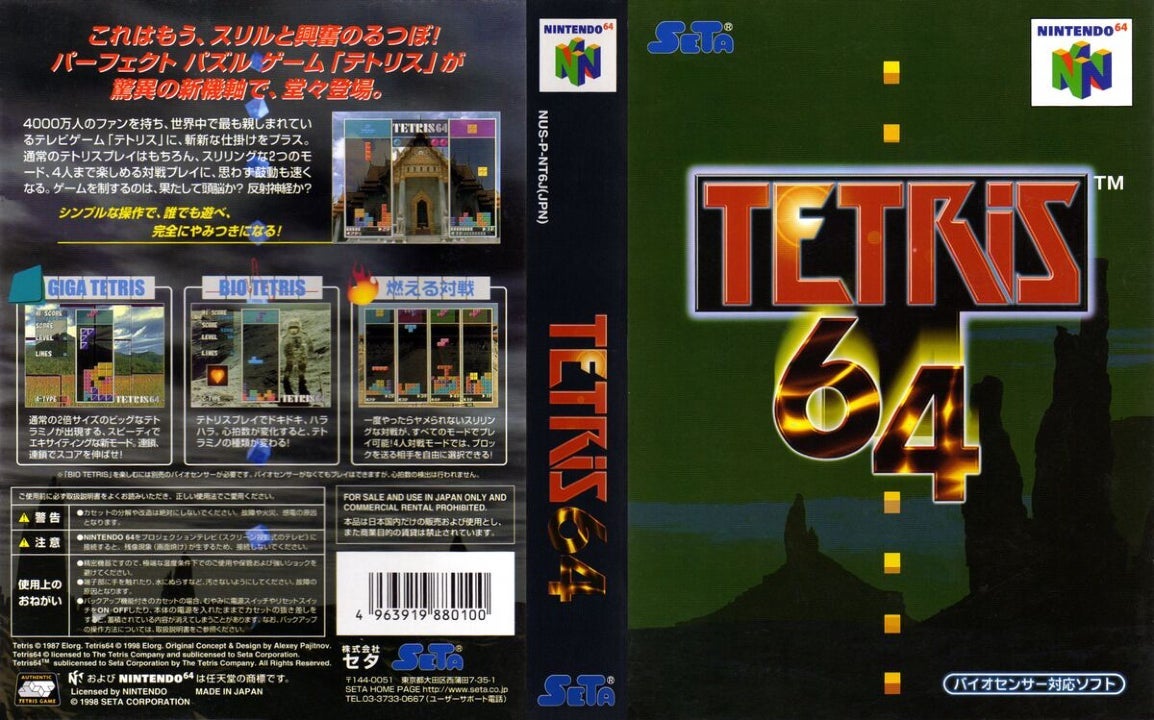
The Bio Sensor, a device launched by Nintendo in Japan in late 1998, marked a milestone at the intersection of technology and video games by allowing the player’s heart rate to modify the difficulty of the famous Tetris 64. This innovative peripheral, designed to connect to the Nintendo 64 controller, included a clip that was placed on the player’s ear, analyzing their heart rate in real time and adjusting the gaming experience in a mode called Bio Tetris. Although it was a bold attempt to integrate the player’s physiology into gameplay, the device never made it out of […]
The Bio Sensor, a device launched by Nintendo in Japan in late 1998, marked a milestone at the intersection of technology and video games, allowing the player’s heart rate to modify the difficulty of the renowned Tetris 64. This innovative peripheral, designed to connect to the Nintendo 64 controller, included a clip that was placed on the player’s ear, analyzing their heart rate in real time and adjusting the gaming experience in a mode called Bio Tetris. Although it was a bold attempt to integrate the player’s physiology into gameplay, the device never left Japan and was only applied to this particular title.
A useless device that only serves to play Tetris
The Bio Sensor was offered both independently and in a package alongside Tetris 64. Its unique functionality allowed for two game modes, contributing to a more immersive experience, especially in its multiplayer version. However, despite its originality, the Bio Sensor is part of an extensive culture of unusual peripherals that spans the history of video games, where innovative ideas have been both acclaimed and considered complete failures.
Almost a decade later, Nintendo introduced the Wii Vitality Sensor, a similar device intended to capture heartbeats during the gaming experience in various Wii titles. However, the company eventually abandoned the product, although it did not give up on the idea of using players’ emotions and reactions as an integral part of the game dynamics.
Meanwhile, Tetris has continued to evolve over time, presenting new variants that have expanded the boundaries of the classic game. Titles like Tetris Effect, which offers stunning sensory experiences, especially in virtual reality, demonstrate that the franchise continues to explore new ways to connect with its players, highlighting the lasting relevance of the series within digital entertainment culture.
Last night one of the most anticipated events of the Summer Game Fest took place. We all expected to see what Sony would offer in its State of Play. Although they have some interesting games on the horizon, 2025 has not been a good year for the Japanese company. And it doesn’t seem like it will be great in the future. At least from what we could see last Wednesday, June 4, around 11 PM. It must be admitted that, although there was something for everyone’s taste, it was a very Japanese State of Play. Very focused on third parties and […]
Last night, one of the most anticipated events of the Summer Game Fest took place. We all expected to see what Sony would offer in its State of Play. Although they have some interesting games on the horizon, 2025 has not been a good year for the Japanese company. And it doesn’t seem like it will be great in the future. At least from what we could see last Wednesday, June 4, around 11 PM.
It must be admitted that, although there was something for everyone, it was a very Japanese State of Play. Very focused on third parties and for those whose tastes are more based on arcade-style games, or with a more video game approach, and less on narrative or cinematic video games. This may disappoint some people who expect a different approach from Sony after God of War, Uncharted, and The Last of Us, but the truth is that it was an exceptional State of Play in terms of pace and content. And for that reason, we have selected the best announcements so you don’t miss anything.
Lumines Arise
There are only three games that have been able to be as iconic and brilliant as Tetris in the world of puzzles: Puyo Puyo, Meteos, and Lumines. The latter will receive a new installment, as we have learned thanks to Sony, named Lumines Arise. Its premise is to be the same idea as always —grouping four or more symbols in a square or equivalent shape using pieces made up of combinations of one or two symbols— but now with more particles and even more spectacular graphics.
Clearly drinking from the tremendous success of Tetris Effect, it seems that the game is heavily inspired by Tetsuya Mizuguchi’s previous game. But let’s not kid ourselves either. Tetris Effect already drew a lot from Lumines. So we can expect to see what the result will be when it releases this upcoming autumn of 2025 for PlayStation 5 and PlayStation VR.
Pragmata
Initially announced at E3 2020 for 2022, Pragmata has had a tumultuous development. So much so that we haven’t heard anything about it for 2 years and many people suspected it had been canceled. Nothing could be further from the truth, as the game has shown signs of life. And it is spectacular.
Highlighting some absolutely stunning graphics, where the quality of the design of the main girl stands out especially, the game seems pure Capcom. Resident Evil, but with more action and in a science fiction setting. Something we really can’t say no to. But to play it, we will still have to wait. Because Pragmata will be released in 2026 for PC, PlayStation 5, and Xbox Series X/S.
Romeo is a Dead Man
Goichi Suda, better known as Suda51, is one of the great authors of video games. Punk, unrestrained, with no intention of pleasing anyone, he always does what he wants, how he wants, and he doesn’t care if you like what he does. That’s why, if you like it, you’ll love it. And that is the case with Romeo is a Dead Man, a madness about a man trapped between life and death due to a time paradox that shattered the space-time continuum and now he must jump between dimensions to hunt down dangerous fugitives.
It promises to be violent. It promises to be hilarious. And it promises to be vulgar. But it is also deep, human, and a game like no other you have ever played. Because that’s what Goichi Suda’s games are about. However, to play it, we will have to wait until 2026, when we can enjoy it on PC, PlayStation 5, and Xbox Series X/S.
Silent Hill f
If there is a horror game that is highly anticipated this year, it is Silent Hill f. Written by one of the most celebrated authors of Japanese horror, putting his own spin on one of the most beloved franchises in the industry, it is impossible for this to go wrong. Especially now that we have finally seen gameplay. And it did not disappoint.
Dark, violent, and very psychological, it seems we will have to go through real hardships to progress in the game. Exactly what we want in a Silent Hill. Additionally, we have been given something even more important. Its release date. The game will be released on September 25 for PC, PlayStation 5, and Xbox Series X/S. And keep a close eye. Because if there is a game in this article that is a contender for game of the year, it is this one.
Final Fantasy Tactics: The Ivalice Chronicles
In Europe, we never got to play one of the most celebrated games from the US and Japan within the Final Fantasy franchise. Moreover, it is not a game from the main franchise. Because Final Fantasy Tactics is one of the brightest games that has come from Square Enix and, even today, it still has one of the most impressive stories and one of the most satisfying battles in Tactic RPG.
This remastered version also has two good things. It will include an improved version, with full voice acting and updated graphics, but also the original version for those who want to enjoy what was playable on PlayStation. This time, with the acclaimed translation that the PSP version had. Final Fantasy Tactics: The Ivalice Chronicles will be released on September 30 for PC, PlayStation 4, PlayStation 5, Switch, Switch 2, and Xbox Series X/S.
Nioh 3
Team Ninja is in a very sweet spot, with many projects on the horizon. And now they have decided to add one that many fans were waiting for: a new installment of their most beloved franchise. Nioh 3 will take us to feudal Japan to face a tremendously challenging souls-like game where, as it seems in the trailer, we will have to choose between protagonists. One is a samurai, similar to the gameplay style of previous installments, and the other is a shinobi, with a style more akin to that of Tenchu.
With the demo now available, it is possible to try the game to see how well it works. And if it will live up to its previous games in the franchise. Even if we will still have to wait until 2026 to enjoy it, we will be able to play it on both PC and PlayStation 5.
Marvel Tōkon: Fighting Souls
But the big announcement has come from Marvel. Although not only from Marvel. Arc System Works in collaboration with PlayStation Studios has announced Marvel Tōkon: Fighting Souls. This is a 4 vs 4 tag team fighting game, where we choose four characters and alternate between them to fight. Closely following the style of previous games from the company, such as Guilty Gears or Dragon Ball FighterZ, it has a spectacular graphic style and a frantic pace that promises to captivate fighting game fans.
We have seen some of the playable characters, such as Spider-Man, Captain America, Iron Man, Star-Lord, Ms. Marvel, Storm, and Dr. Doom. However, like most games, we will still have to wait. Marvel Tokon: Fighting Souls will be released on PC and PlayStation 5 in 2026. But given the promising look of all these games, it seems that PlayStation has plans, and the wait is well worth it.