The launch of The Day Before, a title that became the most anticipated game on Steam, has culminated in controversy and accusations of fraud. Developed by the studio Fntastic, the game was presented as a promising project, with high expectations from players. However, by the end of 2023, the game was criticized for failing to meet promises and for alleged irregularities in its development, leading the community to label it a scam. A complaint that has little traction In the midst of this situation, Fntastic has decided to take its defense to court, suing […]
The launch of The Day Before, a title that became the most anticipated game on Steam, has culminated in controversy and accusations of fraud. Developed by the studio Fntastic, the game was presented as a promising project, with high expectations from players. However, by the end of 2023, the game was criticized for failing to meet promises and for alleged irregularities in its development, leading the community to label it a scam.
A complaint that doesn’t have much traction
In the midst of this situation, Fntastic has decided to take its defense to court, suing the Russian outlet Yakutia.info. The lawsuit focuses on two publications from the site that accused the studio of fraudulent practices and cited YouTubers claiming that The Day Before had copied mechanics from other games. Yakutia.info, hailing from Yakutia, the home region of Fntastic’s founders, argues that the use of the term scam was colloquial and unintentional, and has modified its content to replace scam with shame.
The context of this dispute is unusual, as Yakutia.info is a relatively small outlet and no legal action has been taken against more influential content creators who also criticized the game. This leads many to speculate whether the lawsuit is part of a larger effort to clean up the studio’s image. Additionally, Fntastic has called on players to collaborate for free on their upcoming title, asking them to contribute by creating maps, which raises questions about the current state of the game’s development.
The case of The Day Before adds to a list of situations where the promises of video game developers have triggered furious reactions in the community, and the question that remains is whether this collaborative approach will truly benefit the future of Fntastic.
The Day Before is an action game developed by FNTASTIC. It is an open-world massively multiplayer online game and a third-person action shooter game set in a post-pandemic America. Here, the world is overrun by flesh-hungry infected humans, and you are one of the survivors. You need to set out to find answers and resources to live.
Google has sued two alleged cryptocurrency scammers, accusing them of using its Play Store to offer fraudulent apps.
Today’s story is the classic story we bring on Sundays, as they tell reality in its most unexpected version and there is a lot to talk about. During the week there is no time for long stories, but today there is.
Google has sued two alleged cryptocurrency scammers, accusing them of using its Play Store to offer fraudulent cryptocurrency trading applications and investment platforms that, instead, simply took users’ money.
These applications were used in a type of romance scam commonly known as “pig butchering”, referring to the fattening of a pig before slaughtering it.
Google sues two people based in China it says used the company’s platforms to distribute and advertise fraudulent crypto apps https://t.co/SOUXP7XfYy
The accused scammers, two app developers based in China and Hong Kong, allegedly uploaded 87 different fraudulent applications to carry out their scams, attracting over 100,000 people who downloaded them.
According to user complaints, Google claims that each of them lost between $100 and tens of thousands of dollars. The apps uploaded by the couple and their anonymous partners have been used in versions of the scam since at least 2019, according to Google.
Google says it is the first company in the industry to take this type of action. It has already closed the apps in the Play Store once it determined they were fraudulent.
Google sues alleged crypto scammers for luring people into investments they’d never get back https://t.co/AHwvfbYk85
“This litigation is a critical step in holding these bad actors accountable and sending a clear message that we will aggressively pursue those who seek to take advantage of our users,” said Google’s General Counsel, Halimah DeLaine Prado, in a statement.
Google claims that it was also harmed by the scheme because it threatens the “integrity” of its app store and diverted resources to detect and dismantle the operation. The company says it suffered economic damages of over $75,000 investigating the fraud.
How the love and crypto scam worked
This is how the alleged scam worked, according to Google’s complaint: developers created fake cryptocurrency exchange and investment applications, presenting them on the Play Store as legitimate investment apps and allegedly falsifying details such as their location in order to upload them.
Next, the alleged scammers or their partners would lure users to the platforms through a mix of romantic messages and YouTube videos. Although this type of scam is often referred to as “pig butchering,” Google states in a footnote to its complaint that it does not adopt or endorse the term.
The initial messages they sent might sound familiar to anyone who has received text spam: messages like “I’m Sophia, do you remember me?” or “I miss you all the time, how are your parents Mike?”, according to the complaint.
If they received a response, the alleged scammers apparently tried to start a conversation and eventually move it to a platform like WhatsApp, before convincing their new “friend” to download one of the fraudulent applications and deposit money into it.
Developers or their partners also sometimes convinced the alleged victims that they could earn commissions by selling the applications themselves as “affiliates” of the platforms, according to the complaint.
Once users were in the applications, developers made the platforms appear convincing by showing a balance and investment performance, claims Google. The only problem: users couldn’t withdraw their money.
According to Google, sometimes the apps allowed to withdraw small amounts of money or demanded a commission or a minimum balance to be able to withdraw money, which ultimately scammed some even more money.
Google accuses developers of violating its terms of service and the Racketeer Influenced and Corrupt Organizations Act. It asks the court to prevent them from committing further fraud and to award it unspecified damages.
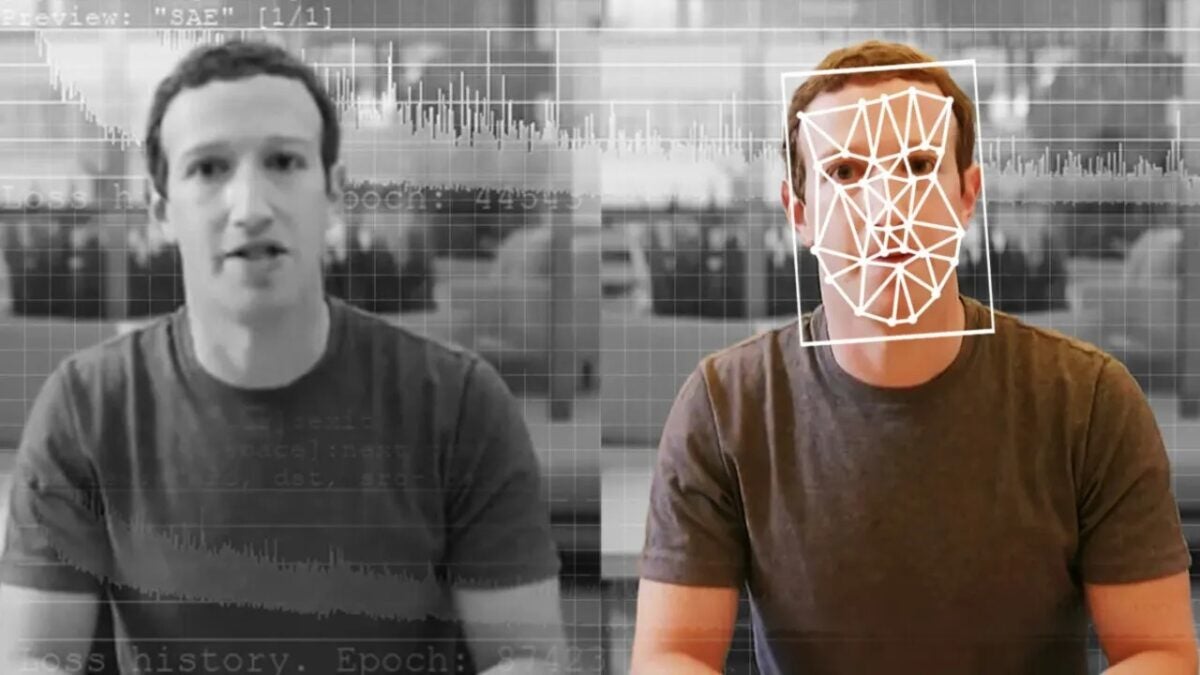
Artificial intelligence has once again been used for evil purposes, as revealed by the Hong Kong police. Someone posing as the chief financial officer of a UK-based company asked a finance worker from the multinational to carry out a secret transaction, and initial doubts were overcome with deepfake technology.
"A multinational company lost US$25.6 million in a scam after employees at its Hong Kong branch were fooled by deepfake technology, with one incident involving a digitally recreated version of its CFO ordering money transfers in a video conference call" https://t.co/bdwaIFz2JQ
How a scam valued at 25 million dollars was designed
After receiving the phishing email, the worker was invited to a video call with several people who looked and sounded like his colleagues, however, they were not actually them: they had used deepfake technology.
However, this deception was enough to trick the worker and he paid approximately 25.6 million dollars to the scammers. And this is not the first case in which this technology has been misused, according to the Hong Kong police, several incidents have occurred that have led to six arrests.
According to CNN, it was only discovered that the transfer was a scam when the employee contacted the company headquarters. No information about the company has been shared, and the current employment status of the worker after losing so much money is unknown.
The video call that tricked the employee included several people from the company pretending to be him. This demonstrates how powerful technology is and why literacy in these emerging technologies is crucial.
Some of the measures that end users can take to detect deepfakes are: lack of facial feature matching, verification of information with reliable news sources, and looking for unusual lighting, shadows, or head movements.
The paths of digital scams are inscrutable on the Internet. So much so that, currently, it is even possible to be scammed by falling into a fraudulent business where you supposedly get paid for giving a “like” or a “thumbs up” on platforms like YouTube. And, when it comes to easy money, you always have to be on high alert.
Scammers who use this method are even capable of giving a small and testimonial income to the victim to gain their trust and then take a much larger sum than the one received, taking advantage of the fact that the person lowers their guard, trusts the scammer and gives them the money they ask for to process their “liking” job.
As explained by Bitdefender Labs, this scam works in a simple way: they contact you to offer you a small incentive for liking a specific video and they give you the money for it (3, 5 dollars, a small sum) to trust the person on the other side of the network. Later, they will invite you to access a platform with a high payment barrier that, after delivering the money, shows that there is no business behind it.
According to reports from the victims, the scammed money can range from $20 to $1,100, depending on the person carrying out the scam and the payment barrier imposed on the victim. Thus, what was supposed to be an “easy job” to earn some extra income turns into a nightmare.
No industry is spared
The shadow of fraud, unfortunately, is not an exclusive scourge of a single sector: practically any profession and any person can engage in scams if they have the necessary knowledge and sufficient moral justifications to have no regrets. In fact, in recent days, the recently released video game, The Day Before, has been involved in a grotesque situation in that industry.
Many times it is difficult to blindly trust projects like this because it can be difficult to know the true intentions of the people behind a job, and that is why it is important to watch out for any signs that raise alarms. In the case of The Day Before, for example, there were already many doubts raised by the lack of truthfulness of the previously shared trailers and gameplay, something that made many users take a step back and avoid supporting the game without having seen it finished first.