The future of Spain in the Eurovision contest is at a crossroads, marked by a growing political and ethical crisis related to Israel’s participation. The controversy intensified after the televote of the 2025 edition, which, despite international criticism of the Israeli offensive in Gaza, resulted in massive support for the country, sparking protests and calls for a boycott from several nations, including Spain. From the river to the sea, RTVE, the Spanish public television, has remained firm in its stance on Israel’s participation, stating that this […]
The future of Spain in the Eurovision contest is at a crossroads, marked by a growing political and ethical crisis related to Israel’s participation. The controversy intensified after the televote of the 2025 edition, which, despite international criticism for the Israeli offensive in Gaza, resulted in massive support for the country, sparking protests and calls for a boycott from several nations, including Spain.
From the river to the sea
RTVE, the Spanish public television, has remained firm in its stance on Israel’s participation, stating that this country has repeatedly violated rules in the last editions of the contest. A spokesperson for the organization has declared that “any other country would have been sanctioned if it had done the same”, and has stated that the new rules of the European Broadcasting Union (EBU) regarding transparency and participation in conflicts are not robust enough.
As the decisions about Eurovision 2026 approach, the tension persists. Although RTVE has not yet confirmed its participation in the upcoming contest, the discussion about human rights and ethics in the context of competitions like Eurovision has become central. Negotiations will continue in Geneva next week, and public dialogue on these issues is expected to intensify.
This scenario represents a historic challenge for RTVE, which must decide whether to maintain its tradition of participating in the festival, while facing significant pressures due to the international political context. Debates about Spain’s continuity in Eurovision have intensified, making this year’s participation more complicated than in previous editions.
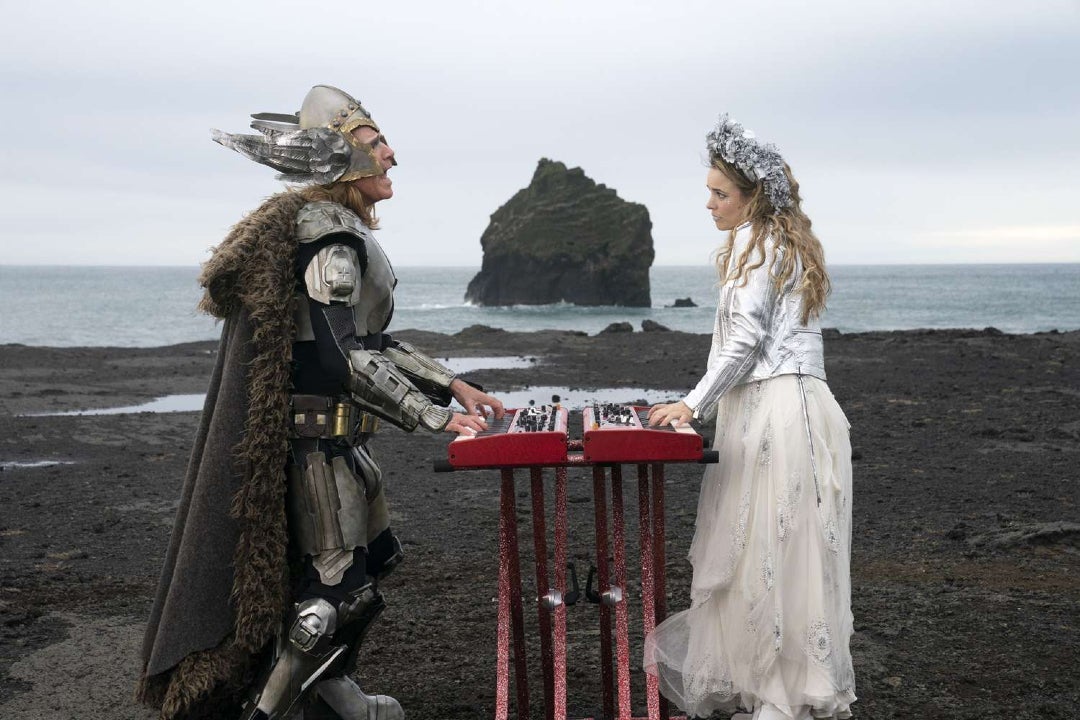
A new musical project is taking shape, based on the successful Netflix movie Eurovision Song Contest: The Story of Fire Saga, released in 2020. This ambitious work aims to bring the vibrant and colorful essence of the famous European song contest to the Broadway stage, turning the film into an unforgettable theatrical experience. Will Ferrell is not exactly who we associate with Eurovision. Will Ferrell, who starred in the movie, has joined Harper Steele and Anthony King to write the book for the musical. Savan Kotecha, known for his work in the music industry, will be in charge […]
A new musical project is taking shape, based on the successful Netflix movie Eurovision Song Contest: The Story of Fire Saga, released in 2020. This ambitious work aims to bring the vibrant and colorful essence of the famous European song contest to the Broadway stage, turning the film into an unforgettable theatrical experience.
Will Ferrell is not exactly who we associate with Eurovision
Will Ferrell, who starred in the movie, has joined Harper Steele and Anthony King to write the book for the musical. Savan Kotecha, known for his work in the music industry, will be in charge of the composition, promising catchy and exciting melodies that capture the festive spirit of Eurovision. As director, Alex Timbers has been confirmed, known for his skill in directing innovative and visually striking productions.
The team behind this project has expressed their excitement about the possibility of bringing Eurovision to Broadway. The incorporation of eye-catching visual elements and a clever script is expected to make this musical a celebration of diversity and creativity, themes that resonate deeply in both the film and the Eurovision contest itself.
Details about the release date or the cast have not yet been revealed, leaving room for speculation and anticipation among fans. However, the news has already generated great interest, especially among those who enjoyed the original film and the culture surrounding the world’s most well-known European music contest. This adaptation is expected to attract not only fans of the film but also a broader audience eager to experience the magic of Eurovision in a new format.
Let’s take a look at some of the moments that nobody wants to remember from the festival: the worst songs in history. A journey to off-key singing, vocal cracks, and impossible oddities.
If I say “Eurovision”, what do you think? Throughout its almost seventy years of history, it has given us a lot to talk about, but we will always remember Dana International, the catchy rhythms of Abba, Rodolfo Chiquilicuatre’s ‘Chiki-Chiki’, or Salvador Sobral’s victory. But there are times when the European song contest falls short, and the songs don’t turn out as they should. Let’s take a look at some of the moments that no one wants to remember from the contest: the worst songs in history. A journey through off-key performances, vocal cracks, and impossible oddities.
Zero points for the United Kingdom in a song where the group Jemini didn’t hit a single note, to the horror of the audience watching from home how they were destroying a song that, in itself, wasn’t great. The following year after this national embarrassment, they split up. Fans of Eurovision since they were young, the singers complained that due to a technical problem they couldn’t hear the music. In any case, it’s better to listen to nails on a chalkboard.
We are the winners (LT United, Lithuania)
With a song whose lyrics read “We are the winners of Eurovision,” and in the face of boos from the audience, LT United managed to create such madness on stage that they rose to sixth place with 163 points. However, looking back over the years, the result was an absolute madness typical of those years when countries didn’t know if Eurovision was something from the past, a trend contest, or just a joke.
Mil etter mil (Jahn Teigen, Noruega)
The first singer who ever got zero points with the new 1975 scoring system, a melodic artist who decided to exaggerate the pronunciation of each letter of the song to ridiculous limits. Funny to watch? Very much so. Good? Not really. Teigen, surprisingly, represented her country two more times, doing much better, because you have to believe in second television opportunities, of course.
Quién Maneja Mi Barca (Remedios Amaya, Spain)
Remedios Amaya decided to participate in Eurovision with a new flamenco song, which the government deemed representative of the emerging modern music genres in the 80s. She received zero points because no one abroad understood what the hell she was doing. It’s possible that today, with Rosalía dominating the sales charts, it could be a success… or not. Because, well, the song is not exactly good.
PingPong (Sameyakh, Israel)
It’s been 24 years since this song and it’s time for us to be honest: Eurovision, at that time, was a horror. A group that could barely sing, and ended up with 7 points (and only because France gave them 6 by chance). It’s unbelievable to listen to.
Illusion (Krassimir Aramov, Bulgaria)
Here’s a little trick, because the song didn’t make it past the semifinals… wisely. Krassimir Avramov had just won the “Superstar of the Year” award in Los Angeles and his performance was expected to be amazing, but judge for yourselves: with 16 points, he said goodbye to the Eurovision final, to the relief of our eardrums.
Teenage Life (Daz Sampson, United Kingdom)
A rap with teenagers and a man over thirty in the middle, with semi-angelic melodies mixed with hip-hop beats. Exactly the opposite of what anyone would want to hear, in general. The song was a success in the United Kingdom and Sampson believes it helped improve the image of Eurovision among the country’s audience. Those who are not comforted are because they do not want to be.
Shir habatlanim (Datnet & Kushnir, Israel)
Natan Datner and Avi Kushnir were comedians and not singers, and you could tell that throughout their, let’s say, performance. In Israel, people were shocked to the point that their Minister of Culture promised to resign if they took part. Not only did they take part, but they finished eighth, for some reason, and, like all politicians, the minister did not keep his promise. Unexpected, huh?