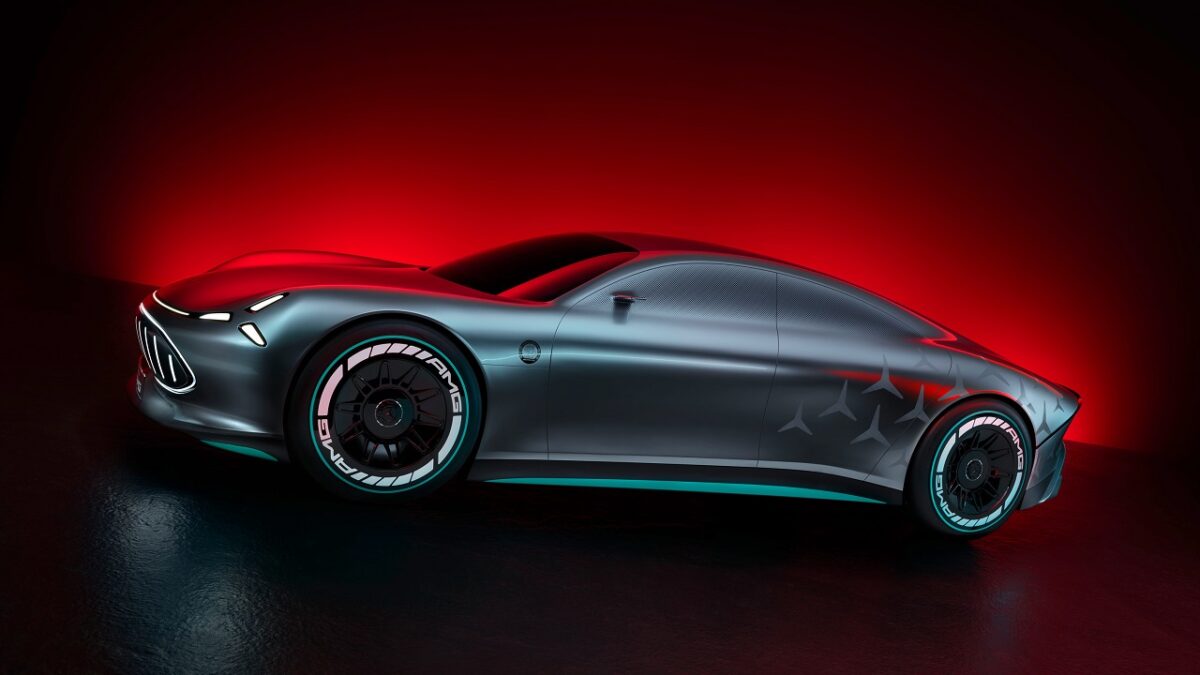
Mercedes-AMG is gearing up to launch an all-electric GT vehicle boasting an impressive 1,000 horsepower, directly targeting the high-performance Porsche Taycan.
The new GT is expected to challenge the Taycan Turbo GT, with a remarkable 0-100 km/h acceleration time of just 2.2 seconds, effectively placing it in the upper echelon of electric supercars.
In a strategic shift, Mercedes-AMG has announced that it will eliminate the EQ sub-brand, opting to unify the design language of its electric vehicles (EVs) with its internal combustion engine (ICE) models.
This move aims to enhance brand consistency and aesthetics, as previous models under the EQ banner have been criticized for their lack of appeal and confusing identity.
The forthcoming AMG GT will be built on the innovative AMG.EA platform, which is distinct from existing Mercedes-Benz electric architectures. This bespoke platform is set to incorporate cutting-edge technologies, including a pair of axial flux electric motors, known for their compactness and enhanced power output compared to conventional radial motors.
This development signifies a substantial leap in AMG’s approach to high-performance electric vehicles.
Despite these advancements, some design elements have drawn criticism. The iconic three-pointed star motif, now integrated into the vehicle’s head and tail lights, has been regarded by some as a questionable aesthetic choice. Critics argue that this decision deviates from Mercedes’ reputation as an engineering powerhouse, transforming it into what may seem more like a fashion brand.
As Mercedes-AMG prepares for this ambitious entry into the electric landscape, it remains to be seen whether this latest offering can sway traditional AMG fans and attract a new generation of performance enthusiasts in an increasingly electrified auto market.
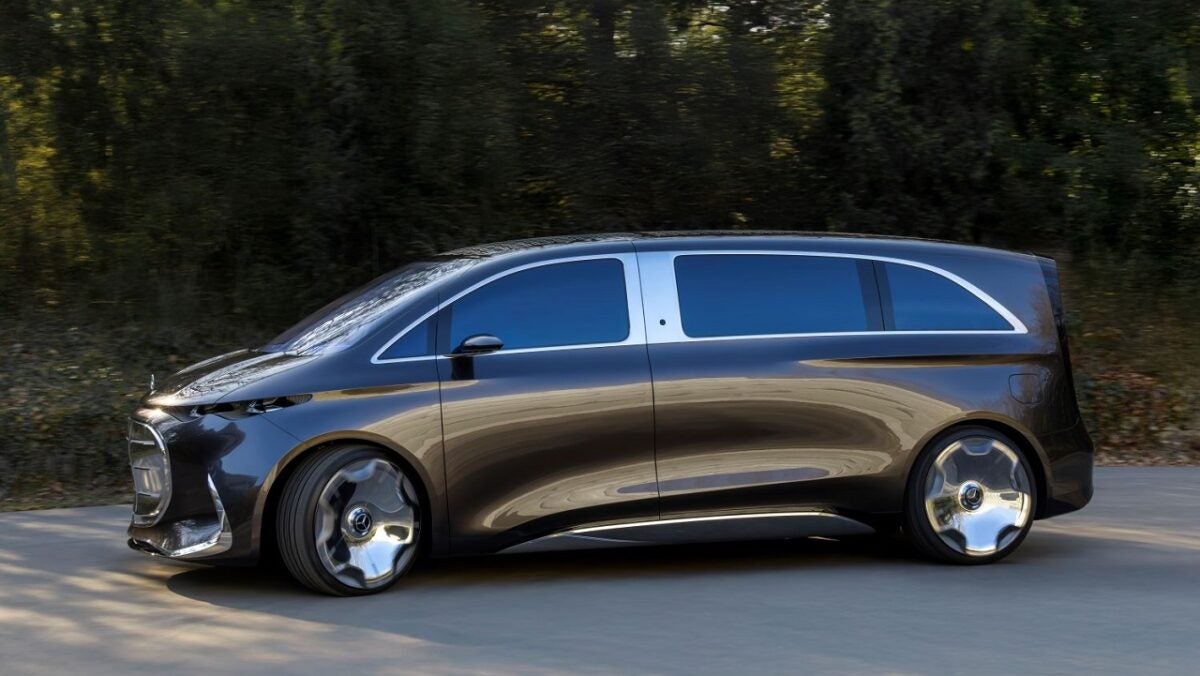
Mercedes-Benz is pushing the envelope in interior design with its latest Vision V concept, featuring innovative folding lounge chairs and a stunning 65-inch television.
This design study illustrates the potential for reimagining the interior of minivans, transforming them into luxurious and functional living spaces.
The bold design philosophy reflects a growing trend towards customization and comfort in the minivan segment, which is increasingly appealing to a diverse range of consumers.
As emissions regulations worldwide creep up on automakers and electrification is the name of the game in automotive innovation, it seems to be a matter of time before limousines become EVs themselves.
This dual focus on visual impact and utility positions the ID. Buzz as a formidable competitor in the growing minivan market, showing that vans no longer have to compromise on style.
The Chrysler Pacifica Plug-In Hybrid provides additional insight into the evolving functionality of minivans. Its low and wide floors optimize battery storage, showcasing how innovative engineering can meet the demands of hybrid technology without sacrificing space.
This design enables families to travel further with ease while reducing their carbon footprint, aligning with trends toward sustainability.
In the realm of luxury minivans, the Li Auto Mega stands out as an exclusive, all-electric offering aimed at the Chinese market. With its distinctive design, the Mega sets a new standard for what consumers can expect from high-end minivans.
Meanwhile, Volvo is preparing to launch its EM90 in China, signaling the brand’s entry into the luxury van space. With expanding global interest, the EM90 may soon reach markets beyond China, further emphasizing the rising demand for upscale minivan options.
Mercedes-Benz has unveiled a new initiative to enhance electric vehicle (EV) infrastructure with the launch of high-power charging stations at its headquarters in Sandy Springs, Georgia.
This ambitious project responds to the surging demand for efficient charging solutions amid the increasing adoption of electric vehicles across the country.
Mercedes-Benz Launches High-Power EV Charging Stations in America
This move positions Mercedes-Benz as a key player in the transition to sustainable transportation, addressing the pressing need for reliable charging options for consumers. The firm emphasizes its commitment to sustainability and innovation, factors critical to maintaining relevance in today’s automotive market.
The charging stations, which boast rapid charging capabilities, are expected to significantly reduce the time it takes for drivers to power up their vehicles. This convenience is vital for users who prioritize efficiency and accessibility, especially in a landscape where charging station availability can often limit the appeal of electric vehicles. Mercedes-Benz aims to alleviate these concerns and provide a seamless experience for EV owners.
As electric mobility continues to grow, industry experts speculate that other manufacturers may follow suit by launching similar initiatives to expand their charging networks.
This growing trend could transform transportation infrastructure, making electric vehicles more attractive to a broader audience. Mercedes-Benz’s efforts in Sandy Springs are seen as a strategic move to lead the charge in this evolving market space, reflecting the automaker’s dedication to both performance and sustainability.
With this new charging hub, Mercedes-Benz not only enhances its own EV offerings but also contributes to the broader push for a sustainable future, where electric vehicle adoption is supported by robust infrastructure and innovations that reduce carbon footprints.
Any economist can tell you that video games are a goldmine. High profile games like Grand Theft Auto V have generated more revenue than any movie that’s ever released. Naturally, advertisers want in on the action. Just like in movies, the logic is that if a product is featured in a popular game, people are more likely to buy it. Product placement must be used carefully, however, as it can easily stick out like a sore thumb and turn people off from both the game and the product. Whether they worked or not, here are the five weirdest product placements that have ever been featured in a video game.
5 weirdest product placements in games
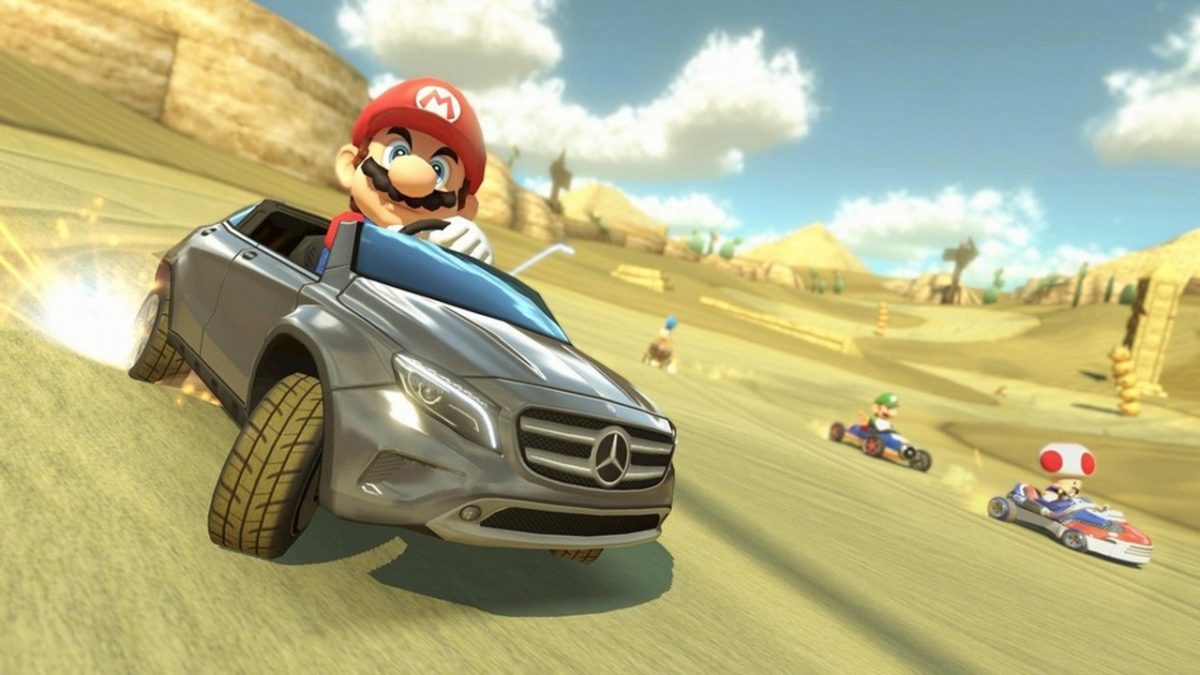
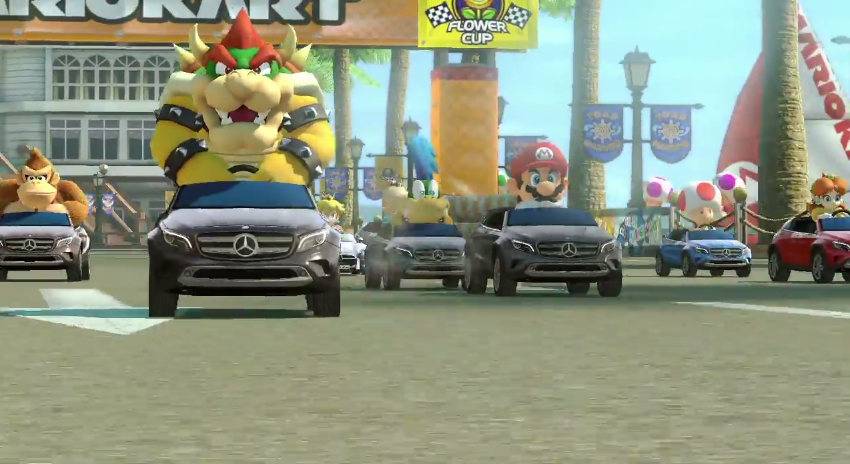
5. Mercedes-Benz in Mario Kart 8
Mayonnaise-colored Benz I push Miracle Whips!
Seeing Mario and friends hurling bananas and Koopa shells at each other out of a Benz will never not be hilarious. It’s so jarring that it actually works. It’s common for car companies to license their vehicles for racing games, but usually, it’s for realistic racers like Forza, not kart racers. Funnily enough, some car brands like Toyota don’t allow their cars to be featured in video games at all, because they fear that their brand would become devalued. Then, a luxury brand like Mercedes hops straight into the Mushroom Kingdom. You can’t exactly blame Mercedes-Benz for wanting their cars featured in the most popular racing game in the world, even if that game is cartoon chaos. Plus, the crossover gave us this amazing commercial:
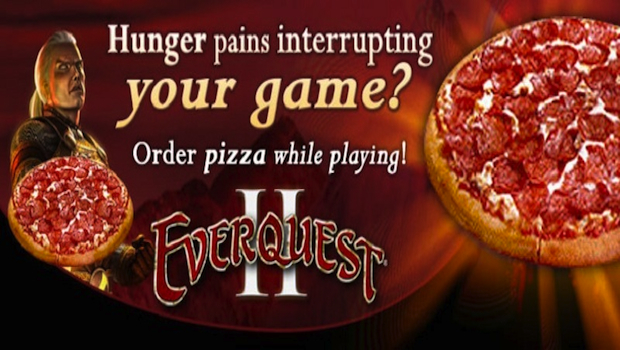
Since the dawn of time MMO players and pizza deliveries have had a symbiotic relationship: one cannot exist without the other. Realizing this, Pizza Hut teamed up with popular MMO Everquest II to allow players to order pizza in-game. If you’re hours into a raid and IRL starvation is preventing you from getting your hard-earned loot, simply type “/pizza” into the all chat to get a pizza at your door within minutes. While many people mock MMO players for their fast food addictions, you have to hand it to Pizza Hut for this stroke of marketing genius.
Finally, a pizza delivery service for me!
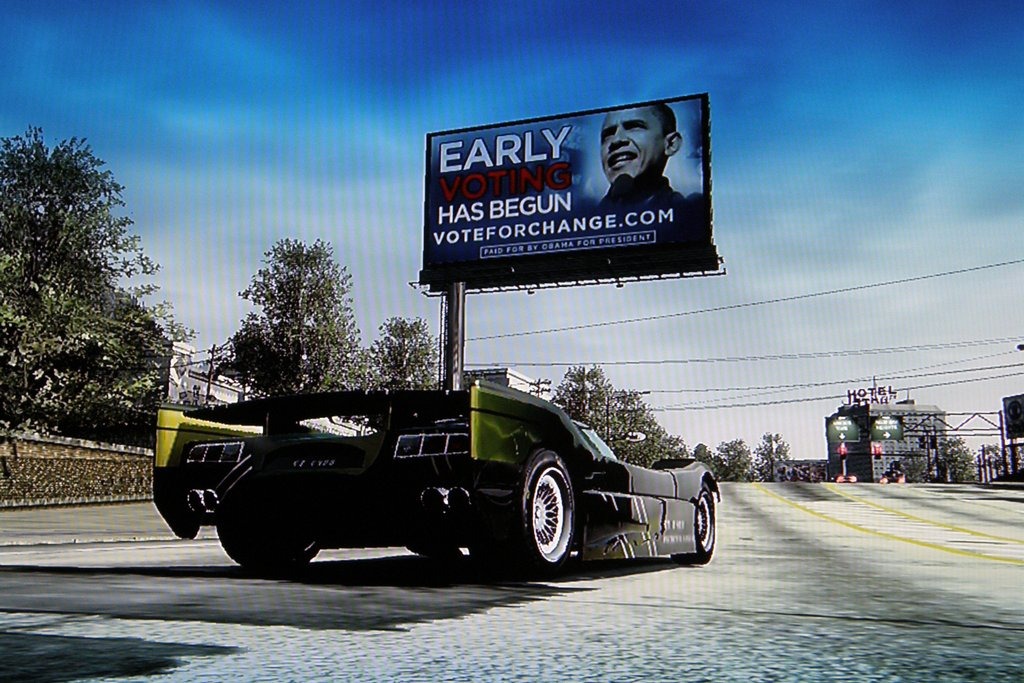
3. Burnout Paradise and Barack Obama
And with that, the race was won
Back in 2008, then president-elect Barack Obama was noted for using the internet to advertise his campaign. He took it a step further and bought advertising space in the racer Burnout Paradise. Burnout Paradise is famous for its massive open world that spans multiple American states. Billboards for Obama appeared in-game in Ohio, Florida, Iowa, Colorado, Indiana, Montana, North Carolina, New Mexico, Nevada, and Wisconsin, states that had voted Republican in the last election cycle. It’s unknown how well this campaign strategy worked, but look forward to seeing Trump’s face plastered all over the next GTA come 2020.
2. Sonic Adventure 2 and Soap Shoes
Sonic’s iconic buckle shoes vs. his TUBULAR Soap shoes
Sonic fans may have noticed that in Sonic Adventure 2 the titular blue hedgehog wears brand-new shoes. The new shoes are Soap shoes, which is actually a real brand of extreme sporting shoes. The shoes had a hard plastic indent on the bottom that allowed wearers to “grind” on rails, like so:
I will give you $50 if you can find a more early-2000’s picture than this one
As if Sonic wasn’t radical enough already, Sega teamed up with Soap to let the blue blur grind rails. I didn’t know anyone who wore Soap shoes back then, but I can only assume that attempts to grind rails with them led to countless injuries. Remember kids, just because Sonic can grind on rails and run through loops doesn’t mean you can.
Note: The final product placement truly needs to be seen to be believed. I truly believe, deep within the recesses of my heart, that no one will ever top how absolutely baffling this next product placement is.
1. Skittles and Darkened Skye
Look at the above screenshot, what do you see? At first glance, it may just look like another mid-2000’s fantasy game. But if you look in the bottom left corner, something looks extremely out of place. That something is a Skittle.
Back in 2002, publisher Simon & Shuster wanted to make video games based on Mars candy, like M&M’s and Skittles. After securing the rights to use the candies, S&S quickly got their developers at work creating the candy based games. The developers of Darkened Skye initially refused to make a Skittles-based game, but eventually agreed to make it on the condition that it would be a humorous fantasy game.
In Darkened Skye, the player uses different magic based on differently colored Skittles. It’s clear that the developers knew that making a high-fantasy Skittles game was incredibly stupid. as the characters in-game constantly use self-deprecating humor. The most hilarious part is that Skittles do not appear at all on the game’s box art, which instead appears as a normal fantasy game. I can only imagine the poor kid who bought the game expecting an epic fantasy adventure only to find themselves using the magical power of Skittles™ candy!
Do you think these ads actually worked? Any weird crossovers we missed? Let us know!