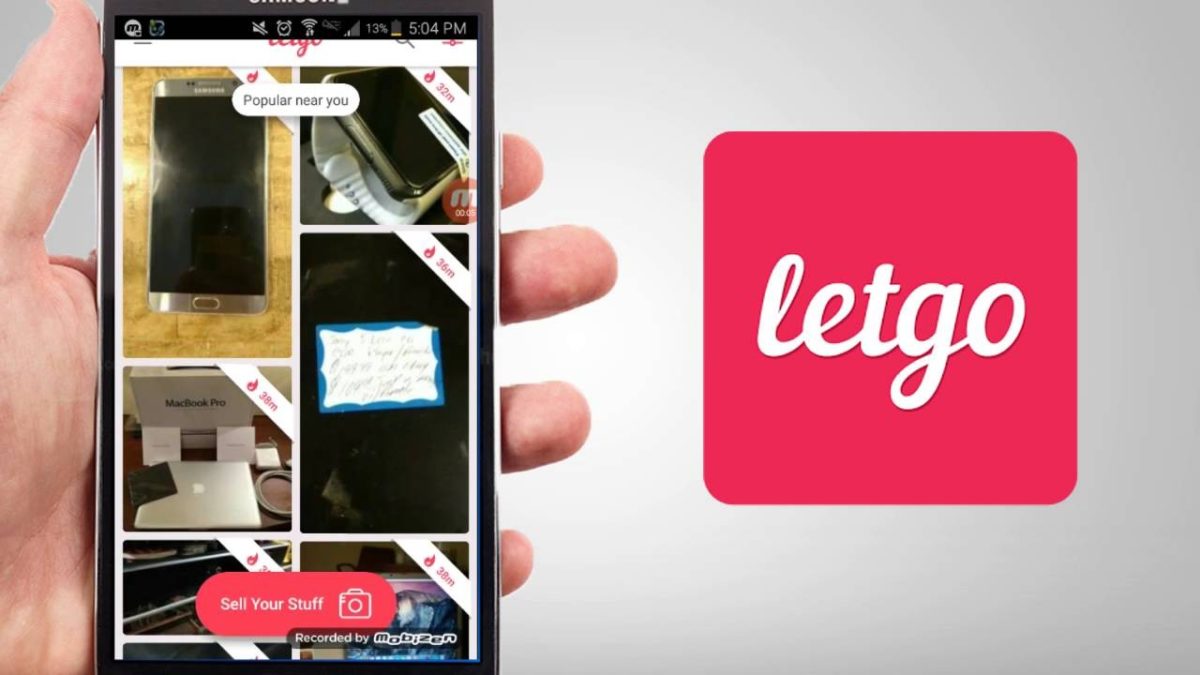
How to use LetGo to sell or buy used stuff

Want to get rid of your stuff or buy something used on the cheap? You need to try LetGo.

LetGo

“The stuff we have isn’t always the right stuff,” laments LetGo on their site. It’s totally true; as we enter new phases of our lives – new job, kids growing up, getting that new house, inheriting gifts from family – the only way to make room for the new is to get rid of the old. If that sounds like an angry sentiment reminiscent of Kylo Ren, that’s not really what we’re getting at. It’s more like getting rid of that bookshelf that can’t hold enough books, or selling that pair of shoes that you outgrew last year.

In fact, with LetGo you might even get paid to do your spring cleaning.

What is LetGo?

Founded in 2015 by entrepreneur Alec Oxenford, LetGo is a website and app that lets users buy and sell their stuff within a configurable radius.

That’s right – LetGo is preset to your location, meaning you won’t have to pay or wait for shipping, talk to people across the country, or drive out someplace far away to pick up the package.

LetGo is the largest and fastest growing app for local buying and selling, and it’s got everything from clothes to cars to action figures. Within the first two years, the app saw 3 billion messages – which averages out to around 9 million a day – and that number has only grown. Whether you’re in Denver, San Diego, Chicago, Las Vegas, Orlando, Houston… or practically anywhere in the U.S., you’ll find deals and people willing to scoop up your old stuff.

What kind of products are on LetGo?

It’s pretty much all there, you just have to search for it! The most popular searches on LetGo are used smartphones, clothing, electronics, old furniture, vehicles, and even real estate. Just keep scrolling until you find something worth getting. Or put something up on offer yourself if you’ve got needless clutter that you won’t miss. See it magically poof into money.
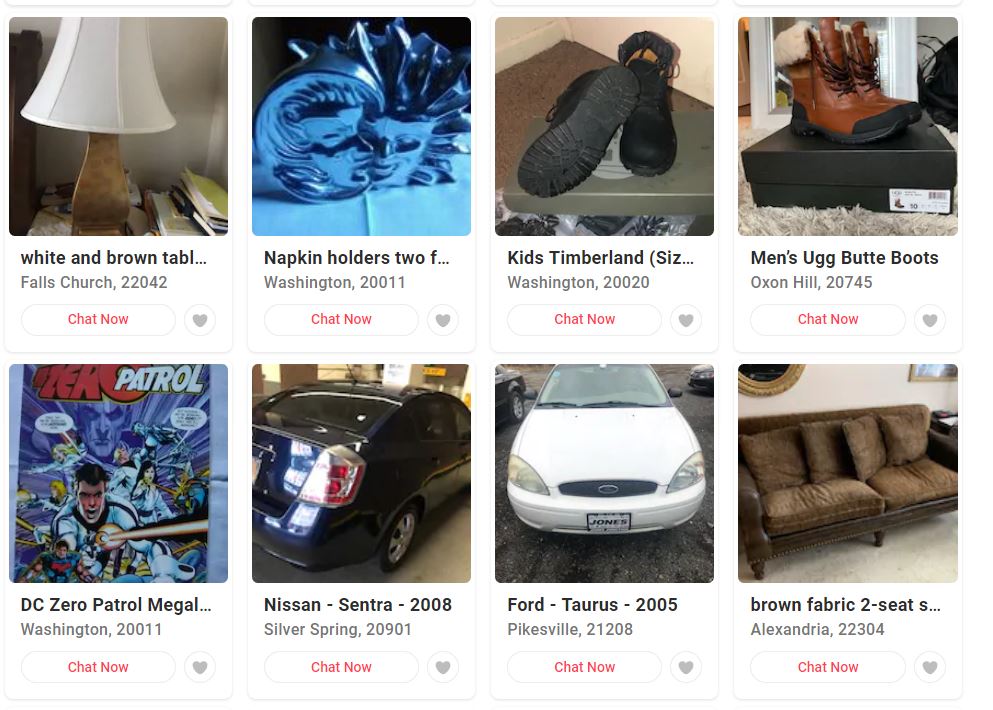
Products on LetGo search
LetGo has everything from shoes to cars to comics. All local.

LetGo has competitive deals on it all, be it a used PlayStation, your dad’s unused record collection, someone’s unwanted Samsung Galaxy, or a beat-up old board game. The app is essentially a constantly-refreshed garage sale on your phone.
How do you buy something on LetGo?

“There’s a secret economy right in your neighborhood,” says LetGo, “and we’re your ticket in.” The beauty of the app is that all its products are displayed based on the geo-location closest to the buyer, and there’s no log in required. The app is integrated with instant chats to make your experience as streamlined and simple as can be.
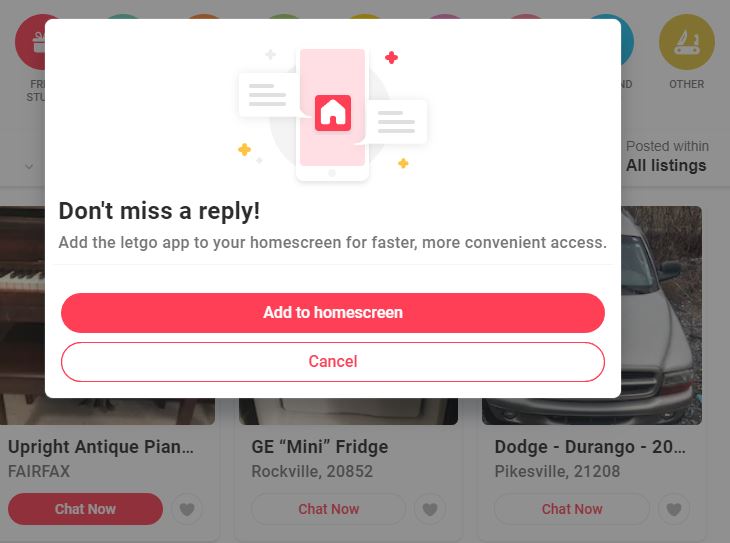
LetGo app pop-up
Get notifications when someone’s interested in your stuff.

LetGo was designed with the mobile user in mind, so the marketplace interface is primarily optimized for smartphones, featuring large photos of products for sale that users can scroll through as long as they wish. You can rifle around for stuff on sale nearby, or you can look up something specific if you’ve got something in mind – like a more compact, community-oriented Amazon, eBay, or Craigslist. You can swipe between other users’ profiles, ratings, and reviews, too, if you want some idea on what else they might have for sale.

Buyers on LetGo can easily nudge the sellers, with auto-fill button prompts like “is this item still available?”, “what condition is this in?”, or “is the price negotiable?” to initiate a conversation with them.
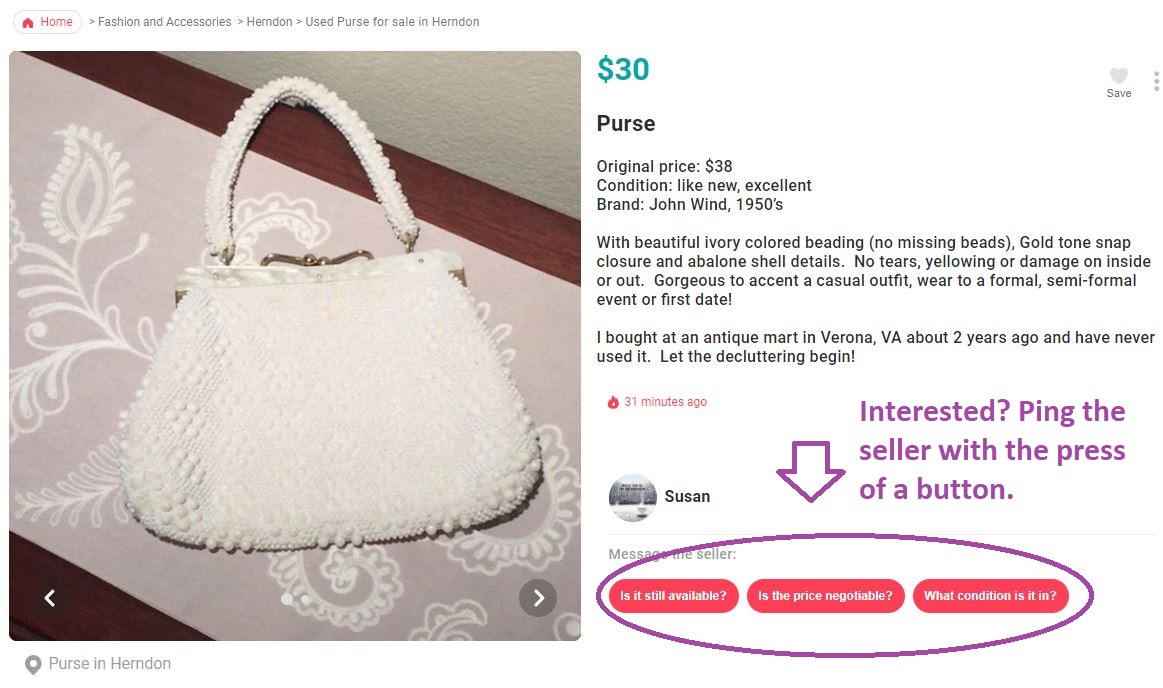
Ping the seller of this purse on LetGo

After you’ve bought something on the app, you can choose to rate your experience and the seller, or leave a comment. Just like on Yelp, that rating will then show up in their profile on the app.
How do you sell on LetGo?

Selling on LetGo is even easier than buying. All you have to do is take a picture of what you’re looking to sell, upload the image photo to LetGo (either on mobile or desktop) and the website will take care of the rest. Once it generates interest, LetGo will notify you of any messages or comments your post has gotten. You can also use Featured Listing to make sure your product remains a priority:

LetGo is the only buying and selling app that automatically titles and categorizes your listing – no matter what it is! It does this by using image recognition to scan the product, build the listing, and even siphon it into the right category so any prospective buyers can find it easily.

Is LetGo safe?

Yep. Tens of millions of people use the service, so LetGo stamps all its verified user profiles with reviews and ratings, giving you the general consensus on the seller and providing you an opportunity for a dialogue with them. Since LetGo can be integrated via instant messaging, all buyers and sellers can chat with each other without even having to leave the app. You won’t even need to give out your email address or phone number! Instead, you can directly negotiate your price or find a time to meet in person.

You also cannot use LetGo to send or receive money, so there’s another element making this safer than eBay, less dangerous than Craigslist, and less corporate than Amazon.
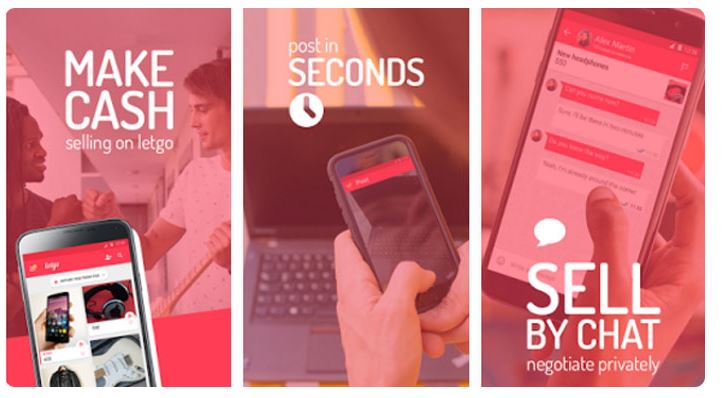
Make cash, post in seconds, sell by chat with LetGo
Buy and sell privately with LetGo.

For more information on LetGo’s safety, you can check out their privacy policy here and their community guidelines here. LetGo has over 75 million downloads and 200 million listings, so download the app today for free and see what you can offer, and what it can offer you!

5 best apps to sell your clothes

Inspired by Marie Kondo to clean out your closet? Try these great apps.

selling clothes

We’re in the golden age of the so-called “side hustle.” Or, maybe we’re just hearing that buzzword a lot as of late.

In any case, between delivering meals to delivering people, we were curious if people were side hustling by selling their clothes online.

It seems that we’re out of the era of striking it rich on eBay a la Nasty Gal, but there are a few apps that keep getting major mentions both online and off.

There’s ThredUP, Poshmark, Depop, and others — presenting a broad user base ready to shop your closet.

So, what’s the deal—can you make any cash?

Like any other seemingly easy money-making schemes, there are several articles from questionable sites that tell you how a student or a stay-at-home mom made six figures selling clothes on Poshmark or Depop.

We came across a UK sneaker seller who made his living flipping shoes, as well as several sellers who made a decent chunk of change through these platforms, but you likely won’t be able to quit your day job.

You’ve got to know what sells

One thing that’s always a challenge with reselling clothing, shoes, and bags is knowing whether anyone will want your old stuff.

Think back to anytime you’ve ever dropped a few bags off at your local Crossroads or Buffalo Exchange.

You probably went in thinking you had some real gems in those old grocery bags but walked out with a measly $10.

Online, there are more chances to impress the buyer. But, clothes need to be in good shape.

You’ll also need to have some knowledge of the trends, the seasons, and how much items are supposed to cost.

Picking the right app for your wares is also a big part of whether you’ll make any money.

Some apps specialize in high-end items, while others cater to a trend-driven crowd or bargain hunters.

Here’s the quick rub on some of the more popular apps.

Top apps to sell your clothes

Depop

Depop is a social selling app that allows you to list your old clothes for free and build a personal store. The app is formatted a lot like Instagram, making it a natural fit for sellers that use the social media site on the regular.

Depop makes you do a bit more work than competing apps, but the benefit is, they only take a 10 percent commission, plus PayPal fees.

Sell anything from vintage wares to gently used mall brands, as well as things like records, accessories, and more. The main thing to remember is that looks matter a ton.

According to the company’s CEO, Maria Raga, the secret to successful selling lies in a combination of top-notch photography and an accurate description.

Poshmark

Poshmark has become super popular over the past couple of years. The platform is stuffed with millions of users, who put together virtual closets by uploading photos and descriptions.

Selling your clothing on Poshmark means taking some pics, and enhancing them with one of eight provided filters. Then you’ll add a description, as well as category, size, and price. Poshmark determines your fee — it’s a flat fee of $2.95 for items $15 and under or 20 percent on anything over that $15 threshold.

It’s worth pointing out that Poshmark has a distinctively social aspect to it. To drum up attention on the app, you need to like comment and follow other users. The more you engage, the more you’ll sell. So, this isn’t the best option for people who don’t enjoy participating in social media.

High-end labels and designer clothes do well on the platform, as do trendier brands like Anthropologie, Madewell, and Lululemon.

Poshmark: Buy & Sell Fashion Download Free ►
7

Tradesy

Tradesy is similar to Poshmark, but they have a different commission structure. The site also only takes women’s clothing, no kids stuff or menswear, allowed. Tradesy is the best place to sell your old handbags, as well as wedding attire you’ll never use again.

This app allows shoppers to browse by brand or category, and the site guarantees that all items are authentic and in good condition.

Selling on the app is relatively easy, too. Simply download the app and snap a few shots of your items — from there, Tradesy will enhance your images by removing distractions. Add your details, and you’re good to go.

Sellers can request a free shipping kit from the app or use their materials, and send items on their way. The app does take a 19.8% commission—which may seem pretty hefty. However, what we did like about this app was, you don’t need to do a ton of socializing as you do on Depop or Poshmark.

The RealReal

The RealReal is your destination for offloading the high-end stuff that just didn’t work for you. While you won’t be able to ditch your whole wardrobe here, if you’ve got a decent amount of designer duds, this is a great hands-off option.

To start selling, you’ll need to make an appointment with The RealReal’s luxury managers, who come to your home. Or, you’ll have the option to mail items to the warehouse for free.

Sellers earn 70 percent of the selling price, which seems like you lose a big cut, but you don’t need to do anything other than provide the items.

The RealReal handles the sales, photography, and advertising, so the higher commission may well be worth the time saved, especially if you’re not a confident photographer.

The RealReal Download Free
7

ThredUP

ThredUP is an interesting one, here. It’s not necessarily a reliable source of cash. Rather, it’s a nice way to earn a few bucks when your closet needs a good purge.

ThredUP does everything for you; you’ll order a clean-out kit and pack up your clothes. Then, they’ll sort through your clothes and pay you according to the selling price of each item they accept.

The benefit of working with these guys is, even if they choose not to use your clothes, you don’t have to take back the rejects. They’ll go ahead and donate your old stuff for you.

thredUP - Buy + Sell Clothing Download Free
8

Wrapping up

In the end, you kind of need an endless well of nice inventory that’s on the pulse of what’s cool. As a side hustle, selling clothes online seems like you’ll need to invest a lot of time and energy into selling — from the photography, the keywords, and understanding the market.

It seems that most people earn enough to exchange their old clothes for new ones, meaning, it’s a solid way to get a fresh wardrobe without breaking the bank.

All of those “six-figure sellers” likely treat their digital stores like the online business it is, which requires a full-time commitment, much like other types of online hustles.

Where eBay resellers once did alright by scouring the local Goodwills and Salvation Army for carelessly discarded gems, it seems too many people got in on the secret.

Now, the local thrift store is loaded up with discarded Target and H&M options that don’t quite hold up the second time around.

As such, app-based resellers will need to get savvy about finding their stock. Whether that’s through sample sales, discounts, or an online shopping habit, it’s more work than it may initially appear.