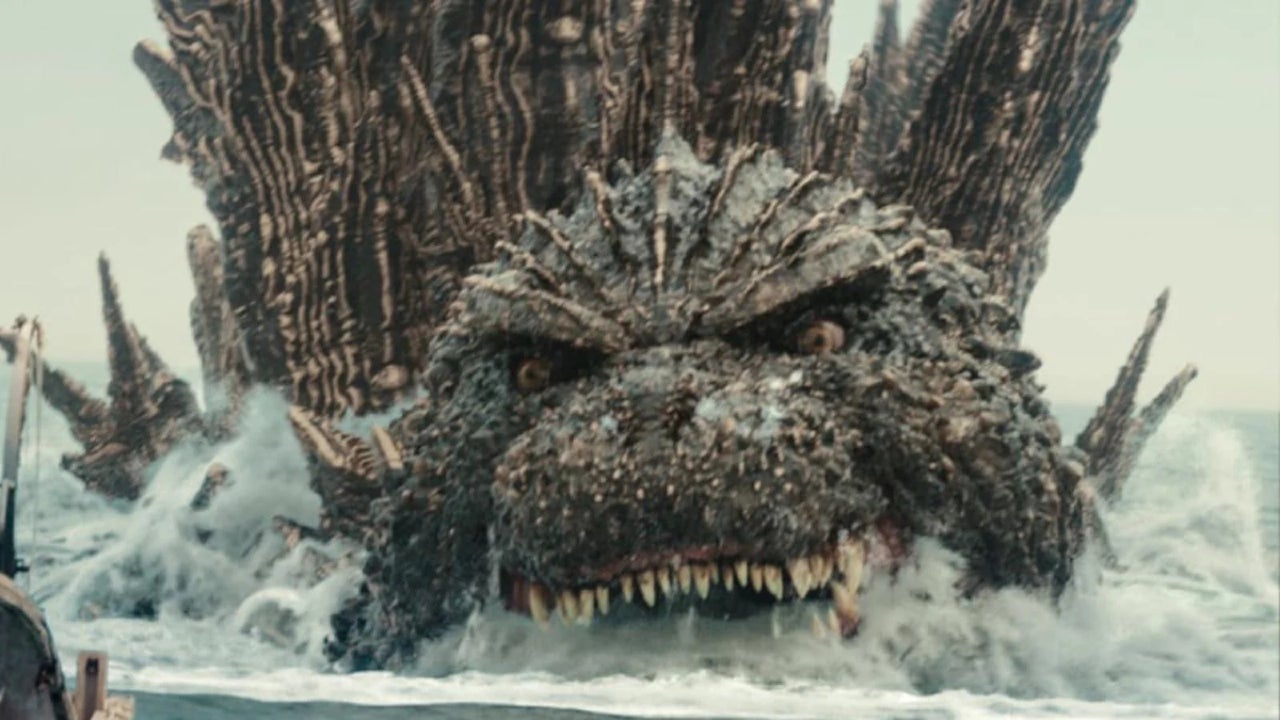
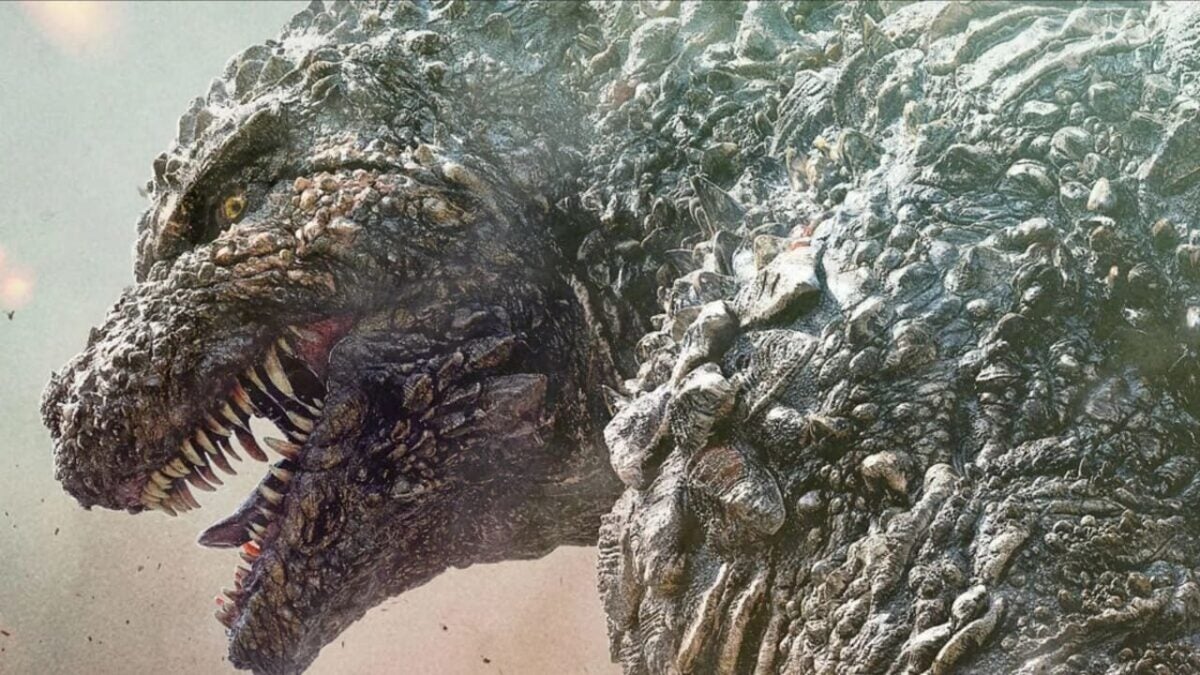
Toho has officially revealed the title of its upcoming Godzilla movie: Godzilla -0.0 (Godzilla Minus Zero). The news was announced during the annual Godzilla Fest held in Tokyo, an event that attracts fans from various generations and where updates about one of the most iconic film franchises are shared. The confirmation of this title was also published on Toho’s official Twitter account, generating great anticipation among followers. The director of Godzilla Minus One returns The direction of Godzilla -0.0 will be handled by Yamazaki Takashi, who will also be responsible for the writing […]
Toho has officially revealed the title of its upcoming Godzilla movie: Godzilla -0.0 (Godzilla Minus Zero). The news was announced during the annual Godzilla Fest held in Tokyo, an event that attracts fans from various generations and where updates about one of the most iconic film franchises are shared. The confirmation of this title was also published on Toho’s official Twitter account, generating great anticipation among followers.
The live broadcast of Godzilla Minus One returns
The direction of Godzilla -0.0 will be handled by Yamazaki Takashi, who will also be responsible for writing and supervising the visual effects. This dual role of the director is a hallmark of his career, where he has demonstrated his ability to merge intense narratives with innovative visual technology. The visual effects, which play a crucial role in the representation of the monster and its environment, will be managed by Shirogumi, known for its work in creating high-quality visual effects in various film productions.
The anticipation for Godzilla -0.0 is growing not only among fans of the saga but also in the realm of action and fantasy cinema. This is because each installment of the saga has brought something new and exciting, and this one does not seem to be the exception. Although few details about the plot have been revealed, rumors suggest that it could explore new facets of the iconic monster and its relationship with humanity, a recurring theme in various adaptations that many fans hope will be addressed in an innovative way.
As the release date approaches, Godzilla fans will be on the lookout for more updates and details about what promises to be another exciting chapter in the rich history of the King of Monsters.
Cinema between the 50s and 70s was a factory of dreams, but above all of blatant copies, nameless plagiarisms, and things that today would make us put our hands to our heads. The reason was the industrialization of countries other than the US, with its eternal and luminous Hollywood, but also the decline of the once omnipotent movie mecca: although it seems that Hollywood has never ceased to be relevant, in reality, since the 50s it is no longer what it was. And that is why the copy, more or less blatant, of what came from there or […]
The cinema between the 50s and the 70s was a factory of dreams, but above all, of blatant copies, nameless plagiarisms, and things that today would make us put our hands to our heads. The reason was the industrialization of countries other than the US, with its eternal and luminous Hollywood, but also the decline of the once omnipotent movie mecca: although it seems that Hollywood has never ceased to be relevant, in reality, since the 50s it is no longer what it was. And that is why the copy, more or less blatant, of what came from there or from anywhere else became the norm. Who was going to complain?
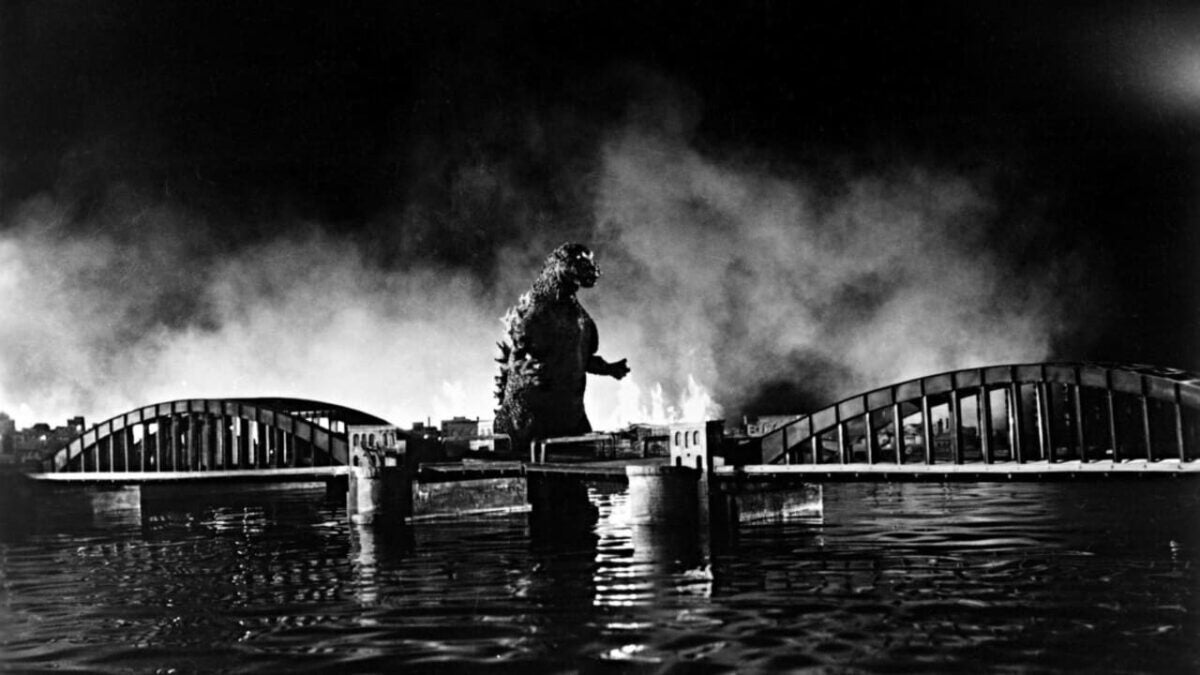
Even more so if the one you are copying is a Japanese studio. Or that’s what the Italian director Luigi Cozilli must have thought when he released his own version of Godzilla in 1977, known as Codzzilla. A modified and colored version of Godzilla, King of the Monsters, the American version of the original Godzilla from 1954. But many things went wrong, leading to the legend that this movie is today.
Luigi Cozzi is an Italian director, screenwriter, and writer known for how his films become progressively stranger as the plot unfolds.Still active today, his first film was Il tunnel sotto il mondo, a low-budget gem adapting the novel of the same name by Frederik Pohl, released in 1969 when he was only 21 years old, with his latest film to date being the hallucinatory Little Wizards of Oz, a reimagining of The Wizard of Oz set in Rome released in 2018. His most well-known film is Hercules, a true delirium released by Cannon in 1983, where he would battle King Minos, who attempts to take over the world thanks to the most terrible power of all: science. A film that was a modest success, thanks to the lead role of bodybuilder-turned-actor Lou Ferrigno, who would have an even more insane sequel two years later.
Before the fantasy that was Hercules and its sequel, Le avventure dell’incredibile Ercole, Cozzi worked on some projects that caught the attention of the public or the products. Or that would end up drawing attention, years later, due to the interesting decisions that were made when approaching them. Because with the release of the 1976 remake of King Kong by John Guillermin, Cozzi had an idea: he could make a remake of a giant monster movie and take advantage of the success of King Kong. And he got to work.
His first idea was to resurrect Gorgo, the 1961 film by Eugène Lourié. The problem was that the rights to acquire the film were too high, something that made Cozzi lose interest in it. His second best option was a monster today, and probably then too, much more well-known: Godzilla. Negotiating with Toho, he could only acquire the black and white negatives of the American version from 1956, although he wanted the original Japanese version. The problem was that distributors did not want to show a black and white film. And that’s where the headaches began.
A Japanese Monster in Italy
Cozzi found that negotiating with the Japanese, and with Toho it is no exception, is never easy. To color the negatives, he had to negotiate new clauses, but he also had to get the final approval from the studio for the use of music and new stock footage. As movies at that time had to be at least 90 minutes long, he had to add new footage, and since shooting something new would cost him more money than he wanted to invest, he had a less than brilliant idea: to add images of real wars and massacres. A very common occurrence a few years earlier, especially in Mondo films by people like Gualtiero Jacopetti, Paolo Cavara, and Franco Prosperi, but it was still in extremely poor taste and already very controversial for the time.
In this way, it reached the 90 minutes of footage, but in a more than questionable manner. Coloring it in its own way, adding images of dead civilians and soldiers that have nothing to do with the film in places that have little to do with it, and with a soundtrack by Vince Tempera that adds a peculiar synthesizer sound to the whole, the result was a 106-minute film made in less than three months, hastily put together, which resulted in a notable box office failure.
Certainly, they were other times
Despite the fact that Toho currently holds the rights to the colored version of Godzilla, they have never made any effort to recover or acknowledge it in any way. Whenever they hold any kind of retrospective on the character and his filmography, they conveniently ignore the Italian version from 1977, acting as if Cozzilla never existed. Whether it is due to its poor quality, because it does not add anything substantial compared to the two original films, or because of the questionable taste in using real images of extreme violence to create cinematic effects in the movie.
In any case, Cozilla exists and is not difficult to find for those who are curious to see it. It is a curiosity from another time, today impossible, or at least impossible legally: Toho would not willingly give up the footage of its films for something like this under any circumstances. And that makes Cozilla interesting. It teaches us what cinema was like in another era, when everything was still possible with effort and enough interest to make it happen. Something that also has its charm.
In a cinematic world where special effects and destruction often steal the spotlight, Godzilla: Minus One has shown that true emotional impact comes from well-written characters and internal conflicts. The film, recognized in 2023 with an Oscar for Best Visual Effects, has been praised for its focus on human drama, exceeding the expectations of fans of the iconic Toho franchise. Godzilla: Minus One is an absolutely brilliant film. Director Takashi Yamazaki has achieved a remarkable balance in this installment between Kaiju action and character development, […]
In a cinematic world where special effects and destruction often steal the spotlight, Godzilla: Minus One has shown that true emotional impact comes from well-written characters and internal conflicts. The film, recognized in 2023 with an Oscar for Best Visual Effects, has been praised for its focus on human drama, exceeding the expectations of fans of the iconic Toho franchise.
Godzilla: Minus One is an absolutely brilliant movie
Director Takashi Yamazaki has achieved a remarkable balance in this installment between the action of the Kaijus and the development of its characters, which has led critics and viewers to feel emotionally connected to the plot. This approach has had such an impact that James Gunn, known for his work on the Guardians of the Galaxy trilogy, has admitted that the film has been a major source of inspiration for his upcoming DC universe production, Superman.
Gunn has emphasized the need to prioritize character development and human drama in his films, ensuring that this strategy will also be reflected in the new portrayal of the Man of Steel, which will include a Kaiju as the antagonist. The release date for Superman is set for July 11, 2025, generating great excitement among fans of the genre.
As the DC universe prepares to reinvent itself under Gunn’s direction, expectations are high. His previous track record of prioritizing heart and characters in his narrative suggests that the film could become a benchmark for the summer movie season of 2025. With the precedents of Godzilla: Minus One and the promise of a focus on human drama, the gaming and film community has compelling reasons to anticipate the next big Superman release.
Tokyo Laboratory will close its doors next fall and with it will go many mythical anime originals that, if not claimed, will have to be destroyed.
Technology changes everything, and technology changes all the time. While this has a positive side, it also has the tragic aspect that technological preservation is not only a necessity but a need that is rarely fully understood. Throughout human history, much of our culture has been lost due to the inability to preserve our outdated technology. It appears that we are on the verge of experiencing another one of these catastrophic transitions.
Tokyo Laboratory is set to close its doors next autumn. If you’re not familiar with the name of this company, that’s understandable, but it has actually played a crucial role in many anime series you adore.
Owned by TOHO, Tokyo Laboratory was founded in 1955 to edit, archive, and develop films. Thanks to its ample space, TOHO also began using it as an archive for original anime films and television series due to its vast storage capacity. For instance, franchises like Mobile Suit Gundam, Astro Boy, Naruto, and Detective Conan have relied on Tokyo Laboratory’s services to store their original materials and preserve them with maximum security.
However, Tokyo Laboratory’s primary function is film editing and development. Due to the shift in anime production to digital, which requires much less physical space, they no longer need these facilities to preserve the content they produce.
So, what’s going to happen to all the original materials they have stored there? Tokyo Laboratory is attempting to return them to their rightful owners. Unfortunately, many may not claim their materials. In those cases, they are legally obligated to destroy all originals for which they do not hold the rights. This will be a significant loss, not only for the anime industry but also for culture in general.
That’s why the closure of Tokyo Laboratory is doubly sad. On one hand, a legendary company in the industry is closing its doors. On the other hand, many original materials will disappear, and we will never know more about them. It’s a genuine tragedy for the medium.
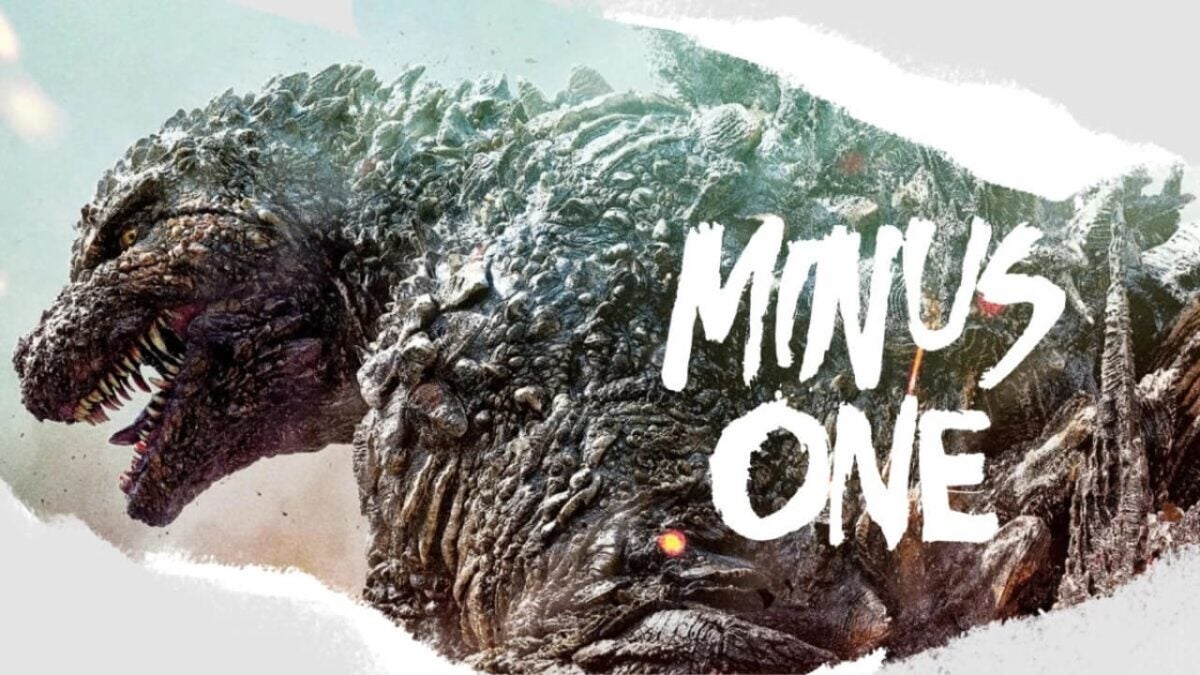
The new Godzilla movie, Godzilla Minus One, has released its first trailer, showing us its tone and how it follows the style of Shin Godzilla.
This has been the summer of the nuclear bomb. The success of Oppenheimer has shown that there is interest in nuclear bombs, and many people have demanded that the movie tell the other side of the story. What happened in Japan. Something that Nolan’s film doesn’t address, nor does it intend to. But in Japan, nuclear bombs and their consequences are something that is always present in their culture. Including their movies. And also in what is probably their greatest cinematic icon: the ever-magnificent Godzilla.
Without a live-action Godzilla film since 2016, the excellent Shin Godzilla by Hideaki Anno and Shinji Higuchi, 2023 is the year when the King of the Monsters returns to star in a movie. As we previously mentioned when the teaser was released, the movie is called Godzilla Minus One. But now, its first trailer has been released, and we have a handful of new details.
The first and most obvious detail is that the tone follows a very similar path to Shin Godzilla. With a bureaucratic tone and a visual and auditory aesthetic very close to the previous Godzilla film, the connection between the two is evident, even though they are narratively disconnected. This Godzilla Minus One is a reboot that will serve as the foundation for a shared universe of Toho monsters, in the style of the Marvel Cinematic Universe.
The first trailer for Toho’s ‘GODZILLA MINUS ONE’ has been released.
Godzilla Minus One, the thirty-third Godzilla film, is set in post-war Japan. After the nuclear bombings and surrender to the United States, Japan is slowly recovering economically and socially. Then, a new threat emerges to further shatter their already broken spirit: a giant lizard named Godzilla.
Directed and written by Takashi Yamazaki, known for works like Stand by Me Doraemon and Dragon Quest: Your Story, Godzilla Minus One promises to follow in the footsteps of Shin Godzilla. That means a dark tone, a focus on the impact on humans, and an evident political undertone. Something that has never been foreign to the franchise since it originated as a metaphor for the U.S. nuclear attacks but is easy to forget is in the DNA of our favorite Japanese monster.
Some of the links added in the article are part of affiliate campaigns and may represent benefits for Softonic.
Thanks to a not-so-popular streaming service, sometime in July we’ll be able to stream almost every Godzilla movie.
Godzilla is one of the great figures of pop culture. And despite its importance, it’s not easy to watch its movies. There aren’t many complete home editions of its extensive filmography, and there aren’t even streaming services where you can watch them. Or at least there weren’t. Because, as announced by Pluto TV, they have decided that it’s time to fix this glaring mistake to which we have been condemned until now.
Pluto TV and TOHO International have announced that they will launch a dedicated channel on the platform solely for the world’s most famous atomic lizard sometime in July. With 24-hour linear broadcasting, the channel will air over thirty Godzilla movies, as well as the two seasons of Godzilla: The Series, the American animated series that aired from 1998 to 2000.
The channel’s programming will include all the Japanese Godzilla films, excluding all the American versions, starting from the 1954 film Godzilla to the excellent final film of the Millennium series, Godzilla: Final Wars, released in 2004. This means that the only films not included are Shin Godzilla, directed by Hideaki Anno (creator of Neon Genesis Evangelion) and available on Amazon Prime Video, and the Godzilla anime trilogy: Planet of the Monsters, available on Netflix. This marks the first time in history that all the Japanese Godzilla films will be legally available online.
Pluto TV, for those who may not know, is a free streaming platform by Paramount Global that offers both live and on-demand content, with dedicated 24-hour channels focused on specific themes or content. With the addition of the Godzilla channel, Pluto TV strengthens its already impressive catalog, filling one of the most glaring gaps that existed in streaming platforms today. This is something that we can only celebrate.
Some of the links added in the article are part of affiliate campaigns and may represent benefits for Softonic.
Godzilla returns to the cinema with his thirty-seventh film in a return to its origins, since the film is set in post-war Japan.
Some things never change. The sun rises in the east. Water is wet. Fire burns. Godzilla destroys Japan. Even when protecting it from other monsters, Godzilla still destroys. It’s a well-known fact, just like November 3rd being Godzilla Day, and this coming November 3rd, Godzilla will celebrate a whopping seventy years. That’s why, on this special occasion, it should come as no surprise that Toho has decided to celebrate in style with a new film, Godzilla Minus One, for which we now have the first teaser.
Co-produced by Robot Communication and Toho Studios, this is the thirty-seventh Godzilla film, but only the fifth of the Reiwa era, which is known for presenting a much darker Godzilla and focusing on politically charged themes. It seems that Godzilla Minus One will be no exception, as the film is set in post-war Japan, featuring a particularly violent and feral Godzilla. This aligns with the overarching concept seen in the movies of this new era: Godzilla is no longer portrayed as a pet, as was the case in much of the Showa era, or as the king of monsters, as in the Heisei era. Instead, Godzilla is depicted as an entity beyond human comprehension, much like in the original 1954 film. We can witness this through Pluto TV’s dedicated channel for Japanese Godzilla movies, providing us with a glimpse into the fascinating world of Godzilla.
The film is directed by Takashi Yamazaki, who is no stranger to the character. In addition to directing films like Stand by Me Doraemon and Parasyte: Part 1 and 2, Yamazaki was also the writer and director of Godzilla the Ride: Giant Monsters Ultimate Battle, an attraction at the Seibu-en amusement park. In this attraction, viewers experience being in the midst of a battle between King Ghidorah and Godzilla, with the members of the Japan Self-Defense Forces trying to defend them.
Godzilla Minus One will premiere in Japan on November 3rd, the official Godzilla Day, and on December 1st in the United States. While we do not have a confirmed release date for Spain or the rest of the world yet, it is expected that this new installment of our favorite atomic saurian will eventually make its way to our shores. Hopefully, without causing any destruction along the way.
Some of the links added in the article are part of affiliate campaigns and may represent benefits for Softonic.