In December 1977, on a corner in Los Angeles, a man named George Atkinson decided to open a somewhat strange store concept for the time: his idea was to buy all the movies that were released for sale on VHS and Beta, such as Patton or Hello, Dolly!, and rent them out for a period of time. He didn’t know it, but he had just created the first video rental store in the world. Soon they began to grow like foam: it is estimated that there were tens of thousands of video rental stores, with Blockbuster at the forefront. No one expected that at their peak, in the mid-90s, everything would soon turn against them.
Apollo 40 (dollars)
Interestingly, Blockbuster did not start its journey with the idea of being number one in the world, but as a much more mundane project. Its creator, David Cook, franchised a store from the Video Works chain in Dallas, which was functioning well. He could have stopped there, but he decided he wanted to paint the walls in two very specific colors: blue and yellow. The owner refused, and Cook then created his own store, Blockbuster Video. Two years later, he had already opened 19 stores. The rest you can imagine.
The power of the video store and the VHS was only comparable to that of shopping malls in the United States, but that came at a price: at that time, many customers had to wait up to five weekends to get the movie they wanted, especially if it was a new release or had become popular for some reason. And that wasn’t the only problem: when you returned a tape late, you had to pay an exorbitant price. Usually, it was three times the normal rental fee, but sometimes, people ended up paying as much as 200 dollars.
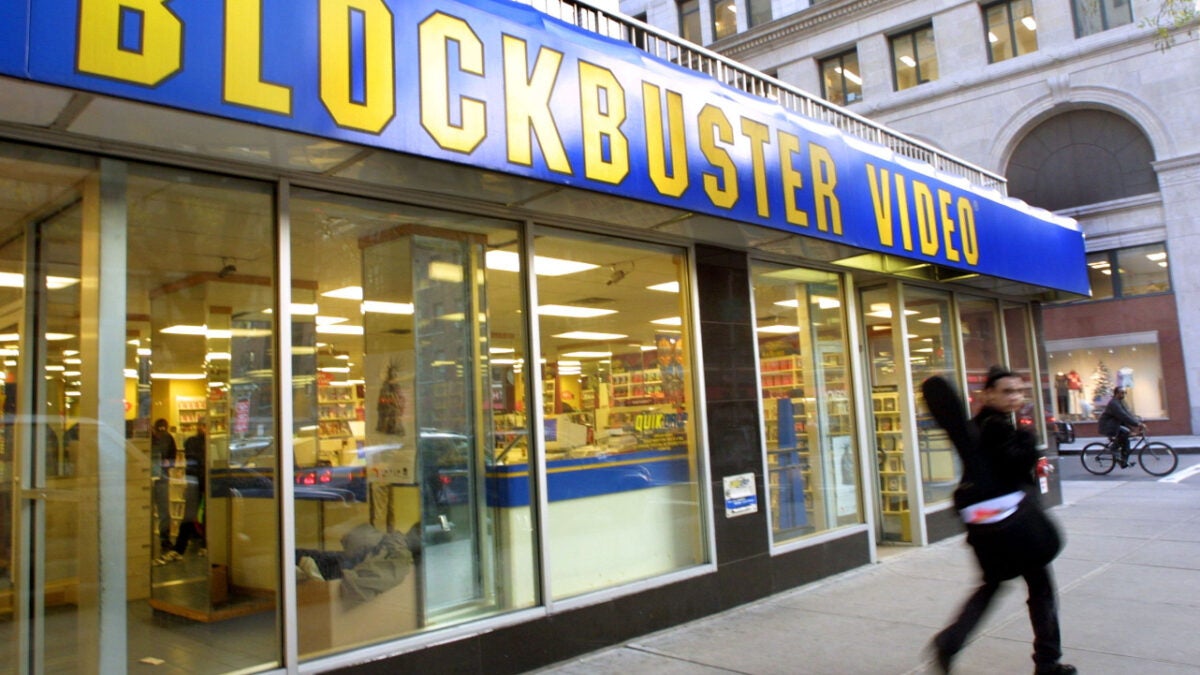
It was such a big deal that there were lawsuits against this exaggeration of Blockbuster, which in the year 2000 made -hold on- 800 million dollars just from late fees, 16% of its total profits. One of those people who faced a fine was Reed Hastings, who in 1997 completely forgot that he had rented the movie Apollo 13 and it stayed in his living room under a pile of papers. When he returned it, he had to pay 40 dollars. He felt stupid and embarrassed. So much so that he decided to create his own brand, the unforgettable… Kibble.
From Kibble to Netflix
Isn’t the story cool? How could it not be, if it’s a lie. In the mid-2000s, Blockbuster ordered Hastings to stop telling that story because they searched their database and found nothing similar. In fact, Marc Randolph, the co-founder of Netflix, said it wasn’t true at all. What a desire to take away our excitement. The truth is much more boring: Randolph and Hastings thought about starting a business that would send VHS tapes to homes, but they were afraid they would break along the way, so they thought about DVDs. And yes, they changed the name from Kibble to Netflix, even though no one liked that X.
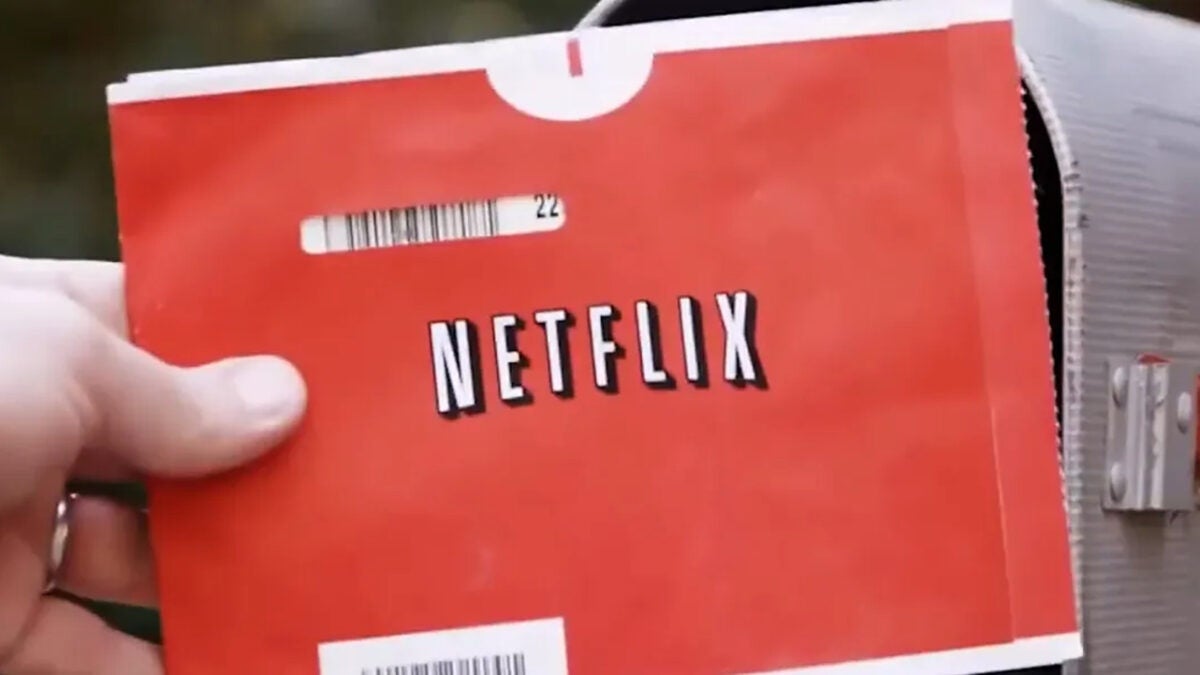
Done and done: they sent each other a CD and, when it arrived intact, they pooled part of the money they had (which was not little: Hastings had just sold his first company for 750 million dollars) to test with 30 employees and only 925 movies, which in 1997 were basically all that had been released in that format. The idea worked so well that they ended up rejecting a 16 million dollar acquisition offer from Amazon and in September 1999 they launched a novelty that continues to this day: a monthly subscription for all you can consume, returning the movies whenever you wanted (although you could only have three at a time). In this way, the viewers’ homes served as storage.
Soon, all their competitors began to launch their monthly subscription system, but the general public had already made up its mind, even if it didn’t know it yet: in 2002 they only held 2% of the market with 750,000 subscribers. By 2005, they were sending out a million DVDs a day. Moreover, in 2006 they even opened their own production company, Red Envelope Entertainment, which released modest films like 4 Months, 3 Weeks and 2 Days, This is England, or 2 Days in Paris. They soon began to think of ways to do all this but in a digital format.
Originally, they thought of a “Netflix Box” that would allow you to download movies overnight and watch them the next morning, but they ultimately decided to go with streaming: in 2008, all subscribers had free access to the service in question, which had a huge number of movies because no one believed it would even overshadow cable television or video rental stores. What was the result? I think we all know: there is only one Blockbuster left in the world, in Bend (Oregon), and Netflix has over 300 million subscribers. And all because of a VHS of Apollo 13. Yes, I know it’s a lie, but let’s continue the legend, what the hell: it’s much more beautiful.