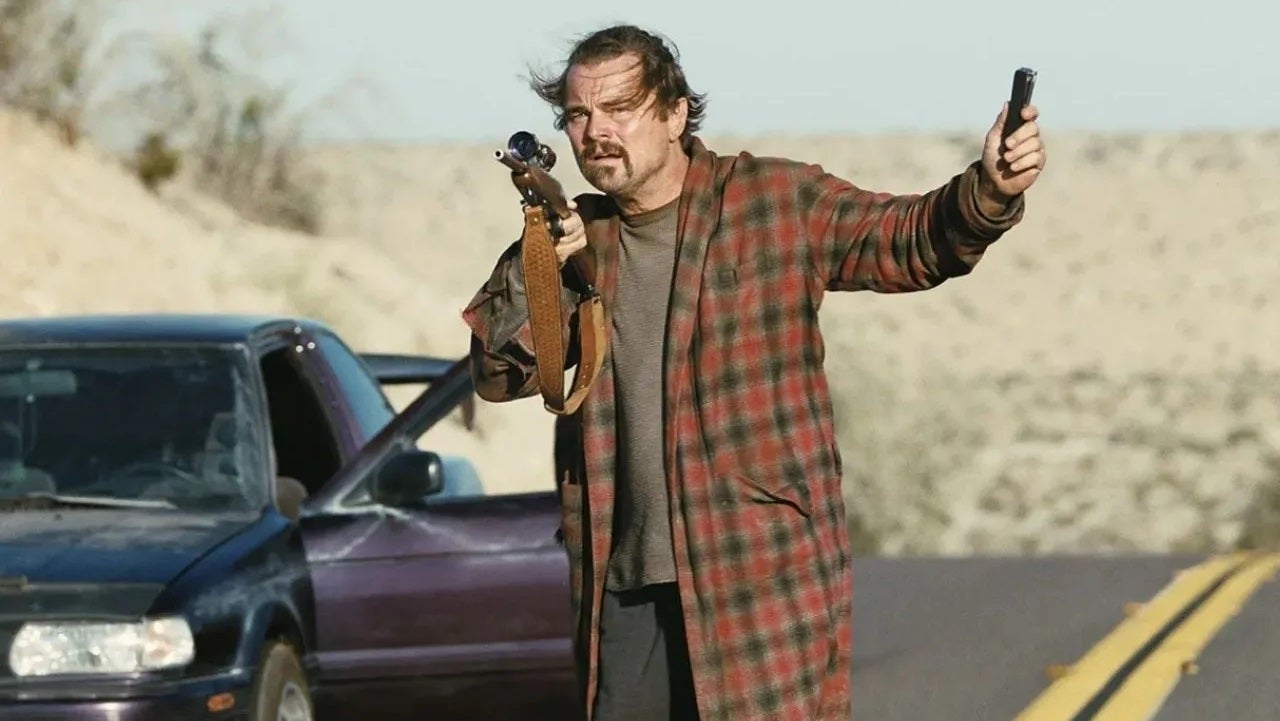
At a time when cinema faces significant challenges due to the rise of reactionary movements and the decline of relevant contemporary stories, comes One Battle After Another, a masterpiece by renowned director Paul Thomas Anderson. Through a complex narrative that combines war thriller with penetrating political critique, the film becomes a safe haven and a voice to discuss the reality we live in.
Leonardo DiCaprio like you’ve never seen him before
The plot follows Bob Ferguson, played by Leonardo DiCaprio, a former rebel fighter who, after experiencing the violence and repression of a military squad, struggles to raise his daughter in a context marked by fear and criticism of the system. Despite his desire to keep her away from violence, he is forced to prepare her to face an old enemy that threatens to destroy the peace he is trying to build.
Anderson, true to his distinctive style, employs spectacular visual resources, including the return of the VistaVision format, to bring this captivating story to life. However, the director does not opt for a solemn narrative; instead, he introduces a constant use of humor, ranging from the absurd to the satirical, challenging the viewer’s expectations. As the story unfolds, DiCaprio’s character is presented as a ridiculous and paranoid father, the embodiment of the tensions faced by a revolutionary movement in a world that feels increasingly oppressive.
One battle after another not only shines for its performance and hypnotizing cinematography, but it also stands out for its ability to connect emotionally with the audience, managing to express the strength of human relationships in difficult times. With a mix of drama, social criticism, and humorous elements, this film is shaping up to be one of the most important of the year, and it is expected to collect numerous awards in the coming months.