Apple TV has closed a deal with renowned author Brandon Sanderson to bring his vast literary universe known as the Cosmere to the screen. This universe includes popular sagas such as Mistborn and The Stormlight Archive, among others. What distinguishes this deal is that Sanderson will be actively involved in the development and production of the adaptations, maintaining creative control as executive producer, which will allow him to decide on scripts and ensure fidelity to his novels. Apple TV has hit the jackpot This creative control is particularly relevant given that […]
Apple TV has closed a deal with renowned author Brandon Sanderson to bring his vast literary universe known as the Cosmere to the screen. This universe includes popular sagas such as Mistborn and The Stormlight Archive, among others. What distinguishes this deal is that Sanderson will be actively involved in the development and production of the adaptations, maintaining creative control as executive producer, which will allow him to decide on scripts and ensure fidelity to his novels.
Apple TV has hit the jackpot
This creative control is particularly relevant given that Sanderson has historically been reluctant to cede his works for adaptations. Recently, he had expressed that “it was not yet the time” to adapt his work. However, it seems that Apple’s offer, which includes the commitment to allow him to write and control the narrative, has changed his mind. The first adaptation will focus on Mistborn, possibly as a film franchise, followed by The Stormlight Archive, which would be developed as a series.
The goal of Apple TV is to build a coherent narrative universe that spans different formats, something that has resonated with the vast community of Sanderson fans, who have already shown enthusiasm on social media. In terms of cinematic potential, the Cosmere is compared to phenomena like Harry Potter and The Lord of the Rings, given its appeal and the number of readers it has.
While Apple has demonstrated its capability with projects like Foundation, the Cosmere narrative offers an interconnected framework designed from the beginning, which could provide a solid foundation for successful adaptations. Additionally, Apple is not only acquiring a collection of existing stories, but also investing in an expanding literary franchise, with new novels planned for the coming years.
In a moment where cinema faces significant challenges due to the rise of reactionary movements and the decline of relevant contemporary stories, “One Battle After Another” emerges, a masterpiece by renowned director Paul Thomas Anderson. Through a complex narrative that combines the war thriller with penetrating political critique, the film becomes a safe haven and a voice for dialogue about the reality we live in. Leonardo DiCaprio like you’ve never seen him before. The plot follows Bob Ferguson, played by Leonardo DiCaprio, a former rebel fighter who, after experiencing the violence and repression of a […]
At a time when cinema faces significant challenges due to the rise of reactionary movements and the decline of relevant contemporary stories, comes One Battle After Another, a masterpiece by renowned director Paul Thomas Anderson. Through a complex narrative that combines war thriller with penetrating political critique, the film becomes a safe haven and a voice to discuss the reality we live in.
Leonardo DiCaprio like you’ve never seen him before
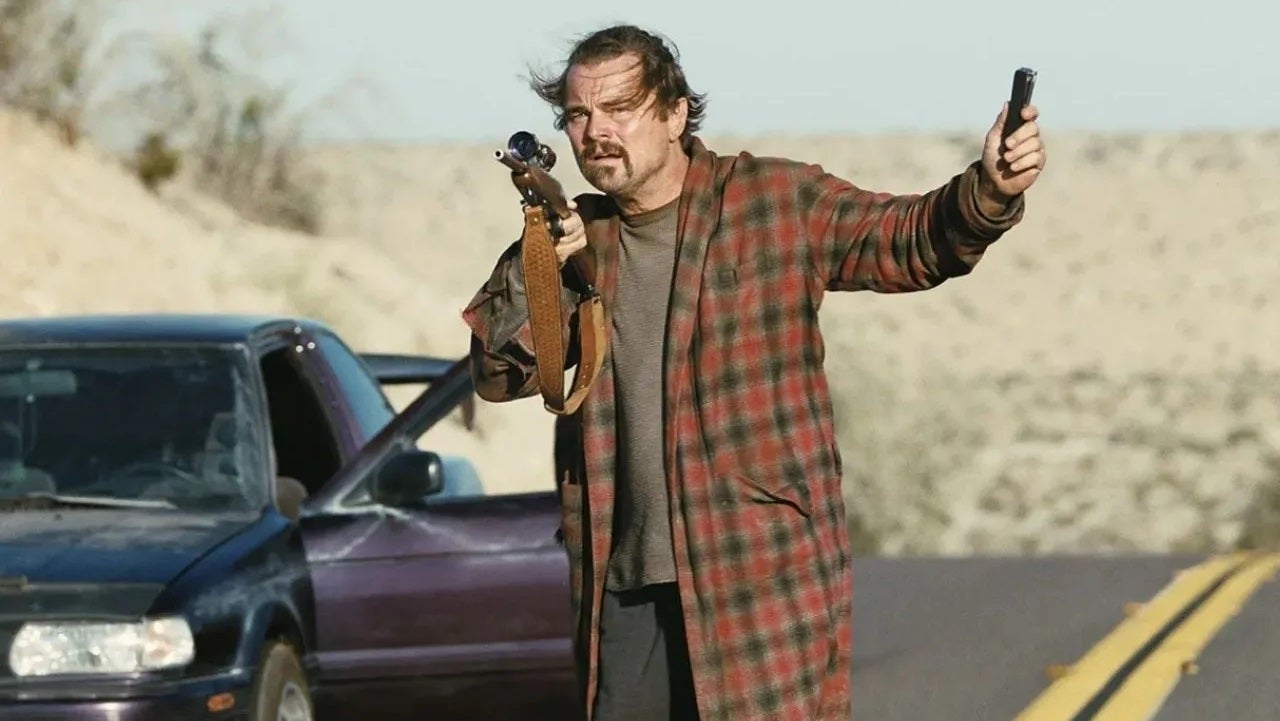
The plot follows Bob Ferguson, played by Leonardo DiCaprio, a former rebel fighter who, after experiencing the violence and repression of a military squad, struggles to raise his daughter in a context marked by fear and criticism of the system. Despite his desire to keep her away from violence, he is forced to prepare her to face an old enemy that threatens to destroy the peace he is trying to build.
Anderson, true to his distinctive style, employs spectacular visual resources, including the return of the VistaVision format, to bring this captivating story to life. However, the director does not opt for a solemn narrative; instead, he introduces a constant use of humor, ranging from the absurd to the satirical, challenging the viewer’s expectations. As the story unfolds, DiCaprio’s character is presented as a ridiculous and paranoid father, the embodiment of the tensions faced by a revolutionary movement in a world that feels increasingly oppressive.
One battle after another not only shines for its performance and hypnotizing cinematography, but it also stands out for its ability to connect emotionally with the audience, managing to express the strength of human relationships in difficult times. With a mix of drama, social criticism, and humorous elements, this film is shaping up to be one of the most important of the year, and it is expected to collect numerous awards in the coming months.
John Wayne, known primarily for his iconic roles in western films, had a much more diverse career, as demonstrated by the case of Blood Alley, a film that premiered on October 1, 1955. The film, based on a novel by Albert Sidney Fleischman, tells the story of Tom Wilder, a ship captain who must transport nearly 200 prisoners from a small town to Hong Kong after being released from a prison in China. A blackmail that worked perfectly What many people do not know is that Wayne was blackmailed into taking the role […]
John Wayne, known primarily for his iconic roles in western films, had a much more diverse career, as demonstrated by the case of Blood Alley, a film that premiered on October 1, 1955. The film, based on a novel by Albert Sidney Fleischman, tells the story of Tom Wilder, a ship captain who must transport nearly 200 prisoners from a small town to Hong Kong after being released from a prison in China.
A blackmail that worked perfectly
What many people don’t know is that Wayne was blackmailed into taking the lead role after director William A. Wellman issued an ultimatum: “Either Mitchum or me.” The production initially had Robert Mitchum in the main role and Wayne as a producer through his company Batjac Productions. The tensions between Wellman and Mitchum, exacerbated by the actor’s behavioral issues, led to a complicated scenario. Aissa Wayne, John Wayne’s daughter, recounted in her book John Wayne: My Father how the situation deteriorated, forcing her father to fire Mitchum even while he was on his honeymoon with Pilar Pallete.
Due to the lack of alternatives, Wayne was forced to star in Bloody Alley, as other actors like Gregory Peck and Humphrey Bogart declined to participate. The film, which had a budget of 2 million dollars, only managed to gross 2.2 million, which positioned it as a moderate success. In Spain, the movie was not released until ten years later.
Despite the difficulties, Wayne was impressed by Lauren Bacall’s talent, which led him to want to work with her again in The Last Gunfighter, his last film. However, their relationship during that production was not the most harmonious. Today, Bloody Alley is available to stream on Filmin, thus offering classic film enthusiasts the opportunity to explore this lesser-known facet of John Wayne.
Tonight, HBO presents the premiere of IT: Welcome to Derry, a new series inspired by the work of Stephen King. This project has been developed by Argentine brothers Andy and Barbara Muschietti, who have a solid track record in the horror genre, especially for their successful film adaptation of It. A novel more relevant today than at the time of its release. During the premiere event, the Muschietti siblings shared their thoughts on the relevance of the horror genre in everyday life and its connection to King’s work. According to them, horror does not […]
Tonight, HBO presents the premiere of IT: Welcome to Derry, a new series inspired by the work of Stephen King. This project has been developed by Argentine brothers Andy and Barbara Muschietti, who have a solid track record in the horror genre, especially for their successful film adaptation of It.
A novel more relevant today than at the time of its release
During the premiere event, the Muschietti siblings shared their thoughts on the relevance of the horror genre in everyday life and its connection to King’s work. According to them, horror is not just a means of entertainment, but it can also serve as a mirror of human experiences and fears, thus connecting with the audience on a deeper level.
Together with the Muschiettis, Jason Fuchs has played a crucial role in the development of the series, bringing his expertise in storytelling and scriptwriting. Fuchs, known for his work on films like Wonder Woman, has joined forces with Brad Caleb Kane, who serves as the showrunner. Kane is responsible for overseeing the production and ensuring that the creative vision of the team is maintained throughout the series.
Andy Muschietti is set to direct several episodes of IT: Welcome to Derry, which promises a continuity in the visual style and atmosphere that defined the previous films. “This series will allow fans to explore unknown aspects of the Derry universe,” Andy commented, suggesting that there is much more to King’s narrative than what has already been presented on the big screen.
With a mix of eagerness and expectations, IT: Welcome to Derry promises not only to expand Stephen King’s legacy but also to offer viewers a new and terrifying look at the fears that dwell in every corner of the human being.
Fans of Sam Fisher and the Tom Clancy universe can get excited about the return of the iconic Third Echelon agent, who will debut in a new animated series on Netflix on October 14. This eight-episode series will feature the voice of Liev Schreiber, known for his roles in Ray Donovan and Logan. The production promises to maintain the essence of the novels and video games, combining espionage action with an engaging narrative. Sam Fisher is also a book hero. Those who want to dive into the world of Splinter Cell before the series’ release […]
Fans of Sam Fisher and the Tom Clancy universe can get excited about the return of the iconic Third Echelon agent, which premieres in a new animated series on Netflix on October 14. This eight-episode series will feature the voice of Liev Schreiber, known for his roles in Ray Donovan and Logan. The production promises to maintain the essence of the novels and video games, combining espionage action with an engaging narrative.
Sam Fisher is also a book hero
Those who want to dive into the world of Splinter Cell before the series launch can take advantage of the novels inspired by this universe. Written by authors like David Michaels and Peter Telep, the early stories feature Fisher and his missions, while the later novels intertwine events from the video games.
The fandom will be rewarded with stories that explore new adventures of Sam Fisher and, in particular, his relationship with his daughter. Recent titles like Splinter Cell: Firewall and Splinter Cell: Dragonfire reflect this new dynamic, offering readers a fresh and emotional perspective while maintaining the characteristic suspense of the franchise.
In addition, many of these books are available at reduced prices on Amazon, making it easier for new fans to access them. The complete series of novels, along with the latest titles, is available in Kindle format, allowing readers to enjoy the saga anywhere. With such a rich and expansive universe, now is the perfect time to dive into or return to the intriguing world of Sam Fisher.
Netflix has shared a new clip from the fourth season of The Witcher, where Liam Hemsworth takes on the iconic role of Geralt of Rivia, in a combat sequence that pits the monster hunter against a specter in a dark forest. This preview marks an important milestone, as it is the first real scene presented from the season, in contrast to the first look that was released in May. Hemsworth, dressed in his leather armor and sporting the characteristic white hair, manages to capture the essence of the character, resonating with fans due to his resemblance in the portrayal […]
Netflix has shared a new clip from the fourth season of The Witcher, where Liam Hemsworth takes on the iconic role of Geralt of Rivia, in a combat sequence that pits the monster hunter against a specter in a dark forest. This preview marks an important milestone, as it is the first real scene presented from the season, in contrast to the first look that was released in May. Hemsworth, dressed in his leather armor and sporting the characteristic white hair, manages to capture the essence of the character, resonating with fans due to his resemblance in the portrayal to Henry Cavill.
A paper made to your specifications
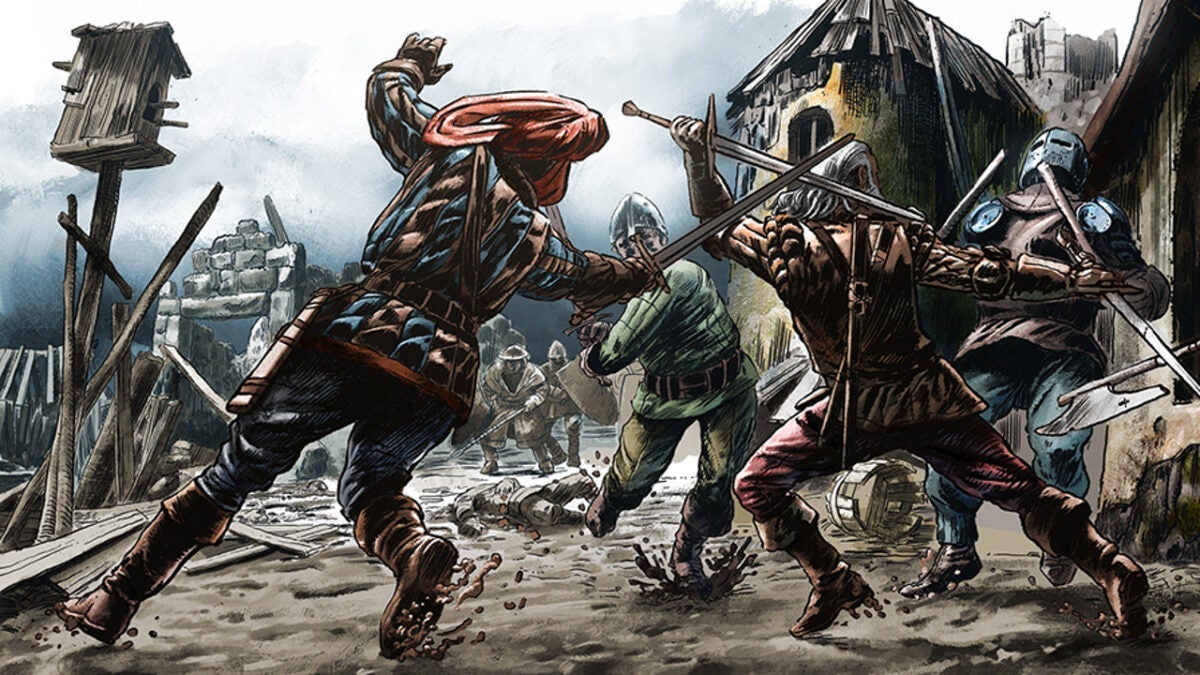
The combat sequence has received a positive response, highlighting the quality of the choreography that is presented in a fluid and readable manner. The scene includes movements that evoke the style of the old Hong Kong martial arts films, with a Geralt using his magical signs, such as Yrden, to defeat his opponent. In a climactic moment, the monster is defeated when Geralt rips out its heart, a final blow that promises to leave viewers on the edge of their seats.
However, the series faces a significant challenge due to the change of protagonist, which has generated discontent among fans. Many fans have expressed their opposition to the variations in the story in relation to the original material from the books, which, according to some speculations, may have influenced Cavill’s decision to leave the role. With the fourth season scheduled to premiere on October 30, expectations are high, and everyone is waiting to see if Hemsworth will manage to win the hearts of the skeptical fans.
Little did Andrezj Sapkowski imagine in 1986, when he wrote the story The Witcher for a contest (where he didn’t even win), that the saga would make him a millionaire and that forty years later he would still be writing about the adventures of Geralt of Rivia, even though some only know The Witcher from Netflix or, of course, from his video game series.
Now, at 76 years old and a decade after Storm Season, he has declared that he already has a new book prepared with Geralt as the central protagonist, perhaps in response to a Netflix series that, despite being announced as faithful, took all kinds of creative liberties, and to a game that goes straight to the point, with its own continuity.
For now, all we know is that the novel is completely finished and will not be part of the pentalogy that made the character famous and culminated in 1999 with The Lady of the Lake. However, even though he has stated that he will go on his own, he has not been able to leave the door open for a future saga. Hey, who knows.
“I don’t have any plans right now. I finished the book. It took me maybe two years or so,” he said, unintentionally embarrassing the other great author of epic novels, George RR Martin, whose A Song of Ice and Fire has been on hiatus for a long time and he is unable to continue with it. And if you’re wondering when these new adventures will be released, they are expected to come out in winter of this year.
Interestingly, it will coincide with the release of the new anime spin-off of the series, Sirens of the Deep, and with the filming of that new season on Netflix that, after the departure of Henry Cavill, there are not a few who look at it with suspicion. It had to be Sapkowski himself who slammed his fist on the table to make it clear that there is a future for his saga… but he will mark it himself. Witchcraft stuff.
RL Stine made gold with books, the series, spin-offs like “In search of your own nightmare”, board games and all kinds of merchandising. And meanwhile, at Scholastic they kept thinking about the easiest way to further capitalize on the success.
Perhaps nothing encapsulates better what the 90s were like than ‘Goosebumps’, both the original saga of 62 books (of which only 60 were published in Spain) and the TV series that tried to terrify a whole generation in ‘Club Megatrix’ with its well-known “Temblad, muchachos, temblad, qué miedo váis a pasar”(Tremble, boys, tremble, you’re going to be scared).
1995 and 1996 were a real “Nightmaremania”, especially in the United States (although watch out for the publication of the magazine ‘Goosebumps’ in Spain and other acts of dubious legality). RL Stine was making gold with the books, the series, spin-offs such as ‘It’s Only a Nightmare!’, board games and all kinds of merchandising. And meanwhile, Scholastic couldn’t stop thinking about the easiest way to capitalize even more on the success. They succeeded, of course. And they succeeded.
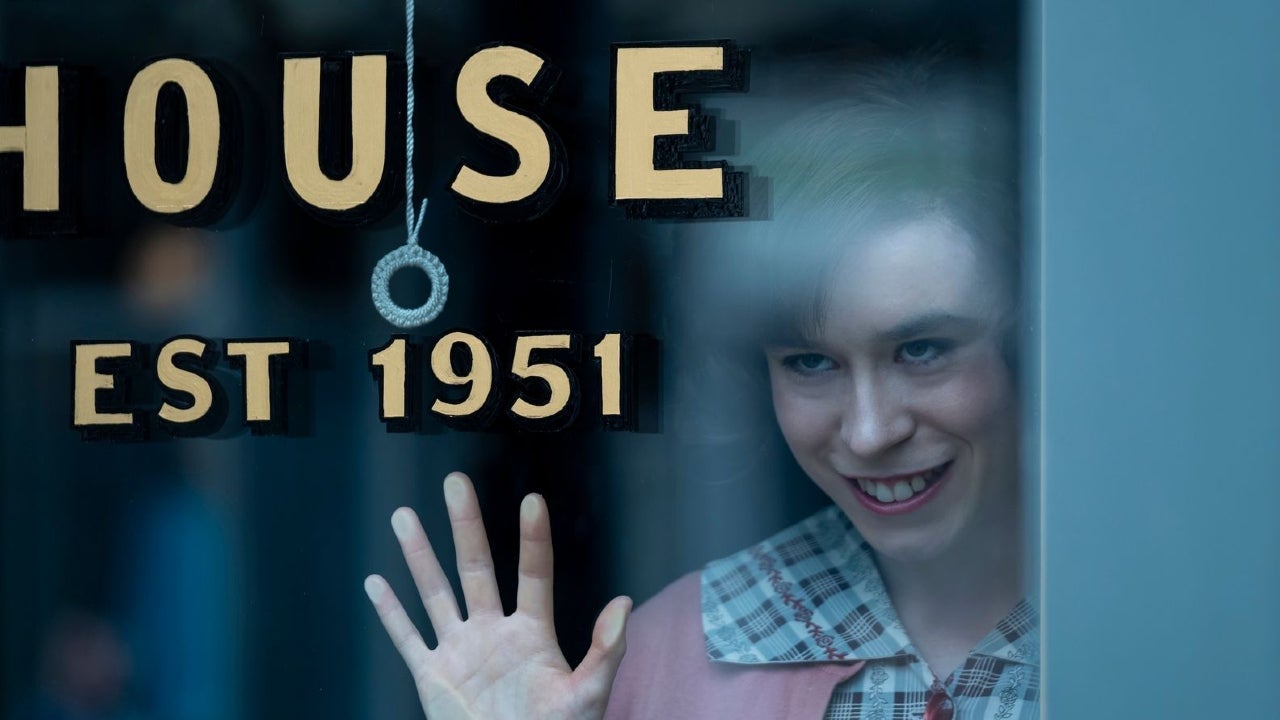
Before ‘Goosebumps’, Stine was already known in the publishing world: he wrote quickly and efficiently, and his ‘Fear Street’ novels were a success. Perhaps that is why he was asked to transform adolescent terror into children’s fears with a collection that he hesitated to write, but ended up making him world famous: even now new novels of the saga are still coming out, although without repeating the crazy success of yesteryear, of course. In July 1992, ‘Welcome to Dead House’ and ‘Stay Out Of The Basement’ were published to general indifference. Three years later, a series that would run to 74 episodes premiered.
‘Goosebumps’ not only adapted 48 books from the original saga: it also brought to television short stories and a couple of books from the consequent series, ‘Goosebumps 2000’. There were even three episodes, dubbed ‘Chillogy’, which were completely new stories. In fact, there RL Stine wasn’t even credited as a screenwriter. And it was strange, because his name was on everything from novels he clearly hadn’t written to the ultimate shameless cash grab for 90’s kids: ‘Goosebumps presents’.
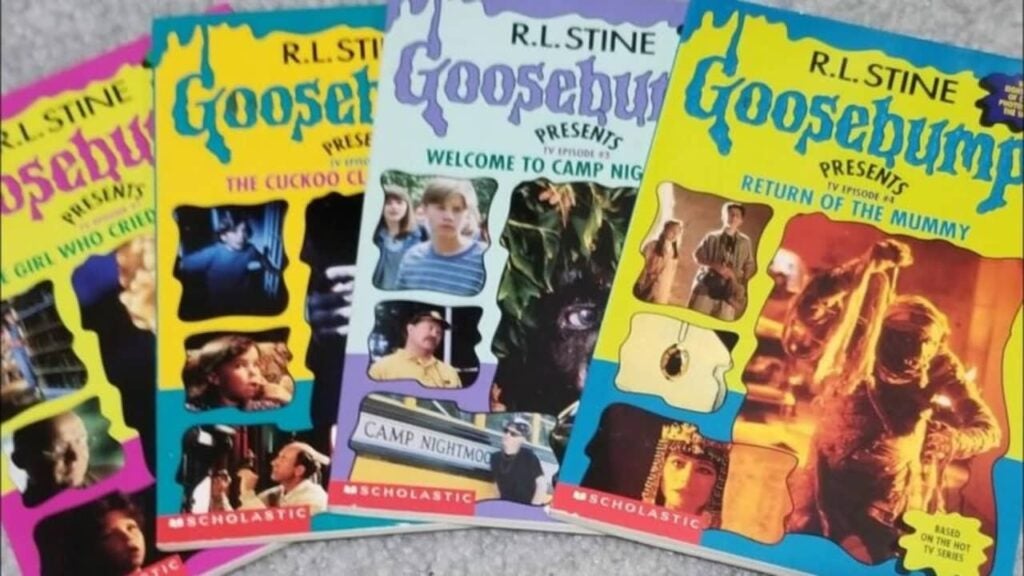
Each episode of ‘Goosebumps’ was based on an original book of about 120 pages. But Scholastic thought they could still make a few dollars more by releasing smaller books based on the TV episodes, in which RL Stine would only put his name on the cover, but not write a single word. The first experiment, in February 1996, was a small 57-page book based on ‘The Girl Who Cried Monster’. And the ticket machine took another turn.
Nearly twenty
One could believe that nobody would fall for such an obvious deception, but the truth is that 18 books were published between February 1996 and February 1998 by different authors, such as Carol Ellis (expert in writing books on demand for sagas like ‘Cheerleaders’ or ‘Zona Límite’), Megan Stine (not related to RL Stine and who ended up making a name for herself writing biographies for children) or Francine Hughes (who had just adapted ‘Space Jam’ and ‘Beethoven 2’ into novels). All in all, a complete fiasco.
You may be thinking about why these books existed. And, on reflection, it makes sense: it was a time without streaming, when there were almost no VHS releases of TV episodes. If you had really liked an episode, you had to hurry up and record it or wait for it to be rebroadcast. These books, which contained full-color pictures, were a way to keep it alive in your memory. In the golden age of novelizations of any kind no one thought it was a rarity. Ah, the good part was that, since they were made from scripts and not the final episodes, you could see (well, read) some unpublished scenes. That’s something.
‘Nightmares’ currently has more than two hundred novels that have made RL Stine a millionaire. Of course, it doesn’t seem that on this book day many are going to go out to the Retiro expecting to find the literary adaptations of the television adaptations of these novels for children. But at least you know they exist: not everyone does!