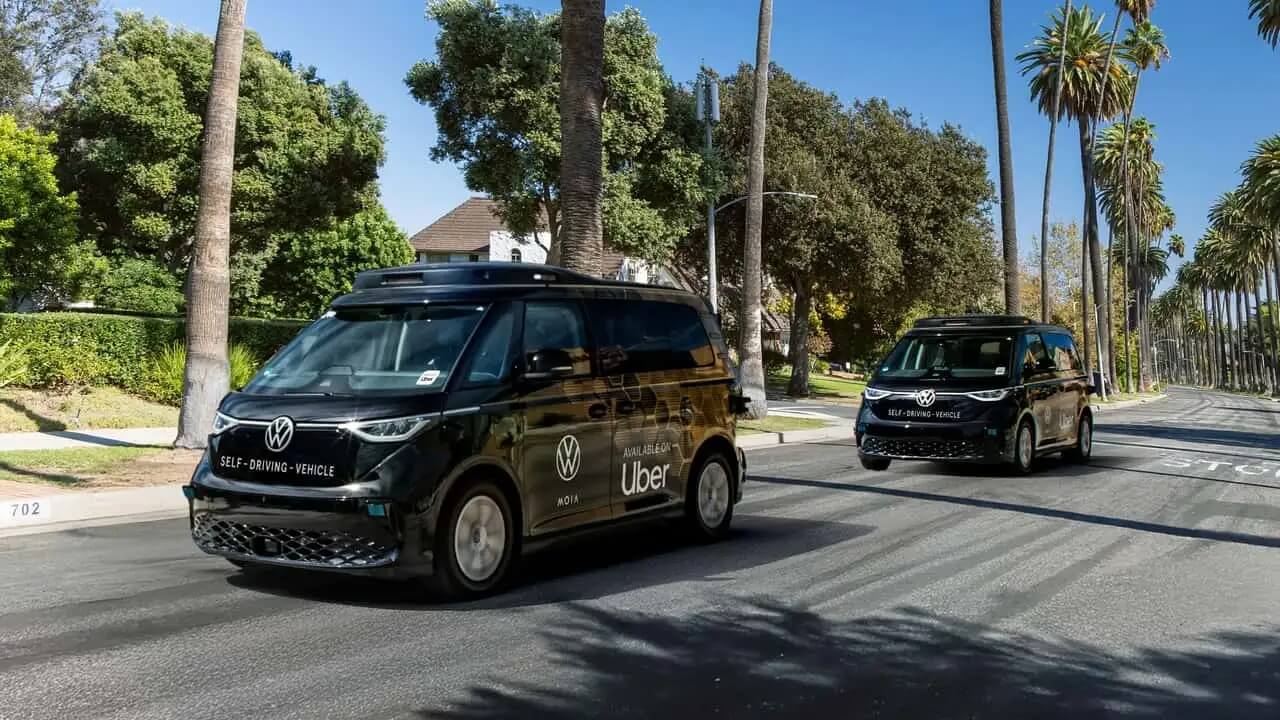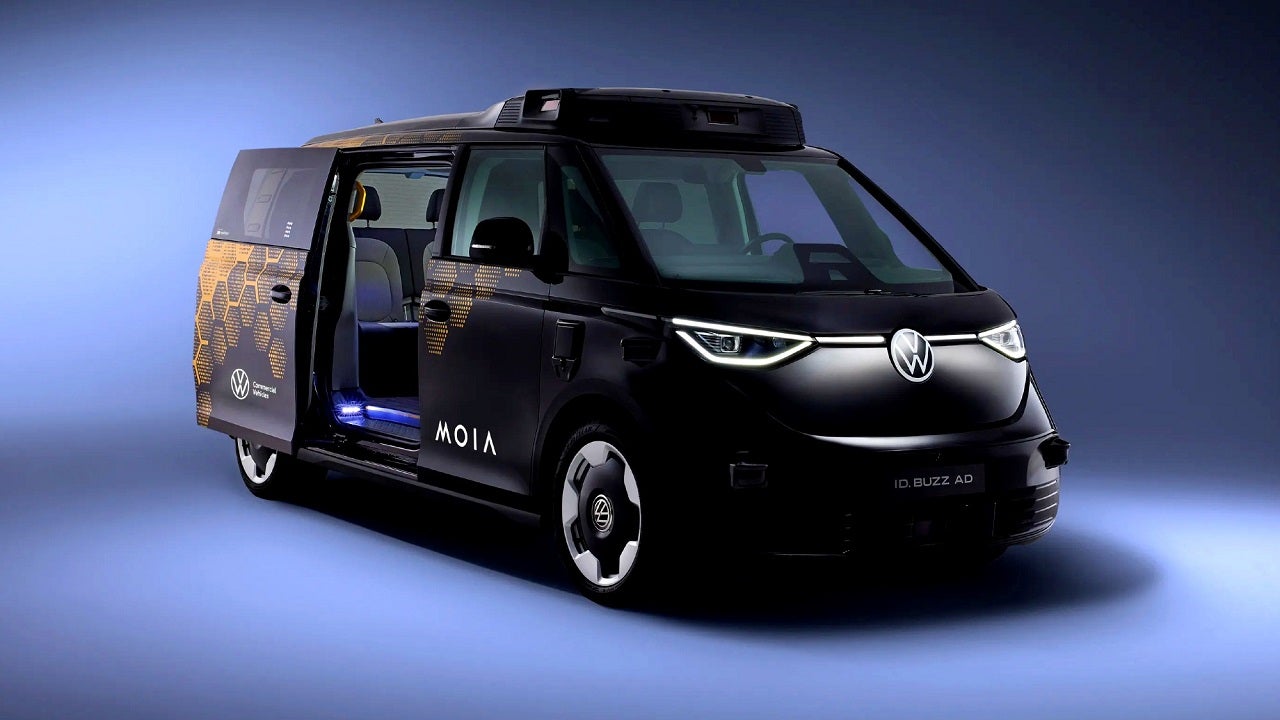
Volkswagen has made a significant leap into the autonomous vehicle market with the introduction of the ID. Buzz AD, its first fully autonomous production vehicle designed explicitly for mobility services.
This innovative vehicle is part of Volkswagen’s broader strategy to establish itself as a leader in the burgeoning multi-billion-dollar autonomous transit sector.
MOIA, Volkswagen’s mobility subsidiary, will initially roll out the ID. Buzz AD in Hamburg, with plans for large-scale deployment across Europe and the United States by 2026.
ID. Buzz AD Set to Transform Urban Transportation with Level 4 Autonomy
This fully electric shuttle is not merely a self-driving van; it is equipped with a comprehensive suite of tools and services for public and private transit operators. The offering includes self-driving technology, fleet management software, passenger support systems, and operator training.
At the core of the ID. Buzz AD is the advanced self-driving system supplied by Mobileye, combined with MOIA’s Autonomous Driving Mobility-as-a-Service (AD MaaS) platform.
The vehicle is fortified with 27 sensors, including 13 cameras, nine LiDARs, and five radars, providing a full 360-degree view of its environment. It has achieved certification under automotive safety standards and meets Level 4 autonomy requirements, which allows it to operate without human intervention in most conditions, backed by remote monitoring for edge cases.
MOIA is also introducing an “Operator Enablement” program that supplies fleet operators with comprehensive support, including simulation training, deployment assistance, and real-time monitoring.
As MOIA CEO Sascha Meyer highlighted, the integration of artificial intelligence into public transport systems opens new avenues for flexible, shared, and affordable mobility solutions. With the ID. Buzz AD, Volkswagen aims to redefine urban transportation and lead the way into the future of autonomous travel.