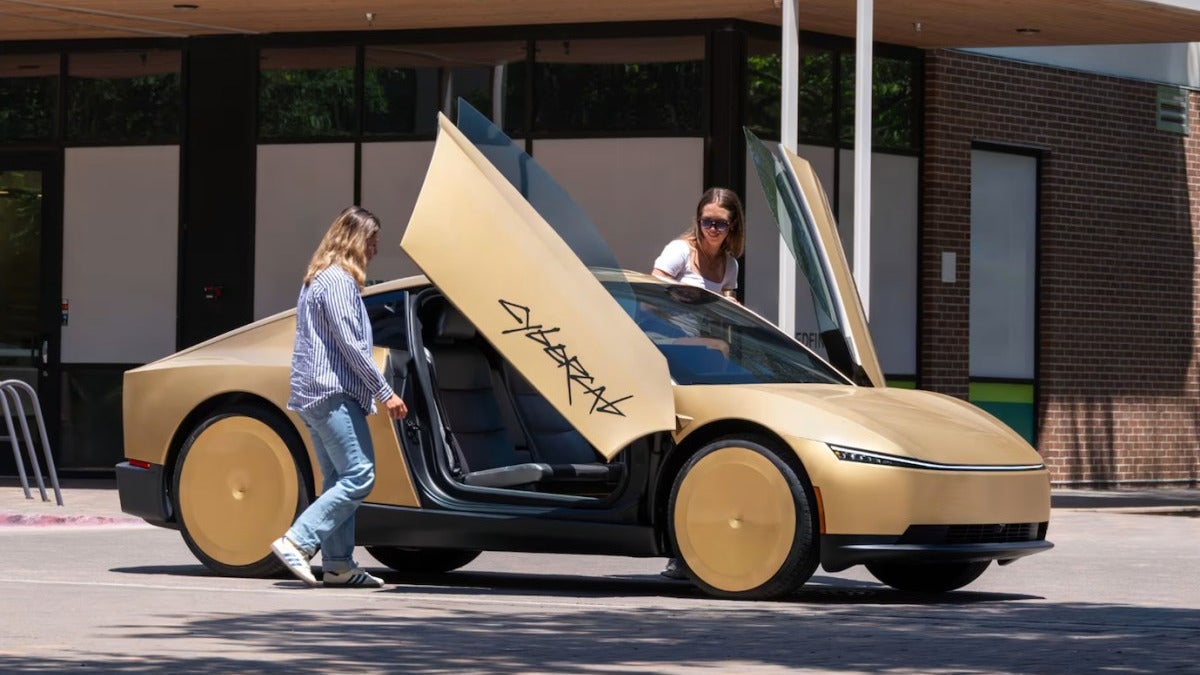
Tesla’s upcoming Cybercab, a two-seat self-driving car with no steering wheel or pedals, won’t let children under 13 ride when it launches, according to Tesla’s policy. children under 13 That holds even if the child is with a parent or guardian.

That’s a stricter rule than the one Tesla uses for its Model Y robotaxi. In that service, Tesla says children ages 8 to 17 can ride with an adult.
One obvious reason is the hardware. The Cybercab doesn’t include standard LATCH anchors for child seats, although Tesla says child seats can still be installed with the seat belts. Tesla also hasn’t said why it drew the line at 13, so safety, liability, and day-to-day operating concerns could all be part of the decision.
If you were picturing the Cybercab as an easy option for family outings, that idea takes a hit here. For short city rides, especially with younger kids, the vehicle becomes a lot less practical.
The policy is showing up while the National Highway Traffic Safety Administration, or NHTSA, reviews Tesla’s self-certification, including how a car with no manual controls fits into federal safety standards. That bigger argument already covers child-safety rules for driverless vehicles, and Tesla isn’t the only company taking a cautious approach. Waymo, for instance, generally requires solo riders to be 18 or older outside a limited set of teen programs.
The Cybercab is still on the way. For now, Tesla’s robotaxi service uses the Model Y.