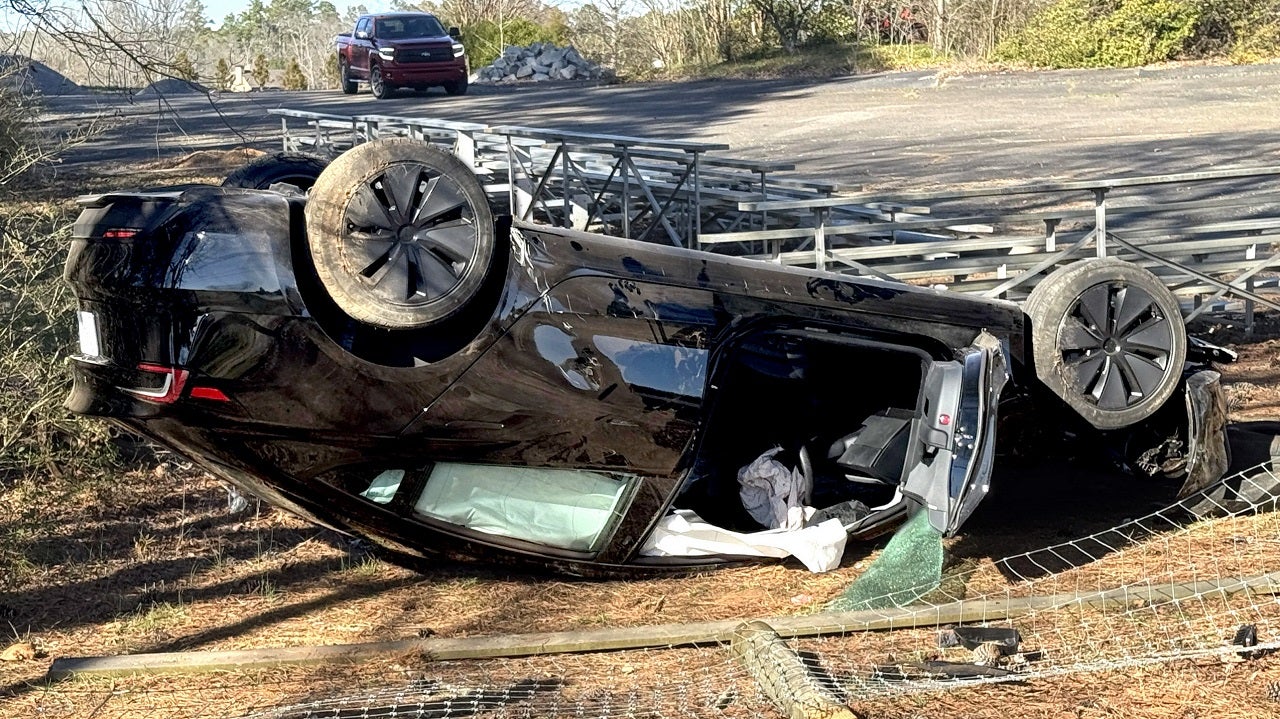
A recent incident involving a Tesla Model 3 equipped with the Full Self-Driving (FSD) feature has raised serious concerns about the safety of the technology.
The vehicle, driven by Wally in Toney, Alabama, unexpectedly veered off the road and flipped over, leaving him with a chin injury requiring stitches.
Wally reported that he was using FSD regularly and believed he was attentive, yet still found himself unable to react in time to prevent the crash.
The Debate Surrounding Tesla’s FSD: Is It Promoting Dangerous Complacency?
This incident highlights the ongoing debate about the adequacy of Tesla’s FSD system, which is often marketed as a cutting-edge driver assistance technology. Although it has been designed to assist drivers, it is classified as a level 2 system, which means the driver must remain vigilant and ready to take control.
Tesla’s communications have increasingly suggested that drivers can “lean back and watch the road,” a stance that some believe may contribute to dangerous complacency among users.
Despite the deployment of driver monitoring systems intended to ensure attention while using FSD, Tesla has been gradually relaxing these measures.
This shift has sparked criticism and concern that a culture of over-reliance on technology is developing among Tesla drivers, potentially leading to more accidents. In Wally’s case, he had less than a second to react as the FSD system abruptly altered the car’s course, illustrating the limitations of the technology in critical moments.
Previous incidents have shown that many crashes involving Tesla’s FSD occur because drivers fail to remain alert or intervene when the system encounters obstacles. The case of Wally raises further questions about the boundaries of driver responsibilities and the actual capabilities of FSD, as incidents where drivers cannot take corrective action could define the future of autonomous vehicles.