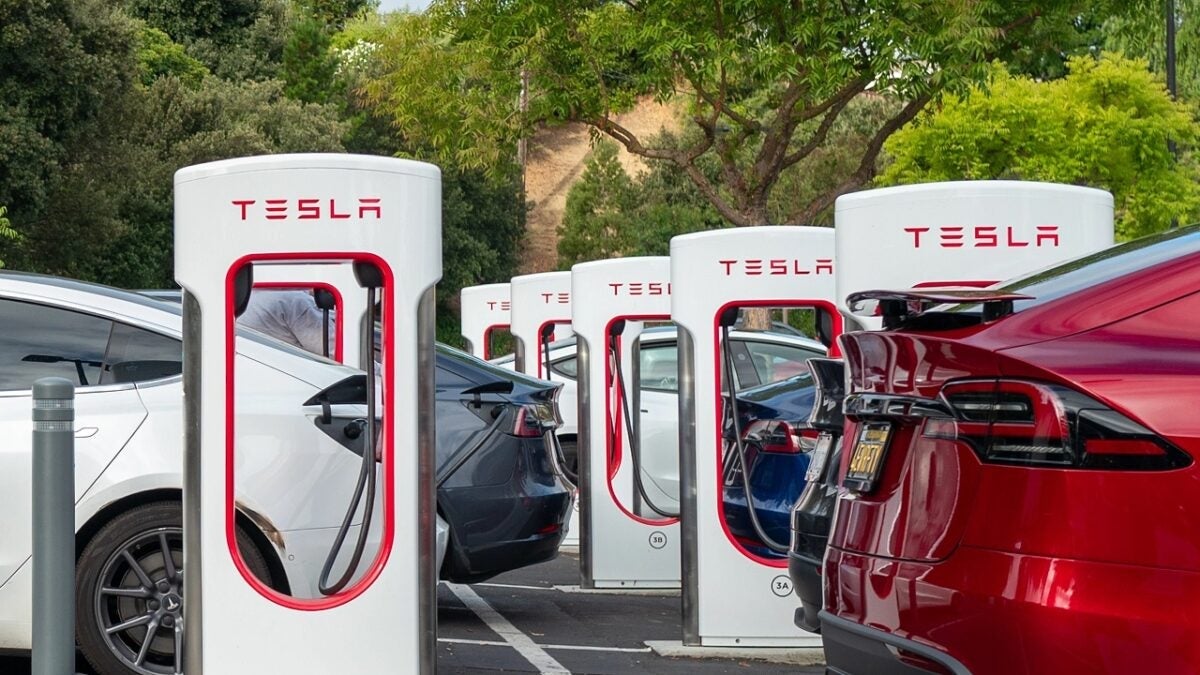
Cable thefts at charging stations for electric vehicles have become a growing problem that affects the reliability and availability of these infrastructures.

This issue not only impacts Tesla, which operates a considerable number of supercharging stations, but also affects all charger operators, complicating accessibility and increasing prices for electric vehicle users.
To tackle this challenge, Tesla has begun testing creative solutions at its Supercharger stations. One of them includes a coating called DyeDefender, which wraps around the charging cables.
They sell the cables to get money for the copper inside
If these cables are cut, the system releases a dye that the saboteurs cannot easily hide. This innovative method, recently observed at a station in Seattle, aims to deter thieves by making stolen cables less useful.
In addition to the coating, Tesla is engraving the phrase “Property of Tesla” on the cables, an effort that, according to the company, could make it more difficult to sell them in illegal markets.
Max de Zegher, head of cargo at Tesla, mentions that this strategy is scalable and economical, and it should not affect the user experience at the stations, as long as the recycling points and junkyards are willing to apply these standards.
Despite Tesla’s initiatives, the existence of black markets for the sale of stolen cables persists. However, the price dynamics in these markets can be discouraging, suggesting that a combination of effective security measures could help reduce the incidence of these thefts.
As the electric vehicle industry continues to expand, addressing these types of infrastructure issues will be crucial for its sustainability and future growth.