Castlevania is a franchise that has evolved dramatically over time. Comparing the first Castlevania with Castlevania: Symphony of the Night or with its 3D versions is absurd, because they’re very different games. Even if they all share a common spirit. What’s interesting about Castlevania isn’t that it’s a game that’s coherent in its mechanics or in what it does, but that it has an aesthetic, a spirit, and a way of doing things that has remained over forty years.
What remained to be seen was whether it would be possible to keep that when the one in charge of making a Castlevania was someone other than Konami, its original creators. And that’s something we’ve been able to confirm with the release of the demo for the next game in the franchise, Castlevania: Belmont’s Curse, which not only isn’t being made by Konami, but changes some elements that for many people are fundamental to 2D Castlevanias. All of it without ever ceasing to feel exactly like what Castlevania should be.

A game grounded in tradition
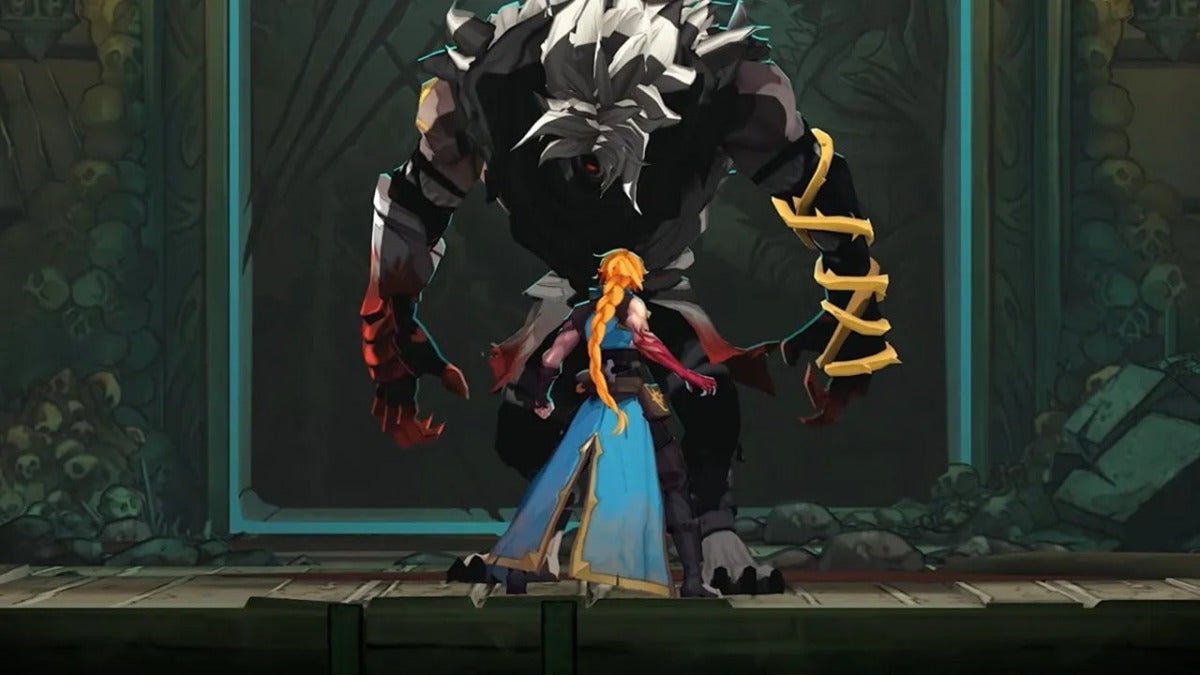
Castlevania: Belmont’s Curse is developed by Evil Empire and Motion Twin, the studios behind the celebrated roguelike Dead Cells. This is noticeable in the demo, especially in how the game’s protagonist, Rose Belmont, doesn’t even have the classic Belmont weapon, the whip. Armed with a sword and with a fireball spell, inherited from her mother in the form of tarot cards to complete, the game feels like a mix of Super Castlevania IV, Castlevania: Symphony of the Night and Dead Cells.
From Super Castlevania IV it inherits two important aspects: mobility and the feeling of being a purer action game within Castlevania’s conventions. The first of these is especially noticeable when we get our first power, which is the whip itself. Once we do, we’ll be able to use it to grapple onto different kinds of rings and enemies, to move by swinging or hurling ourselves at full speed through the stage to reach places that until then were inaccessible. That makes the game tremendously satisfying.
This leads into the part closest to Castlevania: Symphony of the Night. The game is structured around an open map, where we’ll have to return to places we’ve already visited and take advantage of our new powers to access places that were previously inaccessible. And if that sounds like something typical of Metroidvanias, it’s because it is. But Symphony of the Night is one of the founding games of the genre, along with Metroid, and hence its name. And its clear inspiration.
But the influence of Symphony of the Night is also noticeable in the game’s more RPG side. As Rose’s levels and stats increase, if we get stuck somewhere we can always try leveling up before trying again. And with our spells having conditions to evolve and become more powerful versions of themselves, all of them conditional on actions we can perform simply by playing, it promises to create an interesting gameplay loop that helps smooth out any difficulty spikes.
Above all, an action game
Because the part where it most resembles Dead Cells is the part where it most resembles Super Castlevania IV. And it’s the part where the most people may end up feeling disappointed by the game. Which is the part where Silksong differs most from Hollow Knight. It’s a game with a great emphasis on being a pure, old-school action game, even if it has elements to try to ease the tension this can create.
Without blocks or dodges where we’re invulnerable, Castlevania: Belmont’s Curse demands that when an enemy attacks us we not even be close to its attack. To that end, the game gives us tools that let us slide under their attacks, jump over them or, simply, move away from them, but at all times it makes one thing clear: there’s no button you can press to save yourself from an attack in this game. Spamming the attack button until the moment to press the defense button, in a test of reflexes, doesn’t work; we have to know which enemies to prioritize and which attacks we’re vulnerable to and when if we want to persevere.
This is especially evident in its first and only boss in the demo, very manageable when we know its attacks and act accordingly, but overwhelming when we don’t. That suggests that those who liked Silksong for its combat will adore Belmon’t Curse, but those who hated it for that same reason will hate it for exactly the same reasons. Even if, in a nod to the soulslike, they’ve introduced healing flasks that refill at mirrors where the game is saved… at the cost of making all the enemies you’ve defeated up to that point reappear.
With the demo available on PlayStation 5, Xbox Series X|S, Nintendo Switch and PC, any fan of Castlevania and roguelikes should try it. Because Castlevania: Belmont’s Curse has all the makings of being a strong candidate for GOTY even in a year packed with exceptional new releases. It’s going to cause debate and it’s probably not going to spark any less debate than Hollow Knight: Silksong, for exactly the same reasons, and one more: a lot of people are going to claim that it doesn’t really feel like Castlevania. But if there’s one thing we can state here and now, it’s that, even if Rose Belmont doesn’t end up wielding a whip throughout the whole game, we haven’t played a game that feels this much like Castlevania since 2008.
