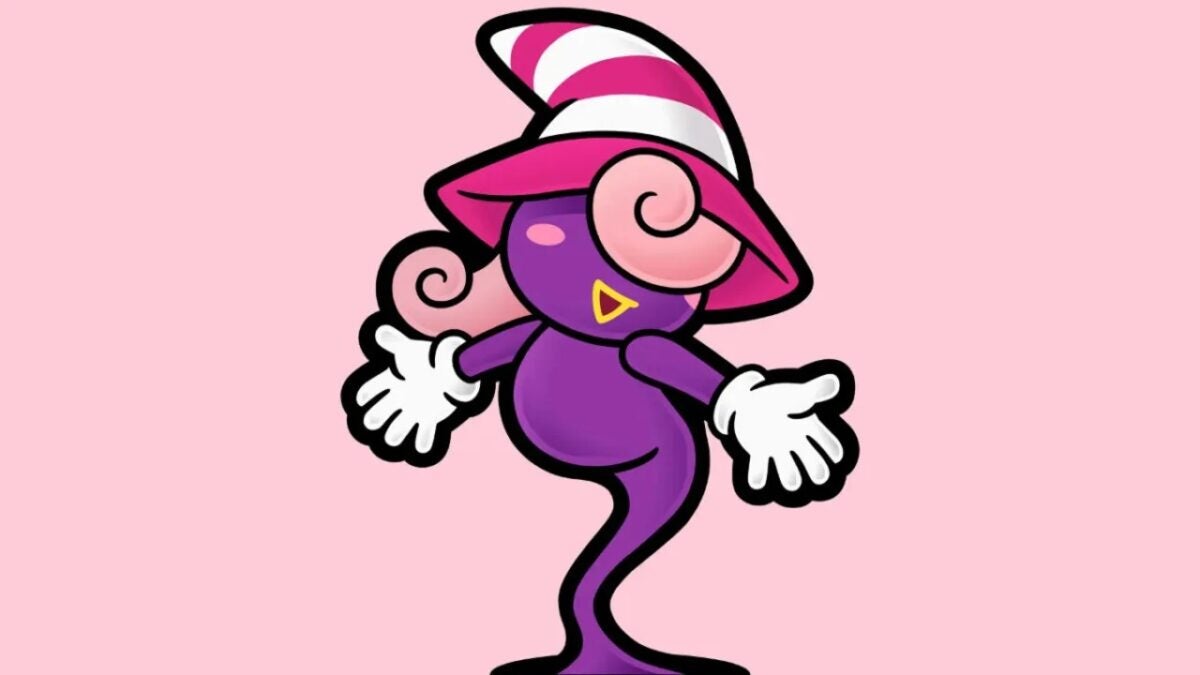
Let’s go back in time, to 2004. Nintendo, going full throttle with the GameCube, releases the sequel to ‘Paper Mario’, titled ‘The Thousand-Year Door’, an RPG that ended up becoming a resounding success and showed us that Nintendo could also let loose. Perhaps too much for the time, really. And it is that, in its localization outside of Japan, Bibiana, the villain who later became part of the group, lost what made her special: her sexual identity.

Mario, ally
I know it may sound trivial and even ridiculous to talk about identity and gender in a Mario RPG, but it is. In the game, we see how Bibiana doesn’t quite get along with her sisters. However, in the American localization, they changed the reason: in Japan, she introduced the group as sisters, and they insulted her by referring to her as a man. In English, she made a mistake in naming the team and they got angry, but not because of her appearance or gender.
The remake released by Nintendo Switch knows that we are in 2024 and addresses these issues with a simplicity that many other seemingly inclusive games would like. There, Bibiana talks to Mario and says that it took her a while to realize that “she was her sister… not her brother”, and the continuous bullying from them ends with her joining the group. And now, the localization is completely correct and does not try to hide her identity. Well done, Nintendo.
‘The millennial door’ has been, for years, one of those Nintendo games that were surrounded by an aura of mysticism, and its remake only improves it, with many more secrets, improved graphics, and overall, the demonstration that Mario also has the right -almost the obligation- to do crazy things and break free from his usual constraints. Mamma mia!
