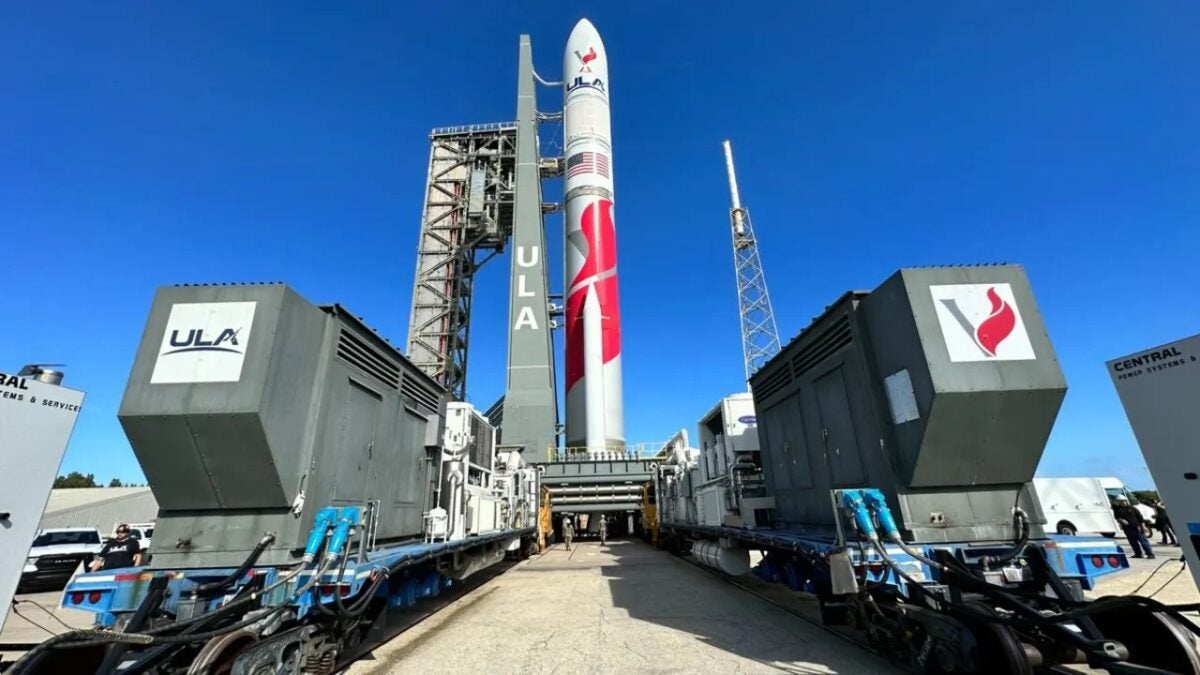
For the past decade, space matters seem to be exclusive to SpaceX, Elon Musk’s rocket company, and NASA itself. But nothing could be further from the truth in 2024: there is a lot of competition and it is coming on strong.

A new American rocket took off on Monday from a launch pad in Cape Canaveral (Florida) and, for the first time in over 50 years, an American spacecraft will head towards the surface of the Moon.
The rocket is called Vulcan and was built by the company United Launch Alliance. This is what you need to know about its first flight, a flight that challenges SpaceX’s supremacy.
What is the lunar mission heading to orbit about?
Astrobotic Technology, from Pittsburgh, will send Peregrine, a robotic spacecraft that will land on Sinus Viscositatis, an enigmatic region on the far side of the Moon.
NASA will pay Astrobotic $108 million to carry five experiments as part of the agency’s Commercial Lunar Payload Services (CLPS) program. The goal of the program is to reduce the cost of sending objects to the lunar surface.
What is the Vulcan rocket and why is it important?
The Vulcan rocket, built by United Launch Alliance, a joint venture of Boeing and Lockheed Martin, will replace the company’s two current rockets, the Atlas V and the Delta IV.
Since its creation in 2006, the main activity of United Launch Alliance has been the launch of high-secret military payloads for the United States Government. Their rockets were expensive – too expensive for most commercial customers – but very reliable.
With Vulcan, ULA seeks a greater share of the commercial market. It has already sold more than 70 Vulcan launches, including 38 to Amazon while building the Kuiper Project, a constellation of internet communication satellites.
The United States Space Force would like to see two successful launches of Vulcan before putting any of their payloads on board. Monday’s launch is the first certification launch.
The second one could take place in April. In it, Dream Chaser, an unmanned spacecraft built by Sierra Space from Louisville (Colorado), would be launched on a cargo delivery mission to the International Space Station.
If these flights are successful, four more Vulcan launches this year would put payloads into orbit for the Space Force.
