In 2018, Hideo Kojima, the renowned creator of the Metal Gear series, visited Valve’s headquarters to discuss his new project, Death Stranding. Recently, emails have been made public in the context of the lawsuit between Elon Musk and Sam Altman, revealing the personal and professional connection between Kojima and Gabe Newell, co-founder of Valve. After the meeting, Newell offered to introduce Kojima to people at OpenAI and Musk, highlighting Kojima’s interest in artificial intelligence and space. A trial that is providing us with interesting information Kojima, known for […]
In 2018, Hideo Kojima, the renowned creator of the Metal Gear series, visited Valve’s headquarters to discuss his new project, Death Stranding. Recently, emails have been made public in the context of the lawsuit between Elon Musk and Sam Altman, revealing the personal and professional connection between Kojima and Gabe Newell, co-founder of Valve. After the meeting, Newell offered to introduce Kojima to people at OpenAI and Musk, highlighting Kojima’s interest in artificial intelligence and space.
A trial that is giving us interesting information
Kojima, known for being a true visionary in the field of video games, expressed his fervent desire to travel to space. In his book, The Creative Gene, he mentions: “If I could make a wish, it would be to go to space before I die”. The intensity of this aspiration has even led him to consider sacrificing his career and personal relationships for a brief experience in Earth’s orbit.
Despite Musk showing interest in facilitating a tour of the SpaceX factory for Kojima, the meeting never materialized. Even in 2020, Kojima’s desire to visit SpaceX remained strong, as affirmed by Musk himself on Twitter: “He is always welcome.” Thus, the Japanese creator’s desire to explore the cosmos has been made clear on multiple occasions, highlighting his passion for space exploration.
Regarding his interest in OpenAI, Musk expressed in an email that his involvement with the organization is limited, although he remains in contact. This exchange also highlighted Newell’s concerns about the potential of neuromodulation, a topic that later led him to found his own neuroscience company: Starfish Neuroscience.
The emails, which also reveal intriguing technical aspects about Neuralink, are a testament to the intersection between entertainment technology and scientific advancements today.
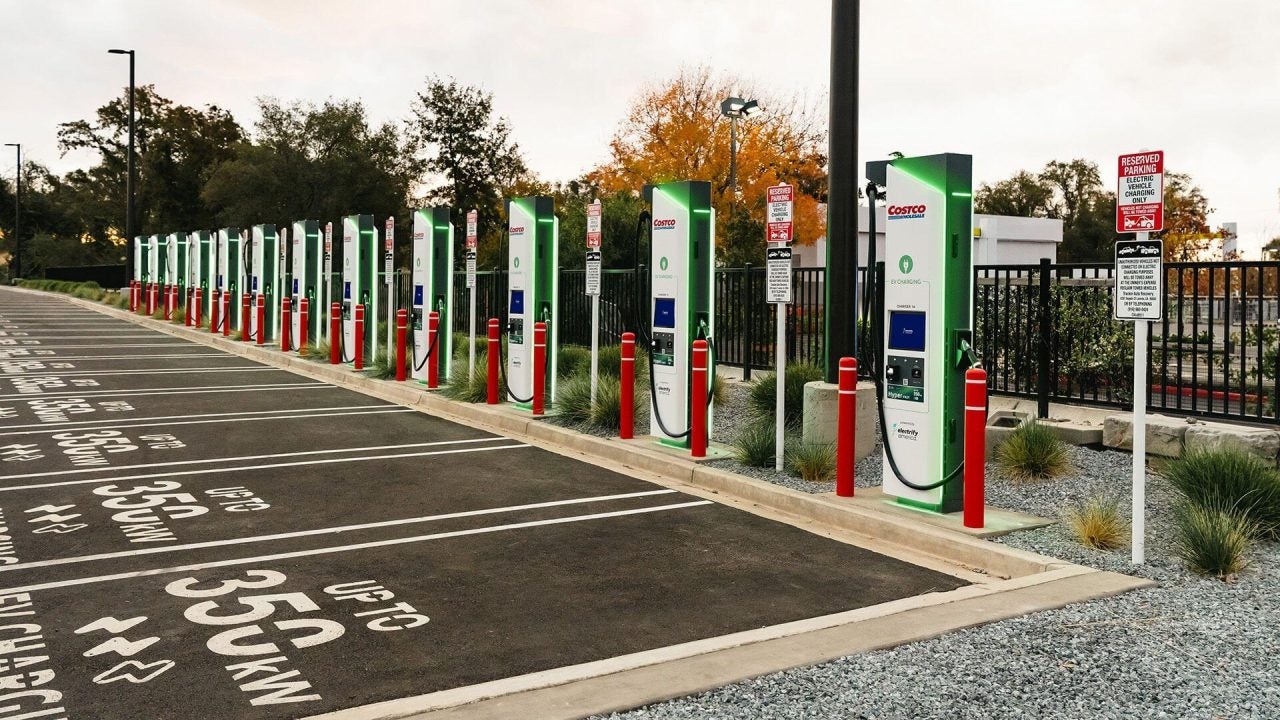
In a significant advancement for electric vehicle (EV) infrastructure, Electric Era has successfully installed six fast charging stations at a Costco in Northport, Florida, in a record 54 days from contract signing to operation.
The agreement, finalized on April 7, 2025, saw the fast-charging site go live by May 30, featuring three units that support both CCS and NACS plug types, allowing for a diverse range of vehicles to refuel efficiently.
The rapid deployment was made possible by Electric Era’s innovative battery-backed system, which circumvents many common challenges in the EV charging world, such as the need for extensive grid upgrades and prolonged permitting processes.
DC fast-charging provider Electric Era says a station at a Florida Costco went up in record time. Here's how.https://t.co/i2tXQ4lO3u
Revolutionary EV Charging System Cuts Grid Power Consumption by 70%
By significantly reducing grid power consumption by up to 70%, the company has managed to streamline the installation process and enhance operational efficiency.
The chargers, capable of bringing vehicles up to 80% charge in just 20 to 60 minutes, also boast a 98.5% uptime per port and over 90% session reliability, marking them as highly dependable additions to the network.
Electric Era’s approach aligns closely with the needs of retail businesses. CEO Quincy Lee emphasizes that retailers seek systems that provide fast and reliable service without disrupting their operations. The installation is equipped with features like loyalty program integration and in-store promotional displays, designed to attract customers while they charge.
Electric Era will always work to make our EV charging stations as good or better than @Tesla Supercharge
We are seeing lots of Tesla drivers come to our customer stations and having awesome experiences, including this @cybertruck driver who came by our Costco install yesterday pic.twitter.com/uDLOP0h4Qn
This innovative project is backed by a team of former SpaceX engineers using a “first principles engineering process,” which involves a complete reevaluation of every aspect of the system, from design to assembly. Such expertise indicates a commitment to quality and performance, fitting the growing demand as more consumers transition to electric vehicles.
The success of this installation not only enhances the EV charging landscape but also sets a promising precedent for future developments in the industry, as Electric Era aims to redefine what’s possible for charging infrastructure in commercial settings.
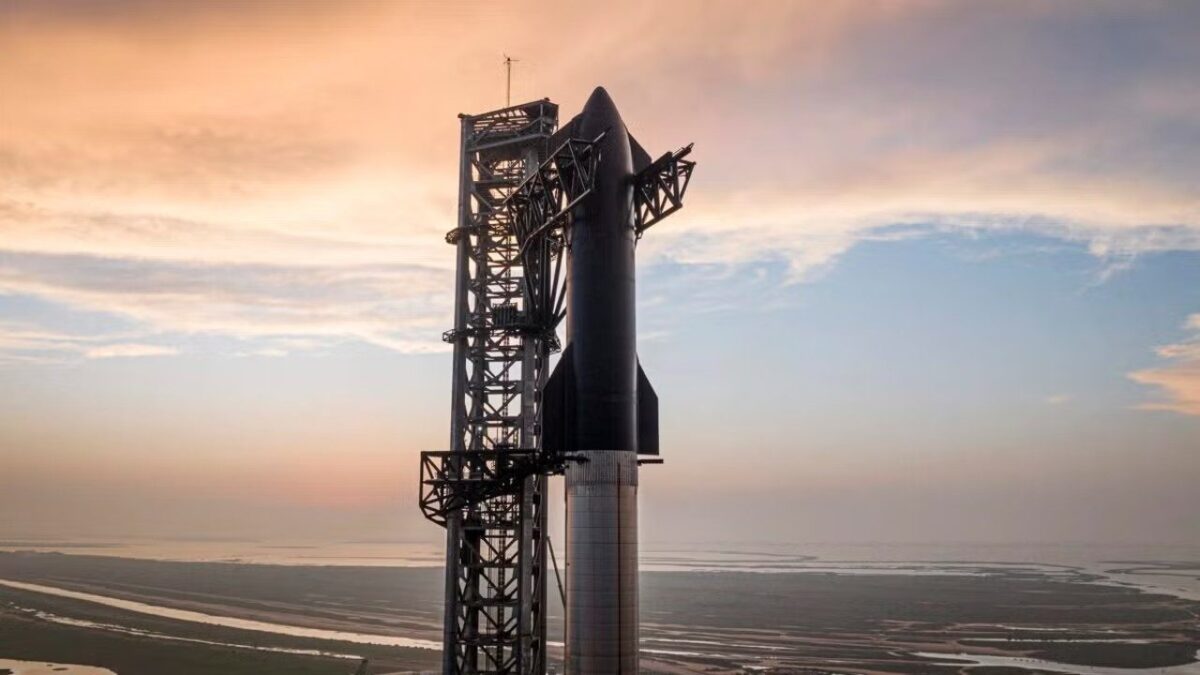
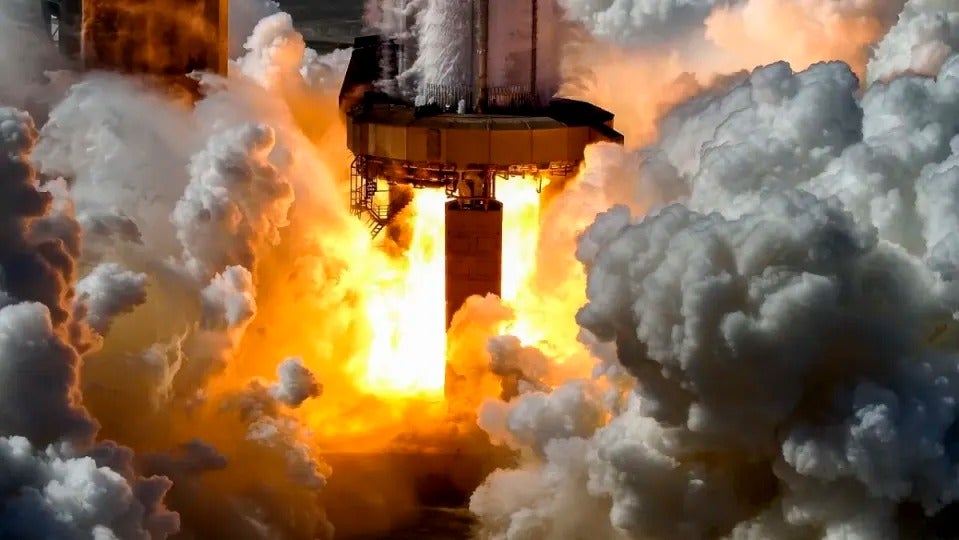
In a significant setback for SpaceX, the Starship 36 suffered a catastrophic explosion during a static fire test at the company’s test facility in Brownsville, Texas.
Occurring at approximately 11:00 PM local time, the explosion sent shockwaves through the metropolitan area, rattling windows and prompting immediate concern among local residents.
No injuries were reported, as the area had been cleared prior to the test. SpaceX assured the public that there were no risks for nearby residents and is currently assessing any damage to the test infrastructure at Massey’s site, where the incident unfolded.
🚨#BREAKING: Watch as SpaceX Starship 36 explodes during static fire test right before launch later this month
Watch as a massive explosion erupts near Starbase City, Texas, during a critical moment in SpaceX’s preparations for Starship Flight 10. The… pic.twitter.com/Rp2tlddenf
The failure marks a troubling chapter for SpaceX, which has now encountered three consecutive launch failures of its Starship Block 2. Currently, only two of these second-generation vehicles remain available for validation before the company transitions to a new generation of Starships.
The program, intended to facilitate missions beyond Earth, is facing increasing pressure, having yet to successfully demonstrate satellite deployment or thermal shield testing, both crucial elements for ensuring the rocket’s full reusability.
As the dust settles from the dramatic explosion, speculation surrounds the future trajectory of SpaceX’s Starship program, with high-stakes implications for its mission timelines.
Industry experts can speculate that continued setbacks like this could prompt a reevaluation of test protocols or timelines as the company maneuvers to bounce back from this latest failure.
After creating NASA in 1958, the American administration in charge of space research took only 10 years to conquer the Moon, an achievement so great that we have not managed to do it again. But from the year 2000 to 2024, we have achieved other milestones. The emergence of private companies and the liberalization of space programs have allowed the space exploration business, which seemed to be at a standstill, to shift into a higher gear. Today we are going to select what we consider to be the 7 most important milestones in the aerospace industry that have happened in the […]
After creating NASA in 1958, the American administration in charge of space research took only 10 years to conquer the Moon, an achievement so great that we have not achieved it again. But from the year 2000 to 2024, we have achieved other milestones.
Subscribe to the Softonic newsletter and get the latest in tech, gaming, entertainment and deals right in your inbox.
The emergence of private companies and the liberalization of space programs have accelerated the business of space exploration, which seemed to be at a standstill.
Today we are going to select what we consider the 7 most important milestones in the aerospace industry that have occurred in the last 24 years. If you feel that an important moment is missing, don’t take it personally: To select 7 moments, many more had to be left out of the list.
Artemis I
Everyone has forgotten that the program to conquer the Moon again began with Artemis I, a mission in which an uncrewed Orion spacecraft flew around the Moon at the end of 2022.
NASA has invested more money in the Artemis Program than in any other space mission in the last 24 years. With the Artemis I mission, NASA will mark a milestone in the program that will finally return humans to deep space after more than half a century—even if we are delayed.
The Dragon capsule crew
The retirement of the space shuttle in 2011 marked a painful moment for NASA. The space agency had to spend several years convincing Americans that the space program was not shutting down. NASA leaders also had to go to the Russian space corporation to ask them to take their astronauts to the International Space Station.
Then in 2020, SpaceX and its Dragon spacecraft arrived. The return of the United States to manned space flights was a significant technical achievement for SpaceX, which became the first private company to put humans into orbit, and allowed NASA to send more astronauts to the space station and make the most of the research capabilities of that facility.
Detection of gravitational waves
Although he theorized about their existence a century ago, physicist Albert Einstein was not sure that humans would be able to detect the faint echoes of gravitational waves traveling through the vastness of space.
However, experimental physicists struggled to achieve it for decades. Then, in February 2016, two LIGO observatories announced that they had detected gravitational waves from two merging black holes. This marked a triumphant moment for experimental physics and confirmed a key principle of Einstein’s general relativity.
The rise of space tourism
It wasn’t until the summer of 2021 that space tourism “took off.” First with the spacecraft VSS Unity from Virgin Galactic and then with Blue Origin’s New Shepard vehicle that took private citizens to suborbital space.
Shortly after, in September 2021, businessman Jared Isaacman commanded the first private orbital mission, Inspiration4, aboard the Crew Dragon. In December of that same year, the daughter of the first American, Laura Shepard-Churchley, followed in her father’s footsteps by flying on a similar trajectory aboard a spacecraft that bore her name. Private space travel is not yet commonplace, but the door has been opened.
China fully enters the space race
One of the main stories of this century is the rise of the Chinese space program and its efforts to challenge the preeminence of the United States. This has been most evident in the country’s efforts to study and land on the Moon with its Chang’e project. In 2007, China flew its first orbiter to the Moon, and in 2013, the Chang’e 3 spacecraft successfully landed on the Moon and deployed the small Yutu rover.
These initial successes laid the groundwork for even more ambitious missions. In 2019, the Chang’e 4 mission landed on the far side of the Moon, the first time anyone had achieved this. Subsequently, the country’s space program embarked on robotic sample return missions, including the Chang’e 6 mission at the Moon’s South Pole this year. China aims to send humans to the Moon by 2030, competing with NASA and the United States.
The SpaceX rockets that are captured
On October 13 of this year, SpaceX launched its massive Starship rocket for the fifth time, but the profile of this flight was different, as the company intended to recover the first stage of the rocket, the so-called Super Heavy.
Surprisingly, the rocket returned to the launch site, stopped next to the launch tower, and was caught in the air by a pair of hooks to be placed back on the launch stand.
This technical achievement demonstrates several important things, including the verification of the radical approach to catching a rocket and also allows SpaceX to accelerate the development and testing of Starship.
The launch of SpaceX’s Falcon Heavy
This February 2018 mission is very important. The visual effects were irresistible. The rocket launch itself was impressive, with the combination of 27 Merlin rocket engines. Next, the twin rockets separated and returned to Earth, landing like a pair of synchronized swimmers. Finally, the stunning vision of a cherry red Tesla (and Starman) moving away from Earth towards Mars.
It was a spectacle that captured the public’s attention. But the new rocket was more than a spectacle. By designing, building, and launching the Falcon Heavy, SpaceX demonstrated that a private company could independently finance and fly the largest and most powerful rocket in the world.
This demonstrated that commercial heavy-lift rockets were possible. By competing with the Delta IV Heavy, the Falcon Heavy saved billions for the U.S. government. This means that it is likely the U.S. government will never again design and develop a rocket.
SpaceX has taken a big step towards the seventh test flight of its massive Starship rocket after receiving authorization this week from the Federal Aviation Administration (FAA). The granting of the launch license by the FAA follows recent tests conducted by SpaceX on the engines of the Super Heavy rocket’s first stage and the upper stage of the Starship spacecraft. The next step will be to place the spacecraft on the Super Heavy to prepare for the launch from SpaceX’s starbase in Boca Chica, Texas. Everything that […]
SpaceX has taken a big step towards the seventh test flight of its massive Starship rocket after receiving authorization from the Federal Aviation Administration (FAA) this week.
Subscribe to the Softonic newsletter and get the latest in tech, gaming, entertainment and deals right in your inbox.
The granting of the launch license by the FAA follows recent tests conducted by SpaceX of the engines of the first stage of the Super Heavy rocket and the upper stage of the Starship spacecraft.
The next step will be to place the spacecraft on the Super Heavy to prepare for the launch from SpaceX’s starbase in Boca Chica (Texas).
Everything SpaceX Expects from its Starship in 2025
The spaceflight company led by Elon Musk has not yet officially announced a launch date for the seventh test flight of the Starship.
But now that SpaceX has secured the launch license for the seventh flight, there is a possibility that it will send the 120-meter-tall rocket to the sky sooner than expected.
In the seventh flight, the first Starship Block 2 will be used, featuring updated fin designs and capable of carrying more propellant. The mission profile is similar to previous tests but includes improvements based on lessons learned from earlier test flights.
As in the fourth, fifth, and sixth test flights of the Starship, the spacecraft is expected to perform a controlled landing in the Indian Ocean approximately one hour after launch.
We should also see another attempt to catch the Super Heavy booster returning using a pair of giant mechanical arms on the launch tower. SpaceX achieved the spectacular feat on its first attempt in the fifth Starship test in October, but failed in the next test last month.
Once tested and certified, NASA and SpaceX want to use the Starship to transport crew and cargo to the Moon, Mars and possibly to even more distant places in our solar system.
The first major mission of the Starship is expected to use a modified version of the spacecraft to land the first NASA astronauts on the moon since 1972. However, the mission, Artemis III, has experienced several delays and is currently scheduled for 2027.
Cards Against Humanity, the company behind the card game of the same name (‘Cartas contra la humanidad’ in Spanish-speaking countries), has sued SpaceX for $15 million, alleging that Elon Musk’s company has trespassed on its property in Texas, near the border with Mexico. The land, acquired in 2017 as part of a campaign to stop Donald Trump’s border wall construction, has been the subject of ongoing disputes. According to the lawsuit, SpaceX has treated the property as if it were its own for at least six months, using the land to park vehicles and store […]
Cards Against Humanity, the company behind the card game of the same name has suedSpaceX for 15 million dollars, alleging that Elon Musk’s company has invaded their property in Texas, near the border with Mexico.
Subscribe to the Softonic newsletter and get the latest in tech, gaming, entertainment and deals right in your inbox.
The land, acquired in 2017 as part of a campaign to halt the construction of Donald Trump’s border wall, has been the subject of constant disputes. According to the lawsuit, SpaceX has treated the property as if it were its own for at least six months, using the land to park vehicles and store construction materials without permission.
The property is located in an area on the southern coast of Texas that has changed dramatically with the development of Starbase, the industrial complex of SpaceX. Although this project has generated more than 2,100 jobs in the region, it has also caused serious problems for the local population.
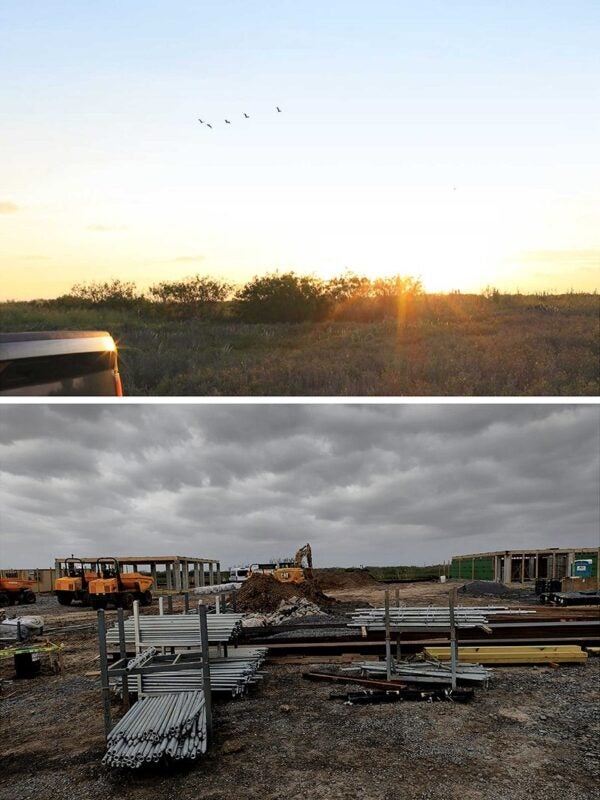
Land owned by Cards Against Humanity before (above) and after (below) the “invasion” by SpaceX – elonowesyou100dollars.com
Before the arrival of SpaceX, the land was in its natural state, “where wild horses roamed freely under the Texas moonlight,” according to Cards Against Humanity. The photos included in the lawsuit show how the land went from being covered in vegetation to being an area used for construction.
A key mission for SpaceX and the conquest of space
Thursday’s mission saw a far better outcome than the first two test flights of the 120-meter (393-foot) rocket, which both ended in explosions minutes after leaving the launch pad.
The third test flight, in March, made significant progress, but this latest mission surpassed even that launch, achieving most of the objectives set by the SpaceX team.
“The Super Heavy rocket successfully launched and completed a full-duration ascent burn,” SpaceX said in a post-mission report. “Starship has executed another successful hot-stage separation, shutting down all but three of the Super Heavy’s Raptor engines and successfully igniting the six Raptor engines of the second stage before separating the vehicles.”
After separation, the Super Heavy rocket “successfully completed the flip maneuver and the retro-thrust ignition to head towards the landing zone, as well as the release of the hot-stage adapter”. The flight of the Super Heavy rocket ended with its first landing burn and smooth splashdown in the Gulf of Mexico 7 minutes and 24 seconds after leaving the launch pad.
Meanwhile, the six Raptor engines of the Starship’s second-stage flight propelled the spacecraft into orbit, where it stopped for a while before performing a controlled reentry for the first time.
The Starship successfully passed the various phases of maximum heating and maximum aerodynamic pressure as it descended through the atmosphere at hypersonic speeds, while the vehicle’s flaps controlled its trajectory towards open sea.
Next, the Starship ignited its three central Raptor engines to perform its first flip maneuver and landing burn since the start of the rocket’s suborbital campaign, followed by a smooth splashdown in the Indian Ocean 1 hour and 6 minutes after departing from the Star Base.
The successful reentry of both vehicles is a major step forward for SpaceX in its attempt to make the Starship fully reusable by landing both parts vertically – instead of in the ocean – so that they can be used for multiple flights.
The ultimate goal is to use the Starship for crewed and cargo missions to the Moon, and possibly even to Mars.
Immediately after the smoke clouds dissipated, fire began to come out from the bottom of the platform and the Raptor engine…
While SpaceX continues with the preparations of its starship IFT-4 in its Boca Chica (Texas) facilities, the rocket engine testing platform of SpaceX in McGregor (Texas) has caught fire.
Local media images show that while the company was testing a rocket engine at the site (a Raptor engine), a fiery explosion occurred that engulfed the tower in flames.
At the moment, SpaceX has not reported on the incident, which occurs after a minor anomaly occurred earlier this month in the second stage of a Starship spacecraft during testing on another platform.
Here is the full clip of the test that ended in a RUD.
How do Raptor engines work and what ships are they used for?
Unlike most rocket companies, which produce a fixed number of engines intended for specific future rockets, SpaceX is a hardware-rich company. The development of its Starship rocket in Texas has allowed the company to increase production of steel sheets, metal tanks, and rocket engines.
Before a rocket engine is installed on the Falcon 9, the Starship Super Heavy, or the second stage of the Starship, it undergoes qualification testing at SpaceX facilities in McGregor, Texas.
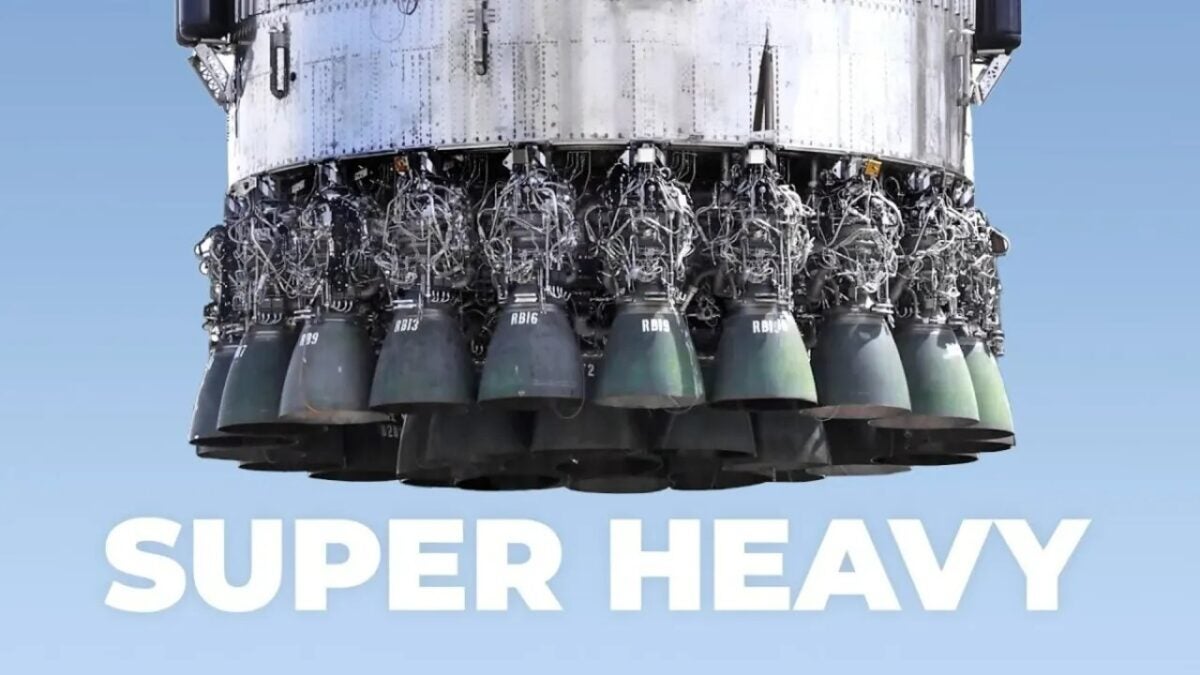
The two rocket engines can be distinguished by their exhaust plumes. While the Merlin’s exhaust has an orange color due to kerosene, the Raptor’s is cleaner and emits a bluish hue. Raptor engines are a new design created specifically for Starship, as they can use methane as fuel.
Today, images from a local media channel in Texas, NASASpaceflight, show that what appeared to be a Raptor engine test at a SpaceX facility in McGregor ends in flames. The test started shortly after 16:12 local time and seemed to be progressing normally, as the smoke from the ignition blocked the camera’s view.
When the smoke cleared, 14 seconds after ignition, the engine had shut down and the test seemed to have concluded.
However, immediately after the smoke clouds dissipated, fire started to come out from the bottom of the platform, where the rocket engine nozzle emits flames. However, these new flames were orange in color and seemed to move upwards before a second explosion engulfed the entire structure.
An orbital sunrise is seen from space and occurs when the sun rises above the Earth’s horizon. If the astronauts aboard the International Space Station…
An orbital sunrise is seen from space and occurs when the sun rises over the Earth’s horizon. If the astronauts aboard the International Space Station were to look out the window for 24 consecutive hours, they would see 16 orbital sunrises due to the high speed at which the facility orbits our planet.
The Falcon 9 rocket that powers the latest Starlink mission took off from Kennedy Space Center on Monday, May 6th. The vehicle deployed 23 Starlink satellites into low Earth orbit to continue expanding the company’s internet service from space.
This is the fifteenth flight of the first stage of the Falcon 9 rocket for this mission. It previously launched CRS-24, Eutelsat Hotbird 13F, OneWeb 1, SES-18 and SES-19, and now 11 Starlink missions. It was also the 31st Starlink mission of 2024, with most flights deploying between 20 and 23 satellites each.
Until last month, there were over 5,800 Starlink satellites in orbit after the initial deployment of 60 satellites in 2019. SpaceX expects to have up to 42,000 Starlink satellites in orbit in the coming years.
The main objective of the service is to bring Internet connectivity to remote areas of the world, although it also serves customers in other locations, with around 2.7 million people subscribed to the service.
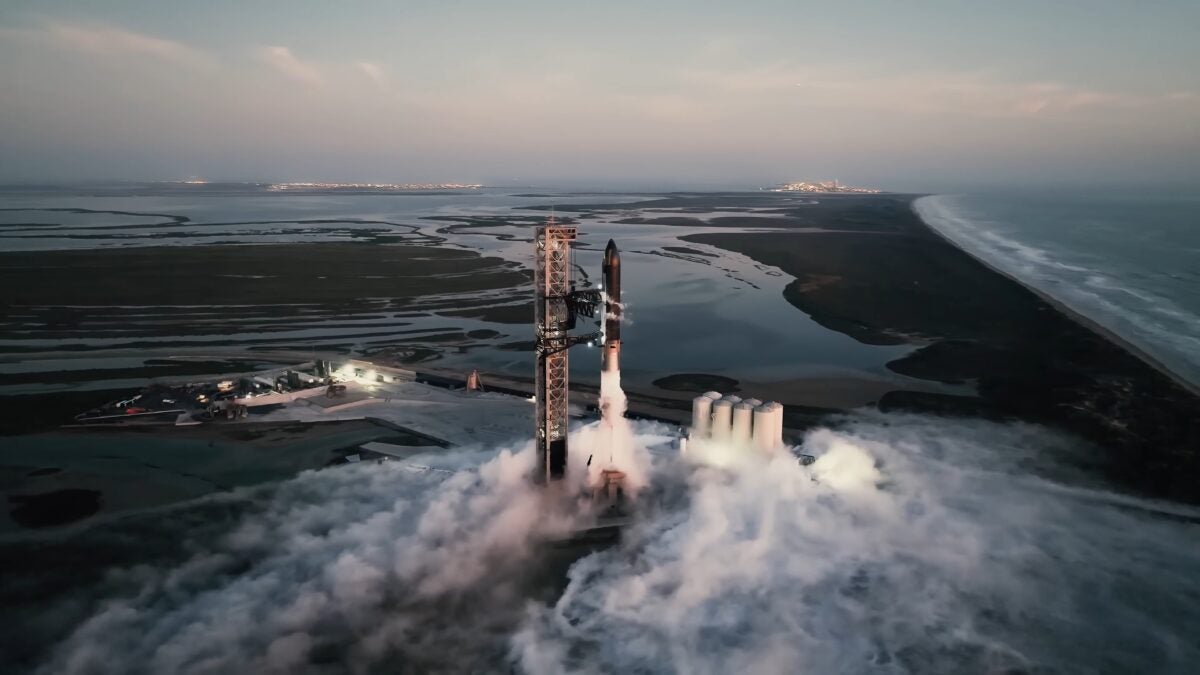
The vehicle is known as Starship, and with 17 million pounds of thrust at launch, the rocket is the most powerful ever flown.
The test took place at SpaceX facilities in Boca Chica, Texas, and was conducted without the Starship spacecraft on the booster. The company shared a video showing how the Raptors engines are ignited.
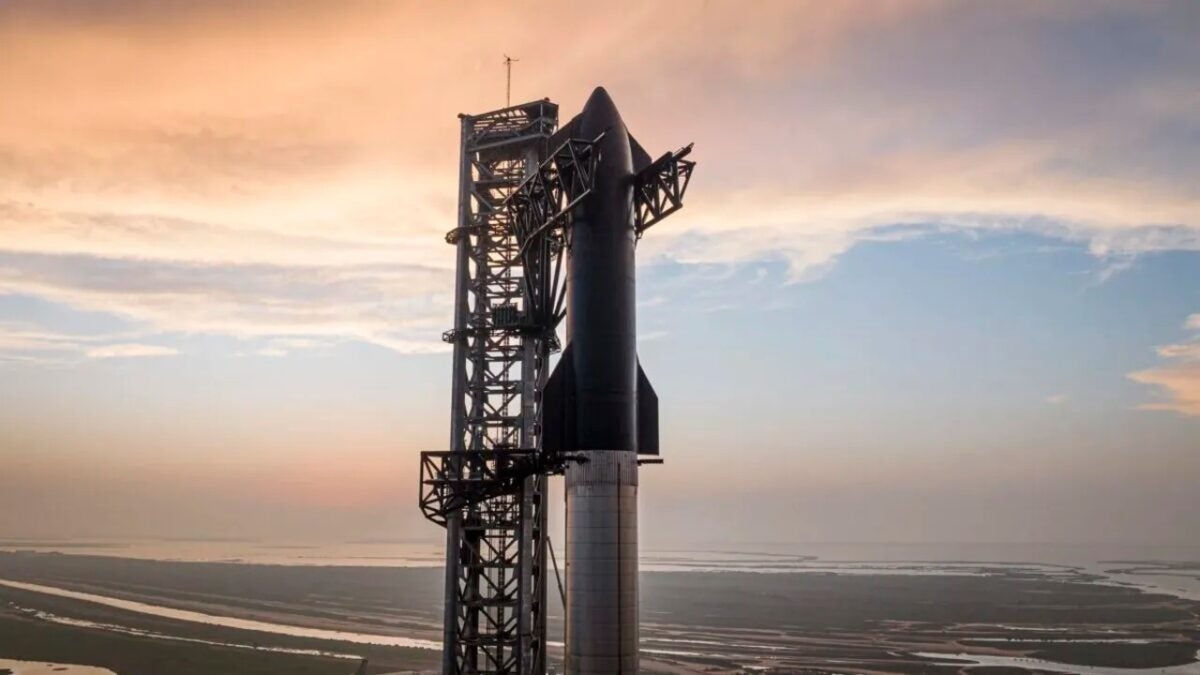
Once SpaceX receives the launch permit from the Federal Aviation Administration (FAA), SpaceX will raise the Starship to its position. When it is fully assembled, the vehicle is known as Starship, and with 17 million pounds of thrust at launch, the rocket is the most powerful ever flown.
The SpaceX Starship is the future of space exploration
Seven months later, in November, the Starship flew again. On this occasion, it managed to separate the stages, but once again the vehicle failed relatively soon.
After much work, the third test took place in March and was by far the most successful flight of the Starship to date, completing many of the mission’s objectives. SpaceX said that the fourth flight could be launched in May, subject to FAA approval.
Elon Musk, CEO of SpaceX, recently said that for the fifth flight, he wants to try landing the Super Heavy rocket’s first stage at the same starbase as SpaceX lands its smaller Falcon 9 rocket shortly after launch, a process that paves the way for the reuse of the same components, thus reducing costs.
They could also attempt to land the Starship spacecraft in a test in 2025. Currently, both parts of the Starship are designed to fall into the water at the end of their respective flights.