Threads Messaging Demystified: Understanding the Unique Terminology Behind It
There is a lot of confusion with Threads and it is normal. Mark Zuckerberg’s new social network is indeed a punch to Elon Musk’s face and not the fake fight…
The folks at Meta have launched their own Twitter. Cleaner and prettier, according to early users. But when it comes down to it, it’s just like Twitter, except with a rather criminal algorithm (nothing it suggests will be to your liking).
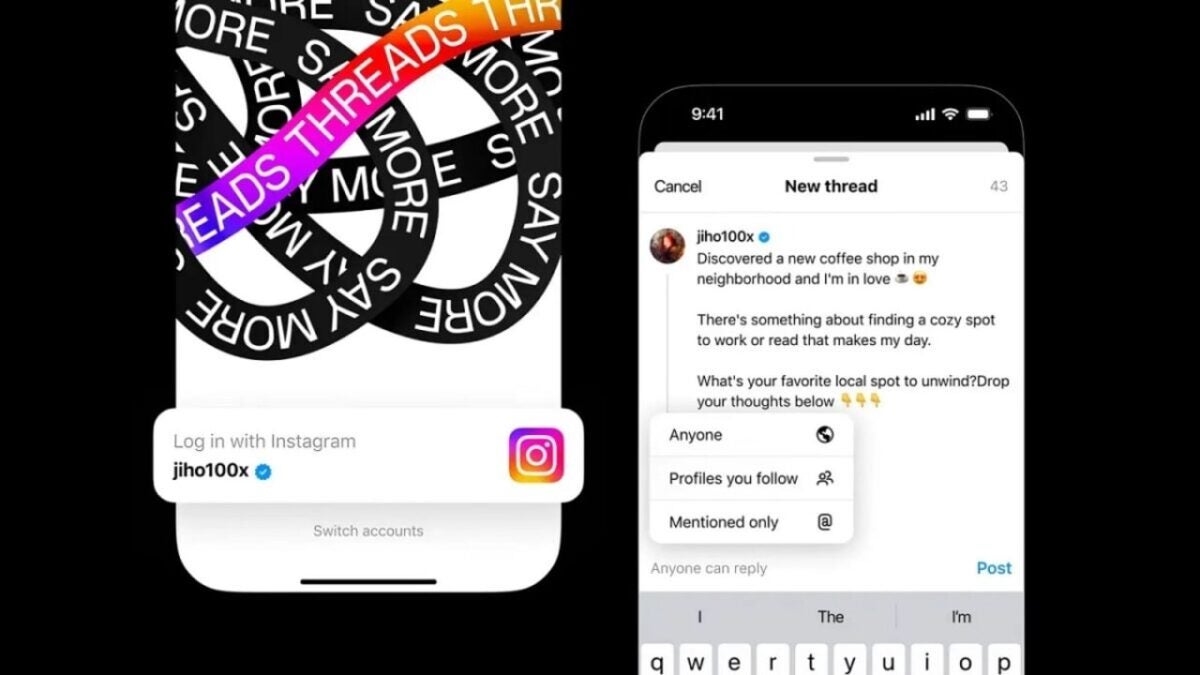
So, with such app similarity, functionality, and interface… what do we call the messages we write and post on Threads? Because on Twitter, we already had the perfect word “tweet” and “to tweet”… can we use the same?
Let’s call Threads’ messages a tweet
We have pondered this question extensively, and our colleagues at The Verge have as well. We have come to the conclusion that we can refer to the messages on Meta’s social network the same way we have always referred to messages on Twitter: “tweet” and “to tweet.”
While many people have simply referred to the messages as “posts,” which is a fitting term, the reality is that it is too vague.
In the early hours of Threads’ public launch, people tried “threet” and “tit,” as well as a whole series of textile-related wordplay. But all of them seem like poor ideas.
For that reason, we advocate for the use of the word “tweet” and the action of “twitter.” It has a defined meaning in several dictionaries directly related to online posting. It is a word that immediately connotes the specific type of publication that microblogs tend towards.
“Tweet” is the perfect word to describe a short and quick message posted in a feed. And if you think “tweet” can only refer to Twitter, you’re mistaken. Twitter didn’t even invent the word.
Some of the links added in the article are part of affiliate campaigns and may represent benefits for Softonic.
Author: Chema Carvajal Sarabia
{
"de-DE": "Journalist, spezialisiert auf Technologie, Unterhaltung und Videospiele. Über das zu schreiben, was mich begeistert (Gadgets, Spiele und Filme), ermöglicht es mir, bei Verstand zu bleiben und mit einem Lächeln im Gesicht aufzuwachen, wenn der Wecker klingelt. PS: Das stimmt nicht 100% der Zeit.",
"en-US": "Journalist specialized in technology, entertainment and video games. Writing about what I'm passionate about (gadgets, games and movies) allows me to stay sane and wake up with a smile on my face when the alarm clock goes off. PS: this is not true 100% of the time.",
"es-ES": "Content Manager - Periodista especializado en tecnología, entretenimiento y videojuegos. Escribir sobre lo que me apasiona (cacharros, juegos y cine) me permite seguir cuerdo y despertarme con una sonrisa cuando suena el despertador. PD: esto no es cierto el 100 % de las veces.",
"fr-FR": "Journaliste spécialisé dans la technologie, le divertissement et les jeux vidéo. Écrire sur ce qui me passionne (gadgets, jeux et films) me permet de rester sain d'esprit et de me réveiller avec le sourire aux lèvres quand le réveil sonne. PS : cela n'est pas vrai 100 % du temps.",
"it-IT": "Giornalista specializzato in tecnologia, intrattenimento e videogiochi. Scrivere di ciò che mi appassiona (gadget, giochi e film) mi permette di mantenere la sanità mentale e di svegliarmi con un sorriso sul viso quando suona la sveglia. PS: questo non è vero al 100% del tempo.",
"ja-JP": "",
"nl-NL": "",
"pl-PL": "",
"pt-BR": "Jornalista especializado em tecnologia, entretenimento e videogames. Escrever sobre o que me apaixona (gadgets, jogos e filmes) me permite manter a sanidade e acordar com um sorriso no rosto quando o despertador toca. PS: isso não é verdade 100% do tempo.",
"social": {
"email": "chemacs91@gmail.com",
"facebook": "",
"twitter": "https://twitter.com/chematopetazo",
"linkedin": ""
}
}
View all posts by Chema Carvajal Sarabia