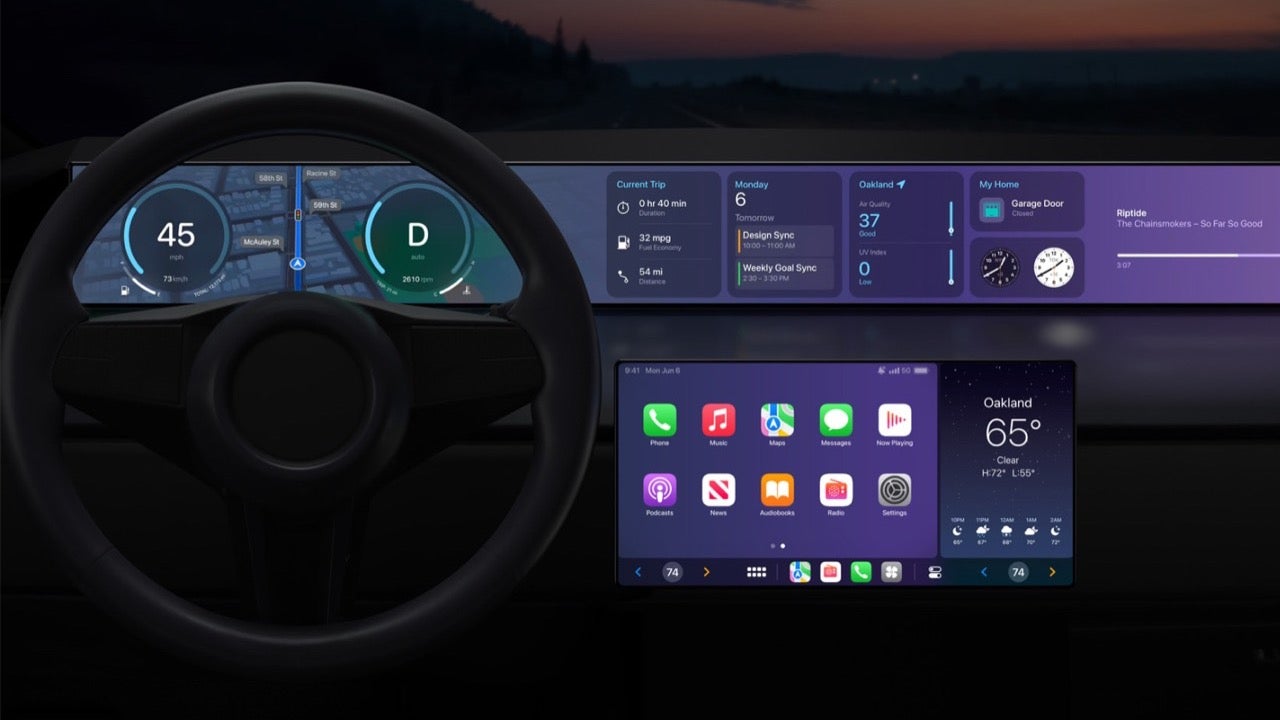
Apple’s ambitious next-generation CarPlay Ultra has hit a major roadblock as several top carmakers walk away from the project. Once promoted as a revolutionary interface that would reshape the in-car experience, CarPlay Ultra now faces hesitation from key automotive partners. Why are these brands turning their backs on what Apple called the future of infotainment?
Leading automakers push back on full takeover
Despite being listed among Apple’s expected collaborators, Mercedes, Audi, BMW, Volvo, Polestar and Renault have all distanced themselves from CarPlay Ultra. The main issue? Apple’s system replaces every screen in the car, not just the infotainment center. Speedometers, climate controls, fuel gauges — everything gets redesigned by Apple’s interface. For these manufacturers, that level of takeover threatens their ability to create a unified car experience that blends hardware and software under their own brand identity.
Custom experiences versus Apple’s integration
Mercedes CEO Ola Källenius made it clear: a premium vehicle requires a coherent ecosystem, and Apple’s system undermines that vision. Audi and Renault echoed similar sentiments, with Renault bluntly warning Apple: “Don’t try to invade our systems.” Only Aston Martin, Hyundai, Kia, and Genesis have officially embraced CarPlay Ultra since its May 2024 launch, despite earlier indications of broader industry support.
Consumer interest remains high, but preferences vary
Apple has cited internal research suggesting that 79% of U.S. buyers prioritize CarPlay support when choosing a vehicle. However, this doesn’t mean they prefer full CarPlay control — many simply want smooth iPhone integrationwhile still enjoying the unique software environments that brands like Mercedes or Porsche offer.
As the automotive world leans into digital experiences, the tension between tech giants and carmakers is growing, and CarPlay Ultra has become the battleground.