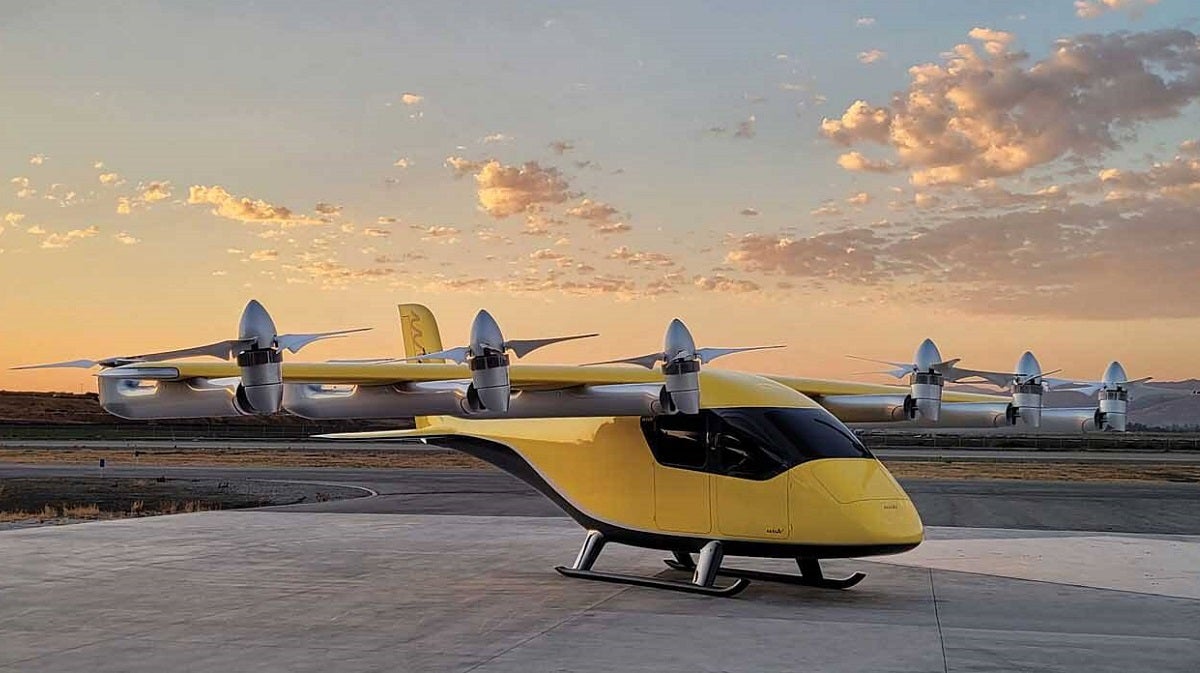
Wisk Aero, a wholly owned subsidiary of Boeing, has announced a new five-year research partnership with NASA to establish advanced air mobility (AAM) standards aimed at integrating autonomous aircraft into the National Airspace System (NAS).
This partnership builds on Wisk’s ongoing collaboration with NASA, which began in 2020 as part of NASA’s Advanced Air Mobility Project, focusing on addressing critical industry challenges and laying the groundwork for autonomous passenger flights.
The centerpiece of Wisk’s efforts is the Cora, an all-electric aircraft that has evolved through multiple generational variants over the past seven years.
Wisk Aero and NASA Join Forces for Advanced Air Mobility Standards
This new Non-Reimbursable Space Act Agreement (NRSAA) will expand upon prior research to develop essential guidelines for the safe operation of autonomous urban air mobility (UAM) flights.
Key objectives include optimizing airspace design, establishing safety requirements for aircraft and ground systems, and formulating air traffic control communication protocols necessary for the seamless integration of future UAM aircraft.
To achieve these ambitious goals, Wisk and NASA will utilize advanced simulation techniques and Live Virtual Constructive (LVC) flight environments. These methods combine real flight operations with simulated environments, allowing researchers to evaluate future autonomous operations effectively.
According to Erick Corona, Director of Airspace Operational Integration at Wisk, this long-term partnership represents a significant advancement for both Wisk and the broader UAM sector, positioning them to develop sixth-generation autonomous systems for safe integration into U.S. airspace by the end of the decade.
Recent meetings between Wisk and NASA’s teams have already initiated discussions on instrument flight procedures and how advanced technology can facilitate secure autonomous passenger flights, with a target date set for 2030. As the industry prepares for this transformation, ongoing regulatory developments will be crucial in shaping the future of urban air mobility.