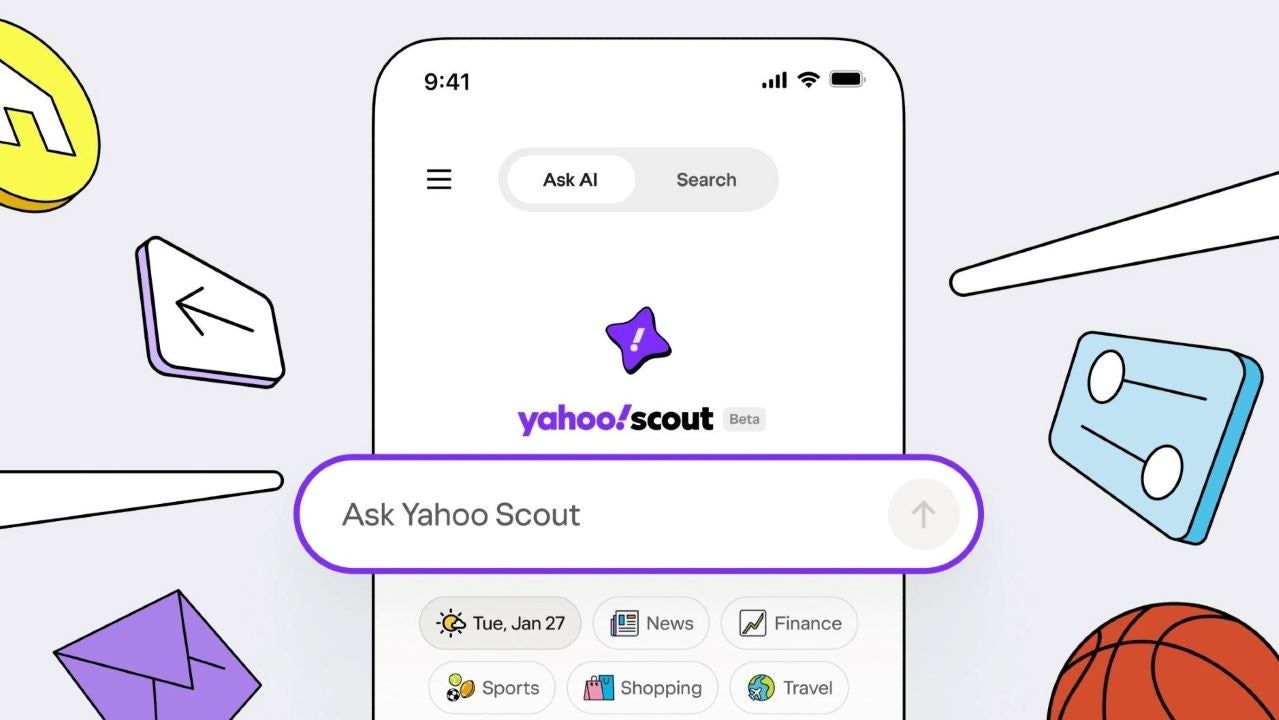
Yahoo has launched Scout, a new AI-powered answer engine that is available in beta through its search app. Unlike other systems like OpenAI’s ChatGPT, which is subscription-based, Scout positions itself as a free product supported by ads. Yahoo’s strategy is to use advertising to fund access, thereby democratizing the discovery and use of AI.
Attention to brands
With 250 million monthly users in the United States and the ability to capture 18 trillion intent signals per year, Yahoo seeks to modernize the way information is presented on its platform. Jim Lanzone, CEO of Yahoo, emphasized that Scout represents a renewed opportunity to fulfill the company’s mission of being a trusted guide on the internet. It is an opportunity we didn’t think would return, but artificial intelligence has provided it to us and we are taking advantage of it, Lanzone commented.
Scout, which will act as a data aggregation layer, differs in its approach to advertising compared to other giants like Google and ChatGPT. Scout’s ads will be designed based on situational relevance, using the vast dataset that Yahoo has accumulated on user interests and behaviors. This provides brands with a new advertising space that prioritizes structured content and contextual creativity.

Therefore, brands are urged to consider Scout as a testing ground for advertising through AI-generated responses. With a focus on data-driven relevance and a more authoritative structure, Scout could become an essential tool for companies looking to capture consumer attention in a dynamic response format.