Chances are, you and all of your friends have a Gmail account. With a whopping 1.5 billion users, there’s a clear market preference.
Outliers seem to be limited almost exclusively to business emails, which, chances are, are linked to a Gmail inbox. Or, of course, the biggest competitor, Outlook.
But, it got us thinking, is Gmail better than anything else, or is the ubiquity chalked up to branding and aesthetics, in the same way that Apple has the market cornered on phones?
Gmail, of course, comes with a long list of benefits. They’ve added some welcome changes like predictive email text, which learns from your communication habits over time.
And there’s the fact that the platform is one piece of the Google suite — access your documents, plug into your browser, and you’ve got this interconnected system of tools. Pretty useful, right?
Anyway, Google has long had an impressive cloud-based AI built into their solution — this is how they identify spam, tag your senders, and keep unwanted addresses from making their way into your priority inbox.
But, it’s worth pointing out that some of the competitors out there have pretty solid solutions themselves. Here’s a look at some of the competing tools.
Best Gmail alternatives
Zoho Mail
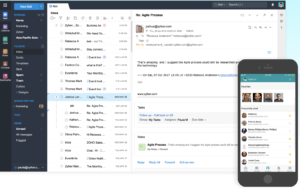
Zoho, maker of a ton of free and affordable business tools has provided free hosted email for over a decade. G Suite’s professional Gmail accounts are $5 and $10 per user per month, so small businesses might like the fact that Zoho’s solution allows you to have a professional email for free.
Some key features include integrations with Zoho’s tools, like the CRM, Office features, and cloud-based collaboration. The collaboration features might work better for companies that do most of their collaboration internally, as this is basically an alternative to Google Docs — which most people have.
That said, some users have mentioned that this isn’t necessary as reliable as Google, especially in a business context. Zoho comes with a lot of features and it could help you become more efficient over time.
Yahoo Mail
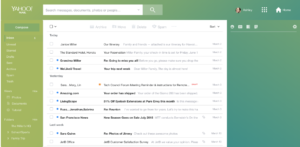
Yahoo Mail has been around for a long time. We’d even venture to guess that you used this tool before switching over to Gmail.
After a 2013 data breach, Yahoo Mail added extra security and new features. It’s had trouble shaking its old-school reputation, but the new Yahoo Mail is actually pretty good.
Like Gmail, Yahoo offers three different inbox layouts and you can customize spacing, color scheme, and so on.
Compared to Gmail, Yahoo’s organization process is a little different. Where Gmail allows you to set up tabs — Primary, Social, Promotions (customizable) Yahoo opts to sort emails by photos, documents, coupons, travels, and tutorials. (Which is a little strange, but you do you, Yahoo.)
Yahoo also provides some decent filtering options, but Gmail is ultimately more useful — allowing for more filtering criteria.
4 Gmail hacks you probably don’t know about
Read Now ►
Apple iCloud Mail
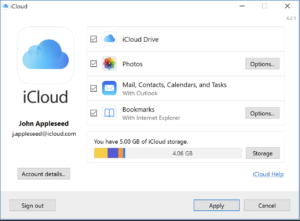
Apple’s email is free to anyone who signs up for an Apple ID. The iCloud mail has its fair share of fans, as its clean and simple, just like your iPhone and Mac.
Pros include 5GB of free online storage which spans calendars, backups, and documents: this includes everything — from photos to your email activity. You do have the option to buy more space, if needed. The app is ad-free, which could be a selling point in and of itself.
Unfortunately, iCloud Mail does not come with labels and search folders.
So this is not the best option for the Inbox Zero-obsessed users who file emails away as they work through the inbox. You also can’t access multiple email accounts from the web app, and mail is not accessible via POP.
Compared to Gmail, iCloud mail is pared down, ad-free, and feels like its designed for the no-frills user. iCloud won’t cut it for business — there just aren’t enough features. But, it’s a solid option for those who aren’t email power users.
Outlook
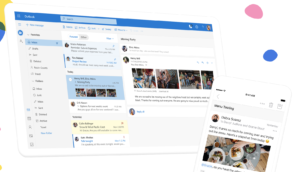
Microsoft’s Outlook is part of a suite of applications that allows you to stores emails, attachments, and organize your activities within your inbox.
Compared to Gmail, Outlook is the strongest competitor in the space. Microsoft offers integrations with the Office Suite, cloud storage, and an Immersive reader.
You can also open photos in the integrated photo viewer and save them to your OneNote Account. The platform integrates with Box, Google Drive, and Dropbox, and they turn blocking unwanted emails into an art form.
Both Gmail and Outlook offer 15 GB of storage free, however, Office 365 accounts offer 50 GB of storage. Labels and folders come down to a matter of preference. Outlook’s approach allows you to have labels and folders within the same system. Gmail’s labels are a way to sort emails into folders.
How to use Mailtrack to see when someone opens your email
Read Now ►
There’s always AOL, too
Interestingly, AOL is trying to work it’s way back on your radar—just in time for Web 3.0.
We recently came across a HubSpot article that mentioned AOL’s email offering has unlimited storage. Still, we wonder whether it matters that AOL isn’t exactly fashionable in this day and age. Honestly, the internet hasn’t been around long enough for us to know whether it’s possible for a former titan to reclaim its crown.
Final thoughts
In the end, we don’t know if Gmail is the best email hands down. But things like the organizational tools, spam filters, and all-around reliability make us unlikely to forego our existing addresses for an iCloud inbox or looking back at AOL.
It is clear that because we’re all so used to using Google’s tools for much of our internet activity, that it makes sense to want to maintain that seamless experience.
It’ll be interesting to see which email providers stick around and whether we’ll make space for anything new. Newcomers have an uphill battle ahead, to be sure.