For those who use the world’s most famous minicomputer, the Raspberry Pi, they can be pleased with the collaboration they have made with Sony, where the star is a camera powered by artificial intelligence. Raspberry Pi and Sony have jointly developed a Raspberry Pi AI camera module that launches today for $70. It comes with integrated AI processing that can help Raspberry Pi users develop “advanced AI solutions that process visual data” with ease, according to the small computer manufacturer. The new camera is based on Raspberry’s plans […]
For those who use the world’s most famous minicomputer, the Raspberry Pi, they can rejoice with the collaboration they have made with Sony, where the star is a camera powered by artificial intelligence.
Subscribe to the Softonic newsletter and get the latest in tech, gaming, entertainment and deals right in your inbox.
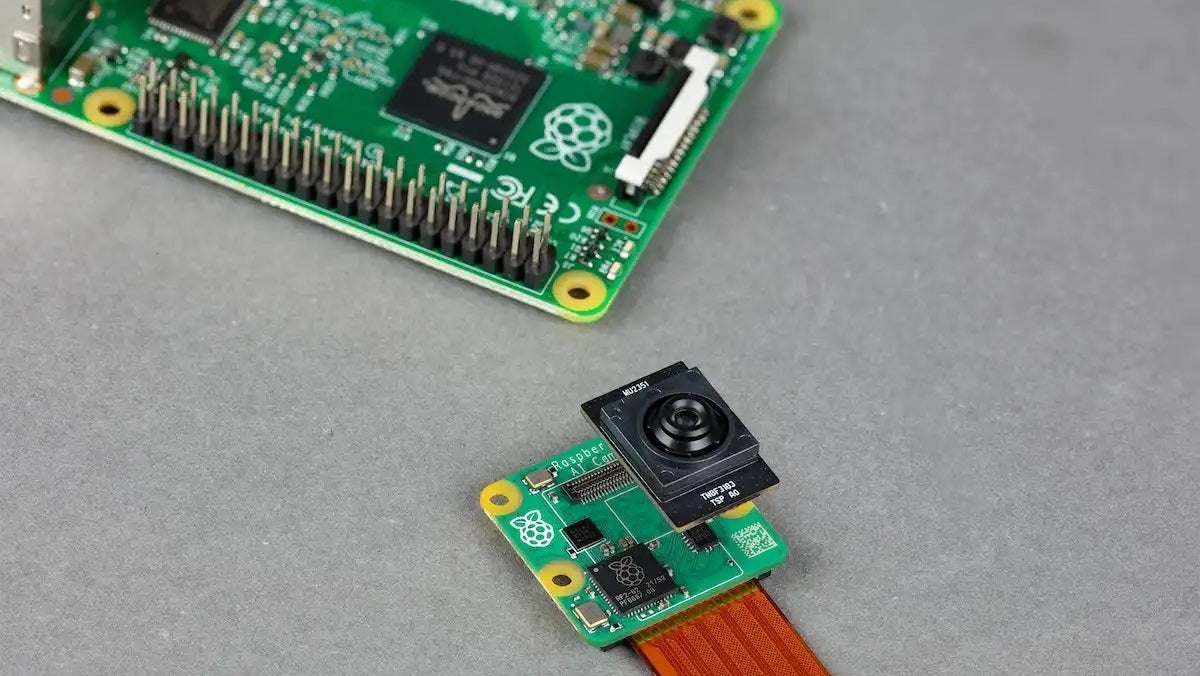
Raspberry Pi and Sony have jointly developed a Raspberry Pi AI camera module that launches today for $70. It comes with built-in AI processing that can help Raspberry Pi users develop “advanced AI solutions that process visual data” with ease, according to the small computer manufacturer.
The Raspberry Pi AI Camera, built around Sony’s IMX500 image sensor with integrated AI accelerator, enables you to create impressive vision AI applications.
“AI-based image processing is becoming an attractive tool for developers around the world,” said Raspberry Pi CEO, Eben Upton, in a press release. “We are looking forward to seeing what our community members are able to achieve using the power of the Raspberry Pi AI camera.”
The AI camera is compatible with all Raspberry Pi single-board computers and combines the company’s RP2040 microcontroller chip with Sony’s IMX500 image sensor, the latter responsible for AI processing.
The combination eliminates the need for additional components such as accelerators or a graphics processing unit (GPU), which are usually necessary for camera modules to handle large-scale visual data.
The Raspberry Pi AI Camera, with 12.3 megapixels, can capture images at 10 frames per second in 4056 x 3040, or at 40 fps in 2028 x 1520. It also has a manually adjustable focus, a 76-degree field of view, and measures 25 x 24 x 11.9 mm, making it almost identical in size to the Camera Module 3 that Raspberry Pi released last year.
From the deepest pain in my heart, the other day I made it quite clear that Megalopolis had been one of the worst experiences I had ever had in theaters, and as time goes by, that only gets reaffirmed. Really, it was an open secret, as everything that was leaking about the movie was worse than the previous. But Francis Ford Coppola is who he is, and perhaps I still hoped he could surprise us with its theatrical release. However, that has not been the case at all. Megalopolis premiered with a box office of 4 million dollars, one […]
From the deepest pain in my heart, the other day I made it quite clear that Megalopolis had been one of the worst experiences I had in theaters, and as time goes by, that only becomes more evident. It was really an open secret, as everything that was leaking about the movie was worse than the previous. But Francis Ford Coppola is who he is, and perhaps I still hoped he could surprise us with its theatrical release.
Subscribe to the Softonic newsletter and get the latest in tech, gaming, entertainment and deals right in your inbox.
However, it has not been like that at all. Megalopolis premiered with a box office of 4 million dollars, one of the worst opening weekends for a big-budget movie in history. Interestingly, it is not the worst of the year, as that spot is reserved for Borderlands, but the blow hurts just the same.
A Disaster Foretold
The film starring Adam Driver has not even come close to the $120 million investment that came from the director himself. Thus, it is clear that Megalopolis is confirmed as the failure that had been anticipated for months. Its only hope now is to achieve better numbers in streaming… when it arrives.
The Argentine series Envidiosa has surprised the world by placing in Netflix’s global Top 10 for non-English language productions. With virtually no promotion, this comedy starring Griselda Siciliani has managed to capture the attention of millions of viewers worldwide. Directed by Gabriel Medina and written by Carolina Aguirre, Envidiosa stands out for its originality and the charismatic performance of its lead actress. The plot revolves around Vicky, a woman who, about to turn 40, faces an unexpected breakup after giving an ultimatum to her longtime boyfriend.
The Argentine series Envious has surprised the world by placing in the global Top 10 of Netflix for non-English language productions. With virtually no promotion, this comedy starring Griselda Siciliani has managed to capture the attention of millions of viewers worldwide.
Subscribe to the Softonic newsletter and get the latest in tech, gaming, entertainment and deals right in your inbox.
Under the direction of Gabriel Medina and with a script by Carolina Aguirre, Envious stands out for its originality and the charismatic performance of its protagonist. The plot revolves around Vicky, a woman who, about to turn 40, faces an unexpected breakup after giving an ultimatum to her lifelong boyfriend: marry or end the relationship. Her partner’s unexpected response leads Vicky to rethink her life, triggering a series of comedic situations and reflections on love, envy, and self-discovery.
Netflix opens its borders
Since its premiere, Envidiosa has accumulated 2.3 million views and 14.4 million hours watched in just one week, managing to position itself in the top 5 most-watched series on Netflix. A new example that the platform opens its borders to productions from any type of origin.
The great rival of the United States and the second most powerful country in the world (economically speaking) has a certain problem with freedom of expression, a consequence of being an authoritarian country with a single party and a single leader. And in its mission to continue expanding its unique worldview, they have taken another step: even controlling satellite internet. Beijing has published its proposed regulations for satellite broadband, which includes the requirement for operators to perform real-time censorship. In its latest draft of regulations, the Cyberspace Administration of China proposes […]
China, the great rival of the United States—and the second most powerful country in the world (economically speaking)—has a certain problem with freedom of expression, a consequence of being an authoritarian country with a single party and a single leader. In their mission to continue expanding their unique worldview, they have taken another step: controlling satellite internet.
Beijing has published its proposed regulations for satellite broadband, which include the requirement for operators to perform real-time censorship.
In its latest draft regulations, the Cyberspace Administration of China proposes that organizations or individuals using terminal equipment with direct connection to satellite services are forbidden from:
“Producing, copying, publishing, or disseminating content prohibited by laws and administrative regulations, such as content that incites the subversion of state power, overthrows the socialist system, endangers national security and interests, damages the national image, incites the secession of the country, undermines national unity and social stability, promotes terrorism, extremism, ethnic hatred, ethnic discrimination, violence, pornography, and false information.”
The government wants to control everything, no matter how we access the network
It clarifies that the affected equipment includes handheld, portable, and fixed civilian terminals, as well as terminals installed in aircraft, ships, and vehicles—essentially, any device that allows users to access satellite communication systems for voice calls, text messages, and data exchange.
The document states that providers must adjust their operations to national security and network security requirements, and avoid illegal activities.
This includes complying with Chinese cybersecurity laws, data security, and personal information protection, in addition to potentially being responsible for user activities.
“If a direct satellite service provider of terminal equipment discovers that a user has posted or transmitted information prohibited by laws and regulations, they must immediately stop the transmission, take measures such as deletion in accordance with the law, preserve the relevant records, and report to the competent authorities,” stipulates the Chinese censorship regulation.
The regulations even require that anyone using satellite broadband to publish news—distribute video and audio content—must obtain a license. The deadline for receiving comments is October 27, 2024.
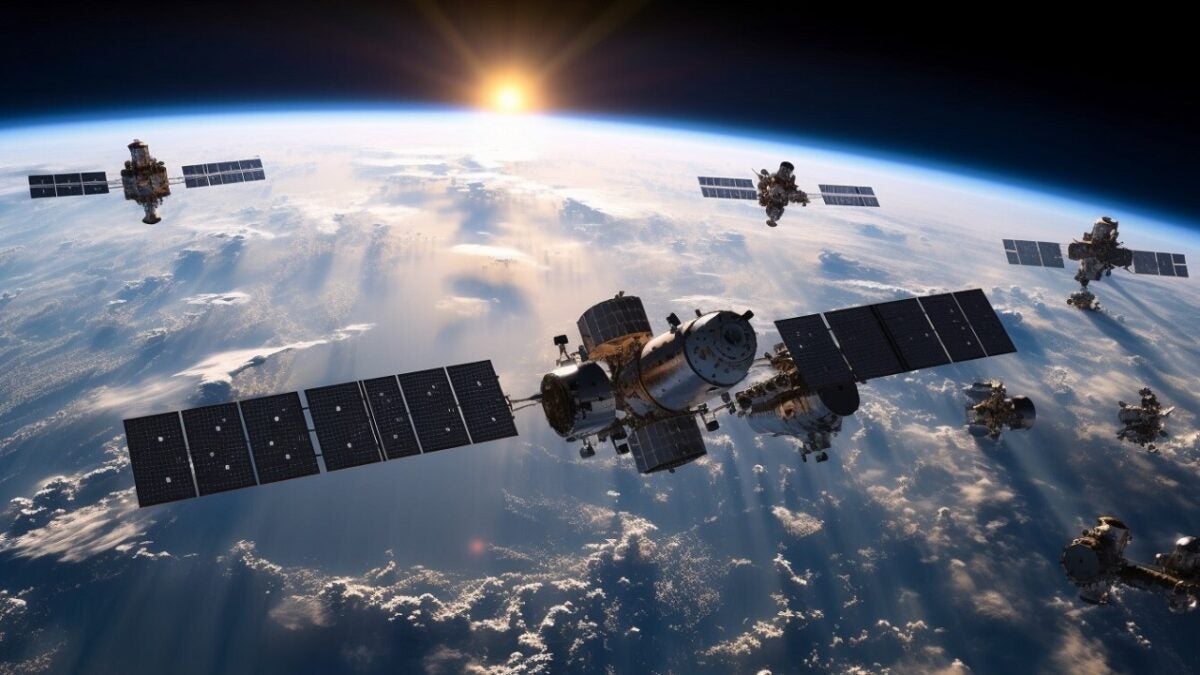
China launched its first space broadband satellites in August. In total, 108 satellites are expected to be launched this year to initiate the Qianfan constellation, followed by 540 more in 2025. China aims to have 15,000 satellites in low Earth orbit by 2030 and cannot miss the opportunity to control them all.
The Clear Grip case from Totallee for the iPhone 16 Pro is an excellent option for when we want to protect our device without sacrificing the original aesthetics and design of the phone. With a focus on simplicity and functionality, Totallee offers us, once again, a transparent case that allows the elegant design of the iPhone 16 to remain visible while providing protection against drops and scratches. An invisible case that we can indeed enjoy. One of the first things that stands out about this case is how thin it is. With only […]
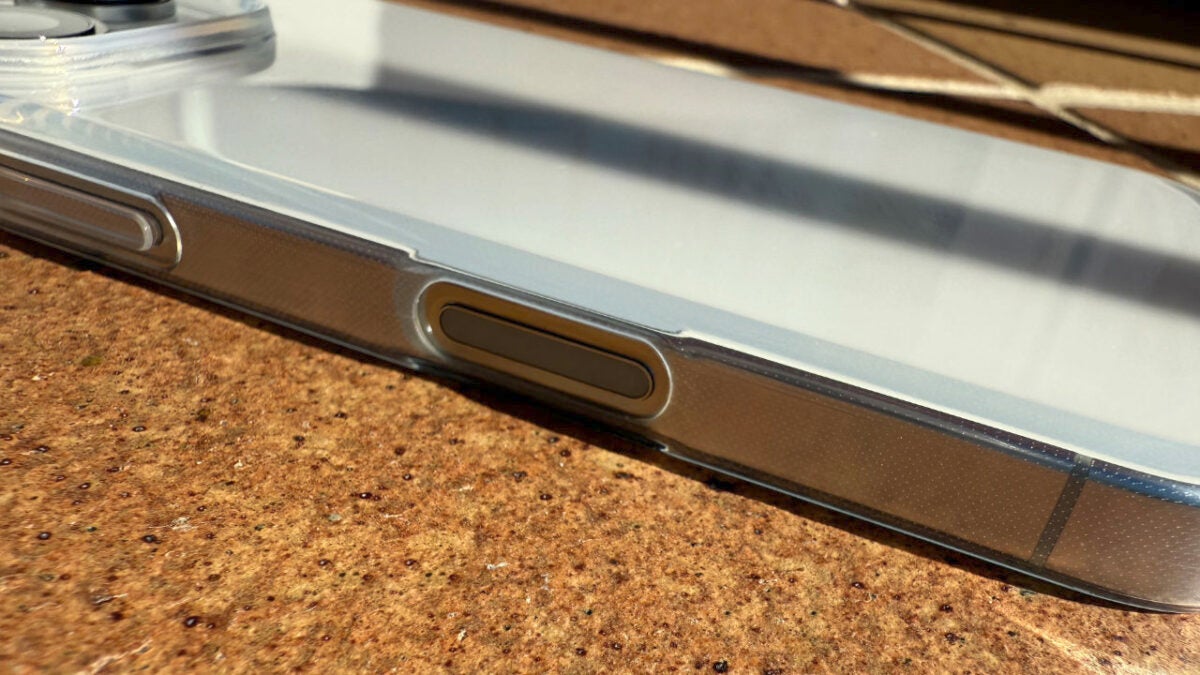
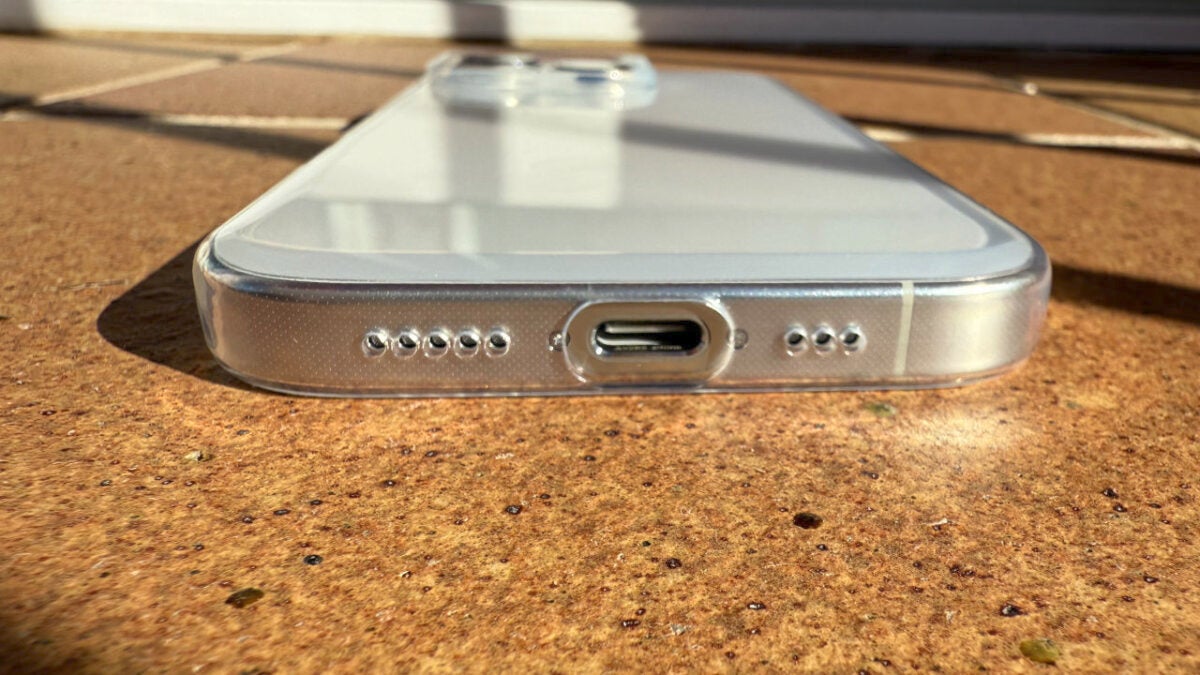
The Clear Grip case by Totallee for the iPhone 16 Pro is an excellent option for when we want to protect our device without sacrificing the phone’s original aesthetics and design. With a focus on simplicity and functionality, Totallee offers us, once again, a transparent case that allows the elegant design of the iPhone 16 to remain visible while providing protection against drops and scratches.
One of the first things that stands out about this case is how thin it is. At just one millimeter thick, it is one of the thinnest cases available on the market. If we are among those who want to avoid adding bulk to the phone, this case is ideal. You can hardly tell it’s there. Beyond its thinness, however, the case is made from an impact-absorbing material, ensuring protection against accidental drops or bumps.
Continuing with the design, the Clear Grip case stands out for its minimalism, but also for its feel. It has a soft and flexible finish, which is very comfortable. Without being a magnet for lint or dirt in general, it is also non-slip, which ensures that it is much easier to firmly grip the phone.
Another positive aspect is that Totallee has designed this case without any visible branding. We don’t find logos or insignias on the surface, which means the iPhone remains the protagonist. This is something to keep in mind, as in a phone with the design of the iPhone 16, a clean and distraction-free design is a great advantage for this type of case.
Regarding compatibility with wireless charging, the Clear Grip is designed to work perfectly with MagSafe technology, which means we can use wireless chargers and other accessories without having to remove the case at any time. Given its thinness, the case also does not become a source of heat during charging.
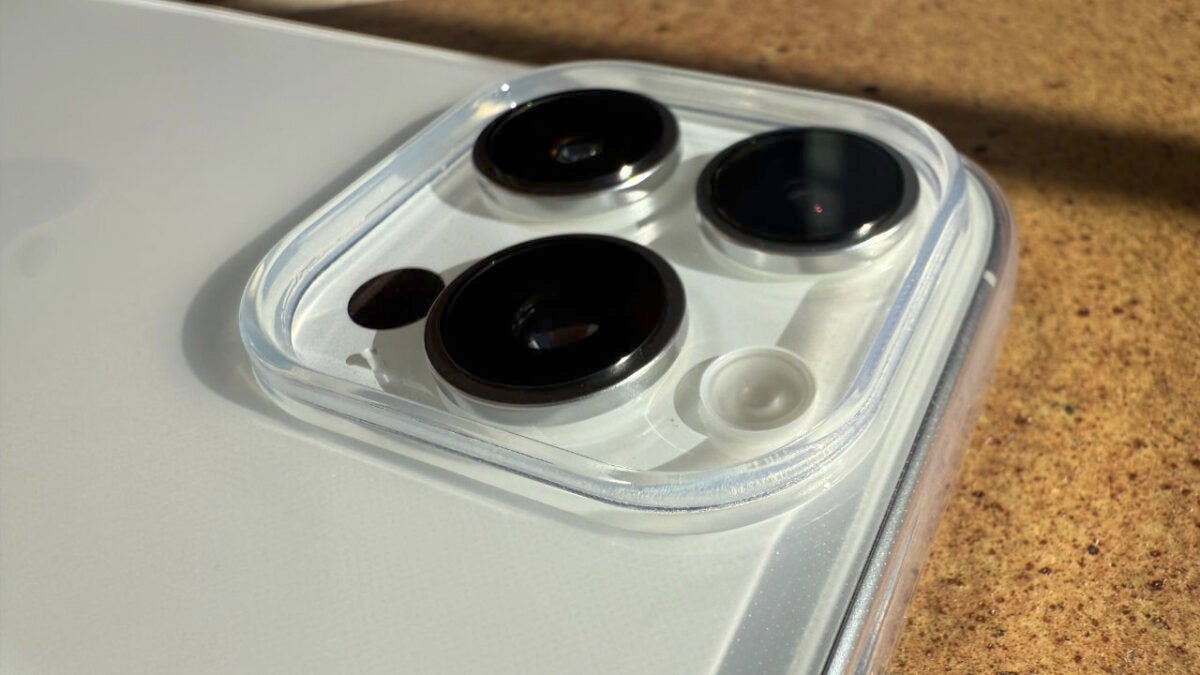
In a case with such a simple appearance, there is little more to highlight, but we should pay attention to the front edge, which protects the screen when we place the phone face down on a table. Also noteworthy is the small protrusion around the camera module, which prevents the lenses from making contact with the surface on which we place the iPhone.
Totallee has specialized in this type of case for years. At first glance, it may look very similar to other alternatives, but the attention to every detail is something to consider. The quality of the material, as well as the simple fact of the sustained evolution of this simple model from generation to generation, make this case stand out among other options. Something ideal for a case that, after all, we want to go unnoticed.
Internal documents from OpenAI have been leaked, revealing the company’s plans to gradually increase the price of its ChatGPT+ subscription over the next five years. Currently, we can access the ChatGPT Plus subscription for $20 per month, which provides access to advanced models, reduced limitations, and the use of tools like DALL-E, OpenAI’s image generator. Up to $44 per month, as far as we know. However, according to the documents accessed by The New York Times, the price of ChatGPT+ will rise to $22 […]
Internal documents from OpenAI have been leaked, revealing the company’s plans to gradually increase the price of its ChatGPT+ subscription over the next five years. Currently, we can access the ChatGPT Plus subscription for $20 per month, which provides access to advanced models, reduced limitations, and the use of tools like DALL-E, OpenAI’s image generator.
However, according to documents accessed by The New York Times, the price of ChatGPT+ will rise to $22 per month before the end of the year. Beyond this, the subscription cost is expected to increase to $44 per month by 2029.
In addition to these price changes, OpenAI is looking to raise up to 7 billion dollars, which translates to a company valuation of 150 billion, a figure much higher than the 30 billion just a year ago, when Microsoft began its investment in the company.
Despite generating monthly revenues of 300 million dollars, OpenAI continues to have significant expenses, which will lead the company to lose about 5 billion this year. In terms of revenue, ChatGPT Plus represents a significant part of OpenAI’s business, contributing 2.7 billion of the 3.7 billion projected for this year.
While OpenAI has taken steps to make access to its most basic models easier, for example by allowing use without the need for an account, it has simultaneously been increasing what we can get in exchange for a subscription fee. A subscription that has added access to the o1 model, for example, and for many, it is a more than justified investment. We will see, as prices rise, how the landscape will evolve.
Since its launch in 2019, Apple TV+ has had a notable impact on the film industry, producing movies that have not only been critically acclaimed but have also set milestones, such as CODA, the first film from a streaming platform to win the Oscar for Best Picture. In recent years, Apple has increased the budget for the movies it produces, and the response to this move has led the company to rethink its strategy for Apple TV+. Films like Killers of the Flower Moon, Napoleon, and Argylle were among the most recent productions […]
Since its launch in 2019, Apple TV+ has had a notable impact on the film industry, producing movies that have not only been critically acclaimed but have also set milestones, such as CODA, the first film from a streaming platform to win the Oscar for Best Picture. In recent years, Apple has increased the budget for the movies it produces, and the response to this move has led the company to rethink its strategy for Apple TV+.
Movies like Killers of the Flower Moon, Napoleon, and Argylle were among the most recent high-budget productions, with theatrical releases and certain expectations for their box office performance. They did not, however, recoup their production costs, which apparently has led Apple to reevaluate how to allocate its film budget and what approach to take in the future.
The new strategy: more streaming, less box office
According to Bloomberg, Apple has decided to modify its approach regarding the movies it will produce. The company plans to maintain its annual investment of one billion dollars in film production, but with a significant change in the composition of its release portfolio.
The goal will be to produce around a dozen movies a year, most of them with budgets under 100 million dollars. With this, the company will focus more on content directed straight to the streaming service, rather than betting on major theatrical releases.
According to Bloomberg, Apple will not completely abandon the release of some movies in theaters, but these releases will become the exception rather than the norm. The company is expected to make only one or two major box office bets per year, with high budgets and hopes of capturing the audience’s attention in theaters. The F1 movie, starring Brad Pitt, will be a clear example of this type of release.
A movement similar to Netflix?
Apple’s strategic shift reminds us of the approach Netflix has long taken. Instead of allocating large sums to theatrical releases, Netflix has prioritized its streaming platform, offering original movies directly to subscribers and limiting theatrical releases to special cases or titles with potential to win awards.
Apple’s new strategy, if we pay attention to the leaks, involves adapting to a cinematic landscape that continues to evolve with changes in consumption habits. While the experience of going to the cinema is still valued by many, the reality is that most people now prefer immediate access to new movies from the comfort of their homes.
For Apple, focusing on lower-budget films for Apple TV+ is a way to continue producing engaging and diverse content without taking on the financial risks associated with major theatrical releases. At the same time, by reserving a couple of big annual productions for theaters, Apple continues to maintain its relevance in the traditional film industry, its good relationship with Hollywood, and the options to present certain productions for awards they may deserve.
Management of Exchange server data is more than tracking emails; it’s actually about ensuring smooth operations with seamless migrations and reliable backups. Be it planning a server upgrade, archiving old mailboxes, or meeting compliance requirements — the need for user-friendly data from Exchange is paramount.
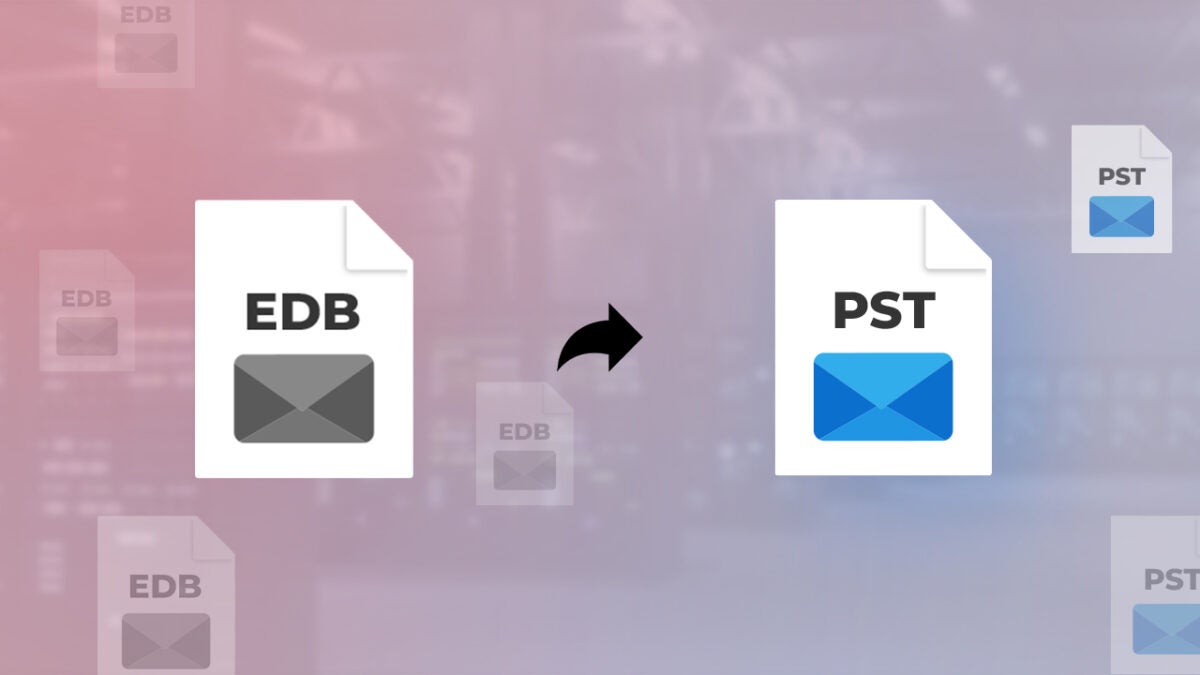
But working with EDB files is rarely easy. This is where EDB to PST conversion comes in to make a difference. PST files work with Outlook, where mailbox data can be managed and backed up more effortlessly by everyday users. This format also allows data migration and auditing without needing to deal with the inner machinations of a complicated Exchange Server. But before you do anything, you’ll need a reliable data conversion tool, and that’s what Stellar Converter for EDB provides.
Understanding EDB and PST Files: The Core of Exchange Data Management
What Are EDB Files? The Foundation of Exchange Servers
The EDB file (Exchange Database) is the central storage unit for Microsoft Exchange Servers. Every single email, contact, and calendar entry sent and received within an Exchange environment is stored in these files. An EDB file keeps the data of all mailbox databases in your organization so that communication within the business will run smoothly. EDB files are very structured and complex in their nature; thus, working directly with them without special software is usually not possible.
The Role of PST Files in Microsoft Outlook
On the other hand, PSTs, or Personal Storage Table files, have made mailbox data storage quite easier to deal with than Exchange. PST files are used by Microsoft Outlook, so managing emails, contacts, and calendar items locally is simple, with no need to depend on an Exchange server. They are portable, user-friendly, and ideal for archiving mailbox data for long-term storage.
Key Differences: When to Use EDB vs. PST
The major differences between EDB and PST lie in the purposes the files serve. EDB files are built for storage on a server and they handle multiple users’ data in an Exchange environment. PST files are ideal in the case of individual mailbox management, when users want to store data locally, export it for migration, or access via Outlook in the absence of a live Exchange Server connection.
Overcoming Common Challenges in EDB to PST Conversion
EDB to PST file conversion isn’t always an easy job and contains its own challenges.
Data Integrity: The Risk of Loss and Corruption
Data integrity is one of the major concerns while performing EDB to PST conversion. Usually, Exchange databases hold sensitive information, and while converting them, data may get corrupted or lost. Even a minor mistake in the migration process might also lead to missing emails, incomplete attachment files, or corrupt mailbox data. It highlights the importance of using a reliable conversion tool to make sure every bit of data is transferred safely without any risk of corruption.
Business Continuity: Minimizing Downtime
Downtime causes considerable disruptions. If you’re carrying out an EDB to PST conversion, minimum disruption to business ops is vital. Most toolsets are not capable of converting EDB files without temporarily halting or slow Exchange services to carry out the process. Therefore, it’s important to find a solution that works in the background to keep business going uninterrupted.
Accurate and Complete Transfers
Simply because EDB files are so complex, it can mean that converting them into PST can end up creating more issues than it solves. Perhaps the largest challenge is enduring absolutely everything in a mailbox, not just emails, are transferred correctly and completely. That means contacts and calendar entries too. If conversions are incomplete, that can lead to data loss and fragmented mailboxes, as well as a lot of headaches for IT Admins and users.
Key Features to Look for in an EDB to PST Converter
While choosing an EDB to PST converter, there are some features that are necessary for a smooth and successful conversion process.
Efficient Data Export for Large Volumes
Are you exporting an entire Exchange? Your converter should be able to export as quickly and fast as possible. It should export Emails, contacts, calendar entries fast, but not at the expense of quality or integrity of data.
Maintaining Data Integrity Throughout Conversion
A reliable EDB to PST converter will keep all data intact throughout the process. Every single email, attachment, metadata, contact and calendar entry should be kept safe without any chance of corruption or loss of data. The finest tools guarantee this accuracy, and that in turn provides you with the peace of mind that nothing will get left behind.
Non-Intrusive, Minimally Disruptive Conversion
Business continuity is paramount, and a powerful EDB to PST converter works without causing disruptions. The tool will work in the background so that everyone can keep on using Exchange services with unperceivable downtime or interference in day-to-day operations.
User-Friendly Interface for All Users
Finally, there is ease of use. It may not sound important, but when a tool is easy to use, there is less probability that things can go wrong. A good EDB to PST converter provides an interface that should be easy to use for both IT professionals and non-technical staff. Everything should be intuitive, with clear instructions and easy workflows.
Stellar Converter for EDB to PST: The Complete Solution for Seamless Data Conversion
Stellar Converter for EDB is a reliable tool that makes it far easier to export mailbox data from Exchange Database EDB files to the Personal Storage Table PST format. Its key capabilities include effective extraction of mailbox items like emails, contacts, and calendar entries; providing companies with a reliable and easy-to-operate solution.
Efficient Export of Mailbox Items
Converter for EDB to PST extracts not just emails, but contacts, calendar events, attachments, and many other items from all types of mailboxes in its conversions. It is perfect for organizations that want to make sure all Exchange data is fully and easily accessible.
Fast Processing and Accurate Conversion
Speed and accuracy are the operating philosophies behind Stellar Converter for EDB. In other words, this is a software solution that is able to handle large volumes of data in the shortest time possible. Put simply: Quick conversions, but not at the cost of accuracy. Everything is converted with integrity, including emails, folders, and metadata.
Non-Disruptive Features for Business Continuity
You won’t be disrupting business activities because the tool doesn’t require access to a live exchange server, you only need to be able to open an offline EDB file from any existing version, though you can work from an online EDB too if required.
Data Integrity Assurance
Last but not least, Stellar Converter for EDB stresses the data integrity. If there is a company out there that knows about this, Stellar has been protecting and recovering important data for over 30 years. The mailbox remains intact after the conversion, from its structure down to every file that was included. All crucial information is safeguarded.
How to Convert EDB to PST: Step-by-Step Use of Stellar Converter for EDB to PST Conversion
1. Preparing for Conversion
First of all, it’s always important to back up data before any conversion process, not just EDBs. Next, download and install Stellar Converter for EDB and check if your system meets the minimum requirements to run the software (x64 intel compatible processor, 8GM RAM, 250MB free space + most modern Windows systems).
Launch the software and then click on “Hosted Exchange” for online EDB files or “Offline EDB” for offline ones. Once you’ve done so, click on “Browse”.
Select the EDB file that you want to convert. Make sure you have an appropriate destination folder for it to create the PST files.
2. Executing the Conversion Process
After selecting the EDB file, click Next to initiate the conversion. The software will scan the file and display the mailboxes in a tree-style view. Preview all the items for accuracy. Click Save; choose PST, and select a destination folder. The exchange mailboxes will export in PST format.
3. Select the mailbox priority
Stellar Converter from EDB will now let you change the mailbox export priority to export important mailboxes first. Once you’ve done the selection, click “Next”.
4. Verifying the Converted PST Files
After the conversion is finished, open Microsoft Outlook and import the PST file to make sure the conversion worked. Check emails, contacts, and calendar entries for accuracy and completeness.
Why Choose Stellar Converter for EDB?
Stellar Converter for EDB is designed to simplify Exchange data management.
Save Time and Resources
By automating the conversion process, it greatly reduces the time and cost of manual data migration. It efficiently deals with large volumes of information and frees up IT resources for other matters.
Reliable Data Conversion
Each conversion provides you with consistent and reliable results so that emails, contacts, and calendars will be transferred with no errors compromising data integrity.
Better Organization and Access
After conversion, the PST-format mailbox data is highly manageable and, as a result, easy to access, organize, and retrieve using Outlook.
Additional Tools for Streamlined Exchange Data Management
The Stellar Toolkit for Exchange is an effective 5-in-1 suite designed to address various aspects of Exchange data recovery, conversion, and repair for IT admins. It’s a handy toolkit for organizations that depend continuously on Microsoft Exchange Server for email communication. It offers various specialized tools that are invaluable for dealing with any technical challenges you might face related to Exchange.
Fundamentally, the toolkit comes with Stellar Repair for Exchange, software that will help recover mailboxes from corrupt, offline, and dismounted Exchange Database files. You can expect completeness in recovery, even in severe corruption cases, by restoring data with 100% integrity.
This toolkit also includes the aforementioned Stellar Converter for EDB, which doesn’t just convert EDB files into PST, but it can also export as HTML, EML, RTF, PDF, and Office 365 formats, thus making mailbox data accessible across a wide range of platforms.
Stellar Mailbox Extractor for Exchange Backup is another powerful feature that extracts mailboxes from Exchange backup files, even corrupted ones. So, if corruption or data loss does occur, organizations can restore critical emails, contacts, and calendar information from backups whatever their state may be.
Also included is, Stellar Converter for OST, which allows accessing and restoring mailbox data from inaccessible or orphaned OST files. Finally, there is also a Password Recovery for MS Exchange included, designed to reset lost or forgotten Windows Server passwords to allow admins access again.
This multi-functional toolkit helps businesses maintain integrity of Exchange data, minimize downtime, and ensure that recovery and migration processes occur smoothly.
Proper EDB-to-PST conversion is always critical to data integrity, managing migration, and ensuring continued and easy access to mailbox data. As discussed, the right tool becomes critical because there are potential challenges such as data loss, downtime, and handling huge Exchange databases, all of which can make the process more difficult than it needs to be.
Stellar Converter for EDB resolves these challenges by converting proprietary Exchange EDB files into PST and other file formats in the fastest, most accurate, and most user-friendly way. With a host of added advantages and performance, Stellar Converter for EDB presents the best ever Exchange data management. To try the benefits yourself, explore Stellar Converter for EDB for your data conversion needs.
The iPhone 16 is here. After months of rumors and waiting, the keynote arrives, and Apple surprises us with a lot of new features and details about the new phones. The first reviews come in, and we continue to discover new details and interesting points of view about the new iPhones. Then, you open your iPhone on launch day, and, like every year, you find that nothing you have read or heard prepares you for the surprise they represent. So, once again, with the perspective that a week of use gives, let’s talk about the iPhone 16 Pro. A phone that […]
The iPhone 16 is here. After months of rumors and waiting, the keynote arrives, and Apple surprises us with many new features and details about the latest phones. The first reviews are coming in, and we will continue to discover new details and exciting perspectives on the new iPhone. Then, you open your iPhone on launch day, and, like every year, you find out that nothing you have read or heard prepares you for the surprise they present.
Thus, with the perspective that a week of use provides, let’s talk about the iPhone 16 Pro. While easy to classify as a continuation, this phone surprises in every detail and every new feature. With its best hardware and software that helps it shine in almost everything it does, it is here to surprise us and allow us to do much more.
Camera Control: a fundamental change for any type of photography
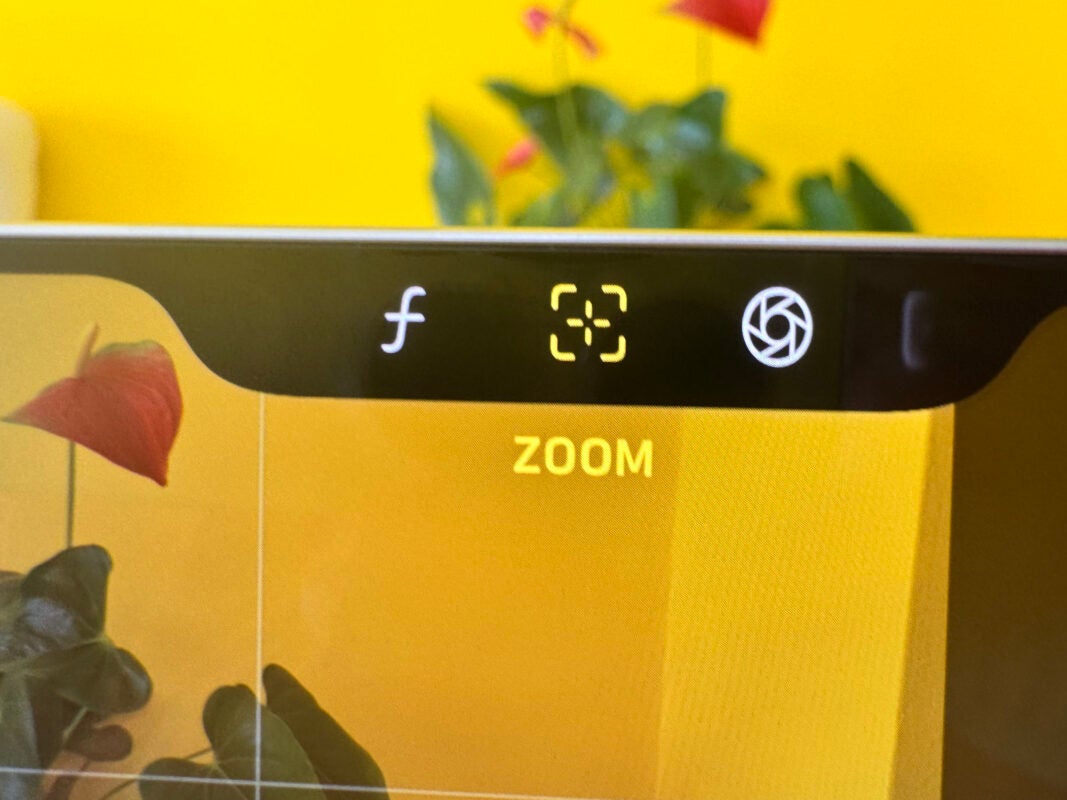
One of the most talked-about features of the iPhone 16 Pro is the new Camera Control. The most straightforward description is a button, but calling it that overlooks many details. Just as we don’t call a trackpad a button, the first thing to keep in mind is that the Camera Control allows us to interact with our iPhone’s camera in a comprehensive way through a single point. Open the camera, adjust the framing, modify settings, and take the photo all with one finger and in one place.
Before the iPhone 16, making adjustments while framing a photo meant interrupting, even if just a little, the process. Touching the screen involves moving your hand, obstructing the view, and thus losing a significant part of the control over the framing. Now, with this physical control, everything is simplified. It allows us to make adjustments like exposure or zoom without taking our fingers off the shutter button, making it easier to focus on the shot. And if we need to take the photo without having finished adjusting the variables to not miss the moment, our finger is right where it needs to be.
A small detail? This should be left to individual opinions, but for a device that often acts as a camera, the ability to focus on shots, centralize control in one location, and have quick and clear access to a good number of options makes a big difference.
Best cameras: much more than megapixels
The iPhone 16 Pro’s camera system follows the trend of recent years, improving key aspects without drastically changing the design. The main camera retains the fantastic 48 megapixels, but now offers us a 5x telephoto lens thanks to the new tetraprism technology, which means more powerful optical zoom and better stabilization. This feature was, until now, exclusive to the iPhone 15 Pro Max, but now it comes to the smaller sibling of the professional range. Excellent news if among our preferences is a more compact-sized phone.
The ultra wide-angle lens has also changed from 12 to 48 megapixels. The difference becomes more than evident when taking shots in low-light conditions. And allow me a parenthesis here. Almost all indoor shots have too little light. We just have to look at how a photography studio or a television set is to see that the amount of light in those spaces is not something we usually find indoors. So, we are not talking about shots in the middle of the night. We are talking about an everyday photo that will now offer us a much superior result.
The quality in those scenarios is much sharper and with less noise. The new A18 Pro chip also plays a crucial role here, of course, with much faster and more efficient image processing. Remember that Apple has integrated improvements in the Photonic Engine and Smart HDR 5, which optimize photos and videos to achieve more realistic colors, a greater dynamic range, and less oversaturation in challenging lighting scenarios.
Screen: fewer bezels and a noticeable increase in size
The other notable change of the iPhone 16 Pro is the screen, which has grown to 6.3 inches. The screen edge is even thinner, and although it may seem like a minor change on paper, the difference is noticeable in person.
The screen elements are somewhat larger. The icons, menus, and other parts of our daily use of the iPhone increase in size. A lot? The size difference is not huge, but those extra millimeters and the almost non-existent bezels translate into a very noticeable perception of spaciousness. It is noticeable from the home screen to the videos or full-screen content that we may view.
A familiar design, but optimized: strategic changes that make a big difference
The design of the iPhone 16 Pro is already familiar to us, but it is full of details that improve key points. It retains, of course, the elegant titanium finish and the frosted back glass that makes it practically immune to fingerprints.
Cameras with an anti-reflective coating or improved screen glass resistance are also details to consider. Inside, a thermal redesign improves heat management, keeping the phone much cooler even during setup and data download, one of the moments under the most pressure. Recording video or during charging —mention here the 5 extra hours of battery life— the temperatures are far from what we saw in the iPhone 15 Pro, and it is appreciated.
After a week of use, the iPhone 16 Pro presents itself as a strategic evolution that, although visually familiar, offers us key improvements in hardware and the supporting software. The Camera Control button transforms the way we take photos. The larger screen and improved cameras give us an even more capable phone. The changes may seem minor on paper, but once you have it in your hand, it becomes clear that this is a phone to seriously consider.
I remember when, in 2019, I went to see Cats at the cinema. Although I am not the biggest fan of musicals, I was very curious about it, and both its cast and its director (Tom Hooper, the man behind Les Misérables) suggested that it could be a great movie. However, the experience couldn’t have been more catastrophic. The movie was a collection of nightmarish images that today we would say looked like they were made with AI. The plot made no sense and had no emotion. And the musical numbers made you want to go deaf. Well, that is nothing compared to the experience […]
I remember when, in 2019, I went to see Cats at the cinema. Although I’m not the biggest fan of musicals, I was very curious, and both its cast and its director (Tom Hooper, the man behind Les Misérables) suggested it could be a great movie. However, the experience couldn’t have been more catastrophic. The movie was a collection of nightmarish images that today, we would say, looked like they were made with AI. The plot made no sense and had no emotion. And the musical numbers made you want to go deaf.
Subscribe to the Softonic newsletter and get the latest in tech, gaming, entertainment and deals right in your inbox.
Well, that is nothing compared to the experience I had watching Megalopolis at the San Sebastián Film Festival. The latest film by Francis Ford Coppola, none other than the director of The Godfather, Apocalypse Now, and Dracula, has been enduring severe criticism since its premiere at the Cannes Festival, with comments as harsh as “Narratively and thematically, Megalopolis is a disaster” or “one of the most incoherent films I have ever seen in my life.” In fact, the marketing team tried to disguise this with a trailer, claiming that his previous blockbusters also received bad reviews.
But it’s not just that they were right, but the movie is much more grotesque than you could ever imagine.
It is an exhausting movie to watch
Could spend hours and hours saying why Megalopolis doesn’t work, but the truth is that it can be summarized much more easily: it’s a movie in which no element works. The story doesn’t make sense (literally) and is so outdated that it feels like a script from the seventies; the actors seem lost in a world they don’t understand; the photography and visual effects are, at best, ugly; and although there seems to be a thesis behind it all, it is not recognized in any sense.
Megalopolis could perfectly be a film by Zack Snyder. That is to say, a bland collection of images that try to be attractive but fall short. A story that is not worth telling and that also doesn’t know exactly what it wants to say. And yes, it is evident that there are small traces of the great Coppola behind all this madness. But nothing could compensate for the fact that this film even exists.
I am a person who loves when movies take risks, but sometimes great geniuses need someone to setlimits for them. In fact, that is sometimes what Megalopolis is about. But it is also what Coppola should have considered before spending his grandchildren’s money on a feature film that not only will not transcend but also tarnishes an otherwise almost impeccable career.