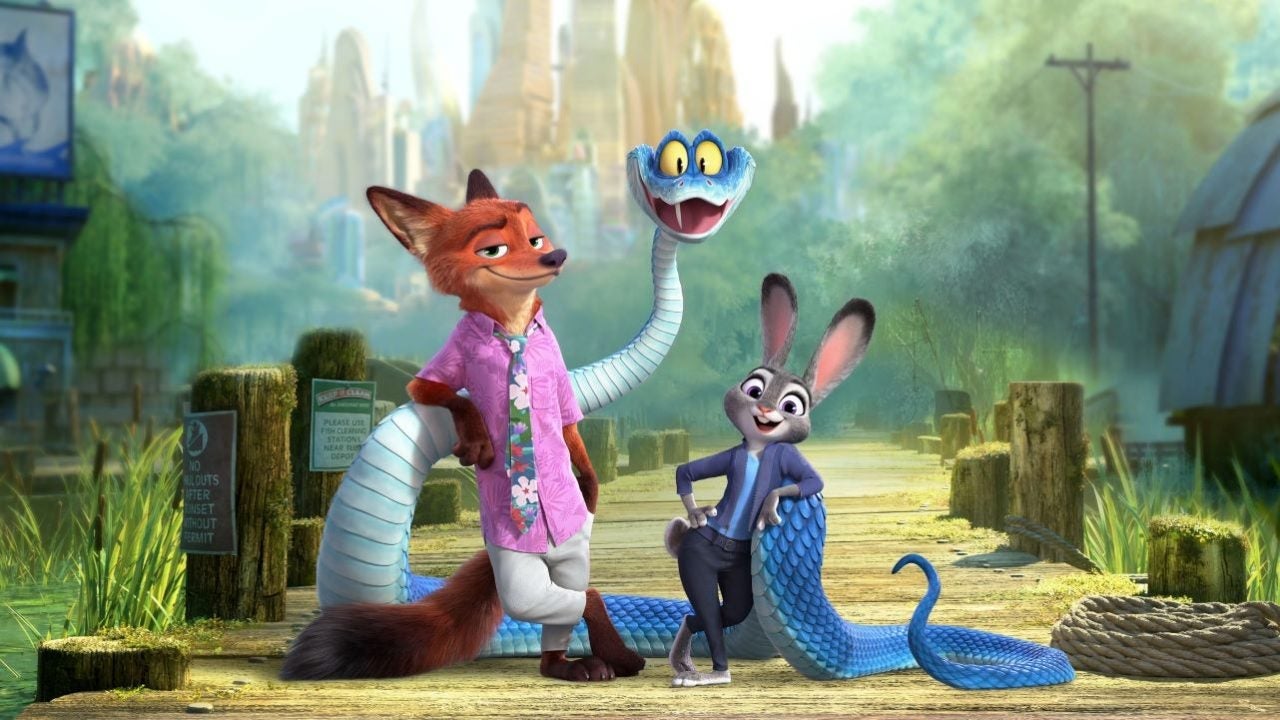
In a surprising turn at the Chinese box office, Zootopia 2 has managed to gross $634.98 million, surpassing the previously set record by Avengers: Endgame, which had generated $632.1 million. This milestone not only marks a triumph for Disney’s animated sequel but also crowns it as the highest-grossing animated film in the company’s history, dethroning the remake of The Lion King. I feel bad, Mr. Stark. Globally, Zootopia 2 has accumulated an impressive total of $1.744 billion, positioning it as the ninth highest-grossing film of all time. However, […]
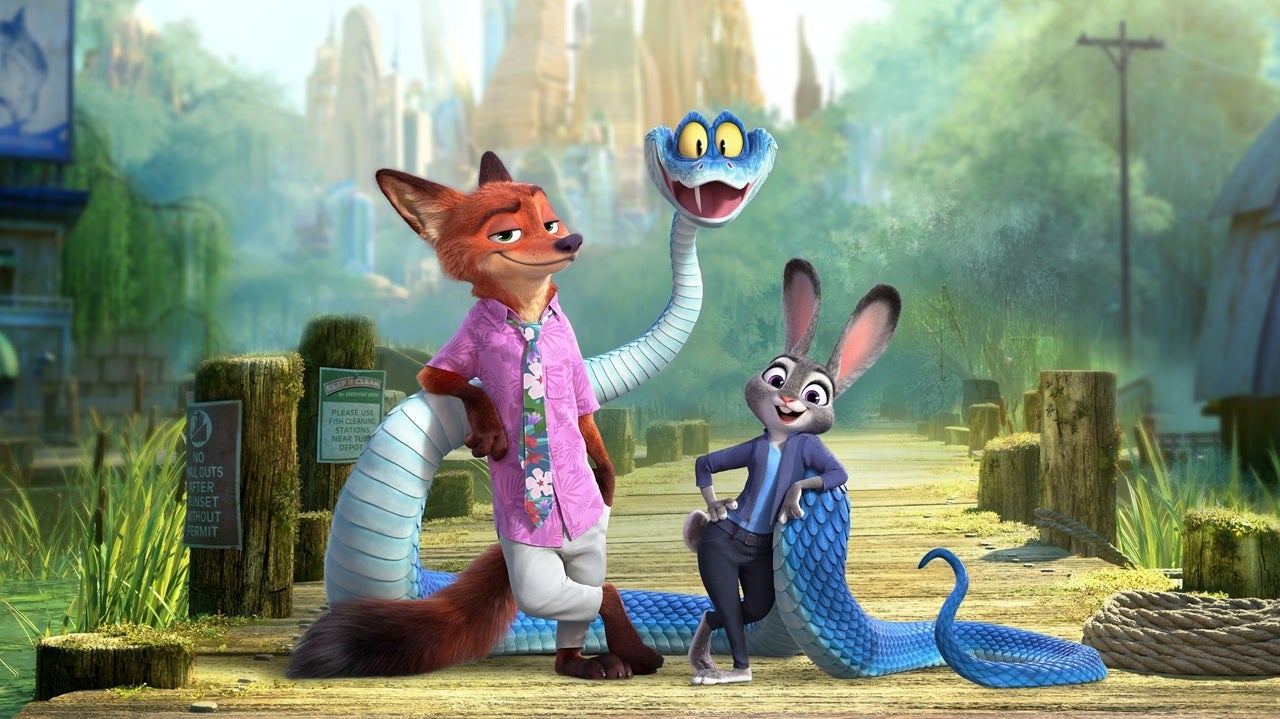
In a surprising turn at the Chinese box office, Zootopia 2 has managed to gross $634.98 million, surpassing the previously established record by Avengers: Endgame, which had generated $632.1 million. This milestone not only marks a triumph for Disney’s animated sequel but also crowns it as the highest-grossing animated film of the company in history, dethroning the remake of The Lion King.
I feel bad, Mr. Stark
Globally, Zootopia 2 has amassed an impressive total of $1.744 billion, making it the ninth highest-grossing film of all time. However, despite this resounding success, some analysts warn that this phenomenon could be an isolated case and not necessarily indicative of a widespread recovery of interest in Hollywood films in China.
The situation of American cinema in the Chinese market has been tense in recent years, making the success of Zootopia 2 even more remarkable. Before this event, it seemed unlikely that any movie could take Avengers: Endgame’s record in China, especially given the declining interest of Chinese audiences in Hollywood productions. However, the popularity of Zootopia 2 has shown that there are still opportunities for animated films.
The road to the top spots on the list of the highest-grossing movies in the world will not be easy for Zootopia 2, as it must surpass Spider-Man: No Way Home, which is in eighth place with $1.921 billion. Meanwhile, the success of Zootopia 2 continues to generate discussions about the future of American film franchises in the vast and complex Chinese market.
The movie Zootopia 2 established itself as the most viewed film in China during the weekend of January 16 to 18, generating revenues of RMB 36.2 million (approximately $5.1 million). This success comes in a context where the film market of the Asian giant shows signs of slowing down ahead of the imminent arrival of the Lunar New Year, a traditionally significant period for box office in the region. A movie that continues to dominate Since its release, Zootopia 2 has managed to accumulate an impressive total of RMB 4.37 billion (around $615.2 million). Despite […]
The movie Zootopia 2 established itself as the most viewed film in China during the weekend of January 16 to 18, generating revenues of RMB 36.2 million (approximately $5.1 million). This success comes in a context where the film market of the Asian giant shows signs of slowing down ahead of the imminent arrival of the Lunar New Year, a traditionally significant period for box office in the region.
A movie that keeps dominating
Since its release, Zootopia 2 has managed to accumulate an impressive total of RMB 4.37 billion (around $615.2 million). Despite the decrease in weekly earnings, the film remains a favorite among viewers, suggesting that its appeal remains strong even in the face of competition and market fluctuations.
The performance of Zootopia 2 in the Chinese market contrasts with the general trend of declining box office revenues, raising questions about how other productions will perform in the same season. The arrival of the Lunar New Year, which usually leads to a significant increase in cinema attendance, could provide a shift in the current dynamics and revitalize public interest in new film offerings.
Industry analysts are closely watching the evolution of the situation, as the decrease in weekly revenues could be an indicator of broader factors affecting the industry as a whole. However, the success of Zootopia 2 could open doors to future sequels or similar productions, as Disney seeks to capitalize on the positive reception of the film.
In a landscape where competition is intensifying, it is evident that Zootopia 2 has found its place in the hearts of viewers, generating conversations about its possible continuation or future adaptations. While the market situation continues to evolve, the legacy of this sequel is already beginning to take shape.
Recently, at the Tengchong Scientists Forum, a group of Chinese scientists and institutions, led by Yang Yuliang, an academic and former rector of Fudan, presented the report titled “Tech Predictions and Future Visions 2049”. This document is organized into two halves: ten technological visions that detail future capabilities, and ten ‘snapshots’ that examine projections about the future. The essence of the discourse focuses on the creation of an “intelligent society” and the promotion of people-centered technologies, emphasizing the importance of open collaboration among various actors. Artificial intelligence and automation will transform daily life by 2035 Among […]
Recently, at the Tengchong Scientists Forum, a group of Chinese scientists and institutions, led by Yang Yuliang, an academic and former president of Fudan, presented the report titled “Tech Predictions and Future Visions 2049”.
This document is organized into two halves: ten technological visions, which detail future capabilities, and ten ‘snapshots’ that examine projections about the future.
The essence of the speech focuses on the creation of a “smart society” and the promotion of people-centered technologies, emphasizing the importance of open collaboration among various stakeholders.
For those of you who engaged with yesterday’s thread, “What Chinese scientists think the world could look like by 2049,” I’ve now posted a much more complete version on Substack. The thread focused on the ten technology visions; this write-up covers the full report, including the… pic.twitter.com/P41sVCrtAs
Artificial intelligence and automation will transform daily life by 2035
Among the most notable projections, the report states that by 2030 we will start to see prototypes of general artificial intelligence. The idea of achieving superintelligence is projected for 2049.
Regarding home automation, it is estimated that by 2035, 30% of households in China will adopt robots as assistants, with prices ranging from 350 to 600 euros for the best models, emphasizing the expected evolution towards a more automated future.
Other visions include the use of digital twins to simulate and optimize cities and industries, with anticipated advancements by 2030, and the integration of artificial intelligence in traffic coordination and the possible development of flying cars.
China went from one of the poorest countries on earth in 1949 to the most technologically advanced country in human history today.
— Jason Smith – 上官杰文 (@ShangguanJiewen) June 6, 2025
In addition, a significant increase in the capacity and efficiency of solid-state batteries is expected, which is crucial for the growth of these emerging technologies.
The report also reflects on the ethical and social challenges that may arise with technological advancement, advocating for a focus on human values and inclusion.
In this regard, the purpose is to avoid increasing social gaps and to maintain a focus centered on ‘operational well-being’ in the integration of new technologies.
Hidetaka Miyazaki and his team revolutionized the world of video games with the release of Demon’s Souls, giving rise to a new genre that has profoundly influenced developers around the world. As Miyazaki’s teachings have permeated the industry, a trend of imitators has also emerged, applying successful mechanics and styles to their own projects. This phenomenon is clearly evidenced in the recent announcement of The Legend of Sword and Fairy 4 – Remake, a title that takes notable inspirations from Clair Obscur: Expedition 33, the acclaimed F-RPG from Sandfall Interactive that has harvested […]
Hidetaka Miyazaki and his team revolutionized the world of video games with the release of Demon’s Souls, giving rise to a new genre that has profoundly influenced developers worldwide. As Miyazaki’s teachings have permeated the industry, a trend of imitators has also emerged, applying successful mechanics and styles in their own projects. This phenomenon is clearly evidenced in the recent announcement of The Legend of Sword and Fairy 4 – Remake, a title that takes notable inspirations from Clair Obscur: Expedition 33, the acclaimed F-RPG from Sandfall Interactive that has garnered numerous awards and sales success in 2025.
It is quite clear. Not dark.
The Legend of Sword and Fairy 4, which has a history dating back to 1998, is being developed in Unreal Engine 5 by UP Software and will be published by CubeGame. Despite its history, this remake seems to be using mechanics and an aesthetic that closely resemble the acclaimed title from Sandfall. In a recent video shared on the Chinese social network BiliBili, elements such as a turn-based combat system that notably resembles Expedition 33 can be observed, in addition to the implementation of blocks and dodges in attacks, which underscores this inspiration.
The popularity of the franchise The Legend of Sword and Fairy, especially in China and its roots in Taiwan, provides an interesting context for this remake. There is still no official release date for the game, which will be available on both PC and consoles. Meanwhile, genre fans are closely watching how Sandfall Interactive has raised expectations for future developments within the RPG realm, which are increasingly influenced by the successes of the last decade.
The world of video games is at the crossroads between the faithful representation of historical facts and militarized propaganda. Call of Duty, for years a symbol of war epic, has been criticized for its propagandistic approach to the narratives of U.S. military actions in various conflicts, presenting the country as the indisputable hero. In this context, Fourteen Years of Flames emerges, a Chinese video game that seeks to offer an alternative perspective, focusing on the Second Sino-Japanese War, a conflict in which an estimated 21.3 million Chinese died between 1937 and 1945, which some historians […]
The world of video games is at the crossroads between the faithful representation of historical facts and militarized propaganda. Call of Duty, for years a symbol of war epic, has been criticized for its propagandistic approach to the narratives of U.S. military actions in various conflicts, presenting the country as the indisputable hero. In this context, Fourteen Years of Flames emerges, a Chinese video game that seeks to offer an alternative perspective, focusing on the Second Sino-Japanese War, a conflict in which an estimated 21.3 million Chinese died between 1937 and 1945, which some historians refer to as the “Asian Holocaust.”
A Deeply Anti-Japanese Game
Developed by Fenghuo Studio, Fourteen Years of Flames resembles a Chinese Call of Duty, focusing on a narrative first-person shooter (FPS) with cinematic ambition. However, unlike Activision’s installments, which tackle more well-known conflicts, this title allows players to explore a lesser-known chapter of history, the atrocities suffered by the Chinese population during the Japanese invasion.
The game serves a dual purpose: it not only seeks to entertain but also to educate, promoting historical awareness about the calamities of conflict. Players embody seven key characters throughout 16 real historical events, exploring from the rural areas of the northeast to Chongqing, one of the most bombed capitals of World War II.
With a representation of weapons, equipment, and scenarios so true to history that a 1:1 model is used, the game seeks to accurately reflect war. Although its narrative is based on characters that did not exist, they are inspired by real stories, thus allowing for a more balanced account. Although Fourteen Years of Flames does not yet have a release date or translations into other languages, it stands out as a unique proposal in the field of video games, challenging conventional narratives and digging into a historical wound that is still open for China.
The movie Zootopia 2 has demonstrated its dominance at the Chinese box office, grossing RMB818.5 million (equivalent to $115.3 million) during its opening weekend. This figure has brought its total to RMB3.05 billion ($429 million). Directed by Byron Howard and Rich Moore, the sequel to the successful Disney film has attracted a crowd of fans, establishing itself as the highest-grossing movie in Chinese theaters at this time, according to reports from Artisan Gateway. Not even the country’s own productions can compete. The success of Zootopia 2 translates not only into figures […]
The movie Zootopia 2 has demonstrated its dominance at the Chinese box office, grossing RMB818.5 million (equivalent to $115.3 million) during its opening weekend. This figure has brought its total to RMB3.05 billion ($429 million). Directed by Byron Howard and Rich Moore, the sequel to the successful Disney film has attracted a crowd of fans, establishing itself as the highest-grossing film in Chinese theaters at this time, according to reports from Artisan Gateway.
Not even the country’s own production can compete
The success of Zootopia 2 translates not only into impressive financial figures but also into its ability to capture the interest of the Chinese audience, which continues to seek quality content and family entertainment. This phenomenon has solidified Disney’s position as a formidable competitor in the Chinese film market.
In second place is the movie Gezhi Town, which premiered on December 6, earning $23.8 million in its opening weekend. Directed by Kong Sheng and written by Lan Xiaolong, this film has generated expectations and conversations around its themes and narratives, although it has fallen short of reaching the level of Zootropolis 2.
The competition at the box office is becoming evident, as Zootopia 2 continues to attract more viewers, while Gezhi Town seeks to establish itself with the audience. As December progresses, it will be interesting to see how the projections develop and whether Gezhi Town can find its own space in a market dominated by a sequel to a Disney classic.
The data suggests that the popularity of Zootopia 2 could continue to grow, raising the possibility that other titles may struggle to compete during this holiday season. However, the cinematic landscape always brings surprises, and one cannot underestimate the drawing power of a new film within the industry.
Zootopia 2 has exceeded all expectations and has become the fourth best opening in the history of cinema, grossing $556.4 million worldwide. This impressive income includes an absolute record in China, where the film grossed $272 million, positioning itself as the second largest American opening in the country, only surpassed by the fourth Avengers installment. In its first weekend, Zootopia 2 grossed $156 million, benefiting from the long Thanksgiving weekend, a traditionally lucrative time for the box office. A film that has shattered records […]
Zootopia 2 has exceeded all expectations and has become the fourth best opening in cinema history, grossing $556.4 million worldwide. This impressive income includes an absolute record in China, where the film grossed $272 million, positioning itself as the second largest American opening in the country, only surpassed by the fourth Avengers installment. In its opening weekend, Zootopia 2 grossed $156 million, benefiting from the long Thanksgiving weekend, a traditionally lucrative time for the box office.
A movie that has shattered records
In contrast, Wicked 2 ranks second at the box office with 93 million dollars, reaching a total of 393 million globally. However, the film has proven to be less popular outside the United States, raising doubts about its ability to match the figures of its predecessor. The situation in the top 20 in the United States is bleak, where earnings seem to be concentrated in a handful of titles, leaving many other films struggling to survive at the box office.
Zootopia 2 could be on track to reach the impressive figure of one billion dollars before the arrival of Avatar: Fire and Ash next December. The landscape in Spain reflects a similar trend, with Zootopia 2 and Wicked 2 leading the box office. Other films, such as Nuremberg and Alibis, have entered the top 5, although their performance has been modest.
With the arrival of new productions and the imminent competition from Avatar: Fire and Ash, the question remains: Could Zootopia 2 maintain its momentum and consolidate its success in a challenging year for cinema?
The movie Resurrection directed by Bi Gan has opened in first place at the Chinese box office, grossing RMB116.8 million, equivalent to approximately $16.5 million, during the weekend of November 21 to 23, according to Artisan Gateway. This remarkable box office performance underscores the growing interest of the Chinese audience in narratives that explore psychological and existential themes. Bi Gan continues to impress audiences with challenging films. Resurrection takes place in a world where humanity has lost the ability to dream, a premise that raises profound questions about the nature of reality and value […]
The film Resurrection directed by Bi Gan has opened in first place at the Chinese box office, grossing RMB116.8 million, equivalent to approximately $16.5 million, during the weekend of November 21 to 23, according to Artisan Gateway. This remarkable box office performance underscores the growing interest of the Chinese audience in narratives that explore psychological and existential themes.
Bi Gan continues to impress audiences with challenging films
Resurrection takes place in a world where humanity has lost the ability to dream, a premise that raises profound questions about the nature of reality and the value of imagination. This approach has resonated with viewers, who seek stories that invite them to reflect on their own life experience.
The cast of the film features prominent Chinese actors, including Jackson Yee, Shu Qi, Mark Chao, Li Gengxi, Huang Jue, and Chen Yongzhong, who bring their talent to a work that promises to be a blend of drama and striking visual elements. The distinctive cinematography of Bi Gan, known for his poetic visual style, has also been an important factor in the positive reception of the film.
Moreover, the film has not only captured the attention of moviegoers but has also sparked conversations about the challenges we face in an increasingly disconnected world from our dreams and aspirations. Resurrection can be a metaphor for the struggle to find meaning amidst the monotony of modern life.
In summary, the successful premiere of Resurrection reflects both the filmmaker’s ability to tackle complex themes and the audience’s desire for stories that explore the human condition. With this release, Bi Gan reaffirms himself as a prominent voice in the contemporary cinematic landscape of China.
China is gradually gaining the interest of the Western public. Although they have been producing excellent audiovisual productions for some time, especially in film and television, it has only been in the last few years that their cinema has begun to be considered commercially viable outside their borders. A similar situation has occurred with their video games, which have only recently started to take off among audiences outside of Asia. The latest case of a game that has taken off and is beginning to dominate the Western market is a game that could not be more […]
China is gradually gaining the interest of the Western public. Although they have been producing excellent audiovisual productions for some time, especially in film and television, it has only been in the last few years that their cinema has started to be considered commercially viable outside their borders. A similar trend has occurred with their video games, which have only recently begun to take off among audiences outside of Asia.
The latest case of a game that has taken the world by storm and is starting to dominate the Western market is a game that couldn’t be more Chinese in everything it does. And its name is Where Winds Meet.
A game with a Chinese flavor, but a Western style
This open-world action RPG offers us something very different from what we are used to in this type of games: to live our own wuxia story. What is wuxia? They are the chivalric tales of wandering heroes who roam throughout China, resolving troubles wherever they find them, using martial arts and spectacular moves that defy the logic and physics of reality. Something that the game has captured perfectly.
Positioning ourselves in the period of the Five Dynasties and Ten Kingdoms, which lasted from 907 to 960 and was a time of tremendous political and social instability for China, our duty will be to act as a gentleman throughout its vast world. Righting wrongs and ensuring we build a reputation as a martial artist across the country.
And it won’t be because we don’t have space to cover and things to do. With 20 squares of map and the ability to specialize in multiple martial arts, weapon uses, as well as numerous mystical arts, the game offers us many ways to create our own legend. And many people are already doing it.
Although the game was officially released on November 14 in Europe and the US, the game has been available on PC since December 27 in China. With three million downloads in the first four days of its release, Where Winds Meet became one of the most important games of this year from the very beginning.
Something that has only grown since its launch in the West. Appearing on PlayStation, Steam, and Epic, within 40 minutes of its release there were 500,000 players just counting Europe and the US, with more than two million during its first 24 hours. Reaching a peak of 190,000 simultaneous players on Steam, it has become the seventh best-selling game in Steam history, the fifth most played, and the second most viewed on its launch day.
The reasons are that the game, besides being visually stunning and offering us radical freedom and a style different from the typical action RPG, is that it is free-to-play. We don’t have to pay for anything to play, making its monetization extremely friendly for the standards of this type of game.
That’s why, if you love games like The Witcher 3 and are even a little intrigued by the wuxia aesthetic, you shouldn’t miss Where Winds Meet. Because few games are going to take the world by storm the way this one is, and besides, it won’t even cost you any money to see if the hype was justified or not.
The Chinese market is becoming increasingly important for Hollywood. Although it may not seem like it, for a movie to succeed explosively, it needs to perform well in that market. That is why movies are increasingly being adapted to the tastes and criteria of the Asian market. Although it is not necessary to reach the Chinese market for a movie to be a success, nor is it the goal of most movies, blockbusters are increasingly trying to succeed in that market. Something in which The Kingdom of the Planet of the Apes is no exception. Tenth […]
The Chinese market is becoming increasingly important for Hollywood. Although it may not seem like it, for a movie to succeed explosively, it needs to perform well in that market. That’s why movies are increasingly being adapted to the tastes and criteria of the Asian market. Although it is not necessary to reach the Chinese market for a movie to be a success, nor is it the goal of most films, blockbusters are increasingly trying to succeed in that market. Something that is no exception is The Kingdom of the Planet of the Apes.
Tenth film in the Planet of the Apes franchise and the fourth in the series after the reboot, the film directed by Wes Ball is a 145-minute odyssey that cost around 160 million dollars and managed to gross 400 million dollars at the box office. Partly thanks to the Chinese market.
Projecting $50-55 million in the US for its debut weekend, it ended up making just over $58 million. Similarly, it was expected to make between $80-90 million outside the US, but it ended up making $129 million. Among them, $6.4 million came from Mexico, $7.1 million from France, and $11.4 million from the second largest market in the world: China. Demonstrating the crucial importance it has in these big-budget films.
Even so, the movie was a success thanks to its domestic and global success. Although it performed well in China, which greatly boosted its numbers, its triumph was largely because it performed radically better than analysts around the world expected. Something that was also reflected in the reviews, receiving an 80% on Rotten Tomatoes, with 323 positive reviews. Even if on Metacritic, where scores tend to be much harsher, it barely reached a 66 out of 100.
Being the fourth installment of the franchise, one would expect it to have performed considerably worse than the previous ones. And although it made 100 million less than the previous film, War for the Planet of the Apes, it was considered a complete success. And why did it work? Mainly, because the movie knows how to maintain a perfect balance between continuing the story of the previous films and being completely understandable without having seen them. By elegantly maintaining that precarious balance for its two and a half hours, it manages to keep the attention of viewers looking for intense and bombastic entertainment, allowing them to enjoy a blockbuster that clearly shows where its budget is: in the special effects.
The reason for success: following the story and the visuals
Because the other great differentiating factor of the film is the great spectacle it offers. With highly crafted special effects and absolutely spectacular CGI, it has been compared in quality to Avatar, the film by James Cameron. This translated into numerous award nominations and, very notably, a nomination for the Oscars for Best Visual Effects in 2024, which Dune: Part Two would ultimately win.
Now the kingdom of the planet of the apes arrives on HBO Max so we can enjoy it in the comfort of our homes to relive the tremendous show it represents. And while it’s not the same as watching it in the cinema, it is surely still a spectacle worth seeing.