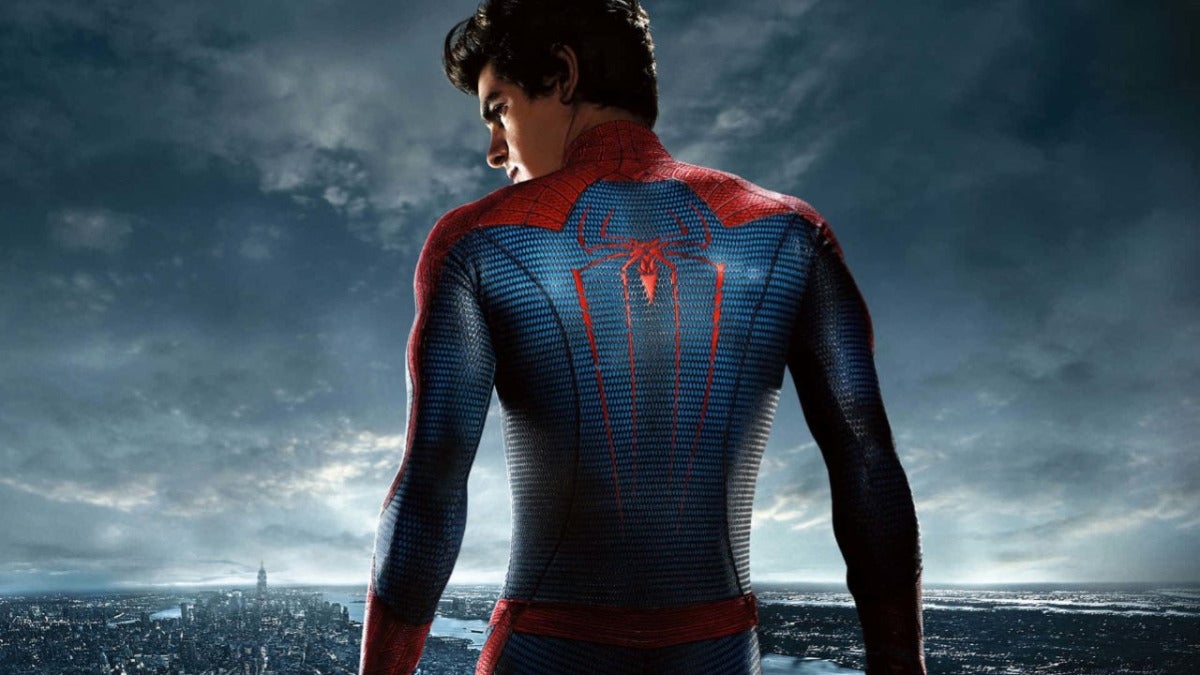
Andrew Garfield claims he hasn’t seen ‘Spider-man: Brand New Day’ yet… and says he’s out of Marvel for now

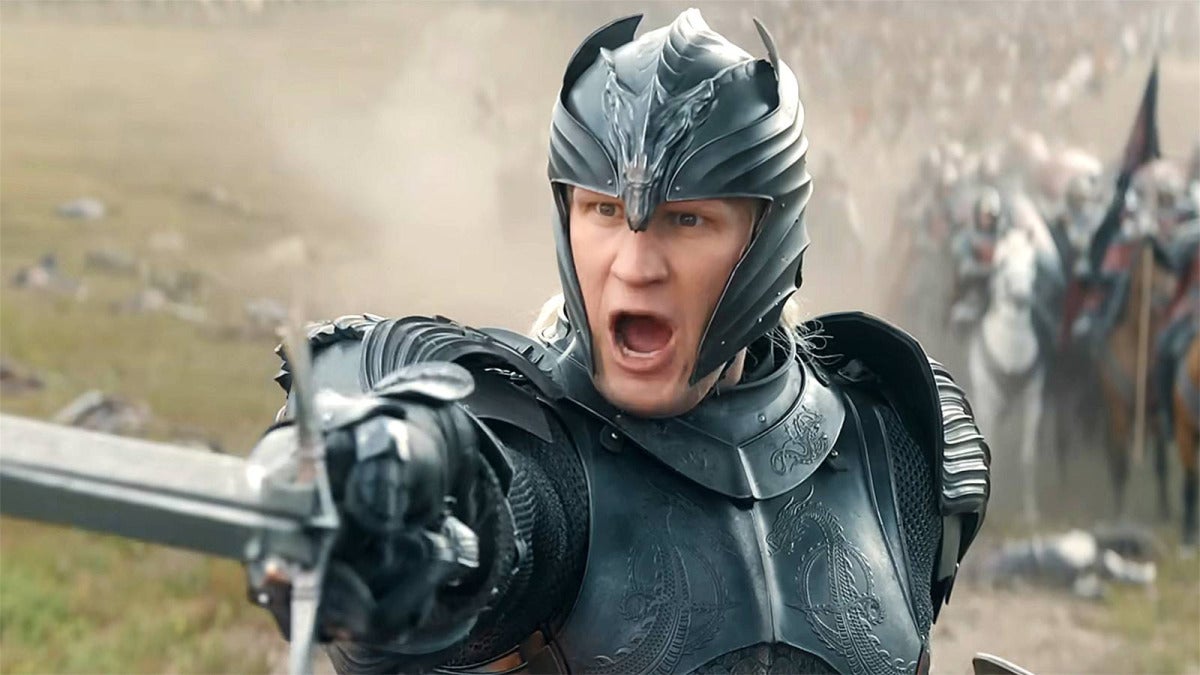
Andrew Garfield is now saying he hasn’t seen Spider-Man: Brand New Day, and that he won’t be turning up in a Marvel movie anytime soon.

Disney+ Download

If you’ve paid attention to Marvel actors for even a little while, you know the drill by now.

They swear up and down that they’re not in the next movie, and then later they stroll onto the screen anyway while the more trusting people in the audience go, “Wait, what? But he said he wouldn’t be in it!”

Marvel has pulled this trick so many times that it’s practically part of the marketing, and now Andrew Garfield is having his turn, trying to sell the idea that he’s totally, completely out of the franchise at this point. Sure. Of course. Wink, wink.

Spider-what? Doesn’t ring a bell

To be fair, Andrew Garfield isn’t exactly picking a side in the The Odyssey vs. Spider-Man: Brand New Day conversation either, because he says he hasn’t seen the former one too: “I don’t want to sound fake. For a movie to make money and for people to go see it is incredible, but I’ll talk more once I see Spider-man, which I’m really looking forward to seeing**. And I haven’t been able to see The Odyssey either. I’ll send Tom Holland a message when I see what he’s done”.

Believe it or not, Garfield says he hasn’t seen either of those movies, and on top of that, he insists we won’t be seeing him on the big screen anytime soon outside of The Uprising.

“I’m not in Avengers: Doomsday,” Garfield has now insisted for the umpteenth time to an audience that already assumes that if it’s not this one, then it’ll be Secret Wars. I mean, that Brand New Day post-credits scene had to mean something, right?**

After the reports that Marvel Studios is filming more scenes for Avengers: Doomsday so they can cram in, quite literally, even more cameos…

are we seriously still supposed to believe Andrew Garfield said no to a hefty paycheck for a single day of shooting? That’s the best and worst part of Marvel: they’ve gotten so good at the secrecy game… that nobody believes a word anymore!


Tesla launches Cybercab robotaxi in Austin: rides begin September 3

Tesla started Cybercab robotaxi rides in Austin on September 3, 2026. The first version is a two-seat vehicle with no steering wheel and no pedals.

Tesla Download

That Austin debut moves the Cybercab from an October 2024 concept to a real product, and makes it the showpiece for Tesla’s ride service. Tesla says that service has been running since June 2025, mostly with modified Model Ys. The Cybercab is Tesla’s first robotaxi built from scratch for the job, meant for city trips, with a minimalist cabin, no standard driver controls, about 293 miles of range, inductive charging, and a target price below $30,000, though Tesla still hasn’t confirmed that figure. Those details come from Tesla’s earlier specifications.

Records from the Texas Department of Motor Vehicles showed about 45 Tesla Cybercabs registered in early September. So this is still a fairly small rollout, even with Tesla saying its Full Self-Driving fleet has now logged more than 1 million unsupervised miles, meaning miles driven without a safety driver on board.

For anyone who’s been following Tesla’s self-driving push, this launch is one to watch. Riders have praised the way the cars drive. Critics, though, keep pointing to the same problems: the limited fleet, the narrow launch, and Tesla’s long history of missing its own timelines. The lack of mirrors and manual controls has also drawn scrutiny from the National Highway Traffic Safety Administration, and that could leave Tesla’s expansion in the U.S. depending on exemptions and rule changes as much as on the technology itself.

Tesla says you can ride the Cybercab only in select parts of Austin right now, and for the moment it looks more like a milestone than a true breakthrough.

Uber Download

House of the Dragon on September 9: it’s a mobile game event, not a new episode

Game of Thrones: Legends, the mobile game, says its House of the Dragon quest event lands on September 9. Just don’t read that as a TV announcement: the September 9 update is in-game content for Game of Thrones: Legends on mobile, not a new episode, a bonus episode, or an early HBO/Max return for the House of the Dragon series.

So yes, there’s new House of the Dragon material coming to Game of Thrones: Legends. It follows the mini-arc that hit the mobile game Game of Thrones: Conquest on August 10, 2026. The show itself, meanwhile, already wrapped season 3 on August 9 after premiering June 21 for an eight-episode run that covered the Battle of the Gullet and Rhaenyra’s capture of King’s Landing. Filming for that season ran from March to October 2025.

There’s also the bigger picture for the show. HBO has already renewed House of the Dragon for season 4, which is expected to be the final season, with pre-production expected to start in October 2026, filming set for early 2027, and a likely air date in 2028.

If you follow House of the Dragon closely, this kind of announcement will still catch your eye. But vague “mark your calendars” posts can sound a lot like a streaming tease, especially around a series whose season 2 premiere still pulled in 7.8 million viewers, down 22% from nearly 10 million in 2022 and still the biggest single-day audience Max had seen at the time.

Elliot Page after ‘The Odyssey’: ‘I’m not getting calls’

Actor Elliot Page says new offers still aren’t coming in, even after Christopher Nolan’s The Odyssey blew past $1.5 billion at the box office.

IMDb Download

People can pretend otherwise now, but for months we had to hear the same line over and over: The Odyssey was doomed to flop because it was “woke” for casting Lupita Nyong’o and Elliot Page, a Black actress and a trans actor, appearing on screen while being exactly those things.

Regular moviegoers, obviously, did not care. The film has already cleared $1.5 billion, and pretty much everyone tied to it has landed on their feet. Well, nearly everyone.

No Work for Page

You’d think that after working with Christopher Nolan, Elliot Page’s phone would be blowing up. According to Page, that hasn’t happened at all.

Speaking on Kevin McCarthy’s podcast, Page said: “I’m not getting calls. So, if anyone wants to call me…”

McCarthy sounded genuinely taken aback. He asked Page what was next, and whether he had anything due out soon.

Page’s answer was blunt: “The truth is, no. I’d love to do a great job, that’s what I love doing”.

Apparently, Page has even started thinking he may need to call directors himself: “People used to see me one way before, and it’s different now. I think it’s for obvious reasons: I’m Canadian”.

If only. In a world where J.K. Rowling gets showered with praise, imagine if being born in Canada were the issue. Sigh.

For those of us who want to see Elliot Page do well and stick two fingers up at the world, there is at least one small consolation: he thinks he’s acting better now than ever. “I feel like I could do my best work now.”

Right now, the only credit listed on Elliot Page’s IMDb page is a voice role in a movie about dolphins. Is someone going to pick up the phone already?

Google launches Gmail Live: Gemini voice features come to Gmail, Docs, and Keep

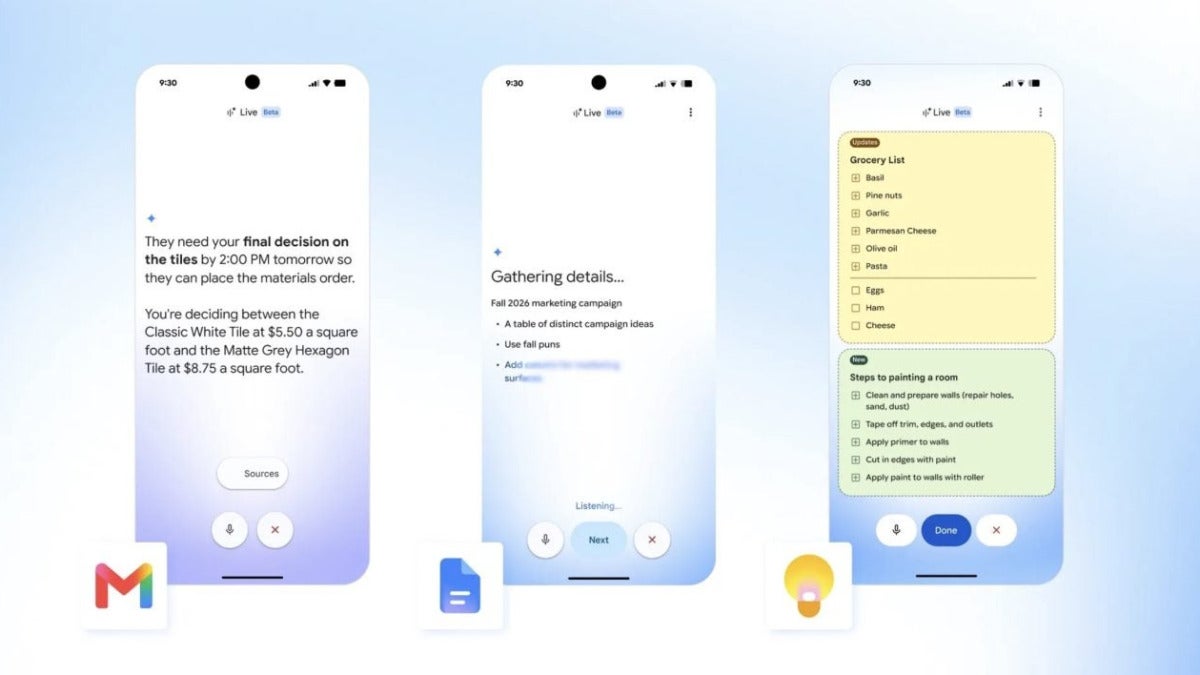
Google is rolling out Gmail Live, Docs Live, and Keep Live, three new features that let us talk to our apps to look up information, draft text, and sort through our ideas. All three run on Gemini, and they push Google a little further down a path it’s already been on for months: weaving Google Gemini into everyday products like Gmail and Google Docs, after a long stretch of teaching people to use AI inside those apps.

Gmail Live makes the inbox something we can talk through, and Docs Live and Keep Live follow the same idea

With Gmail Live, we can ask Google Gemini about what’s in our emails. That could mean pulling up details about a trip, finding a specific piece of information, or just asking follow-up questions about the answers while a live transcript appears on screen.

Gmail Download

TechCrunch reports that Google didn’t stop there, because the company is also adding this voice feature to Google Docs and Google Keep**.

In Docs Live, we can say what we want to write and Google Gemini will put together a first draft, using, if we allow it, context from Gmail, Drive, Chat, and the web. Keep Live takes a different angle. It turns Google Keep into a voice-driven notepad where we can organize ideas, lists, or even recipes.

Google says these features are rolling out in English on iOS and Android under different plans. Gmail Live is available with Google AI Plus, Google AI Pro, which students can get for free, and Google AI Ultra. Docs Live and Keep Live, on the other hand, require either a Google AI Pro or Google AI Ultra subscription.

What Google is trying to do here is pretty clear: bring AI into the tools people already use every day. This time, if we’d rather speak than dig through menus and tap our way around the screen, that option’s there.

GPT-6 Astra is here: OpenAI says it’s the start of AGI

OpenAI unveiled GPT-6 Astra exactly one year after it launched GPT-5. Yesterday, the company began rolling GPT-6 Astra out to a small group of organizations.

ChatGPT Download

OpenAI says GPT-6 Astra is its smartest model yet, and the one that’s most closely aligned with user intent. The company says the biggest jump shows up on the hardest professional work: programming, science, and autonomous computer use.

A model so capable that people are already talking about AGI

By OpenAI’s own numbers, Astra scores 98% on FrontierMath Tier 4, 99.9% on ARC-AGI-3, and 100% on ExploitBench. The company is pitching it as a major step up from GPT-5.6 Sol, Terra, and Luna, which were released just two months ago.

OpenAI also says ChatGPT with Astra can use applications, browse the web, and handle multi-step workflows like creating documents, spreadsheets, and presentations. On most tasks, the company says, it’s nearly twice as fast.

Greg Brockman serves as OpenAI’s president, and he believes we’re starting to move into the era of artificial general intelligence. Part of that claim comes from OpenAI’s own testing: Astra’s cybersecurity capabilities have reached the company’s “Critical” level. OpenAI has also put new security measures in place after the Hugging Face incident.

The rollout started yesterday with selected organizations and, OpenAI says, GPT-6 Astra will reach the rest of ChatGPT Plus, Pro, Business, and Enterprise users in the next few days, along with the API and AWS.

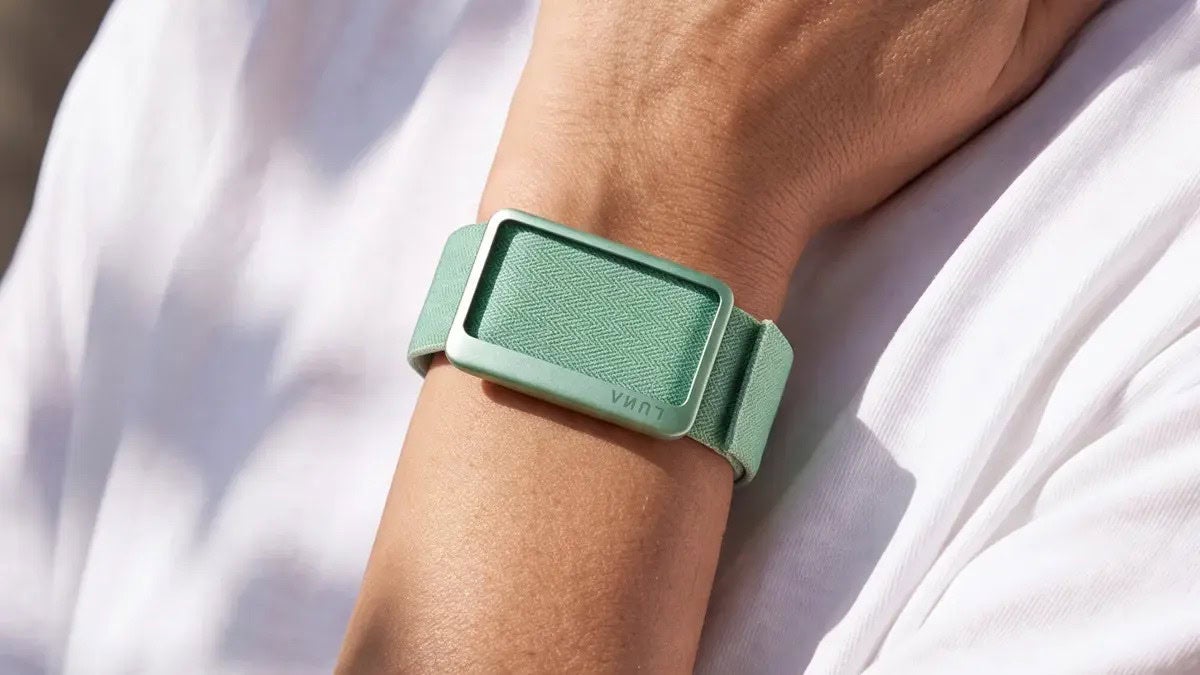
Luna Band launches globally at IFA 2026: a screenless tracker with no subscription

At IFA 2026, Luna took Luna Band global and pitched it as a screen-free fitness tracker, putting it head-to-head with Fitbit Air in one of the wearables market’s fastest-growing corners.

Fitbit Download

Luna’s pitch is pretty direct: pay once and get the full Luna Band feature set, including the company’s LifeOS health engine, rather than signing up for the subscription setup tied to Fitbit Air and Google Health Premium, at least according to Luna.

The company also says Luna Band can take voice input for meals, symptoms, and other wellness notes, then use that information to serve up more proactive prompts over time. That lines up with what showed up across IFA 2026 more broadly: a bigger push toward sleep, stress, recovery, and day-to-day lifestyle coaching. And it matters. The screen-free category jumped 122% year over year in Q2 2026, even while the broader wearable band market dipped 2%.

If you want something lighter on the wrist, less distracting, and free of another monthly charge, Luna Band looks like a product worth considering. Still, the real test hasn’t changed: sensor accuracy, the quality of its recommendations, day-to-day reliability, privacy, e-waste, and whether automated coaching actually holds up across different kinds of users and different regions.

Luna Band is available now through Luna’s invite-only global rollout, according to the company. We’ll probably get a much clearer read on it once more people outside North America and Europe are actually wearing it.

Japanese Spider-Man figures surge now: collectors rediscover *Supaidāman*

Japanese Spider-Man figures based on Marvel’s 1978 Supaidāman TV series are now out from Hot Toys, Hasbro’s Marvel Legends line, and Bandai’s S.H.Figuarts. That’s put the cult show back in front of collectors again.

What stands out here isn’t one single “most valuable” figure. It’s the growing appetite for premium Supaidāman releases. Plenty of collectors are into the bold design, and there’s a real novelty to seeing Japanese Spider-Man displayed next to the more familiar versions. At the same time, some collectors are still hoping for better accessories and screen-accuracy that’s a little tighter.

If you collect Marvel figures, this is a wave worth picking up. Supaidāman is Takuya Yamashiro not Peter Parker. He gets his powers from an alien from Planet Spider, in a tokusatsu, melodramatic, monster-of-the-week reworking that Stan Lee later praised. And Leopardon matters too. It helped shape the giant-robot formula that ran into Super Sentai and later Power Rangers. You can still see why Japanese Spider-Man has stuck around through the Spider-Verse comics, through fan talk about future animated films, and through the Disney+ Marvel’s 616 episode on the 41-episode series. Coverage is still fairly limited outside U.S. and Japanese collector circles, and there still isn’t much public detail on how the newest figures were designed.

You can find the figures through the usual collector retailers, and you can watch Marvel’s 616 on Disney+.

Claude Mythos flags 23,019 software flaws: 21,000 still await human review

By June 2026, Anthropic said its AI system, Claude Mythos, had produced 23,019 vulnerability reports across open-source software. Only about 1,900 had been reviewed by outside parties. That meant more than 21,000 findings were still unverified. Even so, Anthropic says 1,726 of the reviewed reports turned out to be real vulnerabilities, which helps explain why AI-driven bug hunting can feel like a real shift in security work. But people still have to do the hard part, because severity was often rated too high and the choke point is moving away from discovery and toward validation and patching.

That need for human review shows up pretty clearly in the severity calls. Across 27 Common Vulnerabilities and Exposures, or CVE, cases, Anthropic’s Claude Mythos labeled eight as critical. After review, only one of those still counted as critical, and 13 of the 27 original ratings were judged too high. Temporal Server is a good example. A flaw there was first tagged as critical, then later dropped to low because exploiting it depended on rare setups, unusual deployment conditions, or privileged access. At that point, maintainers still had to sort out exploitability, business impact, and patch priority.

Anyone who follows software security should keep an eye on this, because the bottleneck is shifting from finding bugs to checking them and fixing them, and monthly CVE disclosures rose 145% in the two years leading up to June 2026. These reports hit open-source projects, not some consumer app download page, and researchers are divided. On one side, cheaper and faster auditing. On the other, the risk that machine-generated disclosures will swamp teams, maintainers, and bug bounty programs as the number of discovered bugs keeps climbing.

Christopher Nolan again calls 2001: A Space Odyssey “pure cinema”

In 2026, Stanley Kubrick’s 1968 classic 2001: A Space Odyssey is back in the conversation. Christopher Nolan, the director of Interstellar and Oppenheimer, has once again called it “pure cinema.”

JustWatch Download

Nolan has long said that 2001: A Space Odyssey communicates through image, scale, sound, and feeling more than through tidy plot mechanics. He traces that reaction back to seeing the film when he was seven. Even now, he says he doesn’t fully understand everything the film is doing, which helps explain why you can feel 2001 all through Interstellar and across Nolan’s broader fascination with awe, cosmic mystery, humanity’s place in the universe, and the limits of knowledge.

That admiration turned practical in 2018, when Nolan helped present an unrestored 70 mm print struck from the original camera negative, so audiences could get something closer to the tactile, photochemical experience of 1968 rather than a digitally cleaned-up version.

If you follow Christopher Nolan or Stanley Kubrick, 2001: A Space Odyssey still makes sense to pick up in 2026. Steven Spielberg has called the film the “big bang” for his generation, and 2001 remains central to criticism, filmmaker interviews, repertory screenings, and online debate. The 2020 monolith sightings pushed it back into mainstream headlines too.

You can revisit 2001: A Space Odyssey at repertory screenings, including 70 mm showings, or through streaming platforms and home video.