World of Warcraft is one of the greatest video games of all time. Whether you like it or not, its history and its importance within the medium, within MMORPGs, and in the lives of millions of people is undeniable. Its impact is absolutely colossal and even today it continues to have an impact in the medium in countless ways. And while in 2026 it no longer has the same impact as in 2006, because that’s impossible, it’s undeniable that it remains an enormous presence in video game culture.
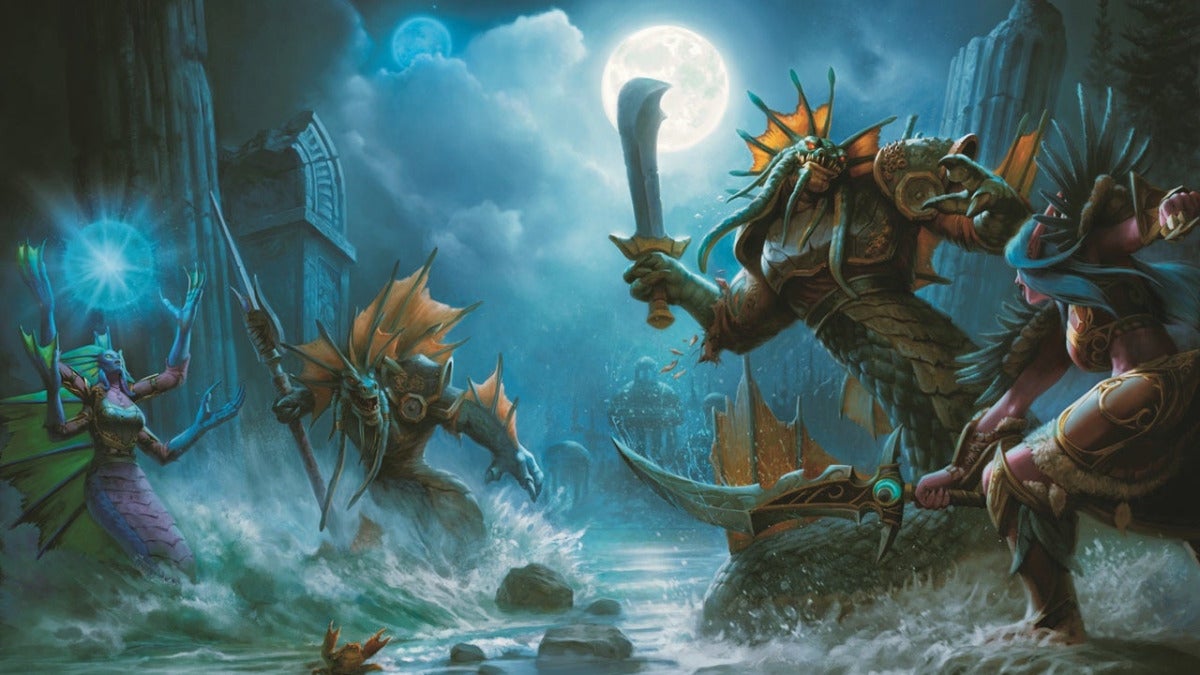
That’s why it’s no surprise that it remains an huge presence. And that it appears where we least expect it. So when Wizards of the Coast decided to extend its Universe Beyond, bringing other companies’ IPs into its own products, all the way to Dungeons & Dragons, one obvious candidate stood out. The worlds of Azeroth were quite simply the perfect candidate to make an excellent campaign book for Dungeons & Dragons.
Adapting the video game to the role-playing game
While the Warcraft universe has a very rich and complex narrative, developed over the decades, when we think about World of Warcraft we think of three things. The first is the factions. The second is the raids. And the third is its dungeons and its quests. And it’s precisely these last two that will be explored most fully in D&D: World of Warcraft.
With seven iconic dungeons rebuilt for this book, each of these maps has been reconstructed to replicate the video game experience, but taking into account that in Dungeons & Dragons you do more than just fight. Adding components of exploration, stealth, and negotiation, reinforcing the non-linear design of the dungeons, and reinforcing the possibility of adding more or fewer encounters in each of the dungeons, each of these places feels familiar, while a completely new experience unfolds.
What contributes to this is that D&D: WoW focuses, particularly, on two aspects: boss encounters and non-combat solutions. The first is obvious enough. What is most memorable about World of Warcraft is the raids and their powerful bosses, which here come to life in particularly intense fights. Which explains the second. Because by putting more weight on the other aspects of role-playing, these combats feel even more intense and unique, by not being just another encounter inside the dungeons.
Also because this book introduces new mechanics to make sure these combats feel truly unique and enormous. Mythic actions allow bosses to act in a completely unexpected way, giving the sense that they evolve throughout the combat. And the introduction of loot drops invites you to defeat them again if you want to replicate the feeling of repeating a raid to get exactly the item you wanted.
The importance of social aspects
Another aspect that we shouldn’t overlook, and that even Dungeons & Dragons players without any special interest in World of Warcraft will appreciate, is the introduction of professions. A new mechanic that will allow you to create items or obtain all kinds of upgrades or items as long as you meet the requirements, such as having the necessary tools and being in the right environment. That way, with professions such as alchemist, blacksmith, enchanter, engineer, or jeweler, now you’ll be able to customize your character more than ever.
Likewise, we couldn’t talk about World of Warcraft without factions. And your characters will be able to belong to the Alliance or the Horde, but also to other smaller factions such as Kirin Tor, the Cenarion Circle, or the Explorer’s League and the Reliquary. As long as they meet their requirements.
All of this will be accompanied, as you’d expect, by 6 new subclasses, 13 classes with World of Warcraft-specific alterations, 16 new Azeroth species (11 of them new), 50 monsters, and new spells and magic items. All of it in a standard edition and a special edition that will come out in 2027. So if you’re in love with Dungeons & Dragons and World of Warcraft, don’t miss this book, because it’s made specifically for you.