
You’re at bat on Softonic

mlb_logo.jpgThe MLB season got to a start yesterday and saw the New York Mets beat the St Louis Cardinals in a rematch of last year’s National League Championship Series. The race to the World Series will last until September and feature great players like Sammy Sosa, Barry Bonds, Pedro Martinez and Randy Johnson. Past years have shown that teams that reach the World Series a year rarely repeat this feat the next year. Add to that the traditional deals and swaps of the preseason and it’s pretty difficult to predict which teams will make it to the playoffs. You might be eager to follow your favourite team as it races for the pennant and a place in the playoffs over the next 6 months so how about checking out some baseball games and applications?

Any serious baseball fan knows the game is all about stats. RBIs, BAs, strikes or shut outs are just a few of the figures that determine whether your favourite players are doing well or have a lousy year. Whether you play baseball or softball, Baseball Memories can track your own stats over a whole season. Check out how you fare compared to professionals and analyze your stats to see what you need to improve over the season.

Continue reading “You’re at bat on Softonic”

Free antivirus apps part 3: Clamwin

clamwin.jpgOn to the third of our five part series on free antivirus applications, today we cover Clamwin the only open source program in our selection. You would be mistaken to dismiss Clamwin just because of its unattractive interface. Using up only 26 MB of memory, Clamwin can smoothly scan without interrupting the flow of your other applications. That’s a good thing, because a full scan took us nearly two hours and a half. Surprisingly, with only 45,475 files scanned, half as much as Avast!, Clamwin still managed to find 6 different pieces of malware that neither Avast! nor AVG picked up.
The default configuration of the antivirus means it will only report viruses; you’ll then have to choose between removing or quarantining them. The progress window will inform you of malware it picks up, but there’s no way of knowing how far in the scan you’ve progressed. However it’s good to know that Clamwin automatically unloads infected programs from your PC memory, lightening up your CPU usage. During the process, the program will give priority to executables and it will also check mail in your Outlook for any viruses. Taking a look at the different features in the program, we liked the scan scheduler and filters you can set to exclude files from your scan. Overall, we were very satisfied with the way Clamwin performed and, although it looks quite unattractive, we believe it’s a very good solution to protect your PC.

Clamwin test results:

  • Uses 26 MB of memory
  • Full scan time: 2:21:00
  • Scanned objects: 45,475
  • Scan scheduler
  • Set filters to exclude files from scanning
  • Ugly interface
  • No information on scan progress
  • Default only reports virus; you can then remove or quarantine it
  • Automatically unloads infected programs for Computer Memory
  • Automatically scans EXEs and emails

Free antivirus apps part 1: AVG

Free antivirus apps part 2: Avast! Home

Trying out Windows Media Player 11

wmp11.jpgWith Windows Media Player (WMP) 11 Microsoft aims to counter iTunes’ dominance. The interface has been beefed-up, usability has been enhanced and Microsoft has worked at turning its flagship media application into a full multimedia center, linked to online stores and compatible with mobile devices. We take a look at its new features.

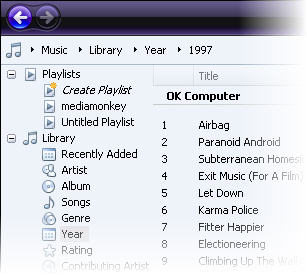
The first thing that will strike you when you start up WMP 11, is the complete revamp of the interface. No more deep blue, the whole application is now dark and shiny and you can customize it by selecting a hue of your choice. The left side is a drop down pane for your library, the centre displays your lists and the right side is used to create playlists which you can rip, burn or sync with a mobile device.

Compared to version 10, we feel that Microsoft actually made an effort to simplify the whole interface and give you more ways to browse through your media list, whether by using the drop down menu or the quick rollout line on the top left. The “play” and “previous” and next” buttons are now nested at the bottom of the interface and have a jazzy glow whenever you roll over them. Microsoft has finally succeeded in integrating a good search function into its WMP interface. As you type the name of an artist or title the application will bring up the results in the main window.

Continue reading “Trying out Windows Media Player 11”

Free antivirus apps part 2: Avast! Home

a.jpgFor the second part of our five part series on the best free antivirus applications, we’ll take a look at Avast! Home. Another renowned name in the security scene, Avast! Home is superficially known for its brushed metal, media player-like interface. In our tests, Avast! used up 36 MB of system RAM, slightly more than AVG, but nothing to get alarmed at. Using the default settings, the standard scan was fairly quick and clocked in at 56 minutes. But with only 89,510 elements scanned, it checked considerably fewer files than AVG. While AVG did not pick up anything, Avast! Home detected 6 different pieces of potential malware on our machine. We liked how Avast! Home gave us an ample choice of actions: repair, delete, deny access, move, chest, and scan. When you dig in the Avast! settings, you’ll find features like exclusion list, which can be quite useful to refine your scan, or alerts on malware you can send to friends via email or IM. With new malware appearing every second, we don’t really believe this function is of much use. The only real annoying thing with Avast! Home is that, although it’s free, you’ll need to register once a year or so, just as a formality, to keep using it.

Avast! Home test results:

  • Uses up 36 MB of memory
  • Full scan time: 0:56:38
  • Scanned objects: 89,510
  • Frequent updates and large virus database
  • You need to register once a year
  • Handy exclusion list to target your scan
  • Send warning alerts to others via email or IM

Free antivirus apps part 1: AVG

Free antivirus apps part 1: AVG

Today we bring you the first in a five part series, where we will test out five different free antivirus applications. All too often users get bullied into buying an expensive antivirus that either works bad or ends up being completely useless, overlooking free alternatives. Most of these free antivirus applications have greatly improved over time and often offer as much as their trial counterparts. Names like AVG or Avast! are already lauded in the community as secure free solutions for users. We decided to give a test run to 5 free antivirus applications, AVG, Avast! Home, Clamwin, Active Virus Shield, and Antivir, testing the CPU usage, length of virus scan, files scanned and special features included in each program. At the end of our series we’ll tell you which one we preferred but meanwhile feel free to leave a comment and tell us what you love or hate about each of the free antivirus applications.

avg1.pngWe start off the series with AVG Anti-Virus System Free Edition. This solid antivirus application has been around for years and was recently reviewed here on insideTonic. AVG fared moderately well in our tests. It used up around 30 MB of system RAM, which is normal for such a program. A full scan took us exactly 1:04:51, which we found a bit on the lengthy side, but AVG did scan a total of 113,393 files including network places and shared documents. We didn’t launch the email scanner because it integrates with Outlook and automatically monitors emails as you receive them. Contrary to other antivirus applications AVG will automatically heal infected files instead of giving you a choice of quarantine or deletion. The program features a scheduler which is automatically set at 8 AM every morning.

AVG test results:

  • Uses up 30 MB of memory
  • Full scan time: 1:04:51
  • Scanned objects: 113,393
  • Email scanner integrated in Outlook
  • Scheduler automatically set at 08 AM
  • Automatically heals infected files

IM and call with Google Talk

talk_logo.gifGoogle Talk is a messenger client with a “Web 2.0” feel that makes communicating with other Google users a piece of cake. The program integrates well with many of Google’s other products. You can open it inside of Gmail, add it to your Google Desktop bar, or even manage your Orkut conversations directly from Google Talk.

At first glance, Google Talk follows in the company’s tradition of keeping things simple. All your contacts are automatically loaded from your Gmail account the first time you launch the client. You can start a conversation in a click and keep all of your different chats in separate windows. Although, Google Talk doesn’t allow you to call phones, it will let you talk with other Google users and even send voicemail if they are offline. Gmail users will appreciate how the chat client is also embedded in your Gmail account, allowing you to chat with other Gmail users instead of sending emails. Google Talk also integrates into the Google Desktop, making it immediately accessible from anywhere on your PC.

Continue reading “IM and call with Google Talk”

Six compression utilities compared

winzip1.jpgWith broadband connections or WiFi set up almost anywhere you go, and portable devices like USB keys offering bigger storage space than ever before, you’d think file compression technology would become obsolete. Surprisingly though, archiving applications are still very popular with users, thanks to extra features like encryption or file repair.
A few years back, having Winzip on your PC was a prerequisite, but with time many more versatile competitors and better compression formats have popped up. Nowadays the name of the game is not really the size of compressions but securing your files and quickly transmitting them to other users. We’ve chosen 6 different compression utilities to put to the test.

Continue reading “Six compression utilities compared”

Install an uninstaller for your PC

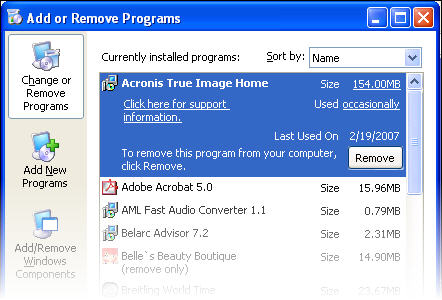
ar1.jpgThe most painful moment of my daily PC experience, apart from a 10 minute startup waiting time, is probably the whole uninstalling process. Whereas in Mac all you need to do is find the application you want to get rid of and drag it in the trash can, uninstalling a program on a PC can drag on for ages. Sure, there’s the “Add or remove programs” feature in your control panel, but more often than not you’ll realize you’re  stuck with remnants of a program you thought had been wiped from your PC. Hence the contradictory solution, of installing a specialized uninstaller to do the work for you.
Total Uninstall and Smarty Uninstaller are two very good tools. They generate a detailed list of all the applications and updates installed on your PC. If you can’t find a program in the Windows Control Panel, there’s a good chance you’ll find it here. Another application we recommend is Norton Removal Tool. If you have Norton Ghost or any version of Norton Antivirus on your PC and want to get rid of it completely, the Norton Removal Tool will automatically browse your PC and remove all relevant files. Built specifically by Symantec, this program will clean your PC of all Norton files still lying in your PC. To avoid unnecessary clutter on your PC, the best advice is still to only install essential programs, remove applications you barely use, and clean your PC of obsolete files regularly.

Record and edit videos with Camtasia Studio

c.jpgCamtasia Studio is a complete application suite to record, edit and share your videos online, on CD or with a portable player. This highly-acclaimed program allows you to create screencasts or video tutorials, and can also be used to prepare presentations. Let’s get a run-down of all the things you can do with Camtasia Studio.

Thanks to the Camtasia Recorder, you can record and save screen captures or webcam broadcasts. We enjoyed playing around with it, adjusting the region size, highlighting cursor movement and setting elements such as time stamps and captions. Depending on what you need to record, you can also choose to hide or show the cursor and disable audio.

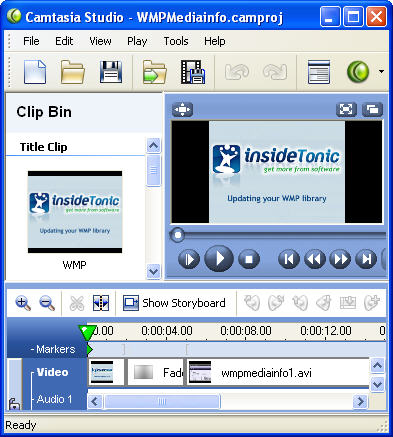
The production studio is the central piece of the application, from where you’ll be doing your editing. Drag and drop your recorded videos onto the timeline at the bottom of the interface. Camtasia embeds a player in the studio interface and you can constantly replay your production. From the menu on the left side you can choose from a selection of 18 different transitions, many call-outs (effectively bubbles to insert text into your video) or captions. The Zoom-n-Pan feature can be used to focus in on one part of the video in particular and teachers can use the Flash Quiz Survey feature to prepare multiple choice tests for their students. Camtasia Studio also includes an audio editor to simply record a voiceover directly to your video or tweak the audio in your production. Use Menu Maker and Theater to create full tables of contents and credits.

Continue reading “Record and edit videos with Camtasia Studio”

Ad-Aware 2007 Beta ready to test

sc-beta-app.gifAd-Aware 2007 Beta is finally available for registered testers. Over on their blog, Lavasoft claim that over 50,000 users have already downloaded it. Anybody interested in trying it out just needs to go to the Beta registration page. If you’ve never heard of it before, Ad-Aware is one of the best free anti spyware applications out there. The program has a constantly updated database on all latest malware and will thoroughly scan your PC.

I personally received an email from Lavasoft yesterday, but the download page kept crashing. Apparently, I wasn’t the only one with this issue. Luckily, the folks at Lavasoft have worked hard fixing the problem and this morning I was able to install the Beta.

My first impressions are of a sleeker interface and a more “pro” feel compared to the old Ad-Aware. Lavasoft have already posted a full list of new features available in this version. The Ad Watch Connect feature, that protects you from “hijackers” as you browse the net, and the new advanced CSI technology, to detect malware seem to be the biggest improvements. The new Ad Aware will also have a function to clear out your cache, cookies and history from your browser in a click. The System Restore Point will keep you safe from accidentally erasing files and it seems Lavasoft have added a file editor to customize the Hosts file to improve your protection. I’ve had a few crashes, but, as the people of Lavasoft remind, that’s very likely to happen with this Beta version. Thanks to all the useful feedback and bug reports from testers, Lavasoft should be able to release the final version of Ad Aware 2007 sometime this month. We’ll make sure to let you know as soon as we’re aware of it.