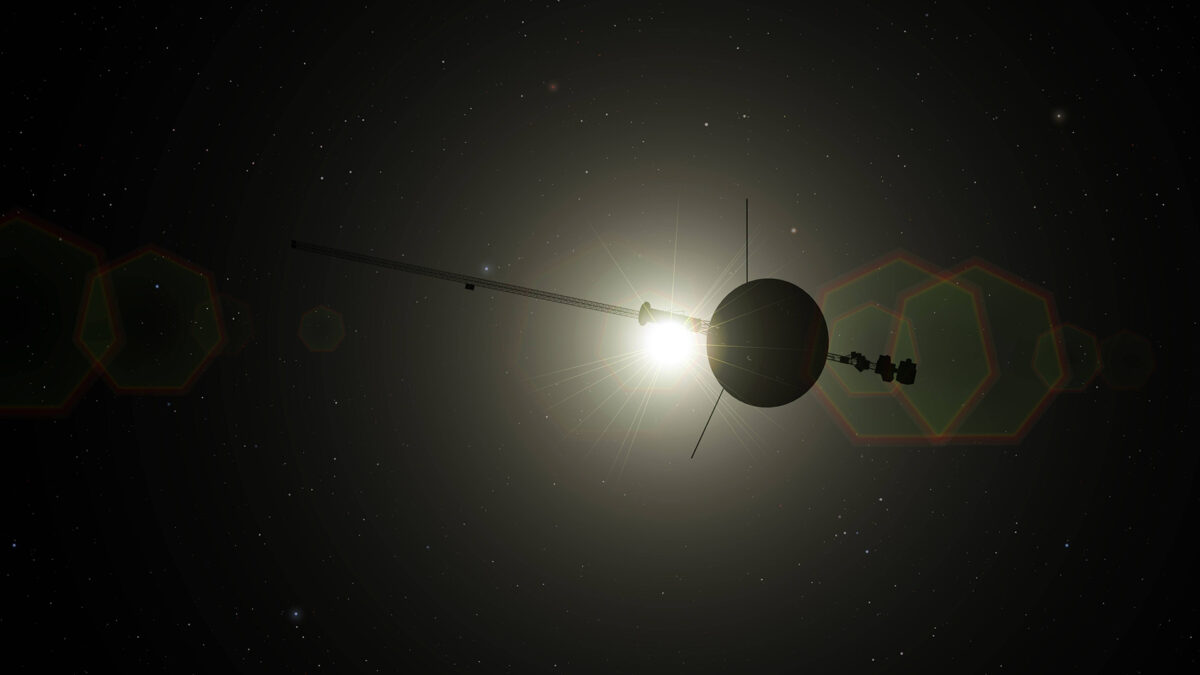
Last July, NASA reported that it had lost contact with Voyager 2, one of the longest-lived space probes used to explore space, including Solar System planets such as Uranus, Jupiter, Saturn and Neptune.
A command sent by mistake to the probe caused its antenna to rotate two degrees in the opposite direction to Earth, immediately losing communication with NASA.

However, this Tuesday NASA has captured in a scan of the sky what appears to be a “heartbeat” signal from Voyager 2. This great news would confirm that the space probe is still broadcasting and is in “good health”, despite being almost 20 billion kilometers away from Earth and traveling at a speed of almost 55,346 km/h through space.
All that remains to be done now is to recover the signal with Voyager 2, which was lost on July 21. Since that day, the probe has been unable to receive commands or send data to NASA’s Deep Space Network, a set of giant radio antennas scattered around the world, and the spacecraft is also unable to receive commands from ground controllers.
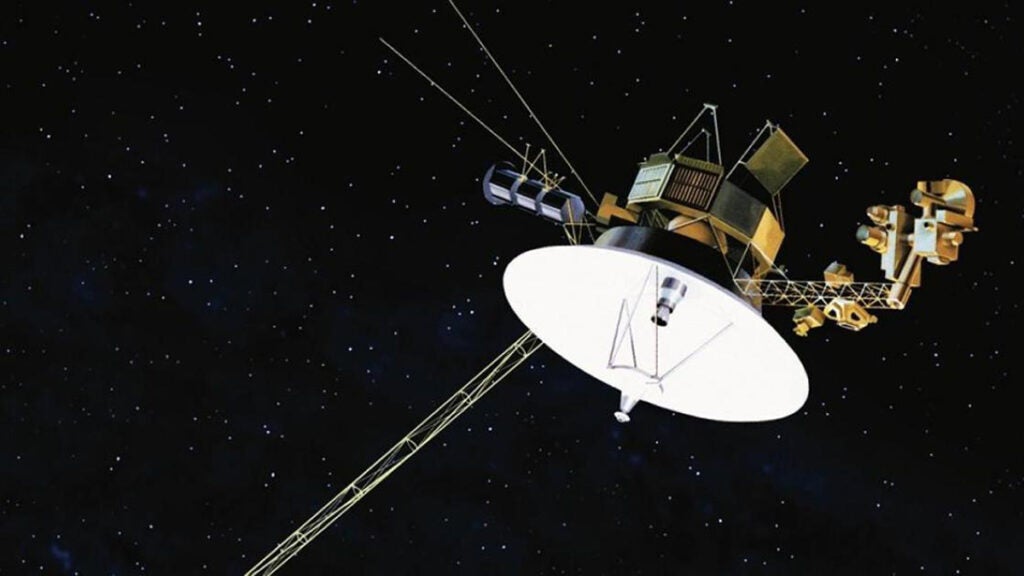
NASA had already been trying to detect any trace of Voyager 2’s signal. As recently as Monday, the space agency said it was using its huge satellite dish at the Deep Space Communications Complex in Canberra, Australia’s capital, to try to detect its location.
This powerful antenna has also been constantly broadcasting the correct command in order to regain contact with Voyager 2.
But even if communication with the space probe cannot be resumed in any way, Voyager 2 is scheduled to readjust its orientation several times a year to keep its antenna pointed at Earth. When will the next readjustment take place? October 15. According to NASA, this “should allow communication to resume”, so we can only wait.
Some of the links added in the article are part of affiliate campaigns and may represent benefits for Softonic.
