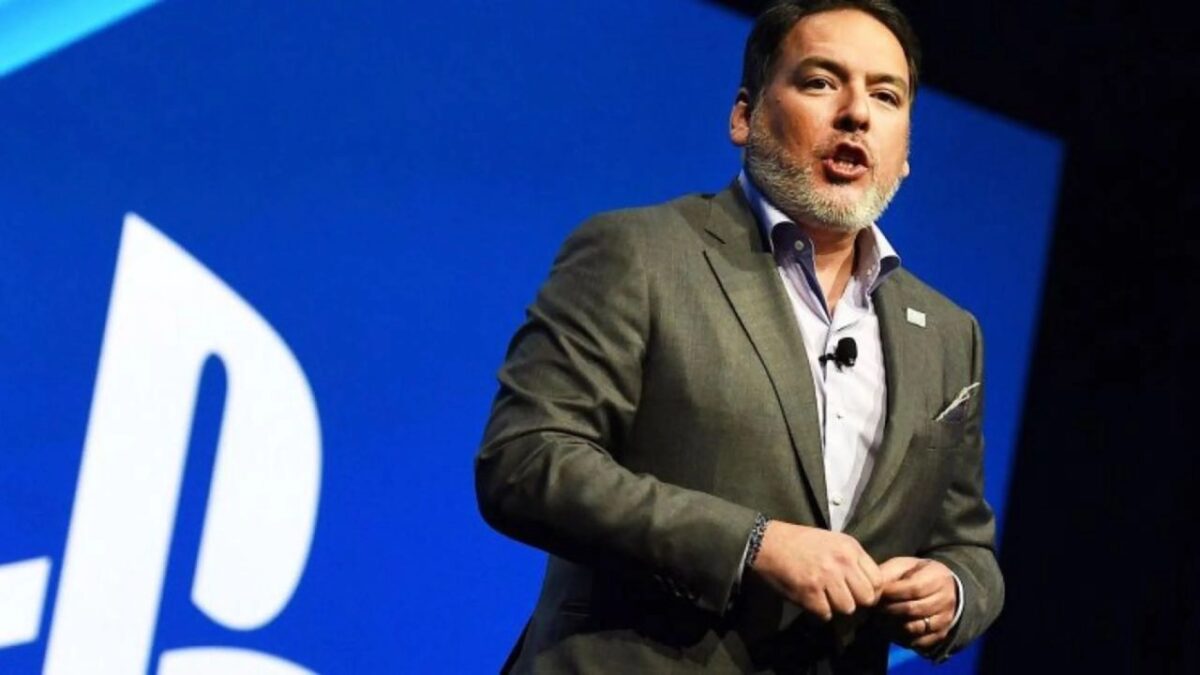
Another will come who will make me good. This popular saying, little used according to the Centro Virtual Cervantes, applies very well to Shawn Layden. Very little liked during his tenure at the helm of Sony, he is having a sort of redemption arc. Without the burden of having to lead a multinational forward, it seems that his opinions are very different from those he had when he was at the helm. Or at least, much more sensible than those who are now at the helm of that same ship. Because once again, the former executive and leader of the Japanese brand has decided to speak with a sensibility we did not expect from an executive.
As an executive at Sony for 30 years, he knows all the ins and outs of the company well, something that has earned him his current job as an advisor for numerous companies, including the Chinese giant Tencent. Where, currently, he is recommending doing exactly the opposite of what the entire industry is doing: reducing the scale of projects, teams, and thus, alleviating the budget issues.

In Layden’s view, it is necessary to return to making games with more modest budgets. Perpetual growth does not work. And he has reasons for this. Arguing that, “when a game costs 5 million dollars to make, you can charge 59.99 dollars, but when it costs 125 million dollars, you charge 59.99 dollars, so the math doesn’t work.” Saying that, by pure logic, it is impossible to maintain the current costs of video games. Not when, “the gaming community has said they don’t want to pay more than 60 dollars for a video game.”
This is something we have seen in recent years. With the growth of budgets, the leap with each new generation has also meant a leap in the base price of games. From 60 to 70 dollars, and currently making a gesture to reach up to 80. But the reality is that by doing this, games sell less at launch, inviting players to wait for the inevitable discounts to purchase the games.
That is why, according to Layden, the industry is hitting a wall. If 150 million is spent on making a triple-A game, then they are obligated to make a sequel. This is because all the risks are defined through mathematics that simply do not align with the material reality of things. What CEOs and finance chiefs see is that the price of a game does not match its cost and that, if it works, it is not worth trying to take a risk with something different. It is better to continue exploiting what is already known to work.
That’s why there are so many clones of the same game. So many DLCs, microtransactions, and battle passes. Because it’s a way to make money while minimizing risks in an economy that doesn’t work. But then, what does Layden propose? Literally, to de-escalate. To make cheaper games.
In his own words, “it’s time to make a radical reset in the business model, a radical reset of what a video game is.” The immense budgets, games over 50 hours, hyper-realistic graphics, are unsustainable in an industry that increasingly struggles to sustain itself. And that requires changing how video game production is approached. But also how we think about video games and what they should be.
Is what Layden proposes possible? Only time will tell. But when the former president of Sony says that the current model is unsustainable and that we are heading towards a cliff, perhaps these are not apocalyptic speeches. Perhaps it’s time to start rethinking the video game industry. And what a video game should be, in general.
