The anticipated Nintendo Switch 2 will be launched in Spain at a price of 480 euros, generating various reactions in the gaming community. Accompanying this new console, several titles, including the popular Mario Kart World, will cost 90 euros. This increase in game prices aligns with a trend in the industry, where several developers have begun to raise prices to offset the rise in production and development costs. The logic of the former president of Sony is not impeccable to say the least Shawn Layden, former president of Sony Interactive Entertainment, has expressed that exclusivity […]
The anticipated Nintendo Switch 2 will be launched in Spain at a price of 480 euros, generating various reactions in the gaming community. Accompanying this new console, several titles, including the popular Mario Kart World, will cost 90 euros. This increase in game prices aligns with a trend in the industry, where several developers have begun to raise prices to offset the rise in production and development costs.
The logic of the former president of Sony is not impeccable, to say the least
Shawn Layden, former president of Sony Interactive Entertainment, has expressed that the exclusivity of titles, such as those of Mario, Donkey Kong, and Zelda, plays a crucial role in consumers’ purchasing decisions. Despite the price increase, Layden argues that the enthusiasm for Nintendo’s exclusives can mitigate the impact of sticker shock among fans. “If it’s the only place you can play Mario, then you pull out your wallet,” Layden commented in a recent episode of the PlayerDriven podcast.
Although the loyalty of Nintendo’s fan base is remarkable, there are doubts about whether the Switch 2 will be able to achieve the same mass appeal as its predecessor, the original Switch. Long-term sales data will be vital to assess the reception of the new device. Additionally, Nintendo’s ability to attract new players and expand its user base beyond hardcore fans will become a key metric for its success.
The coming weeks will be crucial for the future of the Switch 2, as the market will closely observe the impact of the launch and the acceptance of high prices. The promise of innovations and exclusive titles could be enough to captivate players, but time will tell if this strategy is sustainable in an increasingly competitive environment.
Shawn Layden, an emblematic figure in the recent history of PlayStation, left the company in 2019 due to differences in the strategic direction the company was taking. During his time at Sony, Layden promoted iconic titles such as God of War, The Last of Us, Uncharted, and Horizon Zero Dawn, solidifying PlayStation’s reputation for creating deep narrative experiences. However, in recent years, the company has shifted its focus towards games as a service, a business model that has generated controversy in the gaming community. Shawn Layden has no interest in a game model […]
Shawn Layden, an emblematic figure in the recent history of PlayStation, left the company in 2019 due to differences in the strategic direction the company was taking. During his time at Sony, Layden championed iconic titles such as God of War, The Last of Us, Uncharted, and Horizon Zero Dawn, solidifying PlayStation’s reputation for creating deep narrative experiences. However, in recent years, the company has shifted its focus towards games as a service, a business model that has generated controversy in the gaming community.
Shawn Layden has no interest in a games-as-a-service model
Since Layden’s departure, PlayStation has faced criticism for the cancellation of several projects in this area, including titles like The Last of Us and God of War. Despite these cancellations, the recent success of Helldivers 2 has rekindled Sony’s interest in this model, boosting its commitment to developing more games as a service. Among the new initiatives are the MMO based on the Horizon universe and Fairgame$, a multiplayer heist shooter, presented at the latest PlayStation Showcase.
In a recent interview, Layden explained his decision to leave Sony, noting that the company was prioritizing the development of games as a service and subscriptions, an approach that did not align with his creative vision. “I didn’t have the vision or the energy to take it into this new area of games as a service,” Layden stated. Despite the criticism, PlayStation continues to expand its strategy and has created new studios, such as Dark Outlaw Games, under the direction of Jason Blundell, known for his work on Call of Duty Zombies.
Channeling these changes, the video game industry watches with anticipation the upcoming announcements of new titles and the future that this transformation holds in strategic directions within PlayStation.
Another will come who will make me good. This popular saying, little used according to the Centro Virtual Cervantes, applies very well to Shawn Layden. Not very well-liked during his tenure at the helm of Sony, he is experiencing a sort of redemption arc. Without the burden of having to lead a multinational company, it seems that his opinions are very different from those he had when he was at the helm. Or at least, much more sensible than those who are now steering that same ship. Because once again, the former executive and leader of the Japanese brand has decided […]
Another will come who will make me good. This popular saying, little used according to the Centro Virtual Cervantes, applies very well to Shawn Layden. Very little liked during his tenure at the helm of Sony, he is having a sort of redemption arc. Without the burden of having to lead a multinational forward, it seems that his opinions are very different from those he had when he was at the helm. Or at least, much more sensible than those who are now at the helm of that same ship. Because once again, the former executive and leader of the Japanese brand has decided to speak with a sensibility we did not expect from an executive.
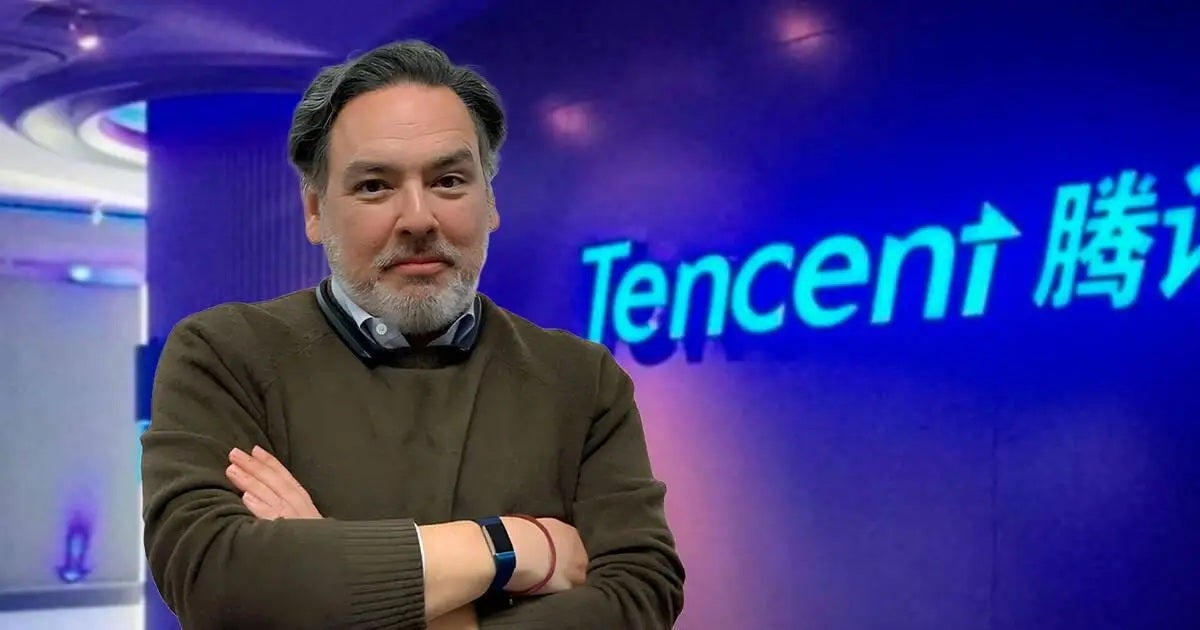
As an executive at Sony for 30 years, he knows all the ins and outs of the company well, something that has earned him his current job as an advisor for numerous companies, including the Chinese giant Tencent. Where, currently, he is recommending doing exactly the opposite of what the entire industry is doing: reducing the scale of projects, teams, and thus, alleviating the budget issues.
PlayStation app is a free application specially designed for PS4 and PS5. With it, you can download and start your favorite games, customize your profile, see which friends are online, and discover the latest news from PlayStation Store.
In Layden’s view, it is necessary to return to making games with more modest budgets. Perpetual growth does not work. And he has reasons for this. Arguing that, “when a game costs 5 million dollars to make, you can charge 59.99 dollars, but when it costs 125 million dollars, you charge 59.99 dollars, so the math doesn’t work.” Saying that, by pure logic, it is impossible to maintain the current costs of video games. Not when, “the gaming community has said they don’t want to pay more than 60 dollars for a video game.”
This is something we have seen in recent years. With the growth of budgets, the leap with each new generation has also meant a leap in the base price of games. From 60 to 70 dollars, and currently making a gesture to reach up to 80. But the reality is that by doing this, games sell less at launch, inviting players to wait for the inevitable discounts to purchase the games.
That is why, according to Layden, the industry is hitting a wall. If 150 million is spent on making a triple-A game, then they are obligated to make a sequel. This is because all the risks are defined through mathematics that simply do not align with the material reality of things. What CEOs and finance chiefs see is that the price of a game does not match its cost and that, if it works, it is not worth trying to take a risk with something different. It is better to continue exploiting what is already known to work.
That’s why there are so many clones of the same game. So many DLCs, microtransactions, and battle passes. Because it’s a way to make money while minimizing risks in an economy that doesn’t work. But then, what does Layden propose? Literally, to de-escalate. To make cheaper games.
In his own words, “it’s time to make a radical reset in the business model, a radical reset of what a video game is.” The immense budgets, games over 50 hours, hyper-realistic graphics, are unsustainable in an industry that increasingly struggles to sustain itself. And that requires changing how video game production is approached. But also how we think about video games and what they should be.
Is what Layden proposes possible? Only time will tell. But when the former president of Sony says that the current model is unsustainable and that we are heading towards a cliff, perhaps these are not apocalyptic speeches. Perhaps it’s time to start rethinking the video game industry. And what a video game should be, in general.