Ads are coming to WhatsApp

Ads are coming to WhatsApp next year, but they might not be as annoying as you think.

WhatsApp

You’re about to hate WhatsApp just as much as you hated the finale of “Game of Thrones.”

Whether you want it or not, in 2020 your favorite messaging app will include ads.

WhatsApp Messenger Download Now ►
8

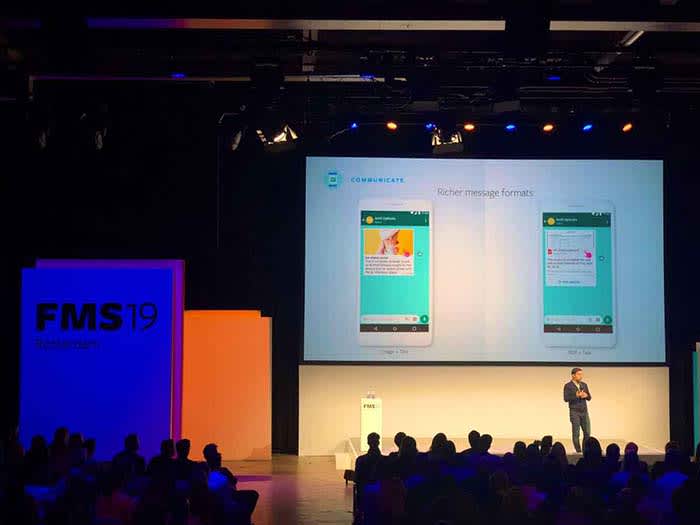
This was announced at the Facebook Marketing Summit 2019 in Rotterdam.

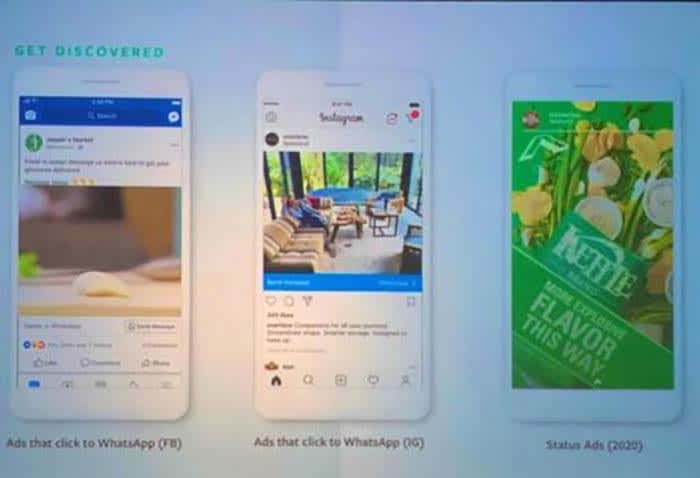
The ads will be similar to those on Instagram. They will appear as you navigate through the app.

WhatsApp ads

The good news is that they will not be as annoying as you might have feared. The ad will be in the form of a video or photo. You can swipe the ad the go to the advertiser’s page, or just scroll past it.

WhatsApp FMS

Also announced: WhatsApp Business, the app for companies, will have new functions including more complex message formats.

These initiatives by Facebook are meant to help monetize the application with more than 1.5 billion active users.

Up until now, WhatsApp was the only app under the Facebook umbrella that did not run advertisements. It was just a matter of time before this happened.

The state of AI in advertising

AI is changing the ads you see. Is that a good thing?

AI 700

Don Draper should be worried. As AI becomes more sophisticated, companies are letting computers try their hands at advertising. Lexus, for example, turned to AI to create a script for a commercial. How’d it do? Judge for yourself.

Sure, it was a stunt, but it did reveal that artificial intelligence is a viable technology for advertisers. Marketing and advertising have changed a lot in the past decade or so. The main shift has been in the sheer volume of data that advertisers now have at their fingertips.

We’re now entering a phase where advertisers have better, faster ways to process that data, and put it to work.

Here’s a little more about where we’re at in 2019 — and some thoughts about where we might be in the near term.

Data analysis and algorithmic action

In most cases, data comes from several sources and is kept in silos. Marketers benefit from accessing all data from one location. This allows them to connect the dots and understand the customer experience from all possible angles.

Many companies are now using a form of AI called Natural Language Processing (NLP) to read and understand human language. The most common example is digital assistants like Siri and Alexa — who deliver intelligent responses to human questions.

From an advertising point of view, NLP may be applied to identify customer sentiment on social media or identify which parts of an email campaign were most likely to generate a response. This allows marketers to quickly ID what works and what doesn’t — without having to tag specific actions or feedback manually.

Algorithms are the core of our favorite apps — they help Netflix recommend movies, give Amazon clues to items we might like, and determine the quality of news that shows up in our Facebook feeds.

But advertisers don’t always openly share information about the algorithms they use to target customers. When customers don’t know why algorithms make a decision, there’s a lack of transparency at play because they don’t know what data that algorithm collects or how the platform works.

How AI is changing Google Ads

Last April, Google announced that they would start offering ad suggestions on their ads recommendation page.

The announcement received little attention, but the update actually is a big deal. Google now uses AI to create text-based ads for advertisers, and these ads will automatically go live after 14 days of inactivity.

You can choose to opt out of this feature. Google frames this auto-drafting feature as a way to make advertising easier. Still, this means advertisers lose control over campaigns unless they make sure to take the extra step and opt out.

On the flip side, AI may be able to make smarter decisions about word choice, helping advertisers generate more leads and rack up revenue. It’ll be interesting to see the statistics (man vs. machine) after this practice has been in the mainstream for a while.

Whether we admit it or not, personalized recommendations are manipulating us. The consulting firm McKinsey & Company estimates that algorithms determine 35% of Amazon purchases and 75% of Netflix choices. Research has shown that algorithms can negatively affect us.  They may promote complacency, perpetuate bias, and offer differential pricing based on a variety of unknown factors.

More marketers will experiment with AI

advertising future

This year and beyond, marketers are likely to start experimenting more with AI and automation. The influx in data means more opportunities to tailor advertisements to individual customers.

Adding AI to advertisers’ toolkits means that they’ll be able to create new revenue opportunities by allowing consumers to choose how they interact with a brand.

The main benefit for this group is that they’re entering this new era of data application. The past several years, marketers have had to be smart about which metrics they analyze. Failure to do so meant sifting through a massive dataset from all of these disparate locations, manually, which includes pulling Google Analytics reports, reviewing social media statistics, and setting up alerts to stay on top of brand mentions.

AI promises to free marketers from this information overload and help them identify big-picture action items that allow them to improve customer relations.

Consumers should be aware of the changing landscape, too

Consumers need to learn more about the techniques used to market to them — and they should have the ability to decide whether they want to participate in those campaigns.

Initiatives like Europe’s GDPR are a step in the right direction, requiring companies to explain, in simple terms, why they need to share their data and how that data will be used and stored.

Customers should have a clear understanding of what they give up when they share their data and what they stand to receive in return. Advertisers have long benefitted from gaining an understanding of human behavior. But the fact that they have access to location-based data, transactional data, and search habits along with powerful algorithms arguably puts marketers at a considerable advantage.

With that in mind, we’ll need to think more carefully about the ethical implications. Consumers may be used to all this tracking and targeting, but that doesn’t make it okay.

Why autoplay will never die

You see autoplaying videos all over the web. Here’s why.

Autoplaying videos are the bane of the internet.

Maybe it’s just us, but it’s always felt like content playing without our consent felt like a violation. Some of us now live life with computers on mute 24/7 to avoid any public outbursts.

You know how it goes. Sometimes you’re cruising the web, trying to get work done, multiple tabs opened. Suddenly, some poor quality sound starts competing with your music, and you’re frantically clicking around looking for the source of auditory spam.

We all hate autoplay — yet somehow, the much-maligned feature hangs around, providing distractions and noise pollution without warning.

Here’s a look at why autoplay will likely stick around through web 3.0 and beyond.

Why autoplay will never die

autoplay

Why is autoplay still so prevalent?

The answer is obvious — autoplay videos are real money-makers. Why else would something so terrible be a mainstay on the web?

The user, in this case, doesn’t matter. UX might apply to individual sites, but it’s hardly a concern for advertisers.

We’ve seen a rise in autoplay ads over the past decade or so due to faster internet connections and the rise of smartphones. As consumers, we’ve gotten used to watching videos on Facebook, YouTube, streaming Netflix on our phones.

But, where Google and Firefox have made it possible to mute autoplay automatically — the biggest name in streaming is the hardest to outrun.

Netflix claims to have data suggesting that autoplay trailers are worthwhile — they reportedly make us watch even more movies and reruns of “Friends” and “The Office.”

Netflix

Netflix isn’t the only one forcing autoplay on their viewers. Back in December, YouTube announced it would roll out a new feature that would “make it easier to preview videos on the go.” Called Autoplay on Home, YouTube now automatically plays preview videos on the mobile app — you know, for convenience.

This change provides one clear benefit: inflating the number of views. For content creators, autoplay makes it easier to monetize videos.

new autoplay feature for youtube

Still, YouTube has one edge over the Netflix approach — the autoplay function can be muted, with captions for a less disruptive experience.

Are companies trying to do better?

Social media sites like Facebook and Twitter allow you to mute autoplay videos in your account settings. Instagram even mutes videos by default these days

A few months back, both Chrome and Firefox released updates that block the issue. Google’s browser now comes with the ability to mute specific tabs — and if you’re visiting a new site — you can use these options as a safeguard against unwanted noise by muting the site.

Version 64 also allows you to flag autoplay videos, but you’ll need to get into your Chrome settings.

The Firefox update added some options to the preferences section. The Nightly update also offers some tracking protections, too, blocking advertisers from running software that follows your online activity.

Unfortunately, the Chrome update puts HTML5 games at risk. Shortly after the rollout, Google was flooded with complaints from smaller game developers claiming that their games no longer worked in the browser. Other issues with these blockers include things like trouble with video calls.

That said, if you do a lot of reading and research online, muting sites like Forbes, CNN, and others that provide a small news report with every written story, the Chrome add-on is a real boon.

On the verge of a new silent generation?

Because everyone mutes their videos anyway, advertisers are now creating ad content with that in mind. For that, you can thank the Coalition for Better Ads, a group that includes big players like Facebook, Procter & Gamble, and the Washington Post.

The idea behind the coalition is, these brands hope that by making ads less invasive, fewer people will use ad blockers. Because blogs and news outlets are at the mercy of their advertisers, ad blockers pose a threat to their profitability.

AdAge reported that the coalition’s efforts haven’t moved as quickly as expected–the changes were supposed to be a good thing for both advertisers and consumers. The problem is, consumers might not be ready to switch off the ad blockers.

Now, autoplay isn’t going anywhere — but auto-muted videos are certainly a start. According to the New York Times, those companies that use sound-enabled ads may soon go extinct. Standards are changing, slowly, but surely.

Unfortunately, there’s no word from Netflix as to how long they’ll keep autoplay as a key player in its bag of algorithmic tricks.