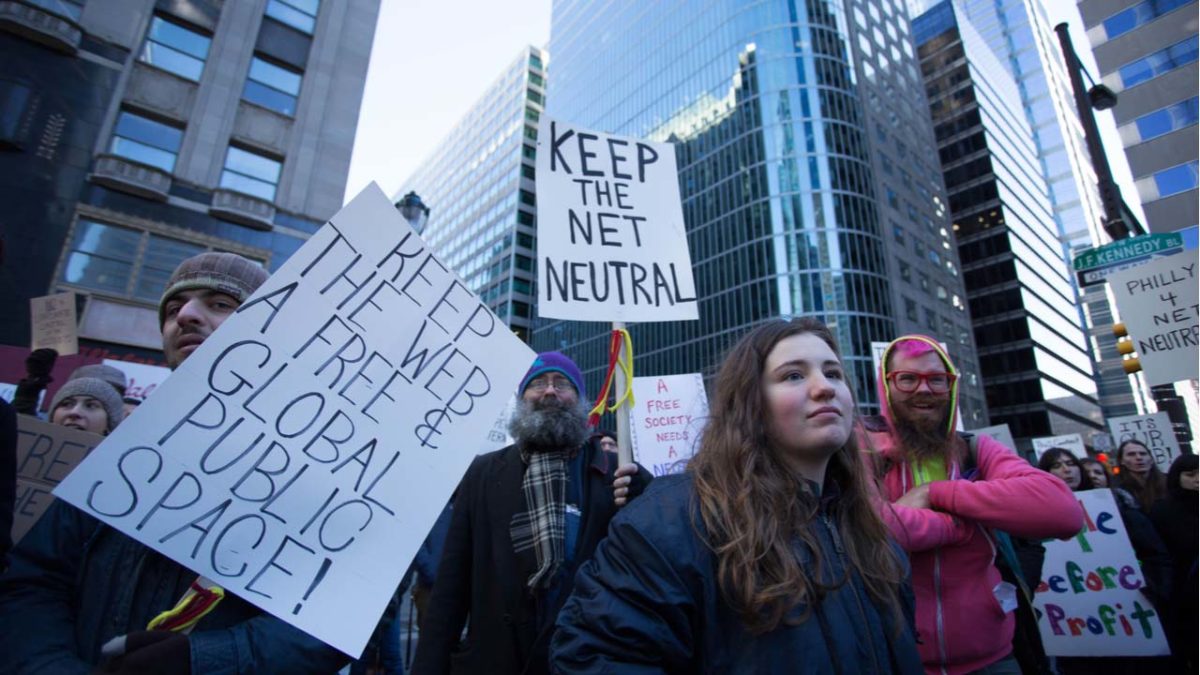
Fans of a free internet, rejoice! The FCC has voted to restore net neutrality.
Net neutrality has been a bit of a controversial subject throughout the years. To better understand net neutrality, the Wall Street Journal made a short video:
The vote does not mean that net neutrality has been restored just yet. The bill still has to go through the Republican-controlled Senate, and President Trump himself.
The response
Trump took to Twitter in 2014, bashing net neutrality and comparing it to the Fairness Doctrine from the 1940s.
FCC chairman Ajit Pai has been a long-time advocate for removing net neutrality. After the vote was made, Pai released a statement on Twitter.
Government regulation of the Internet is a solution in search of a problem. Thanks to the @FCC’s market-based approach, today we have a free and open Internet, faster speeds, more fiber deployment, and more infrastructure investment. Statement: https://t.co/LhLZg4DpwC pic.twitter.com/oQUSWuKcDz
— Ajit Pai (@AjitPaiFCC) April 10, 2019
You may remember Pai released this video to try to convince Americans that ending net neutrality would be a good thing. It did not go well.
The lawsuit
After the FCC voted to remove net neutrality, more than 20 states petitioned the FCC.
Ultimately, about two-dozen attorneys general sued the FCC, calling the decision “illegal.”
According to the lawsuit, removing net neutrality violates the Administrative Procedure Act. The FCC cannot make “arbitrary and capricious” changes to existing policies such as net neutrality. It disregarded evidence on industry practices and possible harm to consumers and businesses.
“The repeal of net neutrality would turn internet service providers into gatekeepers – allowing them to put profits over consumers while controlling what we see, what we do, and what we say online,” Attorney General Eric Schneiderman said. “This would be a disaster for New York consumers and businesses, and for everyone who cares about a free and open internet. That’s why I’m proud to lead this broad coalition of 22 Attorneys General in filing suit to stop the FCC’s illegal rollback of net neutrality.”

Trump administration challenges California’s net neutrality laws
Read more on net neutrality here ►At the start of February, the FCC finally responded to the lawsuit in a statement from FCC Commissioner Geoffrey Starks.
“Today in federal court, this FCC is attempting to explain why it ignored the evidence before it and hastily abandoned the carefully crafted, common sense Open Internet framework established in 2015. In the process, it ignored the will of millions of people who made their support for a free and open internet crystal clear. Like many others, I am paying close attention,” Starks said
Starks continued, “We know that consumers cannot count on the good will of big business to protect their interests. Unfettered access to the open internet provides a gateway to opportunity. Strong, enforceable rules empower consumers to make sure they get the service that they pay for and expect. I strongly believe that the FCC made the right call with the framework it established in 2015, and I am hopeful that these critical consumer protections will soon be restored.”
What can we expect to happen?
If you are wondering how what fate may befall this bill from the FCC, this video from the 1970s may enlighten you.
Stranger things have happened during the Trump administration, so net neutrality may very well return. About 90% of Americans are in favor of a free internet provided by net neutrality. That said, senators and the president could pass the bill to gain support come election time.
If net neutrality is restored, fans of a free internet everywhere will rejoice. Until that day comes, we won’t hold our breath.