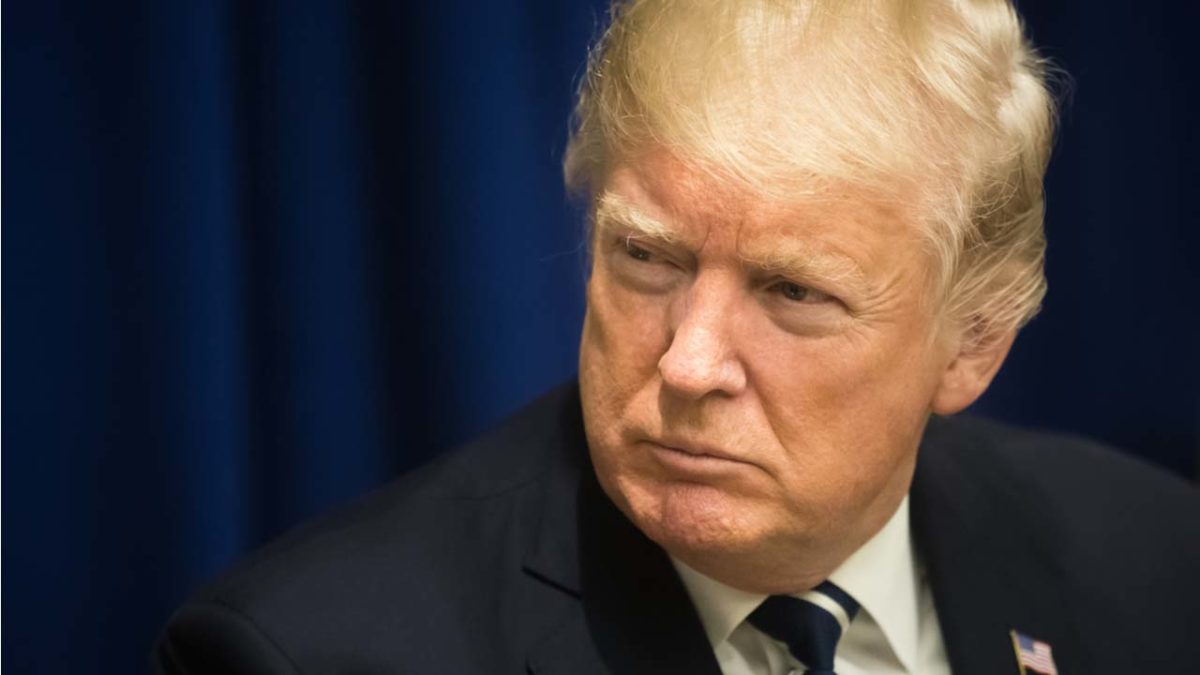
Donald Trump thinks it's ridiculous that Bad Bunny performs at the Super Bowl, despite never having heard his music

Donald Trump has called it ridiculous that Bad Bunny will perform at the Super Bowl Halftime Show scheduled for next year, despite admitting that he has never listened to the Puerto Rican artist’s music. During an interview on NewsMax’s ‘Greg Kelly Reports’ program, Trump expressed his disagreement with the choice of the performer, who has become a global phenomenon in the music industry. Is it just a criticism of Bad Bunny or does it go much further? The Super Bowl Halftime Show is recognized as a highly relevant event in pop culture, where prominent artists perform that […]

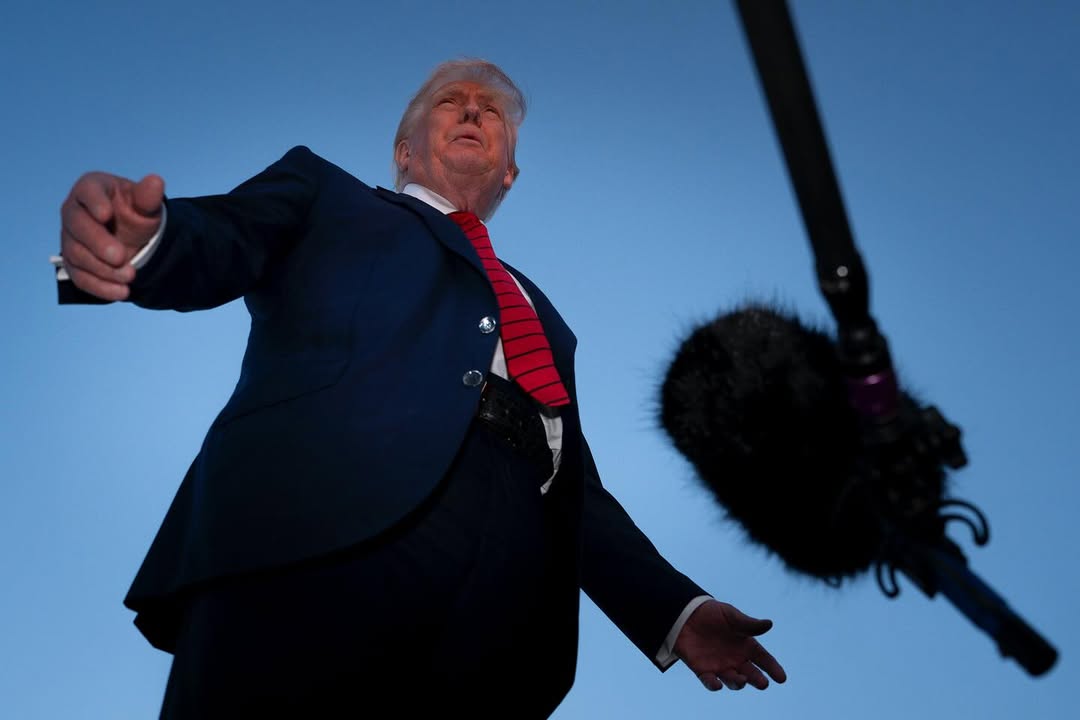
Donald Trump has called it ridiculous that Bad Bunny will perform at the Super Bowl Halftime Show scheduled for next year, despite admitting that he has never listened to the music of the Puerto Rican artist. During an interview on NewsMax’s ‘Greg Kelly Reports’ program, Trump expressed his disagreement with the choice of the performer, who has become a global phenomenon in the music industry.

Is it just a criticism of Bad Bunny or is it much more than that?

The Super Bowl Halftime Show is recognized as a highly relevant event in pop culture, featuring prominent artists that attract the attention of millions of viewers around the world. In this context, the choice of Bad Bunny as one of the main artists has generated both excitement and criticism. His music, which blends reggaeton, trap, and other genres, has established him as an icon in Latin music, boasting a loyal fan base internationally.

Although Trump’s opinion may reflect a particular perspective on the selection of artists for large-scale events, it is important to note that Bad Bunny has made a significant impact on the music industry, representing not only his home country but also a new generation of Latino artists who are breaking barriers in the global market. His participation in the Super Bowl Halftime Show is seen by many as a recognition of the growing influence of Latin music in American popular culture.

Amid this debate, many are wondering if Trump’s words represent a criticism of the musical diversity that characterizes the Super Bowl, or if they simply reflect his ignorance towards an artist who has changed the traditional narratives of contemporary music. This situation highlights the intersection of music, culture, and politics today, a topic that will surely continue to generate conversation as the big night of the Super Bowl approaches.

Illustrated Mueller Report tries to finally get you to read the darn thing

No one is reading the Mueller Report. Maybe some cartoons will help.

Illustrated Mueller Report
Chad Hurd/Business Insider

The Mueller Report is 448 pages. In today’s daily blitzkrieg of information, it’s hard to find time to read a handful of tweets, let alone a long and winding document outlining possible high crimes and misdemeanors.

Hollywood celebrities tried their hand at drawing attention to the report with a staged reading of the key moments. John Lithgow makes a good Trump:

Vice spent nearly 12 hours reading the whole thing:

Our representatives aren’t reading it, either. Sen. Lisa Murkowski (R-Alaska) said she finds it “tedious.” Sen. Tim Scott (R-South Carolina) says he doesn’t see the point of reading it.

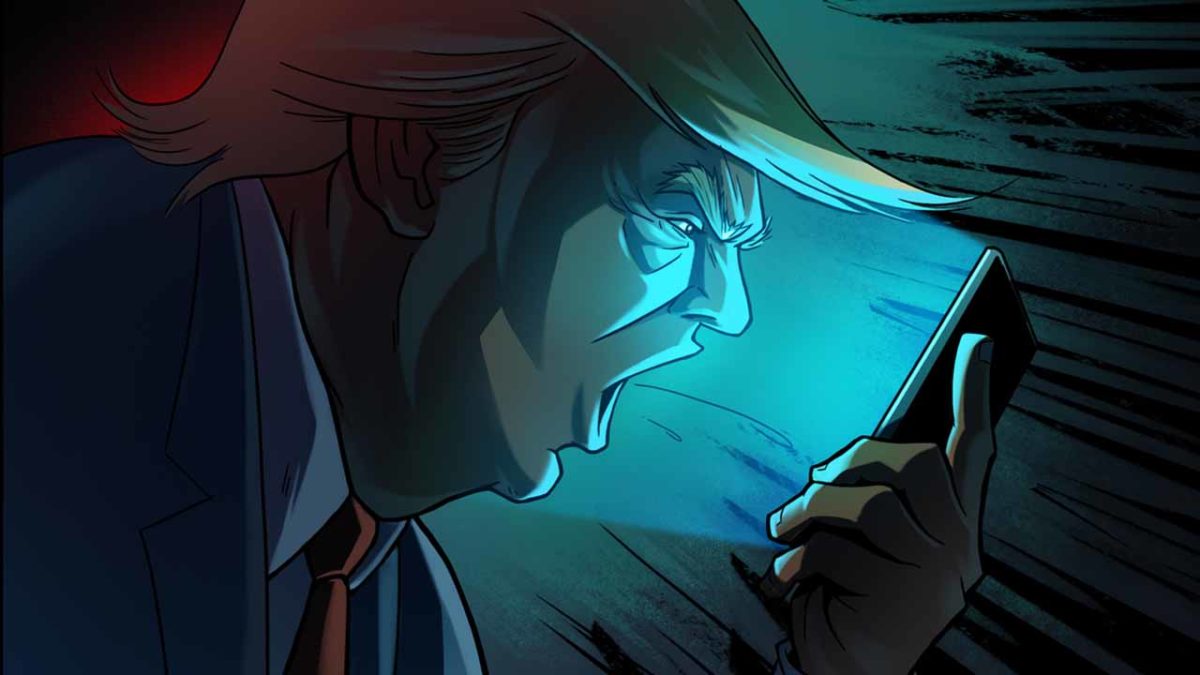
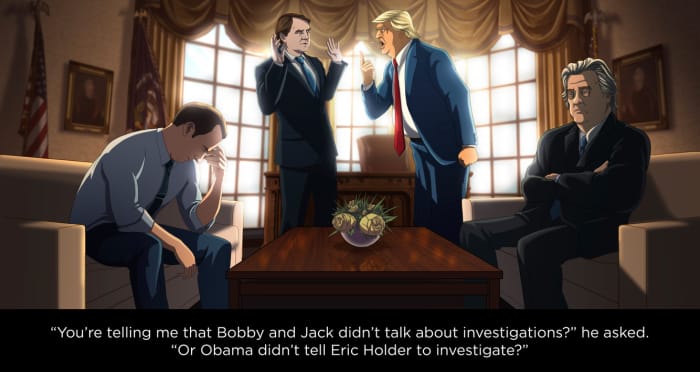
Since none of this is working (and our entire democracy might be at stake), the folks at Insider took another approach. They hired the writer of “Black Hawk Down” and an illustrator who works on “Archer” to create a more compelling version. This one reads like a thriller and catches the eye like a graphic novel. You can read the illustrated Mueller Report here.

You didn’t click that, did you?

(Sigh.)

What if we show you another picture from it?

Obstruction of justice
Courtesy: Chad Hurd/Business Insider

Will you click now? Will you read it? Will you at least vote next year? Please?

Net neutrality voted to return (maybe)

The net is saved! Or is it…?

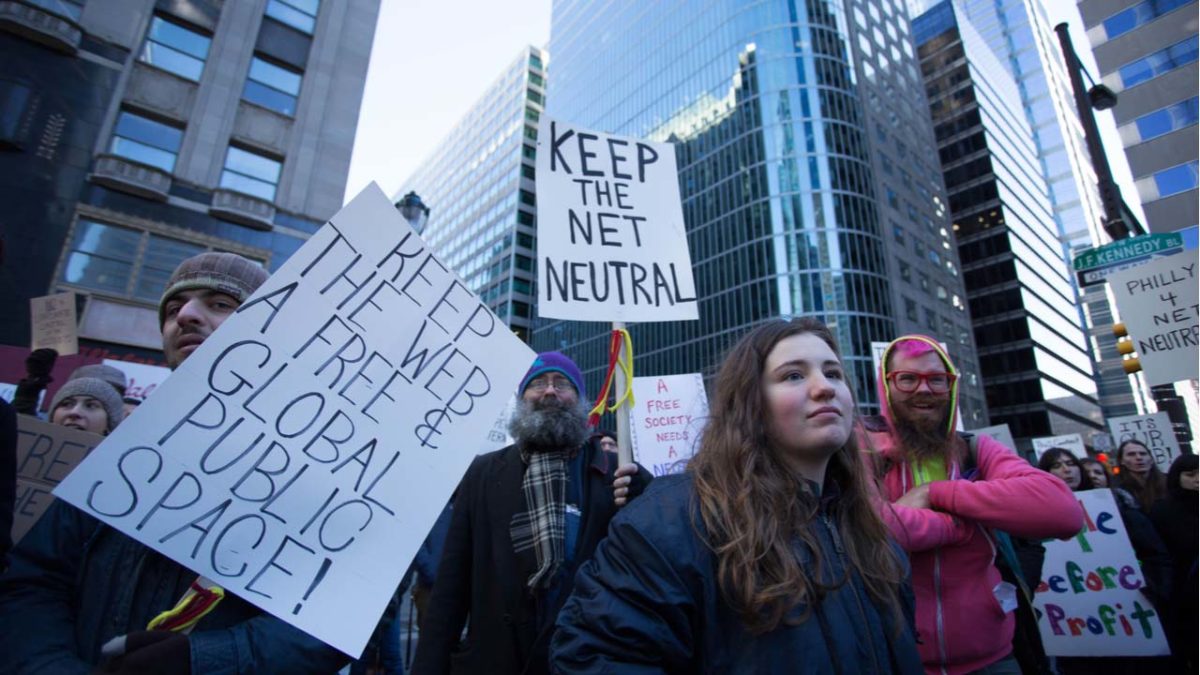
Fans of a free internet, rejoice! The FCC has voted to restore net neutrality.

Net neutrality has been a bit of a controversial subject throughout the years. To better understand net neutrality, the Wall Street Journal made a short video:

The vote does not mean that net neutrality has been restored just yet. The bill still has to go through the Republican-controlled Senate, and President Trump himself. 

The response

Trump took to Twitter in 2014, bashing net neutrality and comparing it to the Fairness Doctrine from the 1940s. 

FCC chairman Ajit Pai has been a long-time advocate for removing net neutrality. After the vote was made, Pai released a statement on Twitter.

You may remember Pai released this video to try to convince Americans that ending net neutrality would be a good thing. It did not go well.

The lawsuit

After the FCC voted to remove net neutrality, more than 20 states petitioned the FCC.

Ultimately, about two-dozen attorneys general sued the FCC, calling the decision “illegal.”

According to the lawsuit,  removing net neutrality violates the Administrative Procedure Act. The FCC cannot make “arbitrary and capricious” changes to existing policies such as net neutrality.  It disregarded evidence on industry practices and possible harm to consumers and businesses.

“The repeal of net neutrality would turn internet service providers into gatekeepers – allowing them to put profits over consumers while controlling what we see, what we do, and what we say online,” Attorney General Eric Schneiderman said. “This would be a disaster for New York consumers and businesses, and for everyone who cares about a free and open internet. That’s why I’m proud to lead this broad coalition of 22 Attorneys General in filing suit to stop the FCC’s illegal rollback of net neutrality.”

At the start of February, the FCC finally responded to the lawsuit in a statement from FCC Commissioner Geoffrey Starks.

“Today in federal court, this FCC is attempting to explain why it ignored the evidence before it and hastily abandoned the carefully crafted, common sense Open Internet framework established in 2015. In the process, it ignored the will of millions of people who made their support for a free and open internet crystal clear. Like many others, I am paying close attention,” Starks said

Starks continued, “We know that consumers cannot count on the good will of big business to protect their interests. Unfettered access to the open internet provides a gateway to opportunity. Strong, enforceable rules empower consumers to make sure they get the service that they pay for and expect. I strongly believe that the FCC made the right call with the framework it established in 2015, and I am hopeful that these critical consumer protections will soon be restored.”

What can we expect to happen?

If you are wondering how what fate may befall this bill from the FCC, this video from the 1970s may enlighten you.

Stranger things have happened during the Trump administration, so net neutrality may very well return. About 90% of Americans are in favor of a free internet provided by net neutrality. That said, senators and the president could pass the bill to gain support come election time. 

If net neutrality is restored, fans of a free internet everywhere will rejoice. Until that day comes, we won’t hold our breath.

Trump signs executive order on artificial intelligence

Can the U.S. compete with China?

Trump

President Trump recently revealed the “American AI Initiative,” an executive order that outlines the American plan to develop AI technology. The executive order did not allocate any new funds towards developing AI technology. It instead encourages federal agencies to allocate some of their own money towards AI focused research and projects.

This executive order came as a response to repeated warnings from AI experts and security officials that the U.S. would soon fall behind China’s AI programs if they didn’t make significant changes. Former Secretary of Defense John Mattis sent a memo to the Trump administration last spring that warned the country would fall hopelessly behind without a concrete national AI strategy.

As AI technology rapidly evolves, we become more and more dependent on it. AI is used in important ways across several industries, from consumer products like the Amazon Echo to lifesaving medical technology, all the way to national security.

In America, AI technology is improving primarily within the private sector and not within federal agencies. Companies like Google have some of the world’s best AI experts working for them, and some of these companies are none too keen on sharing their technology with the U.S. government. Just last year, Google severed its involvement with the Pentagon’s Project Maven, an AI project that aimed to make drone strikes more accurate through video analysis, over inner-company backlash towards the technology’s lethal implications. However, other companies, like Amazon and Microsoft, have aggressively pursued contracts with the Pentagon over AI technology. These contracts are not extremely lucrative, however, as America’s $1.1 billion AI federal budget pales in comparison to Chinese plans, which has had individual cities pledge to donate $15 billion to AI research by themselves.

Traditionally, one of America’s main technological advantages over other countries has been its ability to attract and retain some of the brightest students and researchers from across the world. The Trump administration is rapidly and aggressively cutting programs that allow foreign students and researchers to come to the U.S., encouraging them to take their talents elsewhere. If the U.S. truly wants to become the world leader in the field of AI, the Trump administration needs to loosen its immigration stance as soon as possible. While the Trump administration justifies these cuts by saying that they protect the jobs of domestic programming students, there are more than enough programming jobs to go around. Code.org states that there are around 500,000 available programming jobs in the U.S., while only around 40,000 programming students graduate each year.

By not actually allocating any funds and refusing entry to top foreign talent, Trump’s new executive order on AI is little more than a bluff. Only by gaining significant funding from Congress and allowing foreign students and researchers to enter the country can the U.S. stay competitive in AI, much less lead the world in its development.

Deepfake videos can make anyone say or do anything

The future of video manipulation could have terrifying consequences.

deepfake

Imagine being able to make it look like any person in the world is doing or saying anything you want. With deepfakes, this is not only possible, but free and easy.

For those who don’t know, deepfakes are videos that use motion capture technology to impose someone’s face onto another person’s body or to impersonate another person entirely. A basic example of the technology can be seen below:

As you can see, the technology is incredibly realistic. With a skilled vocal impersonator, it can be very difficult to tell a deepfake from an actual video.

Deepfakes aren’t the result of some sort of top-secret CIA technology, anyone can download an app and make them without much hassle. Deepfakes are created by machine learning algorithms that manipulate video footage until the “realistic” algorithm can reliably be fooled. The technology works best when the algorithms are fed tons of footage, which explains why presidents, actors, and other public figures are the most frequent subjects of deepfakes.

There are several ramifications of this technology and nearly all of them are scary. Before we dive into all that, here’s the only harmless example of deepfaking that we’ve seen: Nicolas Cage being inserted into movies he never starred in.

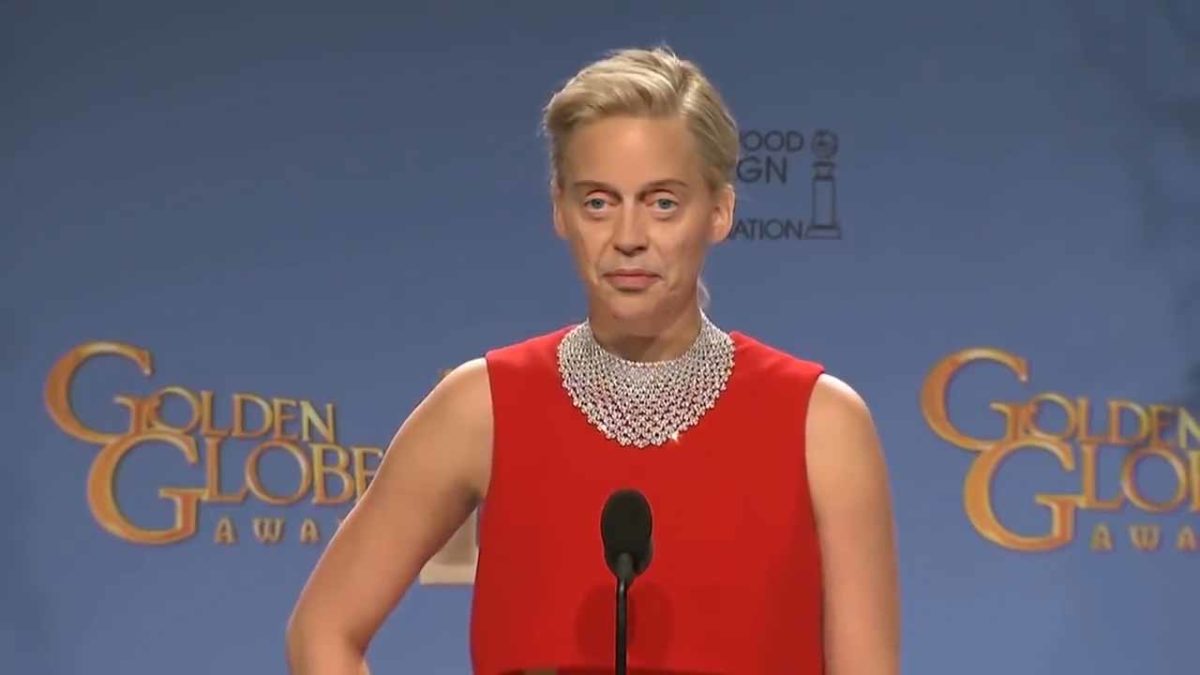
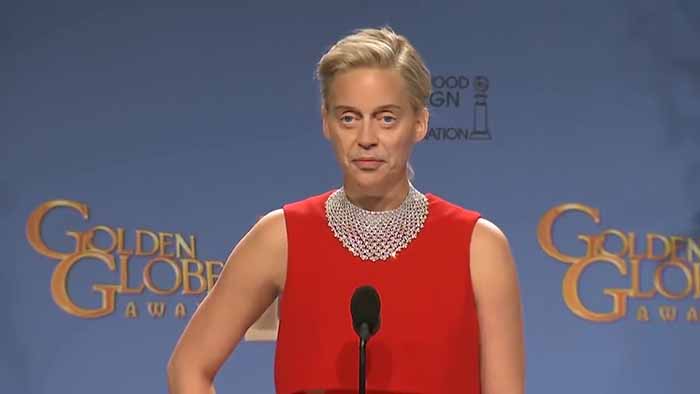
And here’s Steve Buscemi’s face mapped over Jennifer Lawrence for some terrifying reason.

Despite how great those videos are, the vast majority of deepfakes are created for far more nefarious purposes. Currently, the most common use of deepfakes by far is to put the faces of popular celebrity women onto pornstars.

This deepfake has Star Wars star Daisy Ridley's face put on a porn star's body
This deepfake has “Star Wars” star Daisy Ridley’s face put on a porn star’s body

Numerous victimized women have spoken out against this gross trend, including Scarlett Johansson, who said, “Nothing can stop someone from cutting and pasting my image or anyone else’s onto a different body and making it look as eerily realistic as desired. The fact is that trying to protect yourself from the internet and its depravity is basically a lost cause… the internet is a vast wormhole of darkness that eats itself.”

It’s not just celebrity women either. An increasing number of people have fallen victim to deepfake revenge porn from vengeful exes. Because the technology is so new, there’s no concrete legislation to protect people from being deepfaked into porn. Much discussion has been had as to whether the creators of these videos could be charged as identity theft, harassment, or cyberstalking. At the very least, nearly every major porn site bans the uploading of deepfake videos. Mainstream websites like Twitter, Reddit, and Gyfcat have also banned the posting of deepfake videos.

In addition to sexual harassment, deepfakes could also have a devastating effect on politics. Deepfakes could be used to make powerful people say alarming or sensational things. It also works in reverse, as politicians have plausible deniability if they get caught saying or doing something embarrassing (for example, if deepfakes were around in 2016 President Trump could have claimed the infamous “grab them by the ****” video as a deepfake). The last U.S. presidential election already had enough fake news floating around, so imagine the chaos and misinformation that would be caused by widespread deepfake use.

While national defense organizations like the CIA are at work developing technology that can distinguish deepfakes, the moral of the story is to use research and critical thinking whenever you see a video that seems suspicious. Deepfakes are the newest addition to the post-truth/fake news era, and it is more important than ever that people carefully consider where their sources are coming from.

Trump administration challenges California’s net neutrality laws

State governments are willing to go to war over net neutrality.

California pushes back against Trump on net neutrality

Just when you thought the fight for net neutrality was lost, the plot thickens.

Recently, California passed the toughest statewide net neutrality law in the country. Hours later, the Trump administration’s Department of Justice sued the state. The federal government, and by extension the DOJ, has its pockets deeply lined with “donations” from major telecommunication companies like Comcast, Verizon, and AT&T.

Essentially, California’s new law (SB822) rolls back net neutrality rules to what they were before they were gutted by the FCC. This prevents internet service providers from selectively throttling or blocking their users’ access to different websites or online services. For example, in states other then California, Comcast could block or slow access to Netflix in an attempt to draw more users to their On Demand service. The bill also outlaws anti-competitive data sponsorship programs, which allow ISP’s to exclude their video services from their customers’ data caps, giving them an unfair advantage over services like Hulu or Netflix.

California isn’t the only state defending net neutrality through legislation, Washington is pushing its own laws, too. The attorneys general of 22 states have filed a brief against the FCC in the U.S. Court of Appeals.

FCC chairman Ajit Pai accused California’s bill of being anti-consumer, even though the bill has the support of many consumer groups.

Trump does not appear to hold a strong opinion on net neutrality one way or another. His administration repealed it last year, but his personal stake in repealing it seemed to be revoking yet another Obama-era policy. It should be noted, however, that Trump has expressed concern in the past about ISPs blocking access to conservative online content.

American cable and internet providers have created one of the most unregulated, monopolistic industries in the world. Major ISPs, such as AT&T, Comcast, and Time Warner Cable, have essentially divided the country amongst themselves. They make no attempts to encroach on each others’ territories, and any smaller ISPs have a laughably small chance of succeeding in territories controlled by the main players.

Consumers essentially have no choice when it comes to internet or cable; it mostly depends on where they live and who the local ISP kingpin is. This lack of competition also results in lower quality cable and internet services for consumers, as these companies have no incentive to offer faster internet services (matching the speed of services like Google Fiber) because the customer has no other options.

If California wins their bout with the DOJ, you can expect more states to follow their lead.