
Phone companies could block robocalls, but there’s a catch

The FCC is making phone companies give us an option to block robocalls, but it might not be free.

Robocall

Nothing can spoil the moment quite as much as a robocall. Whether they interrupt you at work or bother you on date night, they’re a real nuisance.

Fortunately, the FCC is making the effort to combat robocalls. However, you might have to pay to make it happen.

According to a press release from the FCC, robocalls account for about 60% of their yearly complaints. In 2016 alone, there were about 2.4 billion robocalls per month. That number has risen to about 5 billion per month in 2019, according to research from YouMail. 

The FCC’s plan

FCC Chairman Ajit Pai announced in a video that he is making blocking robocalls one of his top priorities. In order to meet that goal, the FCC has ruled that phone companies must offer a default option to block robocalls.

Phone companies currently have the technologies to help block robocalls, but you have to call them and ask yourself.

The FCC is also looking to have phone companies improve caller ID . The FCC has a new policy for phone companies called “safe harbor.” Essentially, this means that if phone companies don’t block calls that don’t have proper caller ID verification, they can face legal trouble.

Pai said that he is optimistic that the changes will be implemented by the end of the year.

It could cost you

According to FCC commissioner Jessica Rosenworcel, phone companies will have the ability to charge customers for blocking robocalls.

“There is nothing in our decision today that prevents carriers from
charging consumers for this blocking technology to stop robocalls,” Rosenworcel said in a statement.

Although Rosenworcel is strongly pushing for this to be free across all phone companies, there is still a chance that it will be.

However, Pai said in a statement that he does expect phone companies will offer the service for free. 

Basically, handling robocalls costs phone companies money. Blocking them in the first place does not.

He also said that “based on public input” the FCC will determine if a rule to make blocking free would be appropriate.

Protecting elderly people

The FCC is currently pushing phone companies to offer a service that will allow users to block calls that do not come from a list they provide to the phone company. 

According to Pai, the feature would be an optimal tool to help prevent elderly people from being scammed by robocallers, as they are often the target. Again, phone companies could potentially charge customers for this service.

Another option with iOS

Apple revealed at the WWDC that the new iOS 13 will automatically send robocalls to voicemail. Using Siri technology, your phone will look at your contacts, Mail, and Messages apps when a number calls you. If your phone doesn’t recognize the contact from one of those spots, the call will go to voicemail. Users will be able to access this feature in their settings under “Silence Unknown Callers.”

Wrapping up

If phone companies do not charge us for blocking these robocalls, this is a giant leap forward. If they do charge us, that would be an unfortunate development.

We’re optimistic, but we still think you should play it safe and download a free app to block robocalls.

Net neutrality voted to return (maybe)

The net is saved! Or is it…?

Fans of a free internet, rejoice! The FCC has voted to restore net neutrality.

Net neutrality has been a bit of a controversial subject throughout the years. To better understand net neutrality, the Wall Street Journal made a short video:

The vote does not mean that net neutrality has been restored just yet. The bill still has to go through the Republican-controlled Senate, and President Trump himself. 

The response

Trump took to Twitter in 2014, bashing net neutrality and comparing it to the Fairness Doctrine from the 1940s. 

FCC chairman Ajit Pai has been a long-time advocate for removing net neutrality. After the vote was made, Pai released a statement on Twitter.

You may remember Pai released this video to try to convince Americans that ending net neutrality would be a good thing. It did not go well.

The lawsuit

After the FCC voted to remove net neutrality, more than 20 states petitioned the FCC.

Ultimately, about two-dozen attorneys general sued the FCC, calling the decision “illegal.”

According to the lawsuit,  removing net neutrality violates the Administrative Procedure Act. The FCC cannot make “arbitrary and capricious” changes to existing policies such as net neutrality.  It disregarded evidence on industry practices and possible harm to consumers and businesses.

“The repeal of net neutrality would turn internet service providers into gatekeepers – allowing them to put profits over consumers while controlling what we see, what we do, and what we say online,” Attorney General Eric Schneiderman said. “This would be a disaster for New York consumers and businesses, and for everyone who cares about a free and open internet. That’s why I’m proud to lead this broad coalition of 22 Attorneys General in filing suit to stop the FCC’s illegal rollback of net neutrality.”

At the start of February, the FCC finally responded to the lawsuit in a statement from FCC Commissioner Geoffrey Starks.

“Today in federal court, this FCC is attempting to explain why it ignored the evidence before it and hastily abandoned the carefully crafted, common sense Open Internet framework established in 2015. In the process, it ignored the will of millions of people who made their support for a free and open internet crystal clear. Like many others, I am paying close attention,” Starks said

Starks continued, “We know that consumers cannot count on the good will of big business to protect their interests. Unfettered access to the open internet provides a gateway to opportunity. Strong, enforceable rules empower consumers to make sure they get the service that they pay for and expect. I strongly believe that the FCC made the right call with the framework it established in 2015, and I am hopeful that these critical consumer protections will soon be restored.”

What can we expect to happen?

If you are wondering how what fate may befall this bill from the FCC, this video from the 1970s may enlighten you.

Stranger things have happened during the Trump administration, so net neutrality may very well return. About 90% of Americans are in favor of a free internet provided by net neutrality. That said, senators and the president could pass the bill to gain support come election time. 

If net neutrality is restored, fans of a free internet everywhere will rejoice. Until that day comes, we won’t hold our breath.

FCC commissioner warns of location data threats

Your location data is being sold for hundreds of dollars; what should the FCC do?

Location Data

Little did we know, every move we make is being sold for hundreds of dollars.

FCC commissioner Geoffrey Starks wrote in an op-ed piece for the New York Times that wireless companies sell users’ location data, and that the FCC should stop them. 

Who is using our location data?

Last year, the New York Times broke a story about a sheriff using location data to monitor the locations of people in his jurisdiction.  Whether or not he had the best intentions, his methods were, at best, against FCC regulations and at worst, immoral.

Although the sheriff was reprimanded for his actions, the question still looms, “Who has access to our locations, and how are they getting it?”

As Starks wrote, even bounty hunters have been using location data to find and locate their targets. “A bounty hunter was able to pay to track a user’s location on a map accurate to within a few feet,” Starks writes.

How are they getting it?

Location data transactionOur cellphone service providers take location data directly from our phones throughout the day so that we can be contacted. That location data is only supposed to be divulged by our service provider for emergency situations. 
We can opt to allow apps like GrubHub or Waze to use our location in order to use their services, but they have to get permission. They also aren’t allowed to sell our personal location data.

Unlike an app, we can’t opt out of allowing our service provider to have access to our location data. 

This is an FCC issue

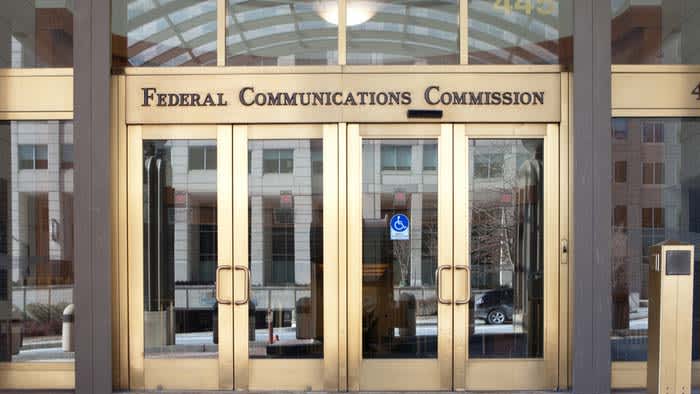
The FCC buildingMake no mistake, it is the FCC’s responsibility to handle this problem.
As Starks wrote, “It is unquestionably the FCC’s job to protect consumers and address risks to public safety. Our location information isn’t supposed to be used without our knowledge and consent and no chain of handoffs or contracts can eliminate the wireless company’s obligations.”

The FCC has been investigating this issue, but they have not taken action.

“The FCC must use its authority to protect consumers and promote public safety, and act swiftly and decisively to stop illegal and dangerous pay-to-track practices once and for all,” Starks writes.

Starks went on to say that as a commissioner, he can call for action on this problem. However, he can only do so if the FCC chairman first adds the issue to the FCC’s agenda. 

What happens next?

Starks took the right step by writing the piece for the New York Times. His story has only been online for two days, but it already been shared thousands of times across social media. Only time will tell as to how the FCC will respond to the article and the public outcry.

Trump administration challenges California’s net neutrality laws

State governments are willing to go to war over net neutrality.

California pushes back against Trump on net neutrality

Just when you thought the fight for net neutrality was lost, the plot thickens.

Recently, California passed the toughest statewide net neutrality law in the country. Hours later, the Trump administration’s Department of Justice sued the state. The federal government, and by extension the DOJ, has its pockets deeply lined with “donations” from major telecommunication companies like Comcast, Verizon, and AT&T.

Essentially, California’s new law (SB822) rolls back net neutrality rules to what they were before they were gutted by the FCC. This prevents internet service providers from selectively throttling or blocking their users’ access to different websites or online services. For example, in states other then California, Comcast could block or slow access to Netflix in an attempt to draw more users to their On Demand service. The bill also outlaws anti-competitive data sponsorship programs, which allow ISP’s to exclude their video services from their customers’ data caps, giving them an unfair advantage over services like Hulu or Netflix.

California isn’t the only state defending net neutrality through legislation, Washington is pushing its own laws, too. The attorneys general of 22 states have filed a brief against the FCC in the U.S. Court of Appeals.

FCC chairman Ajit Pai accused California’s bill of being anti-consumer, even though the bill has the support of many consumer groups.

Trump does not appear to hold a strong opinion on net neutrality one way or another. His administration repealed it last year, but his personal stake in repealing it seemed to be revoking yet another Obama-era policy. It should be noted, however, that Trump has expressed concern in the past about ISPs blocking access to conservative online content.

American cable and internet providers have created one of the most unregulated, monopolistic industries in the world. Major ISPs, such as AT&T, Comcast, and Time Warner Cable, have essentially divided the country amongst themselves. They make no attempts to encroach on each others’ territories, and any smaller ISPs have a laughably small chance of succeeding in territories controlled by the main players.

Consumers essentially have no choice when it comes to internet or cable; it mostly depends on where they live and who the local ISP kingpin is. This lack of competition also results in lower quality cable and internet services for consumers, as these companies have no incentive to offer faster internet services (matching the speed of services like Google Fiber) because the customer has no other options.

If California wins their bout with the DOJ, you can expect more states to follow their lead.