This tool could save artists from AI: poisoning artificial intelligence

The program works by making small modifications to an image that, although invisible to the human eye, make the AI algorithms…

We have talked a lot about how AI is grabbing art from all over the internet to create its own creations. Obviously, these are not original, just a mishmash of existing images. This drives millions of artists crazy, who could now take revenge in the best way possible.

DALL-E DOWNLOAD

Artists could soon have a new weapon to prevent their works from becoming cannon fodder for machine learning.

The tool, called Nightshade, introduces small changes to the pixels of a digital artwork to “poison” it and make it useless for AI training.

This is how a tool that could change the current paradigm works

The MIT Technology Review reports that a team led by Ben Zhao, a professor at the University of Chicago, presented Nightshade for review at the USENIX computer security conference.

The program works by making small modifications to an image that, although invisible to the human eye, cause AI algorithms to identify them completely incorrectly.

For example, an artist can paint a picture of a cat that any human or AI examining it can clearly identify as a feline. However, by applying Nightshade, humans will still see the same image while the AI will mistakenly believe it is a dog.
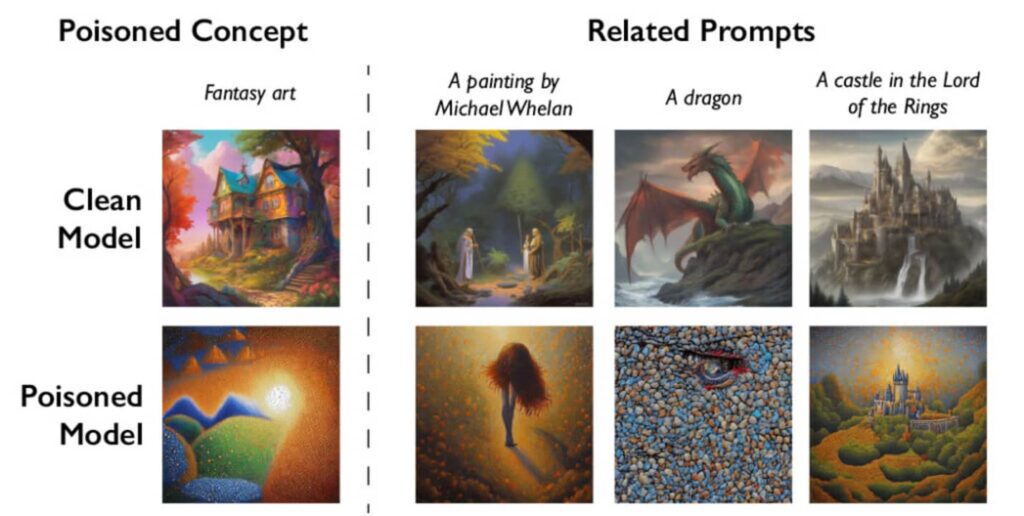
And they explain that if AI is inundated with enough bad training material like this, soon a request for an image of a cat will make it generate a dog instead.

Of course, a single poisoned image is unlikely to have a significant effect on an AI image generator’s algorithm. Its training data would need to be contaminated by thousands of altered images before a real impact could be observed.

However, it is known that AI image generators indiscriminately collect thousands of new samples from the internet to refine their algorithm. If a sufficient number of artists upload their images with Nightshade applied, they could potentially render these AI tools useless.
DALL-E DOWNLOAD

The world’s largest tabletop gaming event uses AI for its drawings and creates chaos among fans

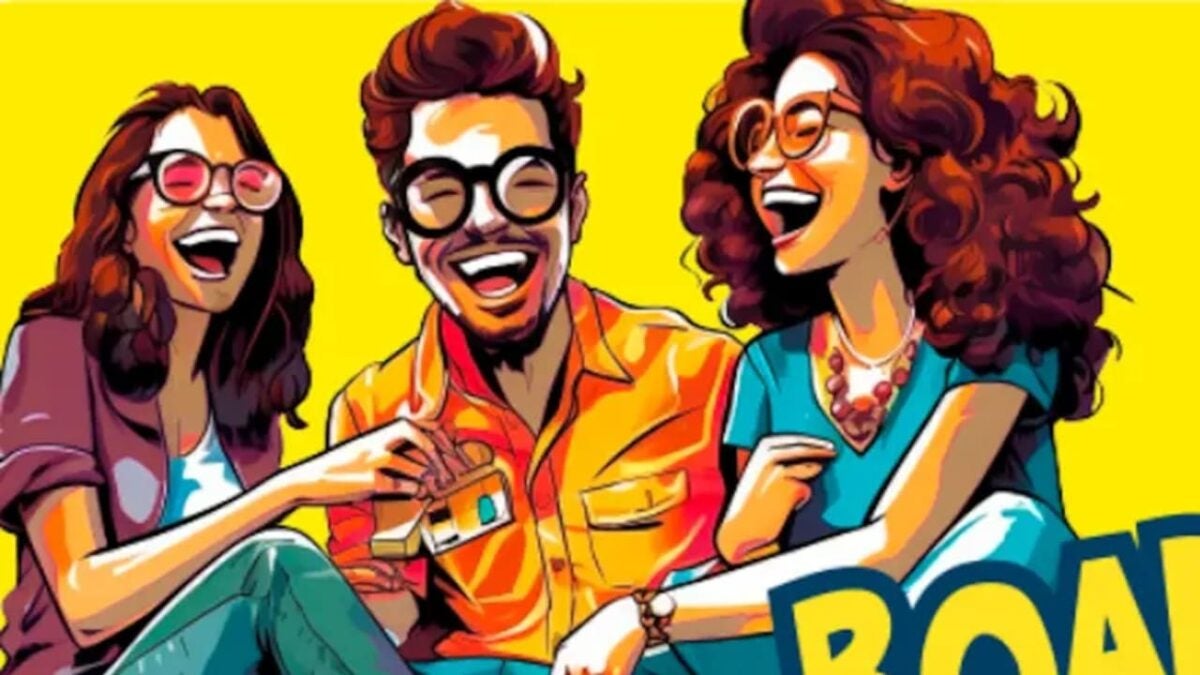
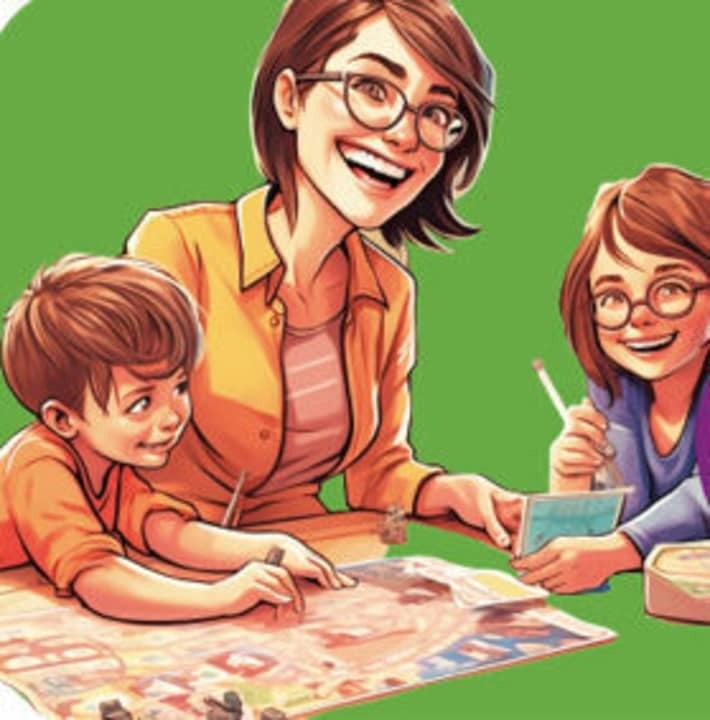
From Essen they have decided that the images of the tickets, the posters and so on are made with AI, with some frankly ugly drawings (those smiles, those six fingers) that have covered them with a patina of unprofessionalism that can take its toll.

It’s possible that Essen doesn’t ring a bell to you. At first glance, it’s just a German city without anything special, but it hides a secret not everyone knows: it’s the place where the world’s largest tabletop gaming fair has been held since 1983, spanning across numerous gigantic industrial halls where fans, stores, conferences, novelties, signings, and even exclusives gather. The problem is that this year, four decades after its start, they have messed up. Big time.

DALL-E DOWNLOAD

Artificial board games

If there’s something that sets tabletop games apart from any other hobby, it’s the fact that, if you want them to be even a bit original, they have to involve human creativity. You can’t create mechanics out of thin air; they need to have a specific art style and feel genuine. Or at least, that’s how it has been until artificial intelligence entered our lives.

When you can save a few bucks on something as crucial as the presentation of your gigantic fair, how can you resist it? Essen has decided to use AI for ticket images, posters, and other materials, resulting in drawings that are frankly ugly (those smiles, those six fingers) and have given them an unprofessional appearance that might cost them dearly.

To calm the situation, Spiel Essen has announced that they only wanted to understand the capabilities of AI and that “protecting the rights of artists is a priority.” They said this while covering the city with these deformed drawings. Could it be the worst defense ever made? Certainly, especially considering that the fair starts the day after tomorrow on the 5th, and they have run out of time to change it after the backlash on social media.

Last year, over 200,000 people attended Essen, and even more will attend in 2023. It’s hard-earned money that could have been well spent on paying an artist to create something truly original. Moreover, at the beginning of the year, it was announced that after forty years, the convention would have a mascot, Meeps, an adorable tiger created by game illustrator Michael Menzel. Now, it has disappeared from all sites to be replaced by this genuine outrage. Absolutely dreadful.

DALL-E DOWNLOAD

Are AI text-to-image generators pushing racist and sexist stereotypes?

We’ve been covering a lot of interesting AI innovations recently including the increasingly popular text-to-image generators, impressive text-to-video generators, and a brand-new translation protocol from Meta. However, as we rush head-first into the future, it is important to consider the challenges and consequences that come with new technologies. We only have to look at the chaos that has been wrought by Facebook all over the world to know that we need to take care to use new technologies safely. A new report by AI researcher Dr. Sasha Luccioni shows that this is even true for seemingly innocent tools like AI text-to-image generators such as DALL-E. Let’s check it out.

DALL-E Download Now

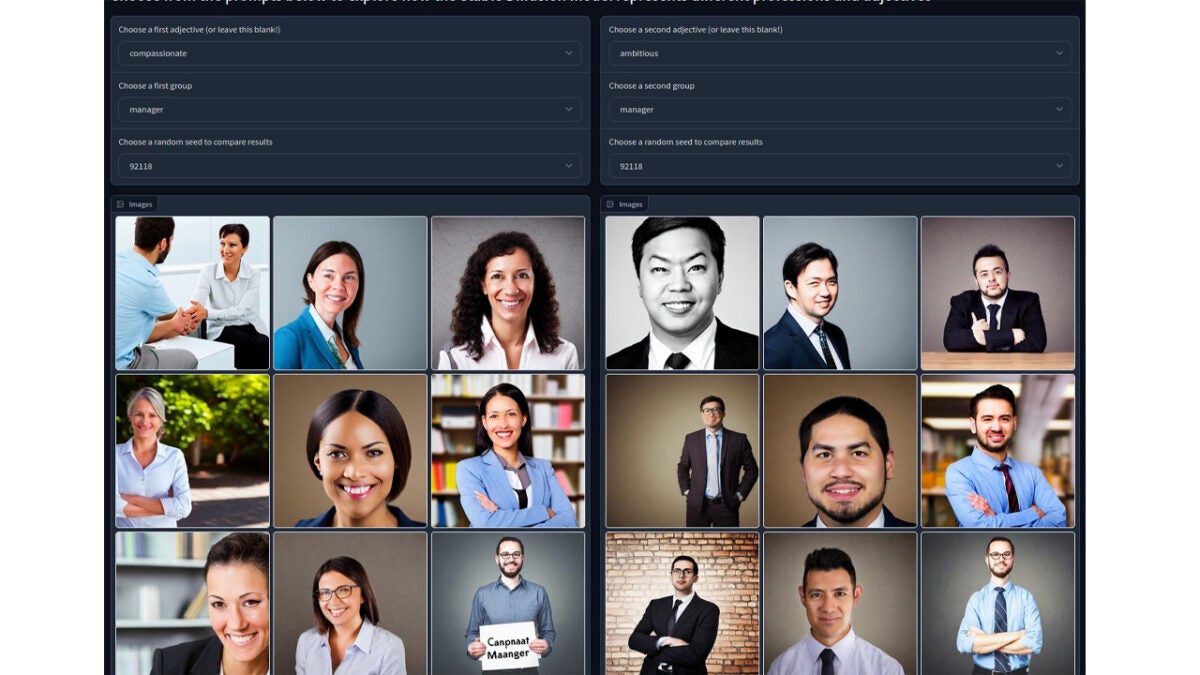
In her report for Hugging Face, Dr. Luccioni pointed out that AI text-to-image generators are reproducing harmful stereotypes related to gender and race. As you can see from the two images presented side-by-side, created by the Stable Diffusion image generator, different adjectives have strict gender associations attached to them with ‘compassionate’ resulting in generated images of women and ‘ambitious’ resulting in generated images of men.

To help further disseminate awareness of this issue, Dr. Luccioni has created a tool that users can use to explore other reproduced stereotypes attached to certain professions and adjectives. These stereotypes relate to both gender and race. The tool has a list of 150 professions and 20 adjectives to choose from.

This tool is an important step toward developing a wider understanding among society of the types of bias and discrimination found in AI and machine learning protocols that often go unseen and unconsidered. These algorithms can only make decisions and take actions based on the data that is used to train them, which means active steps need to be taken to ensure that data are truly representative and not merely reflective of the biases that have long existed in the cultures and contexts in which the data were collected. If we consider that AI algorithms are being given control over decisions affecting our lives and opportunities in all sorts of areas from education to healthcare, it is clear just how important it is to get this right.

In other recent AI news, Meta has just handed over the governance of a prominent AI framework to the Linux Foundation.

DALL-E images are coming to Shutterstock

AI text-to-image generators have been gaining so much attention and popularity recently and we have seen some of the bigger players in tech, such as Meta, breaking into text-to-video generators too. As debates rage about the legitimacy of the art they create and even the suitability of the images used to train these AI tools, the sector keeps advancing, which is what we are here to report on today. Artists can now access DALL-E’s ability to create images on Shutterstock. Let’s take a look at what you need to know.

DALL-E Download Now

Shutterstock has announced that it is extending a partnership it has with OpenAI, which is the organization behind DALL-E. The extended partnership will allow users to generate DALL-E content on Shutterstock based on certain criteria.

To facilitate this Shutterstock will launch a new tool called Shutterstock.ai. However, first, the company wants to take a hand in further training DALL-E with current Shutterstock images to help ensure that it is able to create images that will be more suitable for the Shutterstock library.

Describing the move, OpenAI’s CEO, Sam Altman said:

“The data we licensed from Shutterstock was critical to the training of DALL-E […] We’re excited for Shutterstock to offer DALL-E images to its customers as one of the first deployments through our API, and we look forward to future collaborations as artificial intelligence becomes an integral part of artists’ creative workflows.”

The move means that Shutterstock won’t be compensating DALL-E creators for work they are selling on Shutterstock but could possibly see them compensated for helping to train the tool.

In other recent developments related to DALL-E, did you know that you can now use the tool to expand the borders beyond the edges of famous paintings?

DALL-E now lets you expand the borders of famous paintings

The world is finding innovative ways to use DALL-E, an artificial intelligence platform that quickly turns your text into images. Until now, many people used it to simply conjure up pictures with brief descriptions to use in projects. Developers are now taking it further and imagining what was outside the frames of historically famous paintings.

DALL-E DOWNLOAD

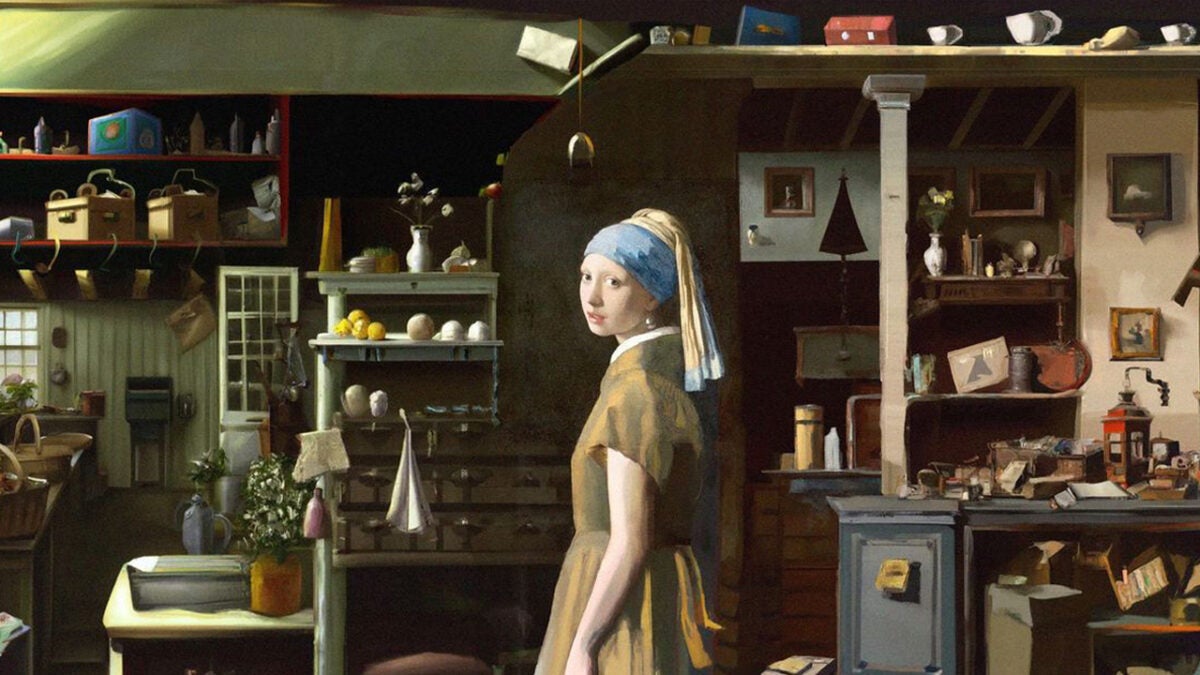
Let’s take The Girl with the Pearl Earring by Johannes Vermeer as an example. In one of the latest tweets, you can see how @_akhaliq used the new Outpainting feature in DALL-E to expand the borders of the painting. By using sections of the image and some descriptions, the program was able to simulate the surroundings using the same brush style.

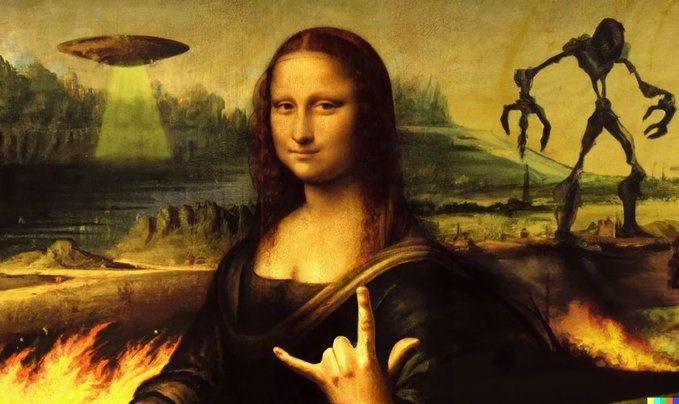
While many have been experimenting with famous paintings in this way, they can be used with any photos. There are even some that expand the logo for Universal Studios. The extra details don’t even need to be realistic, as even the Mona Lisa has some interesting sci-fi touches.

While many of these DALL-E Outpainting experiments are just for fun, it shows great potential for businesses. Game developers can quickly get a new take on a Rembrandt painting. I’m guessing this feature will also be used for the Metaverse where you can purchase new items made by the A.I. system as NFTs.
With DALL-E 2 moving into the beta phase and 1 million invites going out to test the system, you can imagine how much of a role Outpainting will play.

DALL-E invites 1 million testers READ MORE

You’ll be able to take your favorite Avenger scene and place them in new surroundings without having to digitally create them on Photoshop. It could save game developers so much time if they already have elf or warrior sprites and want to place them in a specific environment matching the style.

DALL-E will soon be available to another 1 million users

If you’ve done pretty much anything on the internet recently or been on any social network, you will no doubt have seen a fair few DALL-e creations. The AI-powered text-to-image generator has been a hit with internet folk and has already secured itself a place in the internet meme culture hall of fame. Access to the tool has been limited, however, but now it looks like 1 million more people are going to be able to use the tool. Let’s take a look at what is happening.

DALL-E Download Now

The company behind DALL-E, OpenAI, calls itself an AI research and deployment company that is on a mission to ensure that artificial intelligence benefits all humanity. To back this mission up, OpenAI has put out a blog post announcing that the company is going to invite 1 million users from the DALL-E waitlist and give them free credits that will refill every month.

All DALL-E users will get 50 free credits in the first month and will then get 15 free credits every month after that. What is cool is that DALL-E users will own all the commercial rights for the images they create using the tool. If you’re not familiar with the tool, OpenAI describes it like this:

“DALL·E allows users to create quickly and easily, and artists and creative professionals are using DALL·E to inspire and accelerate their creative processes. We’ve already seen people use DALL·E to make music videos for young cancer patients, create magazine covers, and bring novel concepts to life.”

The company’s claims are true as well because, as we have already mentioned, people have really been going to town coming up with interesting image prompts to feed into DALL-e and its less powerful little sibling, DALL-E Mini. You can see some of the great examples in the video below:

The real significance of this move is that it means the tool DALD-2 is moving into the beta testing phase, which means it moving along its development path towards a full general rollout.

If all this sounds like something, you are interested in then you should add your name to the waiting list now. Once you’ve done so you might want to check out some of the compelling images we created when we got our hands on the DALL- Mini tool.