These are the most read entries on Wikipedia in 2023: atomic bombs and much more.

If we go by the 25 most viewed Wikipedia articles in 2023, people have been very concerned this year about two key issues: the atomic bomb and…

If you want to know what most people are searching for on the internet, maybe the total views on Wikipedia could give you an idea of what has been a trending topic this 2023, a year marked by wars, inflation, and numerous scandals.

Wikipedia DOWNLOAD

If we go by the 25 most viewed Wikipedia articles in 2023, people have been very concerned this year about two key issues: the atomic bomb and artificial intelligence. The first issue makes sense and it’s not because of Russia or Israel’s fault.

What has been the most searched on Wikipedia this 2023?

At the top of the list, as expected, is ChatGPT, with a whopping 49.4 million page views. OpenAI’s chatbot has appeared on multiple lists this year, including the favorite apps list for Android users.

And it’s not just on the English Wikipedia. The Wikimedia Foundation stated that ChatGPT racked up over 78 million page views across all languages.

There are some surprising and some not-so-surprising things about this year’s top Wikipedia articles. While top movies of the year usually receive many clicks, people worldwide wanted to know more about J. Robert Oppenheimer, the director of the Manhattan Project’s research on the atomic bomb.

Oppenheimer held the seventh position among Wikipedia entries with the most clicks, while the Oppenheimer movie itself landed in the fifth spot. The Barbie movie secured the 13th position, with nearly 19.8 million visits.

Movies claimed seven out of the top 25 spots. Among them was the sequel to Avatar: “The Shape of Water” by James Cameron, the grand science fiction production featuring blue cats and humans, at position 20.

Of course, the celebrities also grabbed several top spots. Swifties worldwide propelled Taylor Swift to the 12th position, with 19.4 million visits. Argentine footballer Lionel Messi nearly hit 16.6 million visits.

If you’re curious, here are the 25 most-read Wikipedia articles in 2023.

From Epic to Brief: Wikipedia’s Longest and Shortest Articles Defy All Predictions

Since the page on Afghanistan was created on January 16, 2001, the first article in history, more than 58 million articles have been created. And their records are staggering.

It sounds like the typical concept advertised in American magazines in the 1950s: In the future, everyone will have access to all universal knowledge on one screen! And yet Wikipedia exists. It is a miracle, in a way, and there is much to thank the collectivist Internet of the beginning of the century, because now we would not be able to do something similar (maintain it, yes, but create it from scratch?). Since the Afghanistan page was created on January 16, 2001, the first article in history, more than 58 million articles have been created. And their records are staggering.

Wikipedia DOWNLOAD
A free program for Windows' by Wikipedia Foundation

Wiki wiki scratch

You may have ever wondered what is the shortest article in all of Wikipedia (being considered a Good Article by the web): it is about Ydalir, a place that appears in some Norse poems and that nowadays, supposedly, is a town in Scotland. The shortest unrevised article, currently, is the one by Maria Amor Torres, which reads “She is a woman born in the Philippines”.

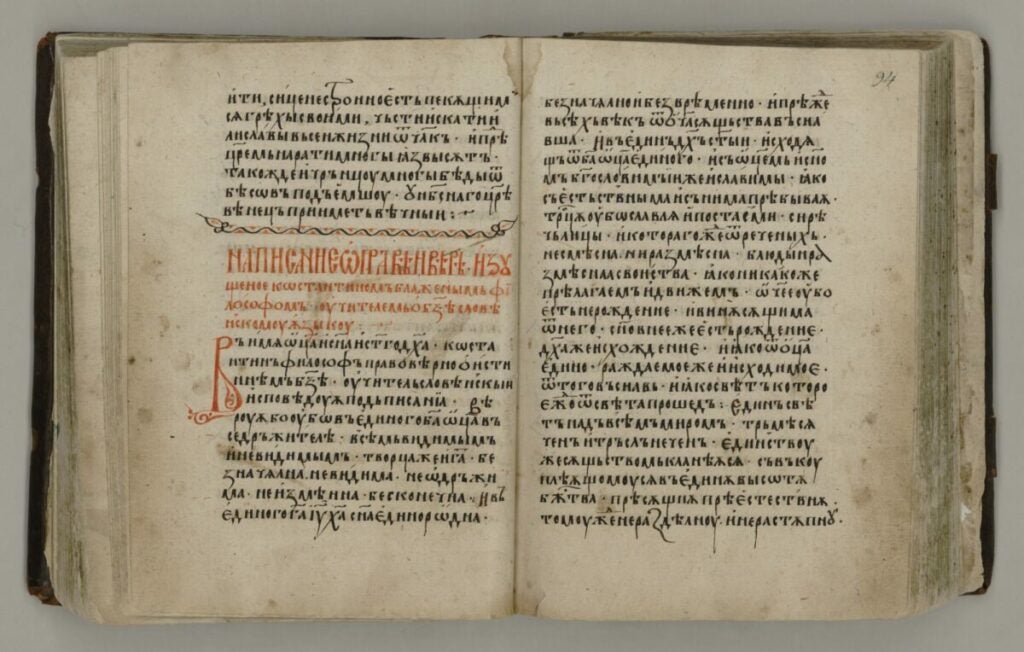
But what about its counterpart, which articles are longer than a day without bread? Well, you may be surprised because the subject is not what you would call fun, but… a list of glagolitic manuscripts, from the 10th to the 21st century. Out of lists we have to go to, of course, soccer. More specifically, the page dedicated to Dynamo Berlin. It may not be the most popular team in the world, but it is certainly the most dedicated. Try to read it: you won’t finish.

For its part, the longest biographical page, and without insults in between, is that of Boris Johnson (the way things are: there is a lot to cover in the time he was governing the United Kingdom). And the most visited article? Unsurprisingly, Wikipedia’s own, followed by Facebook and YouTube. In terms of people, Donald Trump and Elizabeth II, although the record is much sadder: on the day of his death, almost ten million people visited Chadwick Boseman’s profile.

A curiosity: the article with the longest name? It is a joke (but reality-based) scientific article entitled “Cneoridium dumosum (nuttall) collected by Hooker F. on March 26, 1960 at an elevation of about 1450 meters at Cerro Quemazon, 15 miles south of Bahia de Los Angeles, Baja California Mexico, Apparently for an extension to the southeast of about 140 miles.” Who said being a Wikipedia editor was easy?

Wikipedia DOWNLOAD
A free program for Windows' by Wikipedia Foundation

Some of the links added in the article are part of affiliate campaigns and may represent benefits for Softonic.

Wikipedia might set the stage for future court cases and legal proceedings

While many people turn to Wikipedia for insightful information, many of us wouldn’t regard it as completely reliable. Despite our concerns, it seems that Wikipedia has some influence in the courtrooms and with citations, a group of researchers discovered. If things continue as planned, it may become a source of info that lawyers can use with their cases.

Wikipedia DOWNLOAD

It has long been contended that writers who create content with detailed facts shouldn’t use Wikipedia as a source of information. With the way things are going now, that could change. Imagine if lawyers used the online database to quote previous cases as arguments in court.

MIT’s Computer Science and AI Laboratory department has Neil Thompson as one of the members who decided to perform a study on the matter. Since you hardly read about Ireland court cases on Wikipedia, they decided to target that location. The plan was to see if adding legal information about past cases would set a precedent for citing Wikipedia sources.

With several researchers at the help, the team created about 154 new Wikipedia entries that were curated by the Wikipedia editors. Of course, the latter knew nothing about the project. The research team used detailed facts and information about Irish court cases but only loaded about half of the completed assignments.

Wikipedia might set the stage for future court cases and legal proceedings

Not only did the results appear as number one rankings on search engines, but the use of Wikipedia citations in Ireland court cases went up by 20%. It was mostly in the lower courts, which is probably a reflection of how overwhelmed those judges and lawyers are with work. With simply less time available, Wikipedia was the place to go for information on past cases.

Here’s the best part. Instead of making a ruling that no courtroom uses Wikipedia as a source, they’ve gone in the opposite direction. The research team proposed that Wikimedia, the parent company, employ legal experts to check any articles involving past cases and make corrections where needed. Basically, this condones using Wikipedia in the courtroom simply based on the fact that all the details have been confirmed by experts.

Will that change the frame of mind for content agencies and everyone else who refuses to use Wikipedia as a source? Will it set a precedent for court cases to come? With Wikimedia turning to Meta for help with misinformation, it may just do so.

Will Wikipedia turn to Meta’s AI for help? READ MORE

Will Wikipedia turn to Meta’s AI for help fighting misinformation

Wikipedia is like a central hub for all of the world’s collected information. Or at least that is what it is supposed to be. Sometimes people will post fake or inaccurate information to Wikipedia, which can result in biased information misrepresenting the truth. Obviously, Wikipedia wants to stop this happening and has turned to Meta for help. After all, Meta’s Facebook has had well-documented fake news problems for years, so, theoretically, Meta could be the perfect partner to help keep fake news and misinformation off Wikipedia. Let’s take a look.

Wikipedia Download Now

The Wikimedia Foundation, which is the non-profit organization that administers Wikipedia has teamed up with Meta in order to use a Meta AI model to fact-check the references on Wikipedia articles. Wikipedia sees a whopping 17,000 new articles posted online every month meaning it is beyond the capabilities of Wikipedia volunteers to stay on top of the references in all of those new articles.

The footnotes and citations are an incredibly important part of Wikipedia articles because they are where the content gets its authority from. If facts and claims presented in Wikipedia articles cannot be backed up with reputable sources, then the information presented could be made up.

This is extremely important in the case of Wikipedia because so many people use it but not many will actually go on and check the references. This means Wikipedia users are mostly taking Wikipedia entries at face value, so if they are no reputable fake news will find its way into the common discourse.

The model is based on a dataset comprising of over 134 million public web pages. What is impressive about the AI model is that if it does detect that a Wikipedia article has inaccurate or redundant references it will actually recommend other useful sources that could be used to verify the facts presented in the Wikipedia article.

This does seem to be positive news in the war against fake news and disinformation. However, the flip of this is that it marks another step for big tech to become the shining light that the rest of society follows. There are clear problems awaiting if we go down that second path without questioning and holding to account those who are in control of these types of algorithms, particularly if there is no meaningful human oversight of the actions these AI models take.

Although this project is still in the research phase and not actively updating content on Wikipedia at the moment, this is the second big Meta AI update from the last few days with Meta recently launching an impressive translation AI.

Google reaches agreement with Wikipedia to pay for content to go in new “Knowledge Panels”

Wikipedia is one of, if not the most useful and impressive free online tools that has ever existed. Open-source knowledge that is free to access makes us all smarter. Moderating all that content, however, and keeping the site going costs money and, just like with any service that is offered for free, the Wikimedia Foundation that is responsible for running Wikipedia needs to make money. That is why a partnership deal between Google and Wikimedia is good news.

Wikipedia Download Now

The announcement centers around Wikimedia Enterprise, which is a recently launched commercial product from Wikipedia that offers commercial services to companies who use Wikipedia and Wikimedia projects on a large scale. Google has agreed to pay for the privilege of using Wikipedia content in new search “Knowledge Panels”.

Wikipedia announced news of the deal in a Wikimedia blog post. The post didn’t mention the terms of the deal but it is clear that this isn’t a charitable donation by the search giant. As Google adds more and more widgets to its search results that pull more and richer data and information from websites, fewer and fewer users will actually click on links and go to the webpages that come up in search results. This, in turn, harms those websites that then see less traffic.

Of the deal, Lane Becker, Senior Director of Earned Revenue at the Wikimedia Foundation said:

“Wikimedia Enterprise is designed to meet a variety of content reuse and sourcing needs, and our first two customers are a key example of this. Google […] leverages Wikimedia content in very distinct ways, whether it’s to help power a portion of knowledge panel results or preserve citations on Wikipedia… We’re thrilled to be working with them both as our longtime partners, and their insights have been critical to build a compelling product that will be useful for many different kinds of organizations.”

The blog post also contained details of another commercial partnership between the Wikimedia Foundation and the Internet Archive, which runs The Wayback Machine, a website that saves snapshots of websites so people can go back and see what the internet was like at certain times during history. This one, however, is not a financial partnership as both websites are a part of the broader free knowledge movement and support each other’s objectives.

This is great news for Wikimedia and internet users everywhere. It follows and goes beyond making up for recent news that Wikipedia has stopped accepting cryptocurrency donations.

Wikipedia has stopped accepting cryptocurrency donations

After an intense voting session on the potential removal of cryptocurrency in donations to Wikimedia’s services, the nonprofit organization finally decided to discontinue the direct acceptance of crypto as a means of donating. It has since closed its Bitpay account and will be monitoring the situation for feedback.

Wikipedia DOWNLOAD

Wikimedia Foundation is the owner, operator, and host of Wikipedia, the popular and free open online encyclopedia maintained by volunteers worldwide. Since Wikipedia is largely funded through donations, Wikimedia has had to adjust its supported payment methods based on what its current donor communities prefer and have access to. This time, they’d rather shut down the cryptocurrency movement in their circle.

Wikimedia had first started directly accepting crypto way back in 2014 when its users had requested it. However, in the wake of the issues surrounding cryptocurrency—mainly concerning its negative impact on our environment—the organization’s numerous users and volunteers eventually banded together back in January 2022 to request its removal from Wikimedia’s accepted forms of donation.

After months of voting and debate, 71% of the user votes were in favor of Wikimedia stopping the direct acceptance of cryptocurrency—with 232 in favor of the ban while 94 were against. Wikimedia announced that it will be closing its Bitpay account so that it can no longer directly accept crypto donations. Additionally, the foundation mentioned that it will continue to be flexible and responsive to the needs of its volunteers and donors.

While users can no longer easily support Wikipedia with cryptocurrency, this doesn’t mean that the option is fully off the table. Wikimedia has simply cut off its direct route. You can still use crypto—although it will require some conversions to be accepted. If you’re interested in learning more about news on cryptocurrency, here’s a crypto hack scandal on Axie Infinity and Opera for Android now featuring an Ethereum Layer 2 Wallet.