We have Marvel everywhere. Not just in comics (in fact, perhaps less in comics than anywhere else), but in movies, series, amusement parks, and pop culture in general. There is no one who doesn’t know Iron Man, Spider-Man, or Hulk, and the proof of this is how well all their video games continue to perform, from Marvel Rivals to the well-known Spider-Man by Insomniac. However, this love story between superheroes and video games doesn’t come from now, but from a whopping 44 years ago, when Atari […]
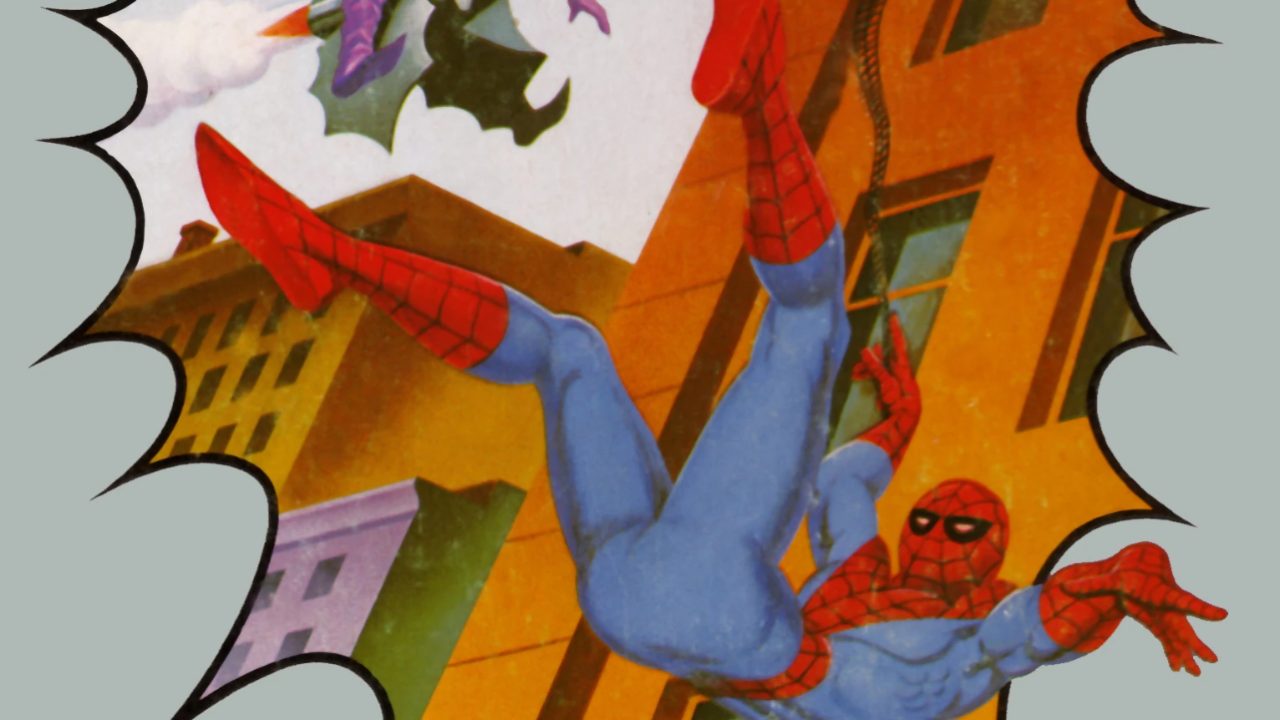
We have Marvel everywhere. Not just in comics (in fact, perhaps less in comics than anywhere else), but in movies, series, theme parks, and pop culture in general. There is no one who doesn’t know Iron Man, Spider-Man, or Hulk, and the proof of this is how well all their video games continue to perform, from Marvel Rivals to the well-known Spider-Man by Insomniac. However, this love story between superheroes and video games does not come from now, but from a whopping 44 years ago, when Atari received the game of a certain web-slinger that became one of the most popular of the time… although we would never hear about its creator again.
Do what a spider does
You probably know Parker Brothers (now Hasbro) for their board games, such as Monopoly, Clue, Risk, Ouija, or Scrabble, but back in the day, trying not to fall behind, they also opened a branch dedicated exclusively to video games. And they were not exactly small: in the final half of 1982, they earned 74 million dollars thanks to their Star Wars games or this Spider-man, and somehow became giants in the industry, although they gradually abandoned it.
The challenge was not small: to take a character with 20 years of history (and quite a convoluted one, too) and turn him not only into a comic book hero but also into a pixelated one. For this, they enlisted the help of Marvel and created an alternative story in which Norman Osborn becomes the Green Goblin again and escapes from prison with the intention of blowing up the Empire State Building with a super bomb. Will he be able to catch him before he succeeds? Well, that’s where the player comes in: the whole game involves climbing a building, disarming bombs, and fighting against some enemies that appear randomly without falling.
Ah, yes: in addition, you had a fluid meter to make webs (with which you could move between different parts of the building), and if you ran out of it, you would fall to the ground and lose a life. The classic Parker luck. The curious thing is that the game’s director, Laura Nikolich had no intention of ending up making video games. In fact, she studied computer programming and ended up working at a nuclear plant programming the systems. In other words, a fully-fledged nuclear engineer… until Atari contacted her. Partly to meet a female quota, and partly because she was one of the few people at that time who really knew how to program.
In fact, he had absolute creative control, and even before his death in 2024, he claimed that this was the best stage of his life. However, he wasn’t necessarily a fan of comics: if the Green Goblin appeared in the game, it wasn’t because he was a Marvel fan, but because it was much easier to include him as a character, since he used the same algorithm as Spider-Man. Believe it or not, it was a huge success, and Atari 2600 fans still hold it dear in their hearts.
And so, if she managed to make it big, did Nikolich, our favorite gaming nuclear engineer, have a long career in video games? Well… As you might guess from the date, no. In 1983, E.T caused the industry crash, and she was one of the first to be let go from the offices, while working on a Care Bears game that would never see the light of day, according to her, because of marketing. We only heard from her once more, in 1984, when she directed the ColecoVision version of Frogger II. From there, she disappeared. Well, more or less: two of her children work in the industry, one at DICE and another at Bungie. In the end, the pixels as fists were worth something more than just a good memory.
The original version of System Shock 2, released in 1999, will be removed from Steam on October 10, 2025, according to an announcement from Atari, owner of Nightdive Studios. Although the game will be taken off the platform, those who already own it will still be able to download and play it from their library. On the other hand, all current and future owners of the new remastered edition, System Shock 2: 25th Anniversary, will receive the original version for free. Buy it before it goes out of print This decision has sparked a mix of reactions among fans. The original version of System Shock 2 […]
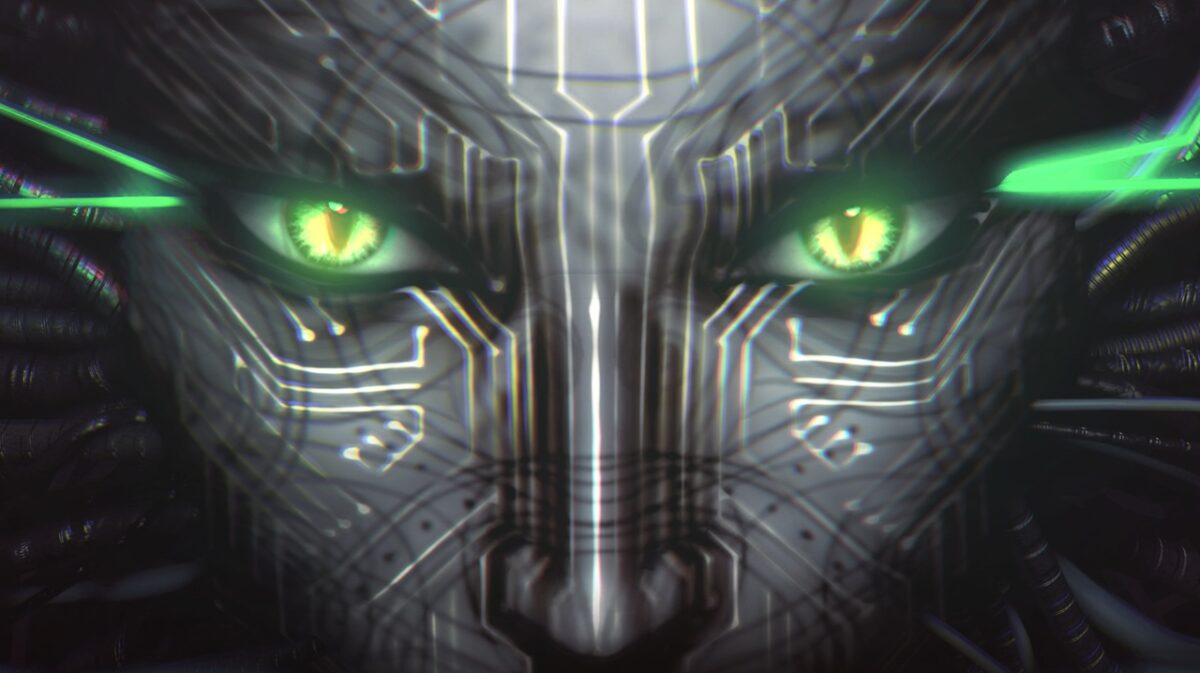
The original version of System Shock 2, released in 1999, will be removed from Steam on October 10, 2025, according to an announcement from Atari, owner of Nightdive Studios. Although the game will be removed from the platform, those who already own it will still be able to download and play it from their library. On the other hand, all current and future owners of the new remastered edition, System Shock 2: 25th Anniversary, will receive the original version for free.
Buy it before it gets discontinued
This decision has sparked a mix of reactions among fans. The original version of System Shock 2 usually costs €10, and is often found on sale for much lower amounts, such as €1 during Steam sales. In contrast, the remastered edition generally sells for €30€, which raises the question of whether the additional cost justifies the improvements. However, experts recommend the new version due to its superior graphics quality and performance.
A highlighted review from PC Gamer gave the remaster a rating of 85%, describing it as “a perfect complement” to the remake of System Shock 1. Critic Ted Litchfield emphasized that the remaster is the best way to experience this classic title today. Therefore, although the original version has an appeal due to its low price, many players might choose the enhanced experience offered by the remastered edition.
It is important to highlight that the original version of System Shock 2 is still available on GOG, where it is part of their Preservation Program. There are still no signs that it will be removed from that service, which provides an alternative for those who want to ensure they maintain access to this classic. In this context, it may be a good opportunity to acquire it before it is removed from Steam.
Fresh out of the oven: Missile Command Delta presents itself as an innovative reinterpretation of the classic 1980 Atari arcade game, known for its gameplay focused on missile defense during the Cold War. This new installment transforms the frantic action of the original game into a turn-based tactical and narrative experience, offering a remarkable freshness after years without capitalizing on the franchise. Dual gameplay Players embody Skye, a teenager who, along with her friends, ventures into a mysterious abandoned bunker. The plot revolves around the emergence of a missile program that, […]
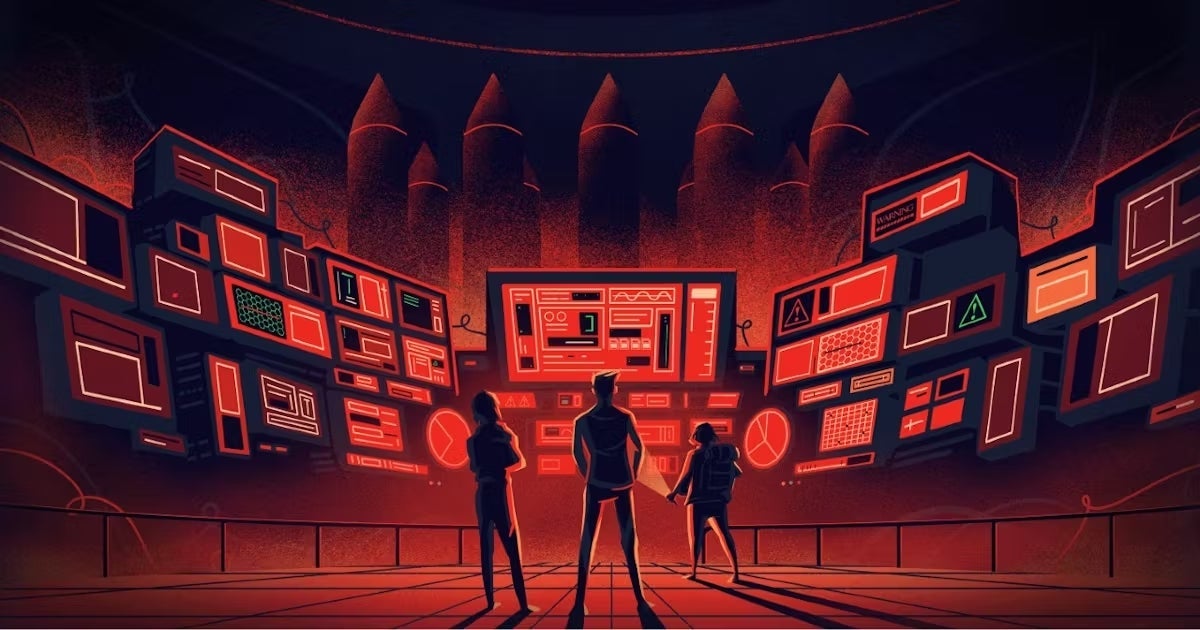
It’s hot out of the oven: Missile Command Delta presents itself as an innovative reinterpretation of the classic 1980 Atari arcade game, known for its gameplay focused on missile defense during the Cold War. This new installment transforms the frantic action of the original game into a turn-based tactical experience and narrative, offering a remarkable freshness after years without capitalizing on the franchise.
Dual gameplay
The players embody Skye, a teenager who, along with her friends, ventures into a mysterious abandoned bunker. The plot revolves around the emergence of a missile program that, when activated, unleashes a series of events filled with tension, distrust, and paranoia, very much in line with the legacy of the Cold War. This atmosphere of isolation is reinforced as the characters must solve puzzles and unravel mysteries related to a strange recruiter named Khan.
One of the most intriguing features of Missile Command Delta is its dual gameplay structure. The classic sections of Missile Command are integrated as turn-based tactical battles where players must calculate movements, resources, and manage their missiles strategically. This mechanic not only keeps the essence of the original title alive but also adds a level of challenge and urgency to the experience, similar to what one might find in escape games.
The design of Delta allows for the tensions of the narrative and tactical mechanics to intertwine, creating an immersive experience that plays with the paranoia and sense of urgency of the bunker environment. With this release, developers Mighty Yell and 13AM Games seem to have found a promising formula to revive arcade properties that had faded into oblivion, offering players an exciting and thought-provoking proposal.
It’s not easy to take a game that has captivated you and cram it, in any way, into a console with less power than the original, usually in an extremely short period of time and with a small team. Because, after all, who is going to buy a PS5 game on Switch? Who is going to play a classic from PC on the 3DO? Who is going to play Resident Evil on mobile? The answer is “More people than it seems,” and that’s why these atrocities keep coming out and continue to be profitable… even if they turn out badly […]
It’s not easy to take a game that has captivated you and cram it, however possible, into a console with less power than the original, usually in an extremely short period of time and with a minority team. Because, after all, who is going to buy a PS5 game on Switch? Who is going to play a classic from PC on the 3DO? Who is going to play Resident Evil on mobile? The answer is “More people than it seems,” and that’s why these atrocities keep coming out and remain profitable… even if they turn out poorly.
Today we are going to take a look at 7 absolute horrors in video game history, 7 games that were ported and turned out so badly that we all decided to pretend they don’t exist. But oh, they do exist. And yes, most of them, in some way, were profitable… even if it was just because they were so cheap.
7-Arkham Knight (PC)
The classic, right? Somehow, Iron Galaxy Studios are still open after perpetrating what is possibly one of the best examples of why it’s not necessary to port everything. In 2013, their version of Batman: Arkham Origins already made many angry because it was full of bugs and issues, which they themselves responded shortly after by saying… they were not going to fix. And that’s how the game remained, half-finished.
But the worst was yet to come: in 2015, they released the PC port of Batman: Arkham Knight and the result was absolutely disastrous. So much so that Warner Bros had to withdraw the game and apologize (although, in Iron Galaxy’s defense, it should be noted that the company was fully aware that this version had issues and released it anyway). They took four months to fix its errors and re-release it, but this time they placed the responsibility on the shoulders of the big guys, Rocksteady (which, on the other hand, is what should have happened from the beginning). A bat-horror.
6-Spider-man 2 (PC)
But frankly, I think there are even worse ports than Batman: Arkham Knight, which have simply been forgotten because they belong to another time. I’m referring to Spider-man 2, the best game of the spider until the PS4 Spider-man came along, a title from 2004 that was a hit on PS2, GameCube, and Xbox and that, of course, had its corresponding port to PC. Well, more or less.
How is it possible that this port was released for sale? Not only does it run at 12 frames per second, but also, the graphics are infinitely worse, the gameplay is unmanageable, there are no textures, and the fights are like schoolyard brawls… It was a completely different game in which, to interact with enemies and buildings, you had to… click on them. No one understood anything, no one was happy at all with the result, and the studio that made it, Fizz Factor, closed in 2009. It’s hard to feel sad about that.
5-Marble Madness (Game Boy Advance)
You might be thinking “Marble Madness? The arcade game from 1984? How can you mess up something like that?” Well, even though the game had appeared on every console imaginable (from NES to Mega Drive), when it came time to port it to Nintendo’s handheld, which was receiving dozens of games of all kinds weekly, they didn’t overthink it: they bundled it with another classic, Klax, in a cartridge that offered two for one.
Not only that: they also decided that three weeks was more than enough to make a port like this. You can imagine the result: incomplete screens, physics that did not reflect reality, no animations or improvements, and, even worse: three levels were missing. Considering that the original game had six, it can be deduced that exactly half was missing. Spectacular work.
4-Doom (3DO)
By now we already know that Doom has been ported to absolutely everything, including printers and smart refrigerators. If it has a screen, it has a Doom. And of course, among all these versions, there had to be a terrible one. This is the case of the port for 3DO, the console that Panasonic launched in the mid-90s and that didn’t end up interesting anyone despite being considered “product of the year.” As you can imagine, Logicware and Art Data Interactive didn’t exactly put much care into it.
When playing this Doom, you had four screen options: the smaller the screen, the higher the frame rate. The larger the screen, the lower. So to speak: if you wanted to see what was happening on the screen, you couldn’t understand anything that was going on. The chaos was such in its creation that the soundtrack ended up being performed by the CEO’s rock band, the only quality that can be considered hopeful in this catastrophe.
3-Pac-man (Atari 2600)
In 1980, Pac-man consumed any kind of conversation about video games: there was only that yellow ball eating pellets and dodging ghosts through various mazes. Logically, home consoles also wanted their chance. The first to try was Atari 2600, on April 3, 1982 (referred to by Atari itself as “National Pac-man Day”), and it became the most successful game in history after selling eight million copies.
Not bad for a port that was made in just six months by programmer Tod Frye and that was, frankly, terrible. In fact, it barely resembled the original game, its graphics were embarrassing: not even the ghosts had different colors, the mazes were different (much simpler), there were no objects to collect and, of course, no music of any kind when completing a level. If it is in the number 3 spot, it is because, frankly, there were still four years until the NES was released and the world did not know that things could be done better.
2-Resident Evil 4 (Zeebo)
Zeebo was a console exclusive to Brazil and Mexico with very, very little graphical power that decided, why not, to port Resident Evil 4 in a version that took up 7 Mb. Yes, 7 Mb. As you can imagine, the speed at which it moved was reminiscent of PlayStation times, the character models were polygonal, there wasn’t a single cutscene, the music played in Midi… In short. A horror in every way, that 16 years later is still one of the greatest atrocities in the history of video games.
The mechanics, however, were those of Resident Evil 4 Mobile Edition, although there are missing missions, the soundtrack is different, and the Ganados have blue skin for some reason. In 2011, Zeebonet stopped functioning and the game could no longer be downloaded, but there is enough evidence across the Internet to assure us that it was a game that was born a zombie.
1-Street Fighter II (ZX Spectrum)
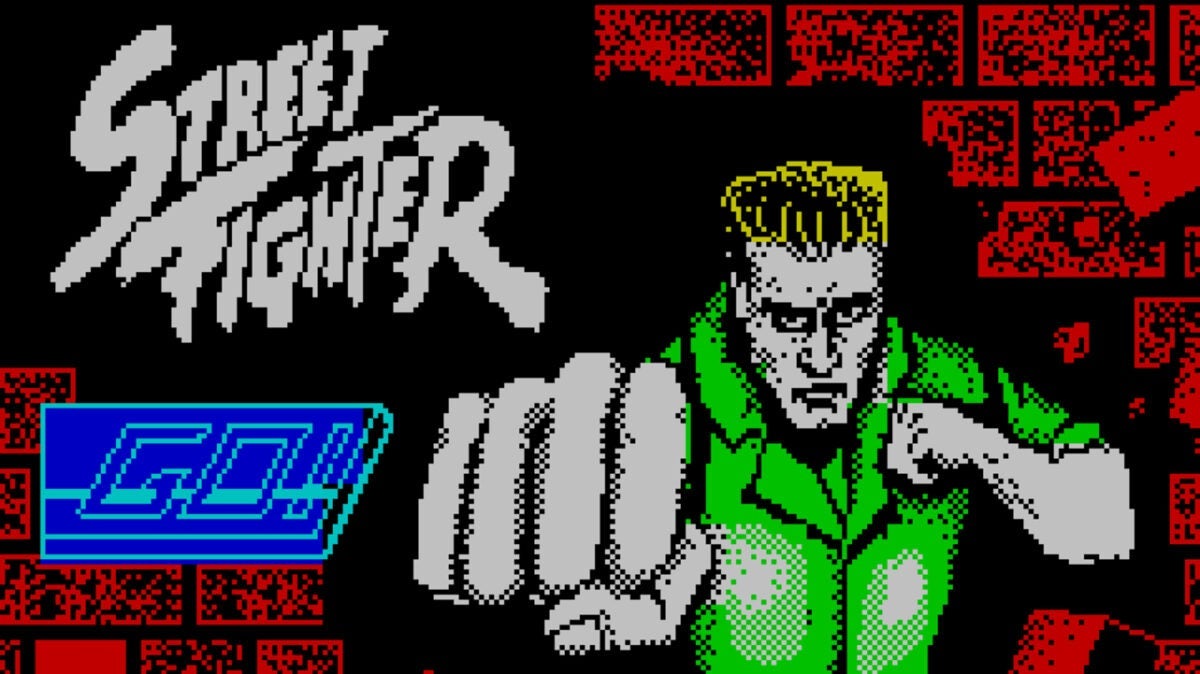
When you become an adult, you learn that you have to know what your limitations are. That, no matter how hard you try, you won’t be able to achieve everything or do everything correctly. And that’s perfectly fine, it’s okay, we must embrace our imperfections. ZX Spectrum completely ignored this rule and released its own version of Street Fighter II in 1992. And it was dreadful, even worse than the Commodore 64 version.
Only two colors on screen and their movements were extremely slow (perhaps one or two frames per second) made the game absolutely unplayable. Yes, a technical achievement to bring Street Fighter II to ZX Spectrum, but it wasn’t necessary. There are those who love this version madly, as the greatest achievement the device ever reached, but honestly, who thinks of this when thinking of Street Fighter? A true embarrassment.
By now, we should all know that the decline of Atari and the first major video game crash was caused by a combination of problems (including uncontrolled growth and reckless spending) that, to summarize, were exemplified in a single cartridge: E.T., a video game that was such a failure that, along with other unsold titles, ended up being buried in the New Mexico desert. 1982 and Steven Spielberg’s extraterrestrial became part of the dark legend of the industry… And yet, in the long run, it wasn’t even the worst […]
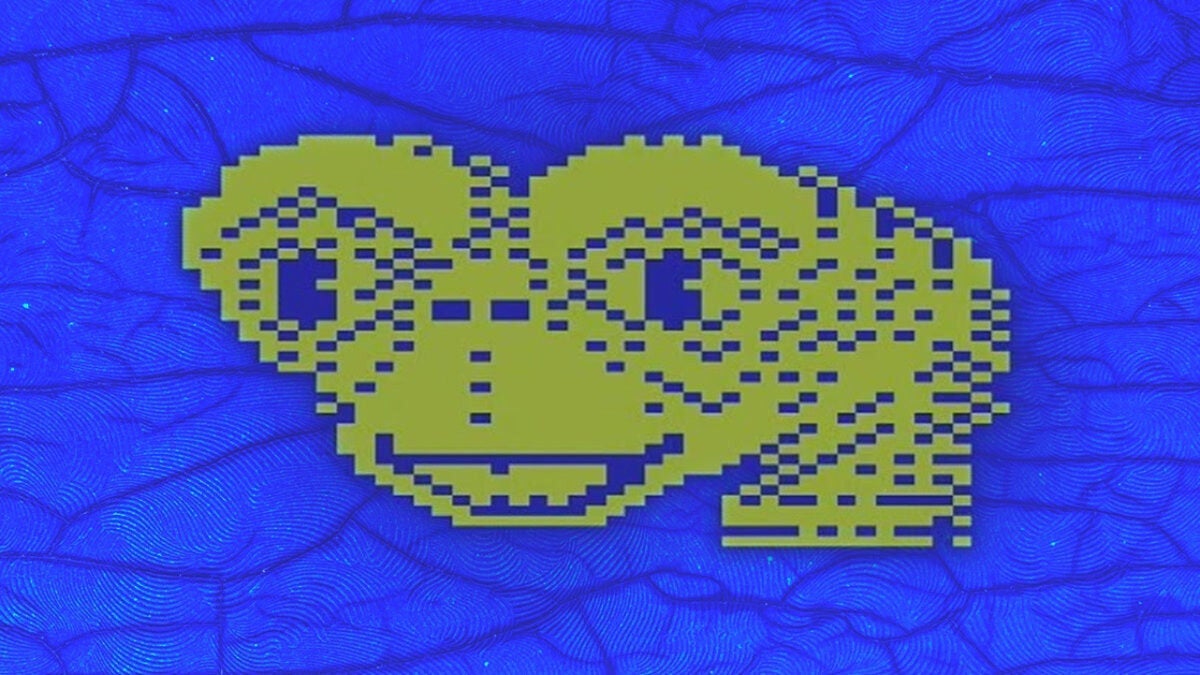
By now, we should all know that the decline of Atari and the first major video game crisis was caused by a combination of problems (including uncontrolled growth and reckless spending) that, to summarize, were exemplified in a single cartridge: E.T., a video game that was such a failure that, along with other unsold titles, ended up being buried in the New Mexico desert. 1982 and Steven Spielberg’s extraterrestrial became part of the industry’s dark legend… And yet, in the long run, it wasn’t even the worst game that adapted that movie.
In fact, some say that the big problem with Atari’s E.T. is trying to play it without reading the instruction manual. Once read and understood, it’s not that it’s good, but at least it’s playable and makes some sense. And we tend to forget it amidst the laughter and pop pointing, but initially, it was a success and sold more than a million units. Not bad for a game that was made in just a month (perhaps the fastest-made mainstream title in history) and that could have been a simple remake of Pac-Man, as Spielberg wanted, but it tried to go further.
The final outcome is more or less known to everyone: the video game industry experienced its biggest crisis to date, and all the consoles that tried to compete at that time (Intellivision, Colecovision, Atari 5200) couldn’t recover. For a year, until the release of the NES, the industry was considered a risk for anyone who wanted to invest in it. And over the years, who was put in the crosshairs? Indeed: E.T.
No one in their right mind would think of repeating the fiasco and re-adapting the movie in question, right? If you answered yes, then you don’t understand Hollywood’s imperative need (and the entertainment industry in general) to desperately build franchises. On one hand, they were trying to pressure Spielberg to make a sequel, but luckily he knew how to destroy the idea from its origin by proposing an absolute perversion of the original.
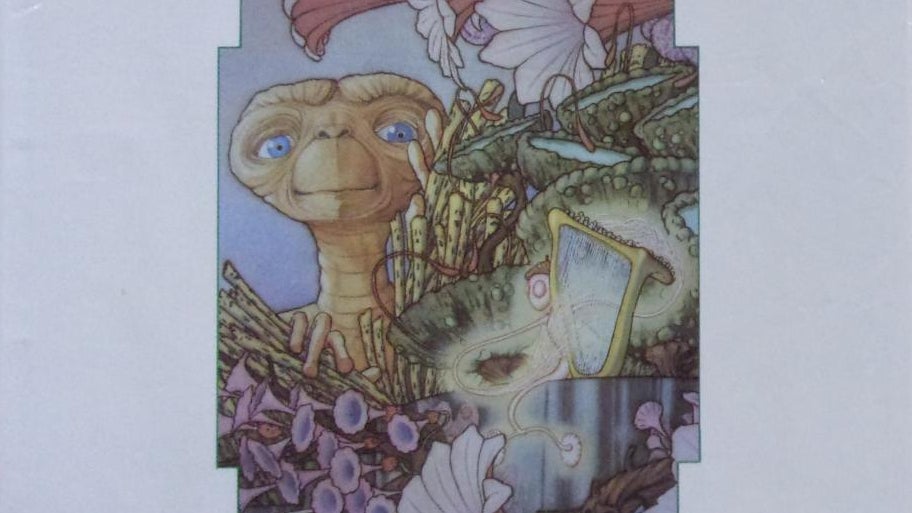
On the other hand, William Kotzwinkle had written an official sequel, The Book of the Green Planet, in which E.T. arrived at his planet, Brodo Asogi, where he was sent into exile and broke all the rules to try to return to Earth, where Elliott had already become a teenager and was not interested in his friend’s matters. This literary sequel led to an attraction at Universal Studios Florida, where the biggest innovation was that E.T. said goodbye to people by saying their name. If they were exploring sequels, books, and attractions, how could there not be more video games?
Trying once again
In 1983, during the height of the crisis, Atari 2600 tried to milk the cow with E.T. Go Home!, a video game originally titled UFI and His Dangerous Mission, which they renamed hoping someone would take the bait. It was, indeed, a disaster, but it seems it didn’t give Atari enough clues that the franchise simply wasn’t profitable, because shortly after, E.T. Phone Home! was released, in which Elliott had to find the pieces his friend needed to go home. You could finish it in seven minutes, and it was as fun as staring out the window, only with an irritating soundtrack added.
It took almost two decades for someone to dare to release something related to the cursed franchise again. In this case, it was Game Boy Color, which with E.T.: Escape from Planet Earth revisited the same concepts as the previous disasters. Once again, the task was to find the different parts of E.T.’s communicator so he could leave Earth, although this time they managed to create something a bit different: a basic strategy game based on mazes that… Frankly? It could be worse. As was demonstrated later, on the other hand.
In 2002, a game for PlayStation (E.T.: Interplanetary Mission) was released, filled with puzzles for children, which didn’t hide much more inside but was, at least, playable. In the last days of Game Boy Color, however, a title arrived that divided the (few) who played it: E.T. and the Cosmic Garden, in which our favorite extraterrestrial had to plant, water, and keep at bay the bugs that wanted to eat his plants. Just what one imagines when thinking of E.T!
The worst E.T. game
In fact, it even had a sort of remake in an app that tried to capitalize on the success of Farmville but with the extraterrestrial as the protagonist: The Green Planet, which was supposed to pay tribute to the movie on its 30th anniversary. And what is the best way to pay tribute to it? Exactly: by doing something that doesn’t resemble it at all.
Previously, we had a couple of computer games: E.T.: Phone Home Adventure, a graphic adventure where (watch out for the innovation!) he had to collect the pieces of his transmitter to return to his planet. The same storyline in all E.T. video games since the Atari one. But of course, innovating was even worse. The proof is another title, which is probably the worst ever created with the character as the protagonist: Do you know E.T. Away From Home?
Neither you nor practically anyone else: the game, released only for computer, is a disaster with absurd puzzles for which you had to roll dice and save our favorite alien in the most crude, wildly unfinished, and amateurish way possible. If you thought the Atari E.T. was a horror, it’s because you haven’t yet opened the gates of hell (luckily for you). If you dare, take a look. But, of course, at your own risk: if the Atari one was created in a month, this one doesn’t seem more polished. Especially for games that were already coming out in 2002! After all, this was the same year as Super Mario Sunshine or Metroid Prime: How is it possible that someone consciously decided to play E.T: Away From Home?
It is an absolutely indescribable game, tremendously unknown, and it makes the Atari one almost a masterpiece. However, it leaves us with a question in the air: Will we ever have a good E.T. game? The answer seems doomed to be “No.”
When someone of the opposite sex was caught, a heart appeared on the screen and the game continued, with the hearts converted into obstacles. Yes, looked at with the eyes of 46 years later, it is one of the most terrifying things we can think of.
If we ask you who the first female protagonist in a video game is, you might answer Samus Aran in ‘Metroid.’ But there were many before that Nintendo post-credits surprise. Truth be told, the first female character was Ms. Pac-Man in 1981, but since it involved putting a bow on a yellow ball, we won’t count it, sticking to human characters. Yes, I know there are people in love with Ms. Pac-Man on the internet. If not, it wouldn’t be the internet, after all.
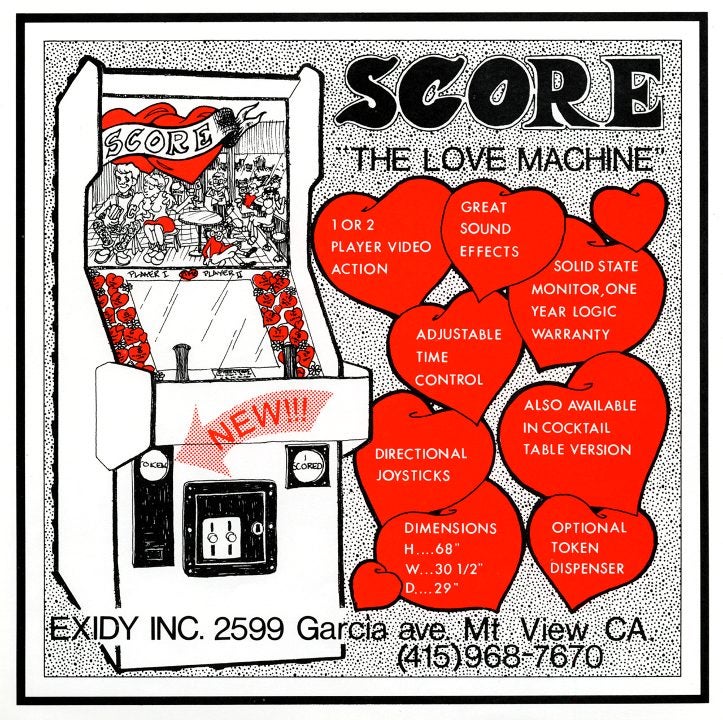
Actually, the first playable female character appeared in 1977 in a game called ‘Score,’ a lost arcade game of the “romantic” genre: men chasing women and women chasing men. When someone of the opposite sex was caught, a heart appeared on the screen, and the game continued, with the hearts turned into obstacles. Yes, viewed with eyes 46 years later, it’s one of the most terrifying things we can think of. The times are changing.
Sadly, there are only images of the cabins where the game was played and no screens of the game itself, which was also the first in history to allow choosing the player’s gender. On the other hand, we do have evidence – and the complete game – of the next time video games dipped their toe into the female world: ‘Wabbit,’ from 1982, for Atari 2600.
It was a farm simulator in which Sue, the farmer, had to chase rabbits away from her field by throwing rotten eggs at them to prevent them from taking the carrots. It was a critical success and marked the first console title where you could play as a woman who wasn’t sidelined in the visuals. It’s interesting to note that it came out in the same year as the controversial and explicit ‘Custer’s Revenge,’ where women were merely objects of desire for the main character.
Fortunately, even in the 80s, things were already changing, and titles like ‘Barbie,’ ‘Jenny of the Prairie,’ or ‘Ninja Princess’ paved the way for ‘Metroid,’ ‘Tomb Raider,’ and ‘The Last of Us Part II‘ to thrive. Always with the complaints of those few who never understood that this hobby was not made exclusively for them. It’s been almost 50 years since the first woman in a video game. It’s about time to evolve.