A team of scientists has managed to extract ice samples that are 6 million years old from the frozen Allan Hills in eastern Antarctica, marking a milestone in the history of climate research. This discovery, the oldest ever directly dated, was led by Sarah Shackleton from the Woods Hole Oceanographic Institution and John Higgins from Princeton University, and was published in the journal PNAS on October 28. The air bubbles trapped in the ice, which come from a time when the Earth was significantly warmer, have served as a capsule […]
A team of scientists has successfully extracted ice samples that are 6 million years old from the frozen Allan Hills, in eastern Antarctica, marking a milestone in the history of climate research.
This discovery, the oldest ever directly dated, was led by Sarah Shackleton of the Woods Hole Oceanographic Institution and John Higgins of Princeton University, and was published in the journal PNAS on October 28.
The air bubbles trapped in the ice, which come from a time when the Earth was significantly warmer, have served as a time capsule, providing a unique insight into the Earth’s climate during the Miocene.
An untouched world under Antarctica hasn’t seen sunlight in 34 million years.
Buried beneath 1.2 miles (2 kilometers) of ice in East Antarctica, scientists have revealed an ancient terrain sculpted by rivers and preserved through eons. By combining satellite radar with airborne… pic.twitter.com/EDZxpA1JcG
The researchers determined the age of the ice using argon isotope dating in these bubbles, a method that allows for direct dating without the need to analyze surrounding soil or rocks.
Analyses have revealed that the Allan Hills region has cooled by approximately 12 °C over the last 6 million years, thus providing the first quantified evidence of cooling in Antarctica since that ancient warm period.
Ed Brook, director of COLDEX and paleoclimatologist at Oregon State University, highlighted the importance of these ice cores, as they will act as ‘climate snapshots’, doubling the age of previous records.
More than 5 miles of glacial ice in Antarctica vanished in only two months, retreating 10 times faster than the previous record, with possible implications for the stability of other glaciers and the pace of sea-level rise.https://t.co/hH5130nvvA
This finding comes at a critical time, as global warming, driven by human emissions of greenhouse gases, is rapidly altering the Earth’s climate.
Scientists hope that the study of these ancient air bubbles will help them reconstruct past greenhouse gas concentrations and identify the natural factors behind climate change throughout the history of the planet.
With the successful discovery, the COLDEX team plans to return to Allan Hills between 2026 and 2031 to conduct more drilling and recover even older samples, thus expanding our understanding of Earth’s climate in ancient times.
The minimum temperature, also known as absolute zero, is defined as -273.15 °C or 0 Kelvin, where total stillness is reached and there is no molecular movement. At the other end of the spectrum is the Planck temperature, considered “absolute heat,” which is estimated to be around 142 quintillion Kelvin (1.42·10^32 degrees Celsius), a threshold where the laws of physics as we know them cease to be applicable. To put this in perspective, the temperature of the core of the Sun is approximately 15 million Kelvin, while in some remnants of supernovae, temperatures close to […]
The minimum temperature, also known as absolute zero, is defined as -273.15 °C or 0 Kelvin, where total stillness is reached and there is no molecular movement.
At the other end of the spectrum is the Planck temperature, considered the “absolute heat”, which is estimated to be around 142 quintillion Kelvin (1.42·1032 degrees Celsius), a threshold where the laws of physics as we know them cease to be applicable.
To put this in perspective, the temperature of the core of the Sun is approximately 15 million Kelvin, while in some remnants of supernovae temperatures close to a billion degrees can be recorded.
Exploring Absolute Zero and the Limits of Temperature
Experiments conducted at the Large Hadron Collider (LHC) at CERN have achieved temperatures exceeding 5 trillion Kelvin, but the Planck temperature remains theoretically unreachable with our current technological capabilities.
The concept of “heat” implies a transfer of energy, and understanding Planck’s temperature requires delving into the realm of quantum physics. In this context, heat is related to emissions in the electromagnetic spectrum.
A fact that shows human achievement: Both the hottest & coldest places in the universe have been on Earth in the last decade
CERN’s Large Hadron Collider hit 9.9 trillion Fahrenheit. And an experiment at the Bremen Drop Tower got to 38 trillionths of a degree above absolute zero pic.twitter.com/rIhx5SzUuP
However, the upper limit of this spectrum is defined by the Planck distance, which prevents more thermal energy from being effectively transferred.
Given the extreme nature of Planck temperature, this figure leads us to consider phenomena such as the Big Bang and black holes, where contemporary physical laws do not apply adequately.
The search for a unifying theory that integrates relativity with quantum physics continues, as it could provide new perspectives on the nature of heat and the universe as a whole.
The subatomic world is difficult to grasp, not only because it is incredibly tiny, but also because it is super fast. Now, physicists from the University of Arizona have developed the fastest electron microscope in the world, capable of capturing phenomena that last only a quintillionth of a second.
A good camera, with a shutter speed measured in milliseconds, could take a sharp photo of a person running. But the fastest cameras in the world, transmission electron microscopes, can capture events on an attosecond scale, such as photos of electrons running.
By the way, an attosecond is one quintillionth of a second, which makes a millisecond (one thousandth of a second) seem like an eternity.
In this new Virtual Special Issue from JPC A we're showcasing the latest research on attosecond chemistry including explorations of ultrafast processes and electron and nuclear dynamics. Read it here ?https://t.co/QJFEb9QaAqpic.twitter.com/L03f7NerKH
— The Journal of Physical Chemistry (@JPhysChem) August 21, 2024
A milestone in physics that could contribute to quantum physics, chemistry, and biology
If we scale up, there are as many attoseconds in a second as there are seconds in 31.7 billion years, which is more than twice the amount of time the universe has existed. These are truly unfathomable numbers.
In any case, as we read in New Atlas, previous efforts to capture events on that kind of timescale have reached up to 43 attoseconds, which researchers at the time described as ‘the shortest controlled event ever created by humanity.’ Now, the team from the University of Arizona has further reduced the time, freezing it in a single attosecond.
BREAKING NEWS The Royal Swedish Academy of Sciences has decided to award the 2023 #NobelPrize in Physics to Pierre Agostini, Ferenc Krausz and Anne L’Huillier “for experimental methods that generate attosecond pulses of light for the study of electron dynamics in matter.” pic.twitter.com/6sPjl1FFzv
The new work is based on the research of Pierre Agostini, Ferenc Krausz, and Anne L’Huilliere, who generated the first pulses of light short enough to be measured in attoseconds. This earned them the Nobel Prize in Physics in 2023.
For the new study, researchers developed what they call an ‘attomicroscope.’ First, an ultraviolet light pulse is fired at a photocathode, which releases ultrafast electrons inside the attomicroscope.
Next, a laser pulse is divided into two beams, which are sent to the electrons moving through the microscope. One of these beams is polarized and arrives at slightly different times, generating a ‘gated’ electron pulse that allows obtaining images of a sample, in this case, of graphene.
Thanks to this technique, the team was able to generate electron pulses of only one attosecond in duration, which allowed them to observe ultrafast electron movements that are normally invisible. The researchers claim that this breakthrough could have applications in quantum physics, chemistry, and biology.
Many doctors have complained that they can’t tell families that their loved ones have “a mutation in a sonic hedgehog gene.”
You and I may talk about Sonic always referring to the blue hedgehog that runs very fast, curls up into a ball, and gave us two amazing movies, but in the world of science it’s something completely different: it’s the protein that, among other things, makes our teeth grow, develops our lungs, and regenerates hair. So, literally, we couldn’t live without Sonic. And I mean it: it’s not a metaphor.
Interestingly, this gene is linked to a disease that causes defects in the brain and face known as holoprosencephaly. And, for whatever reason, many doctors have complained that they cannot tell families that their loved ones have “a mutation in a sonic hedgehog gene”. The solution for a while was to try to change its name, but they finally decided to call it by its initials: the SH gene.
The name, by the way, has nothing to do with the game itself nor is the scientist who discovered it a big fan of Knuckles and company: Robert Riddle was at home after work when his wife, Betsy Wilder, came home with a magazine that had an ad for ‘Sonic’. The light bulb went off: he already had a name, although he didn’t know that it would still be standing in 2023.
And what do we call the inhibitor of this protein? Well, it’s clear, isn’t it? Robotnikinin, in honor of Robotnik. It’s not the only case of a protein with a geeky name: there’s also Pikachurin, whose name was based on the fast and electric movements of Pikachu, or the protein product Zb7b7, which might not sound like anything to you at first, but maybe it will when you know that it was originally called simply “Pokémon”. When The Pokémon Company threatened legal action for associating cancer with their game, they backed down. Science, once again defeated by Nintendo.
Rolls-Royce gave us a glimpse of the nuclear future of the next generation of spacecraft and lunar bases by showing a mock-up.
One day we will conquer the stars. Although we have taken many steps in that direction already, we are not at the beginning of the space race; I would say we are more reaching the halfway point. But we still have a long way to go, let’s not deceive ourselves.
And on that space path, Rolls-Royce has a very relevant role. The engine company gave us a glimpse into the nuclear future of the next generation of spacecraft and lunar bases by unveiling a mock-up of its conceptual model of a space microreactor at the UK Space Conference.
As numerous countries and private companies have committed to launching an increasing number of manned and unmanned missions to the Moon, as well as expanding their activities into deep space, finding a reliable energy source beyond solar panels is becoming increasingly important has become an imperative.
We unveiled our Space Micro-Reactor concept model at last week’s UK Space Conference, laying the groundwork for the habitation and exploration of planetary surfaces and powering spacecraft.
Chemical rockets have been operating close to their theoretical limits since the early tests of the V2 during World War II. As humanity ventures into deep space and with the increasing need to monitor and maintain satellites in Earth’s orbit, a more efficient propulsion system becomes necessary.
As part of a program funded by the UK Space Agency with $3.6 million, Rolls-Royce has been working on a new microreactor to address these needs.
This small, advanced reactor, planned for demonstration on the Moon in the early next decade, is designed to provide future bases with the necessary energy not only to undertake highly ambitious tasks but also to heat the bases so they can survive the extremely cold lunar nights.
Furthermore, the new reactor is designed to act as an energy source for electric and other propulsion systems that will extend the reach of missions to the outer solar system and beyond. It will also enable maintenance and patrol spacecraft to travel between Earth’s orbits with much greater speed and flexibility than is currently possible.
All of this is great, but until now, the public and the industry only had conceptual art of the microreactor. That was until Rolls-Royce unveiled its model of the demonstration reactor that will seek answers on how to generate heat, transfer it, and convert it into electricity.
Researchers found that the ozone hole has significantly less ozone than 19 years ago, with levels declining…
In the ’90s, they spent the decade scaring us about the ozone hole. This hole was supposed to end life on Earth if we didn’t stop it. Fortunately, it started closing on its own… or so we thought.
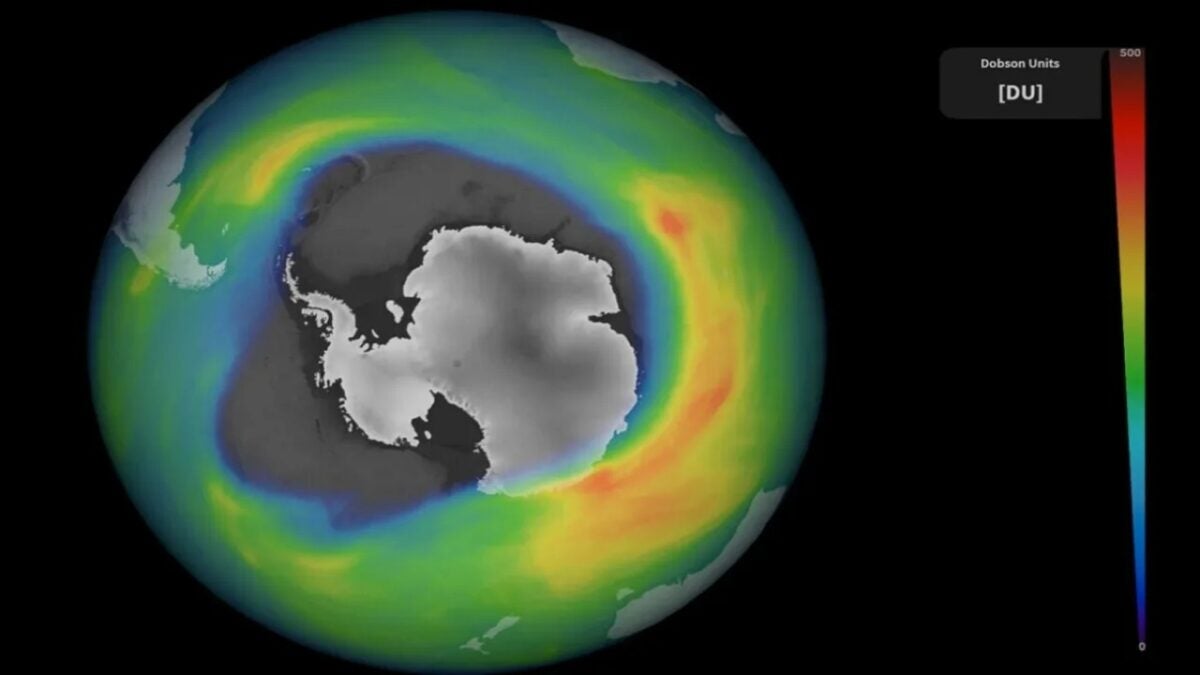
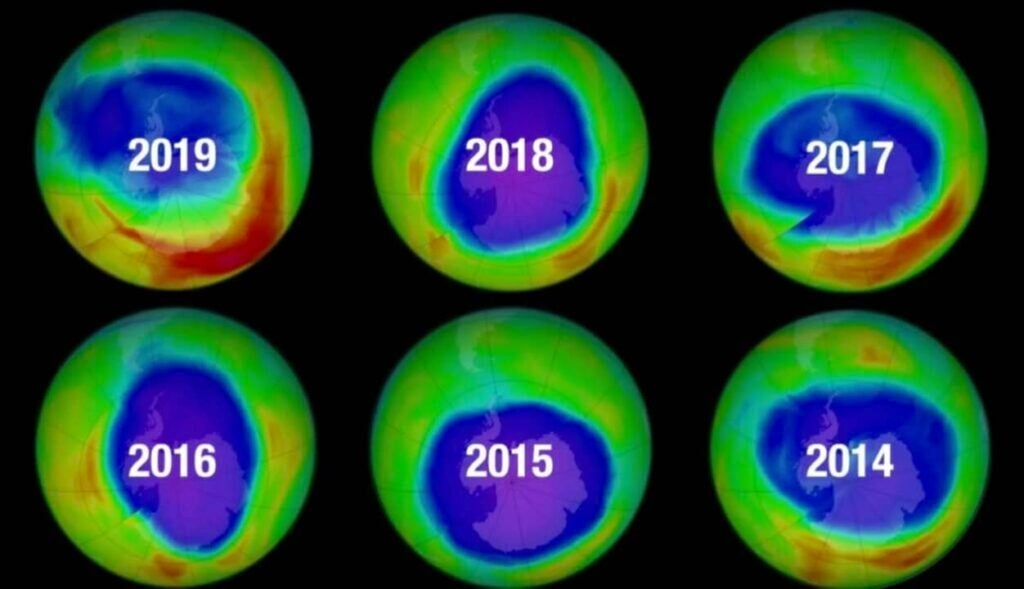
A large hole in the Antarctic ozone layer, thought to be closing, might actually be expanding, according to a new study, casting doubt on whether global efforts to heal the ozone layer have been successful after all.
However, most scientists disagree. The findings, published in the journal Nature Communications, contradict the general consensus that ozone has been steadily recovering over the last four decades.
Returning to the late ’90s
Through the analysis of monthly and daily ozone changes from 2004 to 2022, researchers found that the ozone hole has significantly less ozone than it did 19 years ago, with levels decreasing by a surprising 26%.
“Our analysis concluded with the data from 2022, but as of today, the ozone hole in 2023 has already surpassed the size of the three previous years: by the end of last month, it exceeded 26 million square kilometers, nearly double the surface area of Antarctica,” said the lead author of the study, Hannah Kessenich from the University of Otago, in a statement about the research.
The Montreal Protocol
Located several kilometers above the surface, in the stratosphere, the ozone layer is essential for life on Earth as it shields our planet from the harsh ultraviolet radiation of the Sun.
To protect it, world leaders at the United Nations approved the Montreal Protocol in 1987, marking a milestone by internationally banning a chemical substance used in aerosols, chlorofluorocarbons (CFCs), which scientists had discovered years earlier were depleting the ozone layer.
The treaty has been widely hailed as a major environmental victory. This year, a UN report projected that the ozone would return to 1980s levels by 2040.
PARIS — The hole in the Antarctic ozone layer has been getting deeper in mid-spring over the last two decades, despite a global ban on chemicals that deplete Earth's shield from deadly solar radiation, according to new research. https://t.co/TMlFxpD9jx
So, the ban on CFCs worked, but they might not be the sole culprits if we aim to explain this recent widening. Instead, researchers suggest that ozone depletion might also be due to the Antarctic polar vortex, a low-pressure whirl of cold westerly winds.
Until now, they’ve observed a relationship between changes in the vortex and ozone depletion, but they can’t explain why this would occur.
However, the colleagues of these researchers aren’t entirely convinced. Martin Jucker, from the Climate Change Research Centre at the University of New South Wales, points out that existing literature has already discovered that these holes were caused by climate phenomena such as the 2019 wildfires and a massive volcanic eruption.
Still, whether they’re right or not, researchers say that their work highlights “the importance of continuous monitoring of the state of the ozone layer.”
Argoland: millions of years of fissures and ruptures, with the oceans continually helping to separate the land. We have discovered something that millions of years ago…
Few things awaken our curiosity more than finding traces of our past. A primate cousin, a buried city… or a continent lost beneath the sea. And no, we’re not talking about Atlantis.
The separation of Australia and the lost continent of Argoland 155 million years ago was a significant event. In fact, it was so dramatic that researchers have taken until now to locate Argoland, which was once part of the ancient supercontinent Gondwana.
While many other landmasses linked to Gondwana had been easier to locate, this one seemed to have vanished.
Missing continent ‘Argoland’ found in Asia 155 million years after vanishinghttps://t.co/rIPoslqKbM
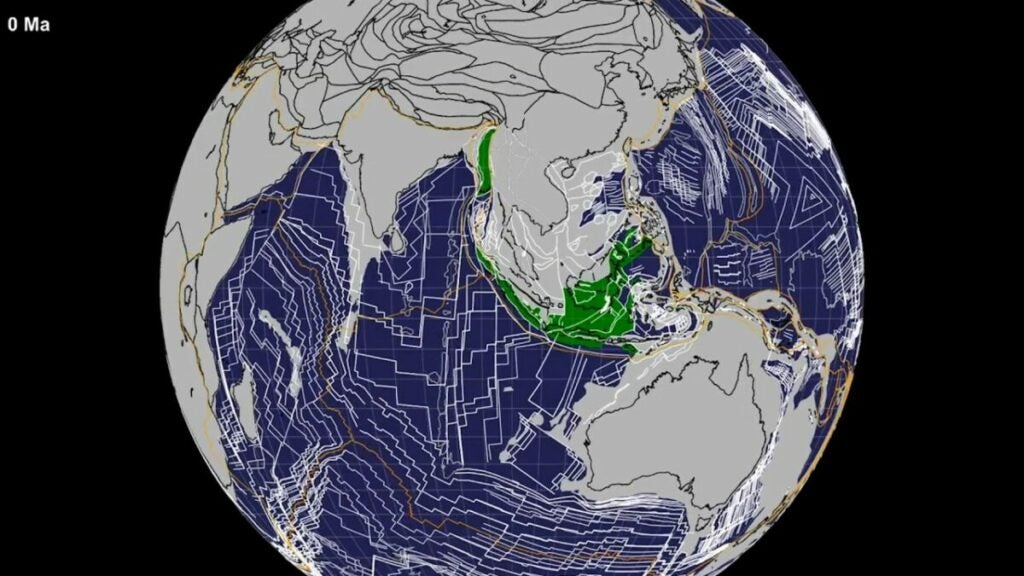
To find it, researchers from the University of Utrecht used geological information from a deep oceanic basin off the coast of Western Australia (the Argo Abyssal Plain) to discover clues about what might have happened to this 4,000 km long piece of continent after it separated from Australia and drifted away. It had to have gone somewhere.
According to the published study, the team believes they have located Argoland in Southeast Asia. The lost continent appears to be completely fragmented but still exists.
This is good news, moreover, as the team was running out of theories. “Otherwise,” the authors wrote in a statement, “we would have faced a significant scientific problem.”
Gondwana has the potential to become a hub of scientific discoveries. According to leading theories, this ancient supercontinent was large enough to host South America, Africa, India, Antarctica, and Australia. As it broke apart, continents shifted, and other parts – like the recently mapped Zealandia, referred to as the world’s eighth continent – separated in the process.
Although many landmasses continue to float above the ocean surface, others fell beneath the waves, either partially, as in the case of Zealandia, or entirely, as in the case of the Great Adria. Those that submerged into the Earth’s mantle, like the Great Adria, folded within it to form mountains.
Argoland was neither above nor below the ocean. “If continents can sink into the mantle and disappear completely, leaving no geological trace on the Earth’s surface, then we wouldn’t have much idea of what Earth might have looked like in geological times past,” says Douwe van Hinsbergen, a co-author of the study. “It would be nearly impossible to create reliable reconstructions of ancient supercontinents and Earth’s geography in past eras.”
But van Hinsbergen and his colleague Eldert Advokaat didn’t give up on the search for Argoland; after all, they knew it existed, thanks to the hidden basin deep off the west coast of Australia. “The seafloor structure shows that this continent must have moved northwestward,” the researchers wrote, “and it must have ended up where the islands of Southeast Asia are today.”
Still, with so many islands, Advokaat said the team was having trouble fitting the puzzle pieces together. “The situation in Southeast Asia is very different from places like Africa and South America, where a continent split in two,” he explains. “Argoland shattered into many different fragments. That obstructed our view of the continent’s journey.”
So, they retraced Argoland’s steps: millions of years of cracks and ruptures, with the oceans continually aiding in separating the land.
In the end, the team realized that the rediscovery of Argoland was not going to involve reconstructing a giant landmass because Argoland probably never was a single landmass.
Instead, it’s likely that it was originally an “argipelago” of microcontinental fragments separated by ancient oceanic basins.
It would resemble more the Great Adria or Zealandia than a perfectly formed India, with which it once bordered as part of Gondwana.
And when Argoland started to separate from Australia and move northward, the separation became even more complicated. The already scattered land seems to have fragmented into thin splinters that now rest near the geological systems of the Himalayas and the Philippines.
“Argoland is hidden,” say the authors, “under the green jungles of vast areas in Indonesia and Myanmar.” It appears that this is where a continent ends up amid messy breakups.
A Japanese school uses robots to combat truancy. This measure is intended to encourage all those students who…
Kumamoto School in southwestern Japan will allow students who don’t attend school to control telepresence robots in the classroom. This is quite unusual because in Japan, school attendance for minors is nearly 100%, but many have stopped going to school after the pandemic.
The organizers of the initiative are hopeful that this setup will encourage students to return to class, although the effectiveness of the measure remains to be seen.
Starting in the next two months, two robots will be used for the pilot program, each equipped with microphones, speakers, cameras, and a tablet to enable two-way communication. The one-meter-tall robot will be controlled from home by the student through a computer.
With their built-in wheels, the robots can even move around the school, though it must be admitted that they will need assistance when dealing with challenging obstacles, such as stairs. Japan is quite fond of robots, especially Gundams.
The issue in schools was exacerbated by the pandemic
The city’s recent efforts to improve the situation have included broadcasting classes to students at home in a virtual classroom.
While this system has helped reduce anxiety for students reluctant to attend in-person classes, telepresence robots are expected to increase interaction between students at home and those in the classroom, making the experience more natural and building confidence for a potential return to school.
Kumamoto, a city in Southwest Japan, plans to install robots in some of its classrooms to help home-based pupils feel more included and less anxious.https://t.co/IdKVJVetPZ
“In addition to allowing them to attend classes, the robots enable students to move freely within the space and communicate with others at their own pace,” explained the local newspaper Mainichi. “We hope this can help reduce the mental barriers for students who are hesitant to attend.”
The trial is expected to last untilMarch and provide authorities with enough data to determine if it’s worth extending the system.
While telepresence robots have existed for some time, they have not yet taken off on a large scale. However, this hasn’t stopped major companies like Honda from exploring the technology.
The oceans located around the equator have changed to a greener hue, a trend that cannot be solely explained by natural year-to-year variability. There is something more… called global warming.
“We are impacting the ecosystem in a way we haven’t seen before,” explains Alexandra Witze, oceanographer and climatologist at the National Oceanography Centre in England.
The answer is biological and it is phytoplankton
The color of the ocean changes based on what is present in its upper layers, as explained in Nature. Bluer oceans typically have less life, while greener oceans have more phytoplankton, marine algae that undergo photosynthesis.
Phytoplankton serves as the foundation of the marine food web, providing fuel for zooplankton and fish, which are then consumed by larger fish, seabirds, and marine mammals.
But phytoplankton also plays a crucial role in combating the climate crisis. Researchers estimate that the oceans absorb around 30% of the carbon dioxide produced by humans, largely due to the photosynthesis of these algae.
Scientists thought they would need many more years of data before they could spot signs of climate change in the colour of the oceans https://t.co/mBGfBV2Fgy
Different types of plankton reflect and absorb light differently, which means that a change in the color of the ocean equates to a change in the ecosystem.
These changes could have a domino effect on the entire food chain and even impact the ocean’s ability to store carbon.
Cael and his colleagues examined data from NASA’s Aqua satellite’s Moderate Resolution Imaging Spectroradiometer (MODIS), which has been monitoring the color of the ocean for 21 years.
The team analyzed measurements from seven visible wavelengths and found that between 2002 and 2022, color changes occurred in 56% of the oceans, primarily in tropical and subtropical areas. The results were published on Wednesday in the journal Nature.
"Climate-change trends emerge more rapidly in ocean colour. […] On the whole, low-latitude #oceans have become greener in the past 20 years."
To determine if the trend was related to climate change, the team turned to a model created by Stephanie Dutkiewicz, co-author of the study, in 2019, which simulated how Earth’s oceans would respond in two scenarios: one with added greenhouse gases and one without.
The predicted results in the greenhouse gas model aligned almost exactly with what the researchers found from real-world data: over 20 years, about half of the oceans significantly changed color, according to the MIT press release.
We’ve been very oceanographic lately, ever since Titan blew up at the bottom of the sea a week ago. Now we have discovered that…
The UFO hunter from Harvard University believes that he and his team may have recovered tiny fragments of an interstellar visitor at the bottom of the Pacific Ocean, but there are still many reasons for skepticism. We are all the Titan.
According to a report by the BBC, the tireless astronomer from Harvard, Avi Loeb, has found what he believes could be fragments of an alien meteor using his “interstellar hook,” a tentacle-shaped device he invented that scrapes the ocean floor to collect possible samples of interstellar rocks.
Loeb has made a name for himself in his search for artifacts that could belong to an extraterrestrial civilization. Although he may be more famous for his theories surrounding the interstellar object ‘Oumuamua, which flew past Earth in October 2017, the latest anomaly in question, nicknamed IM1, fell into the Pacific Ocean in 2014.
A team including Harvard astronomer Avi Loeb may have just found a trace of an interstellar object, which Loeb believes could be alien in origin. https://t.co/HqE3lo16em
A meteor that arrived from outside our Solar System
Loeb firmly believes that it originated from outside our Solar System due to the incredible speed at which it crashed into our seas, a location later confirmed by the Department of Defense.
And that’s not all. Loeb argues that the meteorite could represent alien civilization’s technology, an unlikely theory that will not leave his colleagues indifferent.
But did he and his team actually find evidence of the interstellar origins of the object, or were they simply searching through the remains at the bottom of the ocean?
Earlier this month, Loeb and his team set sail aboard a ship serendipitously named the Silver Star to take a ride with their interstellar hook. On June 21, they seemed to hit the mark when they found small spherical fragments called “spherules,” composed of a peculiar mixture of iron, magnesium, and titanium.
Although Loeb appears confident that these tiny fragments, measuring just one-third of a millimeter in size, come from IM1, other scientists remain skeptical and point out that spherules can also be created by terrestrial processes.
“Marc Fries, a NASA cosmic dust curator, explained to the BBC that tiny metallic spherules are very common on Earth. ‘They come from car exhaust pipes, vehicle brakes, welding, volcanoes, and probably some other sources we haven’t identified.'”
Not to mention that they could have been fragments from the hundreds of other meteorites that rain down on us every year.
But that hasn’t perturbed Loeb, who has since insisted on his blog that the “anomalous” composition of the spherules makes them a good candidate for having interstellar origins, though he acknowledges that further investigation is needed to determine what makes them so special.
And who knows? There still exists a minuscule possibility that they have arrived here from a completely different star system.