Exoplanet Breakthrough: Potential New Home for Humanity Found 90 Light-Years from Earth

And if we tell you to change not just your neighborhood or your apartment, but your planet? Well, within not so much it may be possible. Somebody tune up the galactic BlaBlaCar.

Moving is the worst: packing boxes, moving furniture, packing, unpacking, discarding, preserving… If you’re looking forward to never doing it again, you’re on our team. But of course, today we’re going to talk about a very different kind of move: What if we told you about changing not just neighborhoods or apartments, but planets? Well, in the not-so-distant future, it could be possible. Someone, please tune up the galactic BlaBlaCar. No, Elon Musk, not you, please.

NASA DOWNLOAD

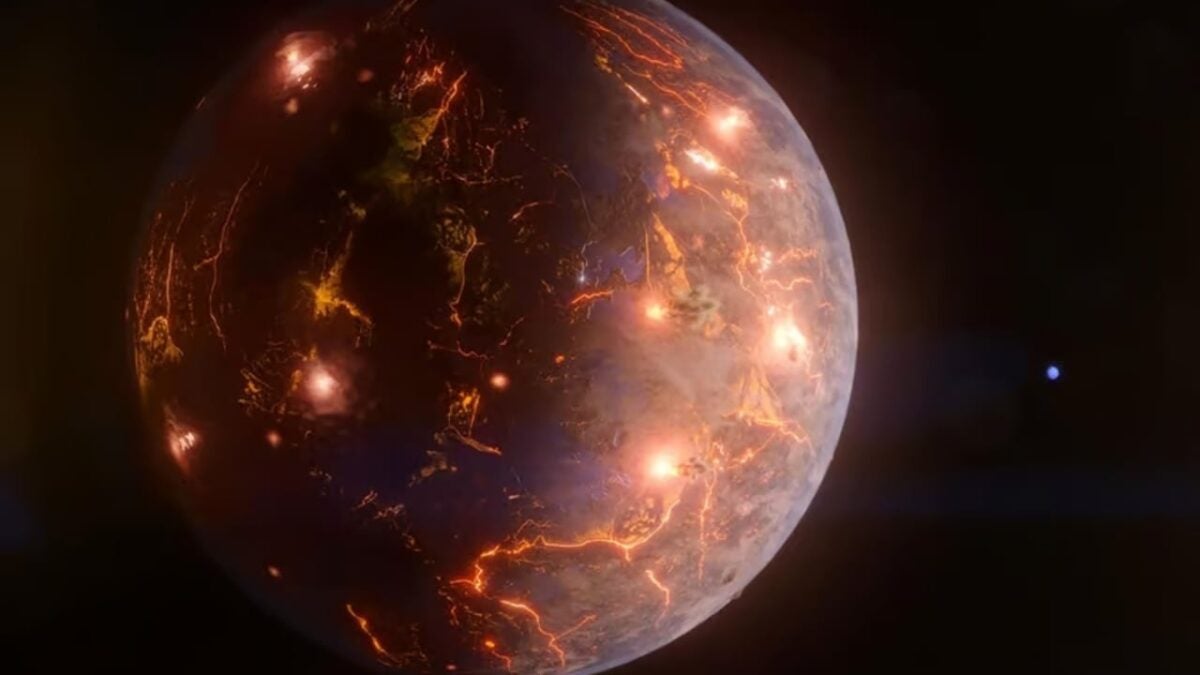
Earth-2

From Méliès’ ‘A Trip to the Moon’ to today, finding a place for the human race to settle down has been a dream. While we wait for it to become a sad, sad obligation due to climate change, scientists have now discovered a planet that is similar in size to Earth and, better yet, may have an atmosphere. Its name, however, needs some marketing expertise: LP 791-18d. As a suggestion, I propose “Earth+,” which is much more catchy. So, when it’s time for us to board the rocket, we can say, “To Earth+!”

The exoplanet in question is located 90 light-years away from Earth (a quick trip to the store and back, really) and it is known that one side always faces the star in the Crater constellation, which means it wouldn’t be a good idea to tour that area no matter how much of a tan you want to sport. Water wouldn’t be possible there in any way, but scientists suspect that on the other side, volcanic activity could create an atmosphere and, therefore, water. A “dark side” that brings hope. Talk about a plot twist, ‘Star Wars.’

Moreover, the same group of scientists has stated that the discovery of LP 791-18d is a first step towards finding life beyond our solar system. This finding was made possible thanks to the James Webb Telescope, which was launched into space a year and a half ago with the aim of eventually providing us with information about the creation of the earliest galaxies. The cosmos is vast, intrinsic, and who knows? Perhaps it is populated by raccoons with guns, although for now, we’ll have to wait to find out how “the ingredients for life may exist on other worlds apart from our own,” as the scientists have said.
Scientists Discover Promising Signs of Life on Venus: “Maybe” becomes the Key Word

According to the latest report from a group of astronomers, it is possible that by being afraid of Martians we were looking at the wrong side of the solar system.

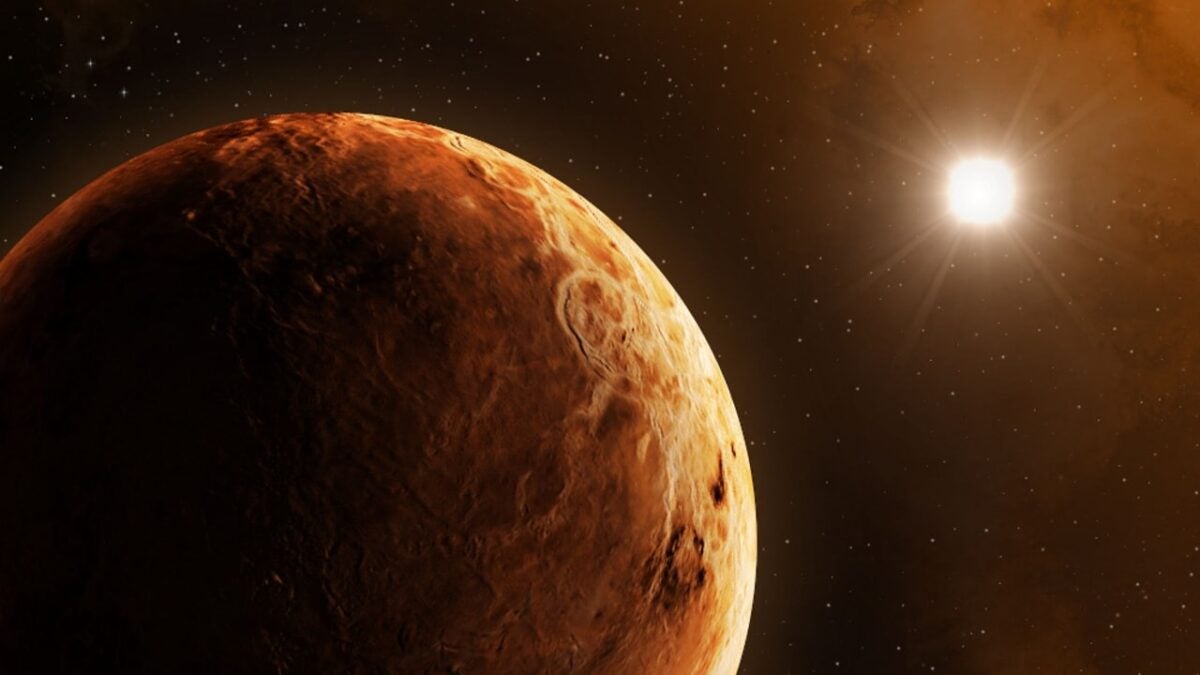
Don’t call Iker Jiménez: so far, no Venusian has appeared on Earth greeting and asking to meet our leader. But according to the latest report from a group of astronomers, it is possible that by fearing Martians, we have been looking in the wrong direction in the solar system. Is there life on Venus? The answer is more “maybe” than a resounding “no.”

NASA DOWNLOAD

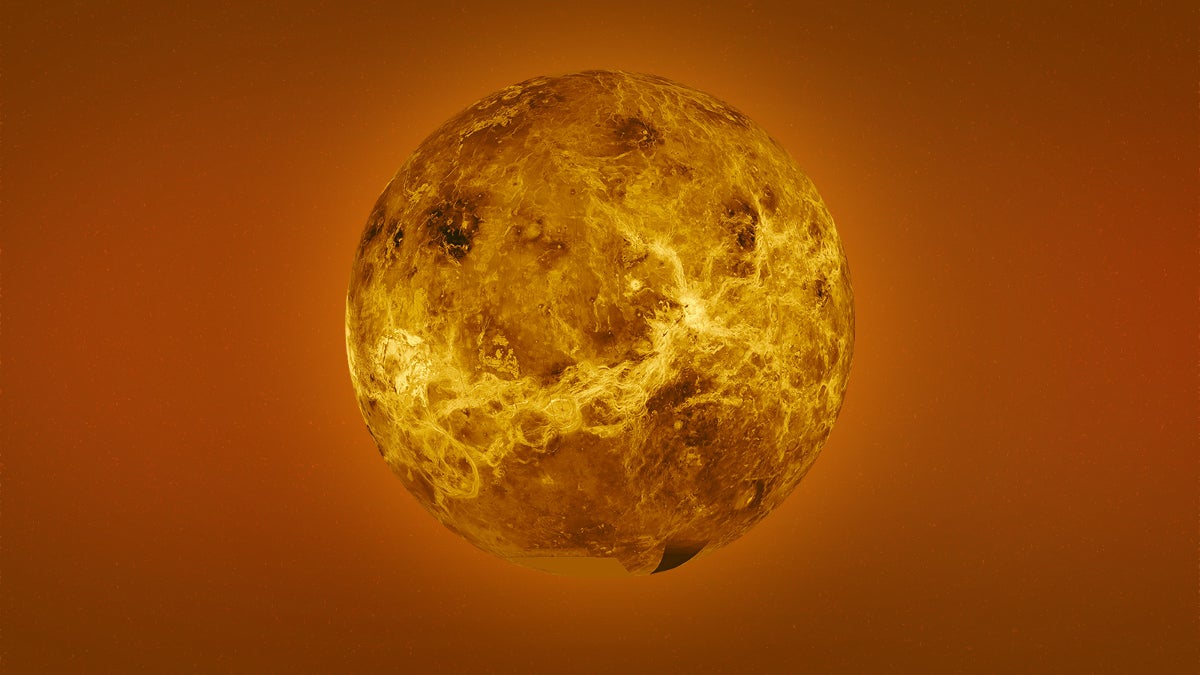
Venus from the arms

‘Nature Astronomy’, a science journal that has been published since January 2017, has released a study indicating the presence of a peculiar molecule called phosphine in the clouds of Venus. Phosphine is a highly flammable gas that must be frozen to maintain its stability; at room temperature, it explodes and emits a distinct odor of garlic and rotten fish. If Venusians exist, the first thing we should teach them is about cologne.

Although not certain, phosphine could serve as an indicator of life. While it has also been found on Jupiter and Saturn, the difference lies in the fact that on Venus, it is not located in the planet‘s atmosphere but is instead formed by decomposing organic matter. In other words, its composition consists of phosphorus and hydrogen.

It is also true that the presence of phosphine found is not significant enough to cause a major shift in our understanding. In December 2022, NASA did not detect the molecule in Venus’ atmosphere, and at most, there would be 0.8 parts of phosphine per billion parts of everything else (hey, some people have even fewer chances of dating). However, researchers in Hawaii and Chile have been more optimistic, although they need more time for further investigation.

If you were expecting the answer to this article to be “Yes, definitely, and they will come to have breakfast at your house tomorrow, so don’t forget to buy croissants,” we understand the disappointment. However, it remains an incredible scientific advancement that could potentially change everything in the long run. For now, continue making plans for tomorrow; it doesn’t seem like the Venusians will be invading us anytime soon.

Astrophysicists weigh in on black hole facing Earth: A cause for concern?

The black hole is 657 million light years away and if we wanted to go there in a ship it would take us 19,000 years.

If there’s one sentence you don’t want to read in a news story about a massive black hole pointing toward Earth, it’s “It’s unclear how it will affect our galaxy”. And yet, that’s where we are. At the moment we don’t have to prepare for the end of the world, far from it: the black hole is 657 million light years away and if we wanted to go there in a spaceship it would take 19,000 years. We have better things to do in the meantime.

The center of the universe

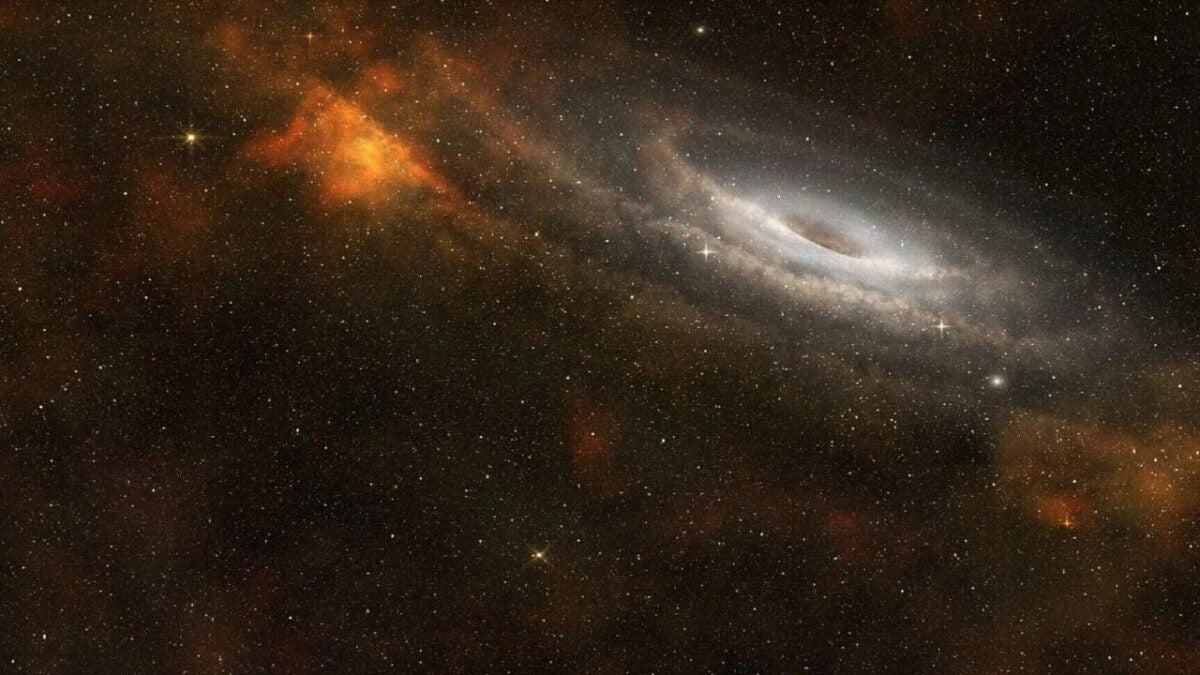
PBC J2333.9-2343. It is not the name of Elon Musk‘s new son, but the name of this hyper-large black hole at the center of a distant galaxy that has now turned its course to head toward Earth. For the moment, scientists at the Royal Astronomical Society are testing to see what is happening.

World Wide Telescope DOWNLOAD

Specifically, the space phenomenon has rotated 90 degrees and has become a “blazar”, which is not a store where you find all kinds of things but the point of a galaxy pointing directly towards the Earth. Blazars are very high energy objects and one of the most powerful phenomena in the universe. I’m sure it gives you a lot of peace of mind to know that there is one now, 657 million light years away, staring us in the face.

Although they do not yet know what caused the change of direction, scientists believe that it collided with another galaxy. In this case, PBC J2333.9-2343 is a galaxy that is outside the norm of what we normally know as such, opening the possibility for new scientific discoveries. We will be watching to see how it evolves and watching the sky out of the corner of our eye just in case. Lest a black hole come out of nowhere.

Revolutionizing Space Science: Tool to Help Search for Life on Other Planets Unveiled

The tool in question is a technique for searching for water in space that uses the size of an exoplanet to estimate how much liquid is below its surface.

Water is life. It’s not just a catchy slogan: it’s also a reality. None of the planets we are exploring in outer space can support life of any kind, because they have no water to survive on. But that may change thanks to a new tool created by astronomers at Cambridge University with which they will be able to take one of the biggest steps towards colonizing other planets.

One step closer to Planet Express

The tool in question is a technique for finding water in space that uses the size of an exoplanet to estimate how much liquid lies beneath its surface. We don’t mean rivers, seas and waterfalls, but a certain amount of water locked in rocks and minerals kilometers from the surface. It’s not that flashy, but it may be the beginning of the creation of life (or human survival).

If we can know how many of these minerals are inside a planet, it is possible to get the water out of its interior, bring it back to the surface, and be able to replenish, for example, oceans that once disappeared due to intense heat or radiation. “This model gives us a limit on how much water a planet can carry in its interior, based on those materials and their ability to have water on their surface,” the scientists comment. Will we one day be able to bathe in Saturn’s oceans? Let’s not get ahead of ourselves.

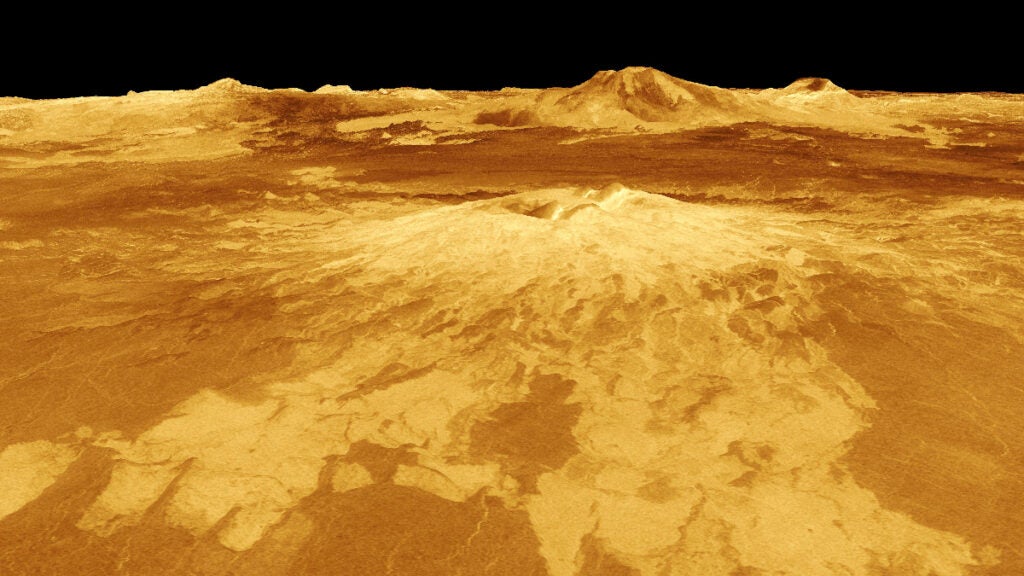
For the time being, scientists will use this new branch of the search for planets to find those most likely to have alien life and study them more closely after triaging them. Of course, do not think that because a planet is huge it will have a lot of water in its interior: in fact, scientists point rather to planets similar in mass to Earth. For example, Venus. It is suspected that before it was the hottest planet in the solar system at about 475 degrees nothing, it had water on its surface.

If that is the case, we could help cool the planet thanks to this tool. Who knows? Maybe in the next few decades we will be able to go on a vacation resort to a small Venusian cove…